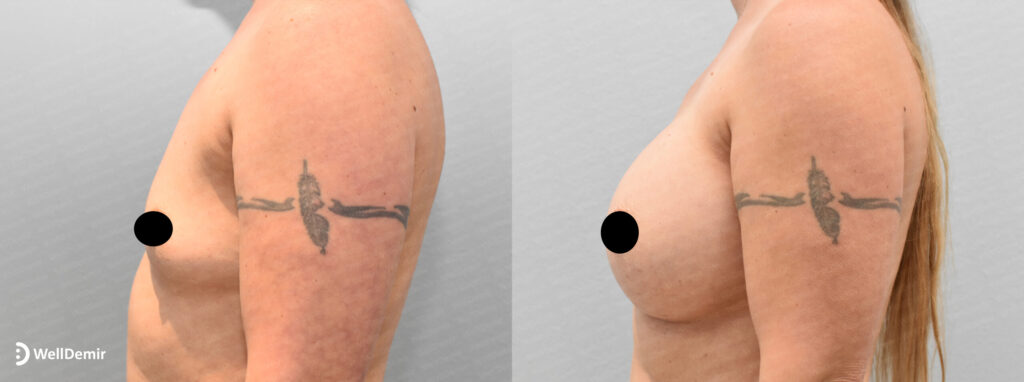
With any surgical or interventional procedure, results may vary from person to person. It is recommended that you seek detailed advice from your physician before proceeding.
Breast augmentation in Turkey is a refined cosmetic procedure that enhances breast volume, shape, and symmetry using implants or fat transfer. This personalized approach is ideal for individuals seeking to restore balance after weight loss, pregnancy, or aging helping them achieve a fuller, natural-looking silhouette that matches their self-image.
Performed by certified surgeons in licensed medical facilities, the procedure is designed for natural results and minimal recovery time. Through WellDemir, patients are matched with trusted clinics and guided at every step. For added peace of mind, complication insurance is available to cover unforeseen medical concerns before or after surgery.
Breast augmentation in Turkey offers a reliable and refined solution for those seeking to enhance breast volume, shape, or symmetry. This advanced procedure uses implants or fat transfer to achieve fuller, natural-looking results helping you feel more confident in your body without compromising authenticity.
Natural results by certified surgeons in Turkey
From flights to follow ups, we carefully coordinate it all.
Treatments performed in trusted medical facilities.
Performed by skilled surgeons in accredited clinics, every breast augmentation is carefully tailored to suit your body shape, symmetry, and personal preferences. WellDemir connects you with trusted specialists who use modern techniques to achieve long-lasting, natural-looking enhancement. From your first consultation to complete recovery, we manage every step with precision and care. For extra reassurance, your treatment can include complication insurance, offering protection against unexpected medical situations before or after surgery.
Breast augmentation in Turkey is a proven method to enhance breast volume, shape, and balance through implants or fat transfer. Unlike superficial fixes, this advanced procedure delivers long-lasting, natural-looking results tailored to your body. Performed by experienced surgeons in accredited clinics, each treatment is customized to meet your personal goals. WellDemir coordinates the entire journey connecting you with licensed professionals and offering complication insurance to ensure a safe, seamless experience from consultation to recovery.
We connect you with skilled plastic surgeons to assess your goals and plan your procedure based on your facial or body anatomy.
WellDemir handles your flights, accommodation, and clinic appointments ensuring a smooth, stress-free plastic surgery journey in Turkey.
Post-surgery care includes regular check-ins and expert support, giving you peace of mind even after you return home.
Breast augmentation, also known as augmentation mammoplasty, is a surgical procedure designed to enhance the size, shape, and symmetry of the breasts. It involves placing implants either under the breast tissue or beneath the chest muscles. Women seek this procedure for cosmetic reasons, reconstructive purposes after mastectomy, or to restore volume lost due to pregnancy, weight loss, or aging. Modern techniques ensure minimal scarring and natural-looking results.
Breast implants are the devices themselves, usually filled with silicone gel or saline solution, that provide the desired volume and shape. Breast augmentation refers to the complete surgical procedure of placing these implants into the body. Essentially, implants are the tool, while augmentation is the process that transforms breast appearance.
A naturally full, perky, and proportionate shape is generally preferred. Most patients and surgeons aim for breasts that complement the body’s overall contour. While “ideal” shapes vary depending on cultural preferences and personal taste, the trend leans towards a balanced silhouette that enhances confidence without appearing exaggerated.
Pain varies by individual and surgical technique, but most patients experience moderate discomfort similar to muscle soreness. Swelling and tenderness are normal for the first few days. Pain management includes prescription medication and proper post-operative care. Within two weeks, most patients report minimal discomfort and increasing mobility.
There is no strict minimum, but candidates should have fully developed breasts, usually by age 18. Optimal results often occur in women aged 20–40, when skin elasticity is still high. Older women can undergo augmentation safely, though additional procedures like lifts may be necessary to address sagging.
Subtle, well-placed implants are often indistinguishable from natural breasts. Men may notice differences in volume or symmetry in some cases, especially if the augmentation is very large or highly projected. Skilled surgeons aim for natural-looking results to maintain realism and proportion.
Implants themselves are durable but not lifetime devices. Most last 10–20 years, depending on type, placement, and patient factors. Over time, natural changes in the body, pregnancy, or aging may affect results. Regular check-ups are recommended to monitor implant integrity and breast health.
Saline implants are known for being safe due to their compatibility and easy detection in case of rupture. Modern silicone gel implants also have excellent safety profiles with high satisfaction rates. Choosing a board-certified surgeon and quality implants ensures the safest outcomes.
In some breast lift procedures combined with augmentation, the nipple-areola complex may be repositioned for a more youthful and centered appearance. Skilled surgeons carefully plan the lift to preserve sensation and natural orientation. Most patients notice minimal changes to nipple sensitivity when performed correctly.
Many patients wish they had better understood recovery time, implant feel, and potential complications. Common lessons include:
Being fully informed helps set realistic expectations and improves overall satisfaction.
Regret is rare when procedures are planned carefully and expectations are realistic. Some common reasons for dissatisfaction include choosing implants too large, not achieving symmetry, or experiencing complications. Proper consultation and surgical planning drastically reduce regret rates.
The ideal size is highly personal, depending on body frame, lifestyle, and aesthetic preference. Surgeons often use measurements, 3D simulations, and patient input to select an implant that achieves natural proportion and balance. Cultural trends influence perception, but patient satisfaction remains the priority.
Medium-sized implants, typically ranging from 300–400 cc, are most popular worldwide. They balance enhancement with a natural appearance, suit a wide variety of body types, and minimize the risk of complications. Surgeons aim to achieve proportionality rather than extreme enlargement.
Age alone is not a barrier. Women over 40 can achieve excellent outcomes, though skin elasticity may affect final results. Combining augmentation with a lift can address sagging and enhance long-term aesthetic outcomes. Good health and realistic expectations are crucial.
Supportive bras help maintain comfort during the initial recovery phase, typically 4–6 weeks. After that, wearing a bra is optional and based on personal preference. Proper support may prolong implant positioning but does not require permanent use.
Signs include a noticeably rounder shape, symmetrical placement that may exceed natural contours, and fullness in the upper breast pole. However, modern implants and surgical techniques make many augmentations virtually undetectable, even to experienced observers.
Breast implants have some potential drawbacks:
Understanding these disadvantages helps patients make informed decisions and plan for long-term maintenance.
Most breast augmentation procedures are performed on an outpatient basis, meaning patients go home the same day. Hospital stays are generally short unless complications arise. Recovery at home involves rest, limited physical activity, and following post-op care instructions provided by the surgeon.
Implants that match the patient’s chest width, body frame, and existing breast tissue often produce the most natural look. Silicone implants are generally preferred over saline for a softer, more realistic feel. Shape, profile, and placement (submuscular vs subglandular) are carefully selected for harmony with the patient’s body.
Breast implants are not lifetime devices. High-quality implants typically last 10–15 years, though many last longer with proper care. Over time, natural changes in breast tissue and skin may affect appearance. Regular checkups and monitoring ensure early detection of any complications.
Safety depends on surgical technique, implant quality, and patient health. Silicone implants are widely considered safe and provide natural results, while saline implants are slightly easier to detect if ruptured. Choosing a board-certified plastic surgeon minimizes risks and improves outcomes.
Long-term satisfaction requires realistic expectations, proper implant selection, and commitment to post-operative care:
By combining these strategies, patients can enjoy aesthetically pleasing results with minimal complications.
The procedure can be performed using silicone implants or your own fat via fat transfer.
Yes, when performed by certified surgeons in licensed clinics, it is considered a safe and effective procedure.
Initial recovery usually takes 1–2 weeks, but full healing may take several weeks.
Yes. The procedure is customized to your body type and aesthetic goals for a balanced, natural look.
Yes, WellDemir offers optional complication insurance to protect you before and after surgery.
In the vast majority of cases, yes. Most modern breast augmentation techniques (especially those placing the implant under the muscle) do not interfere with the milk ducts or the nerves responsible for breastfeeding. However, it is important to discuss your future plans with your surgeon during the consultation to ensure the incision site is chosen to minimize any potential impact.
Breast implants are not lifetime devices, but they do not have a fixed "expiration date." While many patients enjoy their implants for 10 to 15 years or longer without issues, they should be monitored regularly. You only need to replace them if you experience a change in shape, a rupture, or if you simply wish to change your size or style as your body ages.
Breast implants do not prevent you from getting a mammogram, but they do require a specialized technique. You should always inform your radiologist that you have implants so they can perform "displacement views" to ensure the breast tissue is clearly visible. Research shows that breast augmentation does not increase the risk of developing breast cancer.
As WellDemir, we connect you with licensed clinics and top medical professionals across Turkey.

 | Sağlık Turizmi Reklam Ajansı | © 2025 WellDemir