
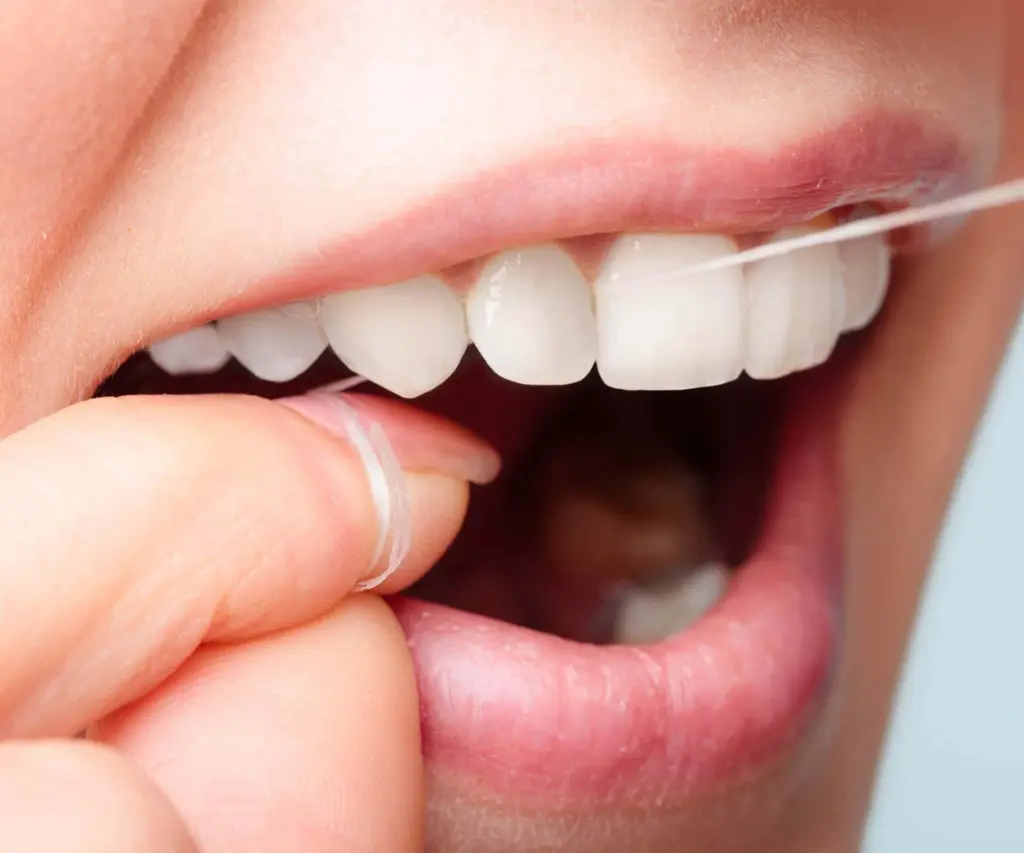
For many people, dental floss is that slim box hiding at the back of the bathroom cabinet, bought with good intentions and then almost forgotten. Yet this simple tool may play a surprisingly large role in how fresh your breath feels, how clean your mouth seems after brushing, and how confident you are about your smile. At WellDemir, we take a close look at what flossing actually does, how it is thought to work, and why so many dentists insist on it even though research findings are sometimes mixed and still evolving.
Table of Contents
Why Dental Floss Matters More Than It Looks
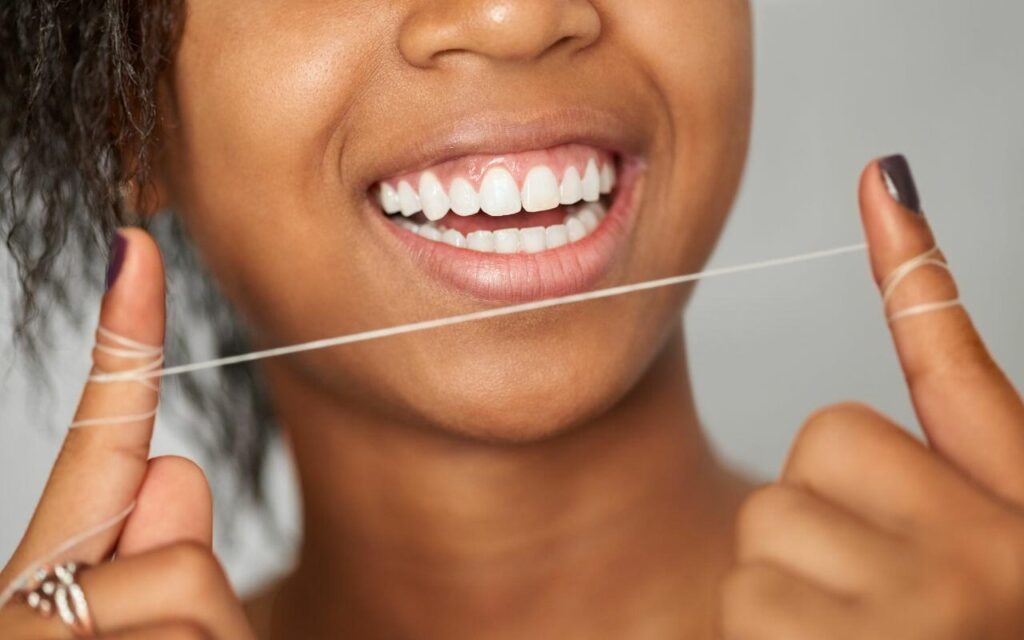
When people think of oral care, they usually think of toothbrushes, toothpaste and maybe mouthwash. Dental floss tends to be the quiet supporting actor. The basic idea behind flossing is to clean the narrow spaces between teeth and just under the gumline, where the bristles of most brushes reach only partially. In those tight areas, tiny food particles and soft bacterial deposits can accumulate and may stay there for hours.
Many studies over the last few decades have tried to evaluate whether dental floss really changes outcomes such as plaque levels, gum bleeding or the risk of tooth decay between teeth. Some research suggests a noticeable benefit when flossing is done regularly and with proper technique, while other reviews have found more modest results, especially when people floss quickly or inconsistently. This ongoing debate makes flossing an interesting topic rather than a settled one, and it encourages a more nuanced, curious approach instead of rigid rules.
Get Free Consultation
Have any questions? Leave your details and we'll get back to you shortly.
From a practical perspective, a lot of oral‑health professionals still see floss or other interdental cleaners as a useful addition to brushing. Not because it is a miracle tool, but because it targets a specific and otherwise hard‑to‑reach area. For people who enjoy a meticulous sense of cleanliness, the immediate feeling of “no food stuck between the teeth” after using dental floss can be a reward in itself.
What Dental Floss Actually Does Between Your Teeth
To understand what dental floss is good for, it helps to picture plaque not as something mysterious, but as a very thin, soft biofilm. This film consists mainly of bacteria that naturally live in the mouth, surrounded by substances they produce and by leftovers from food and drinks. When this layer stays undisturbed, it can gradually change in composition and structure and may become harder to remove.
Brushing can disrupt much of this film on the exposed surfaces of the teeth. However, the narrow contact points where two teeth touch each other create a protected zone. Here, dental floss acts like a flexible cleaning strip. By sliding along the side surfaces of the teeth, floss may mechanically disturb that soft buildup, dislodging debris and thinning the biofilm in areas a brush tends to skim over.
Researchers have also looked at how dental floss might influence early gum irritation. When plaque sits close to the gums, the tissues can react, first with mild redness or swelling that many people barely notice. Regular removal of deposits from those interdental spaces appears to be associated in several studies with calmer, less reactive gums over time, especially when combined with thorough brushing. The exact degree of benefit can vary from person to person, depending on factors like tooth shape, spacing, general health and daily habits such as smoking or snacking frequency.
Different Types of Dental Floss and How They Compare
Walk down the oral‑care aisle and you will see that dental floss is not a single product but a whole family of tools. The variety can be confusing, yet it reflects how different mouths and preferences are.
Some of the most common forms include:
- Traditional waxed floss
- Unwaxed floss
- Expanded or “puffy” floss
- PTFE (tape‑like, very smooth) floss
- Floss picks and holders
- Spongy or “super” floss designed for braces and bridges
Traditional waxed dental floss glides relatively easily between teeth and may feel gentler where contact points are tight. Unwaxed versions can give more of a “squeaky clean” sensation on the tooth surface, which some people like because it provides tactile feedback. The thicker, expanded strands, sometimes called fluffy floss, are designed to fill larger gaps between teeth and may have more surface area to wipe away deposits, especially where gum recession or orthodontic treatment has created extra space.
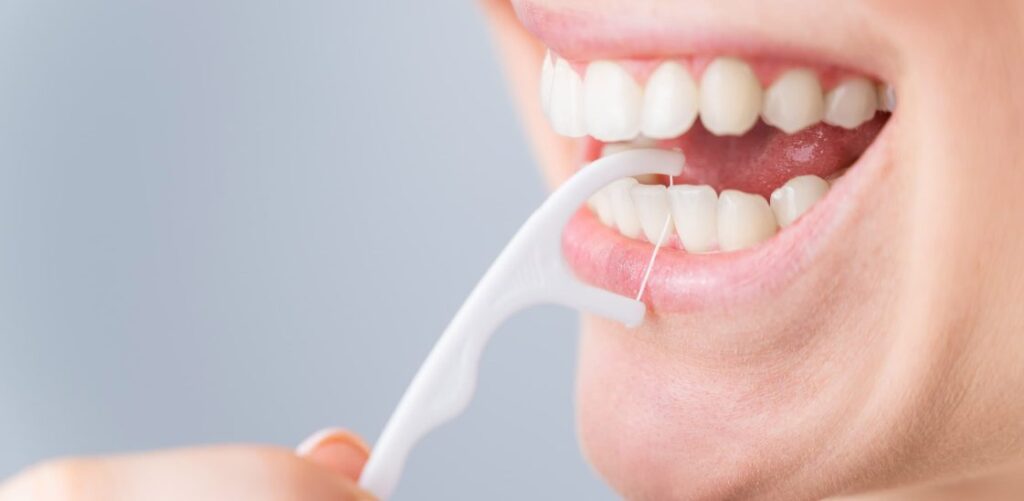
PTFE tape‑style dental floss feels very slick and flat, and some users find it especially comfortable if their teeth are crowded. Floss picks, with a short piece of floss held on a small plastic frame, can be easier for people who find finger wrapping awkward or who want a portable option. For more complex dental work like bridges or orthodontic wires, so‑called “super floss” combines a stiff end, a spongy middle segment and a length of regular floss, making it easier to thread and clean around those structures.
Current research has not yet crowned a single type of dental floss as clearly superior for everyone. Instead, comfort and ease of use tend to drive consistency. A product that feels good and fits someone’s mouth shape is more likely to be used regularly, and it is that regular, reasonably careful use that appears to matter most.
How to Use Dental Floss Step by Step
Many people say, “Flossing doesn’t work for me,” when in reality they have never been shown how to use dental floss in a way that is both gentle and thorough. Technique can make the difference between a quick, ineffective snap through the contact point and a careful cleaning of the entire side surface of the tooth.
A commonly recommended step‑by‑step approach looks like this:
- Cut about 40–45 cm (roughly the length of your forearm) of dental floss.
- Wind most of it around the middle finger of one hand, and a smaller amount around the middle finger of the other hand.
- Pinch the floss between your thumbs and index fingers, leaving a short tensioned segment of a few centimeters to work with.
- Gently guide the floss between two teeth with a sawing motion, avoiding a sudden snap that could irritate the gums.
- Once the floss passes the contact point, curve it into a C‑shape around one tooth.
- Move the floss up and down along the side of that tooth, sliding slightly under the gumline if comfortable.
- Then curve the floss around the adjacent tooth and repeat the motion.
- As you move from space to space, unwind a fresh section of dental floss from one hand and wind the used part onto the other.
This C‑shaped motion is important because it allows dental floss to hug the contour of the tooth rather than just cutting straight across the gumline. When done with light pressure and patience, it can help clean the broad side surfaces more effectively. People who have never tried this method often notice less discomfort and fewer minor gum nicks compared with simply snapping floss in and out quickly.
Some individuals prefer to floss before brushing, others after; there is no single universal rule that fits everyone. Flossing first might dislodge particles that are then brushed and rinsed away, while flossing last may leave the mouth feeling particularly polished. Experimenting can help each person find the order that feels most satisfying and sustainable.
Common Challenges and Myths About Dental Floss
Despite its simple design, dental floss comes with a lot of questions, myths and small frustrations. One frequent complaint is, “My gums bleed when I floss, so I stopped.” Occasional light bleeding when someone first introduces flossing or when the gums are already sensitive is not unusual. Many dental professionals suggest that, in some cases, gentle, continued cleaning may coincide with reduced bleeding over time. However, persistent or heavy bleeding is something many people choose to bring to a dentist’s attention, as it might indicate underlying gum issues or simply that the technique is too aggressive.
Another common myth is that dental floss can create spaces between teeth. In most everyday situations, floss is not strong enough nor used with enough force to move teeth apart. What often happens is that long‑standing plaque or trapped food is removed, revealing the natural shape of the gums and spaces that were already present but visually filled. This can give the impression that gaps have appeared, whereas the anatomy has simply become more visible.
People also wonder whether alternatives can “replace” dental floss. Interdental brushes, water irrigators, wooden or rubber picks and even electric devices all aim to target similar areas. Several studies have explored these tools, and some have found that interdental brushes, for instance, may be particularly effective in larger spaces or for people with certain gum conditions. Rather than framing it as a battle of tools, it can be more useful to see floss as one option within a broader toolkit. The best choice for an individual may depend on tooth spacing, manual dexterity, existing dental work and personal preference.
Finally, there is the question of time. Flossing every single tooth space with care can feel like an extra task at the end of an already long day. Some people respond by setting a realistic starting goal, such as flossing a few key areas thoroughly, then gradually expanding their routine as it becomes more automatic. The central idea is that even partial, thoughtful use of dental floss may be more beneficial than an all‑or‑nothing mindset.
When Dental Floss Might Not Be Enough on Its Own
While dental floss is widely promoted, it is not a universal solution for every mouth or every situation. For example, in people with very tight contacts, extremely crowded teeth or complex restorations, floss may shred, get stuck or feel difficult to maneuver. In those cases, other interdental tools or tailored techniques may be more practical and comfortable.
Research on dental floss also suggests that its potential benefits depend strongly on how and how often it is used. In some clinical trials where flossing was done quickly or by people who were not well trained, improvements in plaque or gum scores were modest. In contrast, studies where trained professionals flossed for participants, or where people received detailed coaching and follow‑up, often showed more noticeable changes. This pattern underscores that floss itself is only part of the equation; skill, attention and habit matter just as much.
There are also broader health and lifestyle factors that may influence how useful dental floss feels to an individual. Diet, smoking, certain medications and general health conditions can all affect saliva flow, gum response and the overall environment in the mouth. For someone who snacks frequently on sticky foods, for example, flossing might remove stubborn residues that brushing alone leaves behind. Others with minimal buildup and very wide spaces might find that interdental brushes or even simple rinsing after meals meets their expectations just as well.
Rather than treating floss as a mandatory ritual with identical value for everyone, it can be more realistic to see it as a flexible tool. Some people may rely heavily on dental floss as their main interdental cleaner, while others may combine small brushes, water irrigation and occasional flossing. The optimal mix tends to emerge through experimentation, guided by professional advice where needed and by how clean and comfortable the mouth feels day to day.
The Role of Dental Floss in a Modern Oral‑Care Routine
In the larger picture of oral care, dental floss is one component in a system that includes brushing, regular check‑ups, diet choices and sometimes additional aids like fluoride products or specialized rinses. Its specific focus is the narrow zone between teeth and near the gumline, where tiny accumulations can linger unnoticed.
Modern digital tools and smartphone reminders have even begun to change how people approach dental floss. Some apps allow users to track habits, celebrate “streaks” and set small goals, turning what once felt like a chore into a gamified routine. Others use visual timers to encourage slower, more deliberate flossing instead of quick, rushed motions. This blend of tradition and technology reflects an interesting trend: a very old, low‑tech tool being integrated into highly modern lifestyle systems.
Scientific interest is also shifting from simple yes/no questions about flossing to more refined topics, such as:
- Which groups of people seem to benefit most from dental floss?
- How do different floss materials interact with biofilm structure?
- Can new coatings or textures enhance plaque disruption without harming tissues?
- How does flossing fit together with advanced interdental brushes or water irrigators?
As these questions are explored, recommendations are likely to become more individualized. Some people may be advised to emphasize dental floss, others to prioritize alternative tools, and many to use a combination. Through all of this, one constant remains: the spaces between the teeth are important zones, and paying thoughtful attention to them can influence how fresh, clean and comfortable the mouth feels.
Is Dental Floss Worth Your Time?
In the end, the story of dental floss is less about a miracle product and more about a simple method for reaching an often‑ignored area. Evidence so far suggests that, when used regularly and with careful technique, floss can help disturb plaque between teeth, reduce trapped food, support calmer gums and contribute to a sense of overall cleanliness. At the same time, it is clear that floss is not the only option, and not every person will experience identical benefits.
From WellDemir’s perspective, the most useful way to think about dental floss is as a flexible, low‑cost tool that you can adapt to your own mouth, habits and preferences. Learning a comfortable technique, choosing a type of floss that suits your teeth and combining it with other well‑chosen oral‑care practices may offer a balanced, realistic approach. Rather than perfection, consistency and curiosity seem to be the qualities that matter most.

 |
|