
A Hair Transplant is widely discussed, frequently advertised, and often misunderstood. Many people first encounter the idea through striking before and after images, yet the science and planning behind a successful Hair Transplant are far more detailed than most summaries suggest.
A modern Hair Transplant is not simply a cosmetic touch up. It is a biological relocation of living follicles, a design exercise shaped by facial structure, and a procedural workflow influenced by surgical technique. Understanding the moving parts behind a Hair Transplant helps transform confusion into informed curiosity.
Table of Contents
How a Hair Transplant Really Works at the Follicle Level
A Hair Transplant works by relocating hair follicles from a donor region to an area with visible thinning. These follicles are typically selected from zones that show long term resistance to pattern hair loss. What makes the concept fascinating is that each transplanted unit carries its genetic programming with it after relocation.
Get Free Consultation
Have any questions? Leave your details and we'll get back to you shortly.
Clinical observations published across dermatologic research often describe this as donor dominance. In simple terms, a Hair Transplant follicle often behaves like it did in its original location. It tends to keep its growth rhythm and resistance profile. That is why donor quality is central to Hair Transplant planning and why two people with the same level of hair loss may not have the same procedural outlook.
The biological dimension also explains why a Hair Transplant is not instant in visible effect. Follicles must reconnect with blood supply and pass through growth phases. This built in delay is part of the natural cycle rather than a procedural flaw.
Hair Transplant Methods Differ in Process and Tradeoffs
Every Hair Transplant is built on an extraction and placement method, yet the technical paths differ. Some techniques remove follicular units individually, while others obtain them from a narrow donor section that is later divided under magnification. Both approaches appear in scientific and clinical literature, each with operational advantages and logistical limits.
From a research perspective, Hair Transplant outcome quality is linked more strongly to graft handling and placement precision than to branding labels alone. The way follicles are preserved outside the body, the time they spend before implantation, and the delicacy of insertion all influence survival patterns described in procedural studies.
This is why discussions around Hair Transplant technique are more meaningful when they include workflow detail rather than only method names. The process behind the name often matters more than the name itself.
Hair Transplant Candidacy Is a Structured Evaluation
A Hair Transplant is not automatically suitable for every individual experiencing hair loss. Candidacy is usually evaluated through donor density, hair shaft thickness, scalp characteristics, and projected loss pattern. These parameters appear repeatedly in clinical assessment frameworks.
Scientific reviews of Hair Transplant cases often emphasize pattern stability. If hair loss is still rapidly evolving, design decisions become more complex. A transplanted zone may remain stable while surrounding native hair changes, creating contrast over time.
Because of this, a Hair Transplant conversation in expert settings often includes future pattern modeling rather than only current appearance. The goal is not just coverage today, but visual harmony across years.
Hair Transplant Design Is About Geometry and Illusion
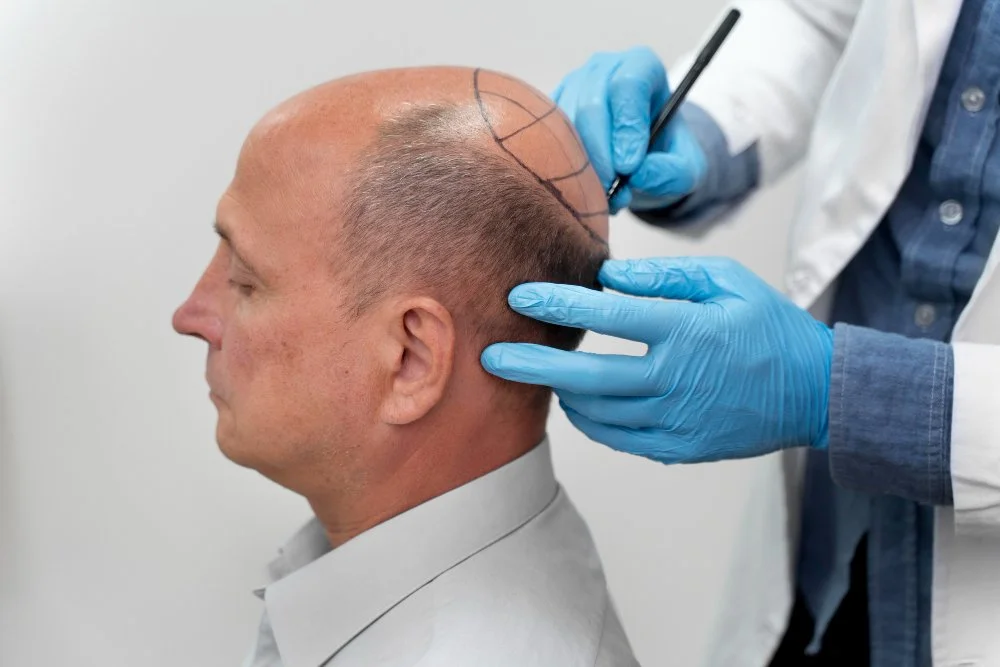
A Hair Transplant is partly medical and partly visual engineering. Hairline placement, density gradients, and angle direction all shape how natural the final appearance seems. Anthropometric facial studies show that natural hairlines are irregular and softly asymmetric rather than perfectly straight.
In Hair Transplant design discussions, specialists often talk about macro design and micro randomness. Macro design refers to the global hairline shape. Micro randomness refers to the small irregular placement patterns that prevent artificial appearance. These concepts are frequently referenced in surgical education material.
The artistic side of a Hair Transplant does not replace science, but it works alongside it. Follicles grow, yet perception defines satisfaction. How density is distributed can visually multiply or reduce the apparent fullness after a Hair Transplant.
Hair Transplant Session Size Does Not Equal Success
It is common to see a Hair Transplant described with large graft numbers. While quantity matters, research discussions repeatedly note that graft survival quality is just as important as graft count. A smaller, well preserved Hair Transplant session may outperform a larger one with rough handling.
Laboratory studies on follicle viability show sensitivity to dehydration, temperature, and mechanical stress. Each Hair Transplant graft is a fragile biological structure during the out of body interval. Preservation environment and timing influence outcomes reported in follow up analyses.
Because of this, advanced Hair Transplant planning focuses on controlled workflow and staging rather than only maximizing extraction totals in a single sitting.
Hair Transplant Recovery Follows a Growth Cycle, Not a Calendar Date
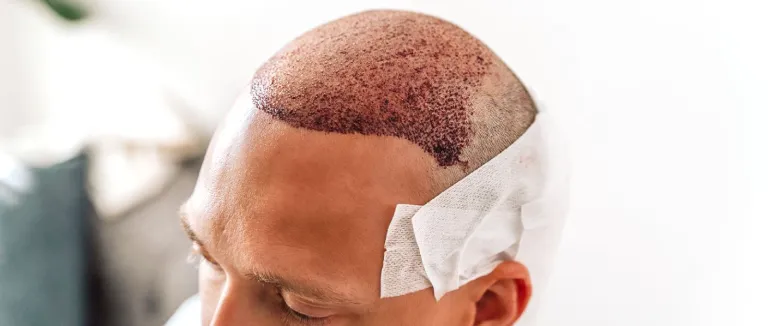
A Hair Transplant follows the biology of hair cycling. After placement, many follicles enter a temporary resting and shedding phase. This pattern is frequently documented in post procedure observational studies.
The visible timeline of a Hair Transplant is therefore cyclical. Early shedding does not automatically signal failure. It is often described as a reset phase before new growth begins. Different follicles restart at slightly different times, which explains uneven early density patterns.
Understanding the cyclic behavior of Hair Transplant follicles helps set realistic expectations. Growth tends to be progressive and variable rather than synchronized.
Hair Transplant Results Depend on Hair Physics
A Hair Transplant result is influenced by the physical properties of hair fibers. Thickness, curl, and color contrast with scalp tone all change how density is perceived. Optical research on hair coverage shows that thicker fibers cast more shadow and create stronger visual fullness.
That means two Hair Transplant cases with equal graft counts may look quite different. Curly or wavy hair may appear denser because of three dimensional spread. Straight fine hair may transmit more light and look lighter even with similar follicle numbers.
For this reason, Hair Transplant evaluation in academic photography studies often controls for lighting and angle, since perception shifts easily with visual conditions.
Hair Transplant Outcomes Include Variability
A Hair Transplant is a medical procedure involving living tissue, and living systems show variation. Published case series frequently report a range of graft survival and growth timing rather than identical outcomes across all patients.
Variables discussed around Hair Transplant outcomes include local healing response, micro circulation differences, and follicle handling time. These factors create a spectrum of results rather than a fixed formula.
Serious Hair Transplant discussions therefore use probability language. They describe tendencies and ranges instead of guarantees. This scientific tone reflects how biological systems behave.
Hair Transplant Quality Is Team Dependent
A Hair Transplant is performed by a coordinated team. Extraction, sorting, preservation, and placement often involve multiple trained professionals working in sequence. Workflow discipline appears repeatedly in procedural quality studies.
Consistency in a Hair Transplant setting is often linked to protocol clarity and repetition. Teams that document steps, timing, and handling standards tend to show more stable process quality across cases.
At WellDemir, the Hair Transplant approach centers on structured planning, case documentation, and transparent explanation. The emphasis stays on method clarity rather than dramatic marketing language.
Hair Transplant Is Usually Part of a Long Term Strategy
A Hair Transplant is often best understood as one stage within a broader hair strategy. Pattern hair loss research shows that progression over time is common. Transplanted follicles may remain, while some native hairs continue to miniaturize.
Because of this dynamic, a Hair Transplant plan is frequently modeled in phases in academic and clinical discussions. Distribution of donor resources, preservation of future options, and density layering are recurring themes.
Thinking of a Hair Transplant as strategic redistribution rather than instant restoration creates a more stable conceptual framework.
Hair Transplant Technology and Method Differences
Modern Hair Transplant practice is shaped by evolving extraction and implantation techniques. The two most discussed approaches are follicular unit extraction and follicular unit transplantation. While both aim to relocate viable follicles, their operational logic differs in how grafts are harvested and prepared.
From a technical standpoint, a Hair Transplant method affects graft handling time, tissue stress, and placement flexibility. Researchers who examine graft survival often focus on hydration control, temperature exposure, and implantation speed. These technical variables may influence outcomes more than brand names or clinic marketing language.
In clinical discussions, technique selection is often described as a planning decision rather than a superiority contest. A well planned Hair Transplant typically aligns method choice with scalp condition, donor density, and hairstyle goals rather than trends.
Hair Transplant Graft Survival and Biological Limits
Every Hair Transplant depends on graft survival, and graft survival depends on biology. Hair follicles are mini organs with metabolic needs. Once extracted, they enter a time sensitive window where oxygen, moisture, and handling precision matter.
Laboratory observations show that Hair Transplant grafts respond to environmental stress in measurable ways. Dehydration, compression, and excessive manipulation may reduce follicle viability. That is why procedural workflow is often discussed in scientific meetings and surgical workshops.
It is also widely discussed that not every transplanted follicle produces identical hair thickness or growth speed. A Hair Transplant redistributes existing follicles, but it does not change their genetic programming. This explains why texture and curl pattern usually remain consistent after transfer.
Hair Transplant Planning and Facial Proportion Design
A Hair Transplant is not only about adding hair. It is also about visual proportion. Hairline design intersects with facial geometry, age projection, and density gradients. Anthropometric studies show that small shifts in hairline angle can change perceived facial balance.
Design focused Hair Transplant planning often studies forehead height ratios and temporal recess patterns. Instead of drawing a straight line, practitioners often design irregular micro patterns that resemble natural growth randomness. This visual irregularity is frequently associated with natural looking outcomes.
Observers of Hair Transplant aesthetics often note that density distribution matters more than raw graft count. Strategic placement can create the perception of fullness even when follicle numbers are moderate.
Hair Transplant Recovery Patterns and Timeline Variations
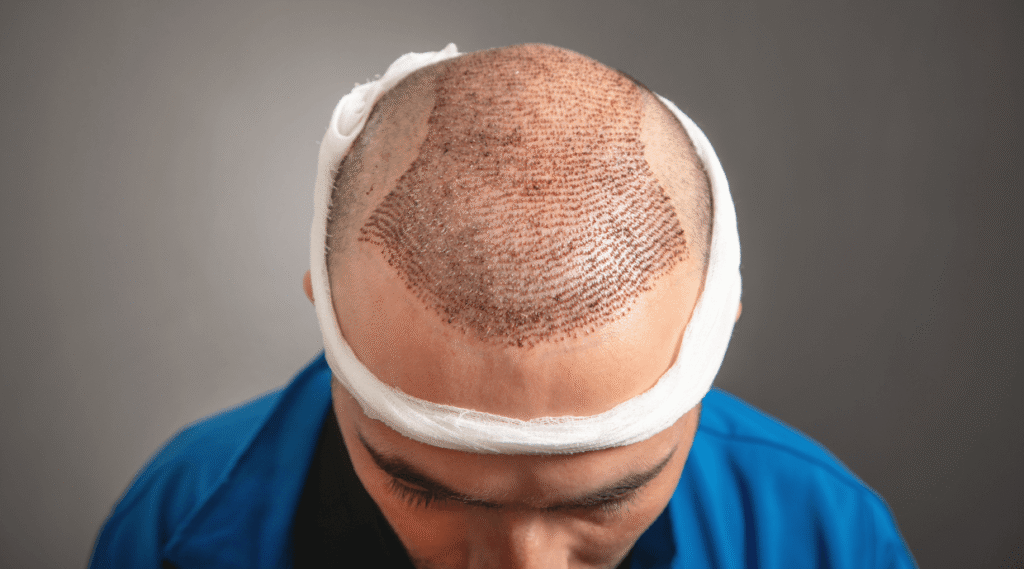
Recovery after a Hair Transplant is often described in phases rather than a single timeline. Early healing involves surface recovery, while deeper follicular adjustment continues below the skin. These layers of recovery do not always move at the same speed.
Clinical follow up data suggests that Hair Transplant growth cycles vary between individuals due to circulation, inflammation response, and baseline hair cycle timing. Some follicles may enter temporary rest before producing visible shafts.
Because of this, Hair Transplant progress is usually evaluated across months rather than weeks. Photographic comparison methods are commonly used in research settings to reduce perception bias and lighting variation.
Hair Transplant Density Expectations vs Visual Density
There is a scientific difference between numeric density and perceived density in a Hair Transplant. Numeric density refers to follicles per square centimeter. Visual density depends on hair diameter, color contrast, curl, and direction.
Optical studies in dermatology show that thicker hair fibers create stronger coverage illusions. This means two Hair Transplant patients with identical graft counts can appear very different in fullness.
Angle control also plays a role. When a Hair Transplant is placed with correct directional flow, overlapping strands increase shadowing and reduce scalp visibility. This is a visual physics effect rather than a biological one.
Hair Transplant Risks Discussed in Scientific Literature
Scientific publications that mention Hair Transplant procedures usually frame risk in terms of probability and variability rather than certainty. Reported complications are typically categorized as minor, moderate, or rare.
Commonly discussed Hair Transplant concerns in journals include temporary shedding, uneven growth phases, and localized sensitivity. These are described as possibilities, not guarantees. Language in medical writing is typically cautious and probability based.
Risk discussion around Hair Transplant is often paired with screening logic. Patient selection, scalp evaluation, and medical history review are frequently mentioned as moderating factors in outcome variability.
Hair Transplant and Long Term Hair Loss Progression
One widely discussed topic is how a Hair Transplant interacts with ongoing hair loss patterns. Transplanted follicles may be more resistant to pattern loss, but surrounding native hair may continue to thin over time.
This creates what researchers sometimes call density contrast evolution after a Hair Transplant. If native hair recedes while transplanted zones remain stable, visual imbalance may appear unless long term planning is considered.
For this reason, Hair Transplant strategy is often described as a staged concept in academic discussions. The idea is not prediction, but scenario awareness.
Hair Transplant Research Trends and Innovation Directions
Current Hair Transplant research often explores graft preservation media, robotic assistance, and bioactive support solutions. Experimental models examine how microenvironment optimization may support follicle resilience.
Innovation conversations around Hair Transplant also include stem cell signaling, growth factor environments, and scaffold concepts. These are still research heavy areas, but they show how interdisciplinary the field has become.
What makes Hair Transplant science interesting is that it sits between surgery, dermatology, cell biology, and visual design. Each discipline contributes a piece of the overall understanding.
Final Perspective on Hair Transplant Decisions
A Hair Transplant combines surgical technique, follicle biology, visual design, and time dependent growth behavior. It is detailed, technical, and surprisingly interdisciplinary. The most valuable preparation before any Hair Transplant conversation is informed understanding rather than hype.

 |
|