Skip to content
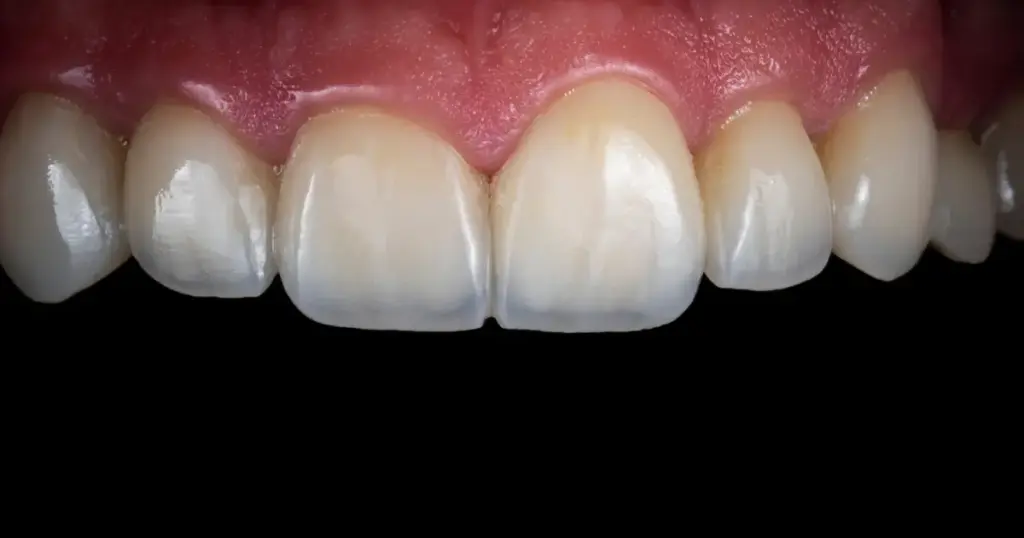
At first glance, translucent teeth can look elegant, almost glass-like, because light seems to pass through the edges of the enamel. Yet many people notice this change and wonder whether it is simply a cosmetic trait, an early sign of enamel wear, or a clue that something deeper may be affecting tooth structure. The answer is rarely one-size-fits-all. In many cases, translucent teeth develop gradually, which is exactly why they can be easy to overlook until the smile begins to appear thinner, clearer, or more fragile than before.
At WellDemir, we believe dental topics should be explained with both clarity and curiosity. Teeth are remarkable biological materials. Enamel is the hardest substance in the human body, yet it is not invincible. When its thickness, mineral content, or surface integrity changes, the tooth may start to appear more transparent at the edges.
Table of Contents
What Are Translucent Teeth and Why Do They Look Clear?
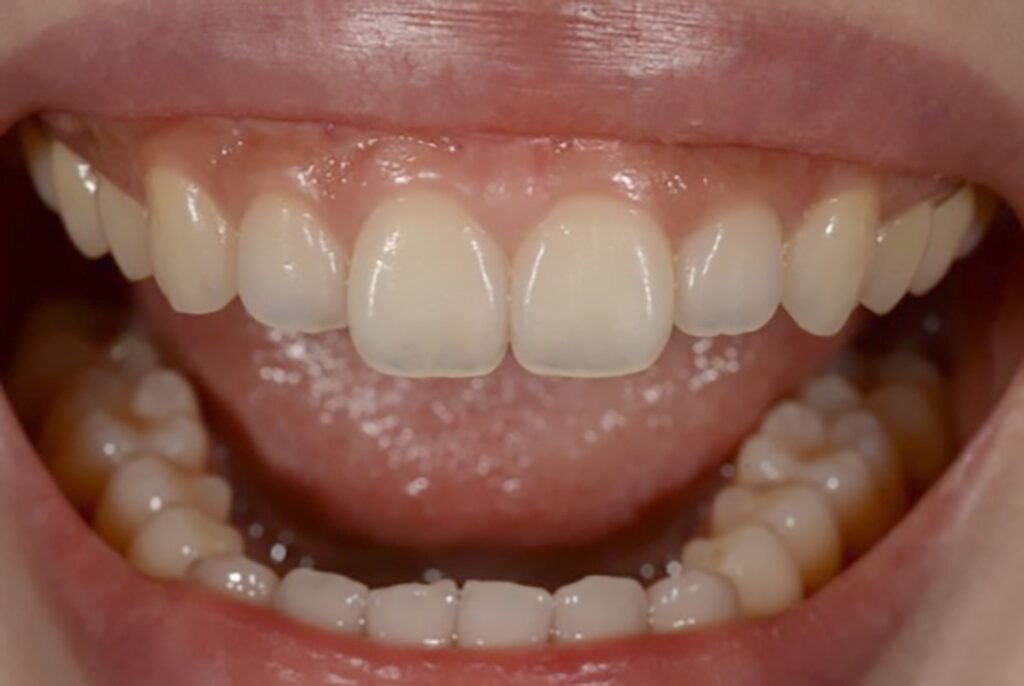
Translucent teeth usually refer to teeth, most often the front teeth, whose edges look semi-transparent rather than solid white or ivory. This appearance happens because enamel naturally interacts with light. Healthy enamel is not fully opaque. It already has a degree of translucency. However, when enamel becomes thinner or less mineral-dense, more light can pass through it, making the edges appear clearer than usual.
Get Free Consultation
Have any questions? Leave your details and we'll get back to you shortly.
This effect is often most visible on the incisal edges, which are the biting edges of the upper and lower front teeth. In photos, these edges may look bluish, grayish, or glassy depending on lighting conditions. That visual shift can be subtle at first. A person may notice that their smile looks less bright at the tips, even if the rest of the tooth still seems normal.
Scientifically speaking, tooth color is influenced by both enamel and dentin. Enamel is the outer layer and dentin is the more opaque layer beneath it. When enamel thins, the balance between these layers changes. In some cases, the edge may look clearer because there is less dense material scattering light. In others, the darker internal tones of the tooth may become more noticeable. This is why translucent teeth are not merely a color issue. They are often a structural and optical issue at the same time.
It is also worth noting that not every transparent-looking edge signals damage. Some people naturally have more translucent enamel, especially in youth, because enamel anatomy and light reflection vary between individuals. The key question is whether the look has changed over time or is accompanied by sensitivity, roughness, or visible wear.
How to Identify Translucent Teeth at an Early Stage
Spotting translucent teeth early can be surprisingly difficult because the change is often gradual. Most people first notice it in bright bathroom lighting, close-up selfies, or side-angle photographs. The front teeth may seem more delicate than before, with edges that no longer appear fully white. Instead, they may reflect light in a way that makes them look thin or almost see-through.
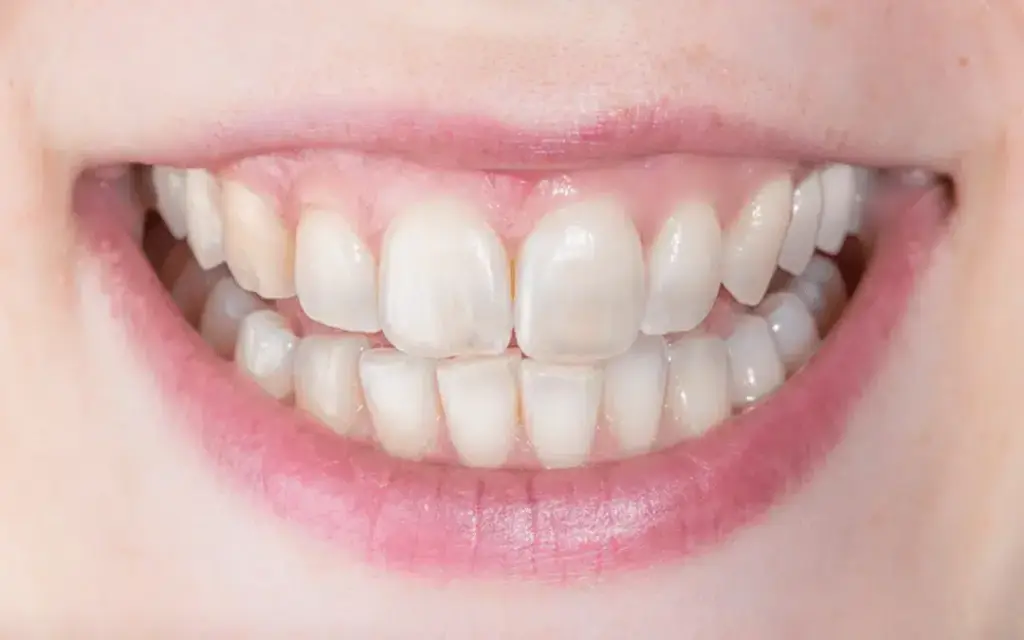
Another common clue is uneven brightness. The middle part of the tooth may remain opaque, while the edges become clearer. In some cases, the enamel can also look smoother or shinier than expected, especially if erosive wear is involved. If the surface appears flattened, chipped, or slightly scalloped, that can add to the transparent effect.
The following table summarizes common visual patterns associated with this appearance:
| Observation | What It May Suggest |
|---|---|
| Clear or glass-like edges | Natural translucency or enamel thinning |
| Bluish or grayish tips | Light passing differently through the enamel |
| Increased sensitivity | Possible enamel loss or surface change |
| Small chips on front teeth | Mechanical wear or weakened edges |
| Dullness plus transparency | Surface erosion or mineral loss |
Identification is not only about what you see. It is also about what has changed. If the teeth have always looked somewhat luminous at the edges, the appearance may simply be part of normal anatomy. If the look is new, more pronounced, or combined with sensitivity to hot, cold, or sweet foods, the pattern becomes more meaningful. The most useful perspective is comparative. Old photos can often reveal whether the smile has changed over months or years.
What Causes Translucent Teeth to Develop?
The causes of translucent teeth are varied, and several factors can overlap. One widely discussed explanation is enamel erosion. Acidic exposure from diet, gastric reflux, or frequent contact with low-pH beverages may gradually affect the outer tooth surface. Over time, this can reduce enamel thickness and alter the way teeth reflect and transmit light.
Mechanical wear is another possibility. Grinding, clenching, and certain bite patterns can slowly wear down incisal edges. This is especially relevant when the transparent look is paired with flattening or micro-chipping. In these cases, the issue may not begin with color at all. It may begin with friction and pressure.
Genetics can also play a role. Some people naturally have thinner enamel or enamel that is more prone to optical translucency. Developmental conditions that affect enamel formation may create a more pronounced transparent effect. In addition, aging can influence the smile’s appearance as enamel changes over time and cumulative wear becomes more visible.
A few commonly discussed contributors include:
- Acid erosion from beverages or digestive causes
- Tooth grinding or jaw clenching
- Naturally thin enamel
- Developmental enamel variations
- Age-related wear patterns
- Repeated mechanical stress on front teeth
The important point is that translucent teeth are not a diagnosis by themselves. They are a visual sign. That sign may point to enamel wear, structural variation, or a combination of both. Because of that, the context matters more than the appearance alone.
For readers interested in the biological basics of enamel, the National Institute of Dental and Craniofacial Research offers helpful background on tooth structure and oral health science.
When Do Translucent Teeth Become a Cosmetic or Functional Concern?
For some people, translucent teeth are mostly an aesthetic concern. The smile may appear less uniform, less bright, or more fragile in photographs. In cosmetic dentistry, opacity, texture, and light reflection are central to how a smile is perceived. Even small changes in translucency can alter the visual balance of the front teeth.
For others, the issue may go beyond appearance. If the transparent effect accompanies sensitivity, roughness, chipping, or shortened edges, it can suggest that the enamel is not only looking different but behaving differently. A tooth edge that appears thinner may also be more vulnerable to future wear, though the degree varies from one person to another.
Context matters here as well. A naturally translucent incisal edge in an otherwise healthy tooth may be considered a normal smile characteristic. In fact, some high-end aesthetic restorations intentionally recreate a slight translucent effect because it can look natural and lifelike. Concern tends to grow when the translucency appears suddenly, becomes more obvious over time, or occurs together with shape changes.
This is where evaluation becomes less about panic and more about pattern recognition. Dentists often consider several variables at once, including enamel thickness, bite force, acid exposure history, symmetry, and whether the effect is localized or generalized. The same visual sign can mean different things in different mouths.
3 Ways to Fix Translucent Teeth
The phrase “fix” can mean different things depending on whether the goal is cosmetic blending, structural reinforcement, or both. There is no universal answer, but three commonly discussed approaches stand out when addressing translucent teeth.
1. Composite Bonding for Surface Enhancement
Composite bonding is frequently used when the transparent effect is mild to moderate and mostly visible at the edges. In this approach, a tooth-colored resin material is shaped and polished to improve opacity, contour, and balance. One reason bonding is often discussed in relation to translucent teeth is its flexibility. It can be tailored to small areas and adjusted with artistic precision.
From an aesthetic perspective, bonding can reduce the glass-like look by adding material where enamel appears too thin or visually uneven. From a functional perspective, it may also help restore edge definition if minor chipping is present. Results depend heavily on planning, shade selection, and the clinician’s understanding of how natural teeth transmit light.
2. Porcelain Veneers for More Noticeable Smile Changes
When translucent teeth are more advanced, more visible across multiple front teeth, or part of a broader cosmetic concern, porcelain veneers may be considered. Veneers are thin ceramic shells designed to cover the front surface of teeth. They can alter color, shape, brightness, and translucency in a controlled way.
Porcelain is especially valued in aesthetic dentistry because it can mimic natural enamel while also masking undesirable transparency. In cases where the teeth look both worn and visually inconsistent, veneers may offer a more comprehensive visual transformation. Their appeal lies in the ability to balance opacity with lifelike depth, rather than creating a flat, artificial white surface.
Readers exploring restorative materials may also find useful context through the American Dental Association, which provides educational information on oral care and dental treatments.
3. Addressing the Underlying Wear Pattern
Sometimes the best way to approach translucent teeth is not only to change how they look, but also to understand why they began looking that way. If grinding, clenching, erosive habits, or bite-related pressure are involved, aesthetic treatment alone may not fully address the pattern. In such cases, the underlying forces become part of the conversation.
This does not mean every transparent edge requires a complex intervention. It simply means that long-term planning often considers both appearance and cause. For example, if front teeth show repeated micro-wear, preserving future structure may become just as important as improving the current look. In scientific terms, this is a more conservative and behavior-aware approach. In plain terms, it means asking not only “How can this be covered?” but also “Why did it happen?”
How Dentists Evaluate Tooth Transparency Scientifically
The science behind translucent teeth is more fascinating than it first appears. Dentists do not evaluate tooth transparency based on color alone. They often look at enamel thickness, surface texture, light transmission, edge morphology, and how the tooth interacts with surrounding structures. Photography, magnification, and shade analysis can all play a role in understanding the smile more precisely.
Optical properties matter because teeth are dynamic visual structures. A tooth may look opaque in one light source and translucent in another. This is why clinical evaluation often differs from what a person sees in a single mirror at home. Professional analysis may also involve checking whether the enamel surface is smooth, softened, pitted, or mechanically worn.
From a materials perspective, modern dentistry borrows concepts from both biology and engineering. Enamel is strong but brittle. Dentin is softer but more supportive. When the outer layer changes, light behavior changes too. That is why translucent teeth can be both a visual clue and a material science story. The smile is not just white. It is layered, reflective, and structurally complex.
Can Translucent Teeth Be Prevented From Looking Worse?
In many discussions around translucent teeth, the real concern is progression. People often want to know whether the transparent look is likely to stay the same or become more noticeable. The answer depends on the cause. Stable, natural translucency may remain relatively unchanged. Wear-related translucency may evolve over time if the contributing factors continue.
Observation is often the first useful step. Comparing photographs, monitoring sensitivity, and noting whether edges chip or flatten can reveal patterns. This kind of attention is not about self-diagnosis. It is about noticing whether the appearance is static or changing. The distinction matters because cosmetic translucency and active wear can look similar in the early stages.
A practical way to think about translucent teeth is to separate appearance from trend. Appearance is what the teeth look like today. Trend is whether they are becoming more transparent, more fragile, or more uneven over time. A smile that looks slightly translucent but remains stable may call for a different conversation than a smile that keeps changing year after year.
Final Thoughts on Understanding Translucent Teeth
Translucent teeth can be subtle, beautiful, confusing, or concerning depending on the context. In some smiles, they are part of normal enamel anatomy. In others, they may reflect erosion, wear, or structural thinning that changes both aesthetics and function. The most useful way to understand them is not as a single problem, but as a visual sign with multiple possible explanations.
At WellDemir, we see dental education as more than listing symptoms and treatments. It is about helping people read the small signals their smile may be sending. The transparent edge of a tooth might be harmless, or it might be the first visible clue of change. Either way, understanding how light, enamel, and structure interact makes the subject far less mysterious.
If there is one takeaway, it is this: translucent teeth are rarely just about color. They sit at the crossroads of biology, optics, material science, and smile aesthetics. And that makes them one of the most interesting little details in modern dental observation.

 |
|