Skip to content
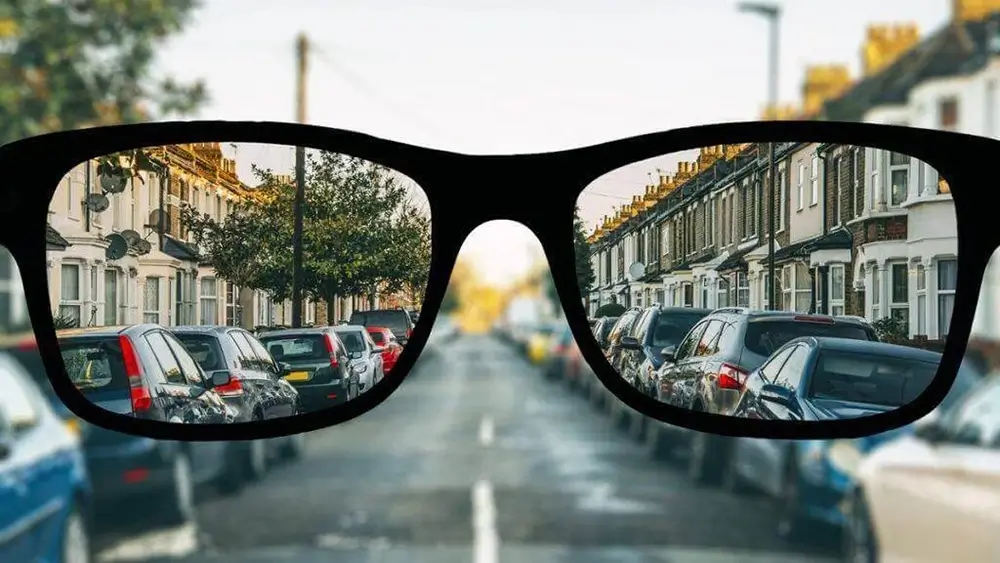
Maintaining standard daily wellness relies heavily on the continuous health of our sensory systems, yet progressive shifts in eyesight often develop without clear warning. Struggling to read distant road signs, experiencing regular brow fatigue after a workday, or noticing that distant landscapes look continuously blurred are common indicators of a changing optical system. When your vision remains clear for close-up tasks like reading a smartphone but falls out of focus for everything else, it point directly to a widespread structural elongation known as myopia. This state is not an ocular disease; it is a straightforward refractive variation concerning the physical dimensions of your eye chamber.
At WellDemir, we focus on bridging the gap between international patients and advanced ophthalmic protocols that restore permanent sensory freedom. Living with a refractive error can create a constant, exhausting reliance on external optical aids. Fortunately, modern corrective medicine provides exceptionally safe, predictable pathways to reshape your visual future.
As advanced refractive surgery in 2026 utilizes micron-level digital imaging, custom corneal mapping, and ultra-fast cold laser systems, achieving sharp, unassisted long-range focus has become an accessible, routine, and life-changing reality.
Get Free Consultation
Have any questions? Leave your details and we'll get back to you shortly.
Table of Contents
What Is Myopia?
To manage your visual habits effectively, it is helpful to look at what is myopia from an anatomical perspective. A healthy, fully balanced eye features a round corneal dome and a proportional axial length that allows light to map perfectly onto the retina.
When comparing myopia vs hyperopia, the optical mechanics are reversed. In hyperopia (farsightedness), the eyeball is too short, causing light to focus behind the retina and making close objects blur. In a myopic eye, the physical length of the eyeball is slightly too long. Because the distance between the front lens and the back retina is extended, light rays from a distance cross paths too early inside the eye chamber.
This early focus means that by the time the light rays physically strike your retina, they have scattered, creating a blurred background effect for everything situated in the distance.
What Causes Myopia to Develop And Worsen?
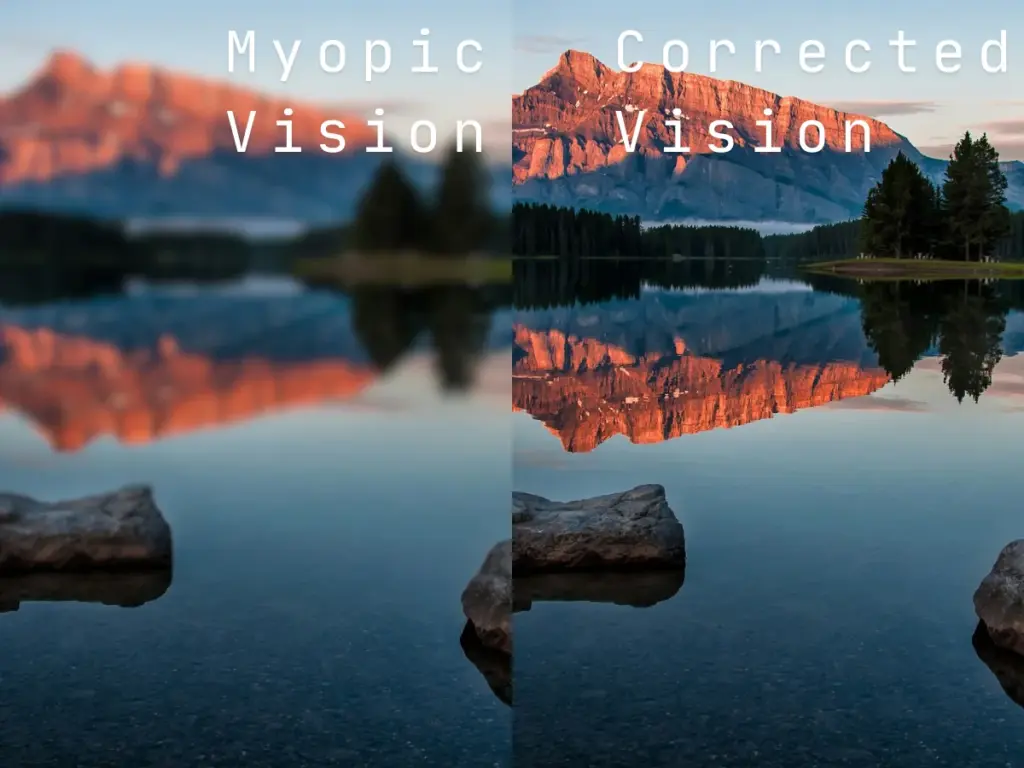
When individuals observe their optical prescriptions increasing year after year, they naturally seek to understand what causes myopia to change its structural boundaries. The baseline shape of your eye is heavily governed by inherited genetics; children with two nearsighted parents have a significantly higher statistical likelihood of developing the condition during their school-age years.
Beyond genetic markers, environmental demands play a major role in accelerating progressive myopia during childhood and early adulthood. Spending extended, uninterrupted hours focusing on near-range tasks places continuous mechanical strain on the internal focusing muscles of the eye. This near-focus tension can stimulate the teenage eyeball to physically elongate further, causing the distance prescription to increase.
When a prescription shifts into exceptionally severe levels, it transitions into high myopia. This severe structural stretching requires consistent monitoring by a specialist, as the physical thinning of the rear eye walls can elevate the lifetime risk of developing high myopia complications, including premature cataracts, localized macular changes, or structural retinal tears.
Recognizing The Everyday Symptoms of Myopia
Because structural changes inside the eye chamber typically advance slowly over several seasons, many individuals develop unconscious habits to cope with their changing vision before seeking an assessment. However, your body displays clear, repetitive myopia symptoms when your optical focus is out of balance.
The most frequent warning sign is a persistent blur when trying to identify objects located more than a few meters away, such as street names or television text. To compensate for this blur, individuals often find themselves constantly squinting, a physical reflex that temporarily changes the shape of the eyelids to filter out scattered light.
Over the course of a day, this continuous squinting and inner muscle tension can trigger heavy eye fatigue, a raw burning sensation in the eyelids, and chronic tension headaches localized around the forehead or temples. Furthermore, the condition can complicate evening travel, as the scattered light rays generate large, overlapping halos around street lamps, making myopia night driving a challenging and stressful task without proper correction.
How to Fix Myopia Permanently?
When exploring solutions past temporary daily steps, patients frequently ask can myopia be cured completely. While a structural variation cannot be reversed by diet or lifestyle changes, modern refractive procedures can adjust the corneal curvature permanently, allowing light to focus perfectly without assistance.
- Advanced Topography-Guided LASIK: This popular treatment uses ultra-fast excimer lasers to gently reshape the micro-contours of the cornea. By flattening the center of the corneal dome, the laser shifts the focal point back onto the retina, allowing patients to put away their heavy myopia glasses permanently.
- Flapless SMILE Pro Technology: As a premier option for laser eye surgery Turkey pathways, this modern, flapless technique corrects vision through a tiny keyhole incision. By removing a micro-layer of tissue from inside the cornea without creating a surface flap, it preserves maximum structural integrity, making it an exceptional choice for active individuals or those with moderate dry eye tendencies.
- Implantable Collamer Lenses (ICL): For individuals seeking the best non-invasive vision correction for severe myopia, placing a specialized phakic lens inside the eye framework offers a highly stable permanent alternative. These micro-thin, biocompatible lenses sit securely behind the iris, resolving extreme prescriptions that fall outside the safe boundaries of traditional laser reshaping.
How to Slow Down Vision Degradation?
While adults with a stable eye structure can opt for permanent laser correction, incorporating healthy vision hygiene into your daily routine is an essential step to minimize daily strain and protect your long-term wellness.
- Incorporate the 20-20-20 Rule: When spending extended hours on digital devices, pause every 20 minutes to look at an object 20 feet away for at least 20 seconds. This simple habit releases the inner focusing muscles, preventing chronic accommodation spasms.
- Prioritize Daily Outdoor Activity: Clinical studies show that regular exposure to natural ambient sunlight stimulates the healthy release of dopamine within the eye, a biochemical process that helps regulate and stabilize axial eye growth during developmental years.
- Maintain Accurate Corrective Prescriptions: Wearing precisely calibrated myopia lenses, specialized spectacles for myopia, or modern eye glasses for myopia ensures your brain receives perfectly focused images, preventing your eyes from straining unnecessarily.
| Corrective Approach | Delivery Method | Optimal Prescription Range | Main Lifestyle Advantage |
| Spectacles for Myopia | External curved lenses | Mild to severe errors | Simple, accessible use with zero physical contact |
| Myopia Lenses (Contacts) | Direct corneal placement | Mild to high prescriptions | Restores full peripheral focus for sports and active tasks |
| Laser Eye Surgery Turkey | Precision laser reshaping | Moderate to high errors | Permanently eliminates the daily hassle of glasses and contacts |
| Implantable Collamer Lens | Internal micro-lens implant | Severe or extreme high myopia | Provides stable, high-definition focus for thin corneas |
Why choose Turkey for your laser vision correction?
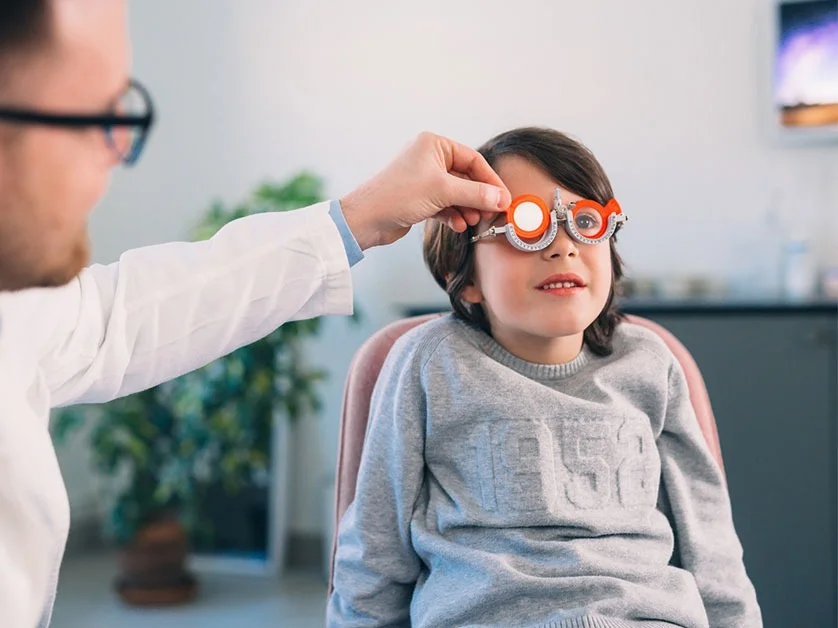
Organizing your vision rehabilitation through a coordinated international care pathway in Istanbul offers a substantial practical advantage for patients seeking top-tier clinical expertise.
Our partner clinics in Turkey utilize cutting-edge 2026 digital infrastructure, including automated wavefront diagnostics and advanced flapless laser suites, ensuring your surgical mapping is handled with absolute biological precision. Because regional operational costs and medical facility fees are highly competitive, patients can access elite ophthalmic surgeons and premium custom treatments at a value that fits comfortably within their personal wellness budgets.
Booking your care with WellDemir combines advanced medical accuracy with a smooth, fully supported travel experience, allowing you to transform your vision safely while enjoying a historic and vibrant destination.
FAQ: Frequently Asked Questions
Can laser eye surgery fully correct high myopia permanently?
Yes, modern laser platforms can permanently correct high degrees of nearsightedness with high predictability. However, if an individual’s prescription is exceptionally severe or if their corneal tissue is naturally thin, an experienced surgeon may select a premium Implantable Collamer Lens (ICL) as a safer, more structurally stable alternative to achieve permanent clarity.
What is the difference between stable myopia and progressive myopia?
Stable myopia refers to an optical state where the physical elongation of the eyeball has ceased, causing the prescription to remain unchanged for at least one to two years, which is a key requirement for laser surgery. Progressive myopia is a state where the eye structure continues to lengthen, causing the distance vision to degrade continuously over consecutive seasons.
At what age does myopia usually stop progressing?
For the majority of individuals, the physical growth of the eyeball mirrors general skeletal development, meaning that myopic prescription shifts typically slow down and stabilize completely between the ages of 18 and 24, allowing for a safe permanent laser evaluation.

 |
|