Skip to content
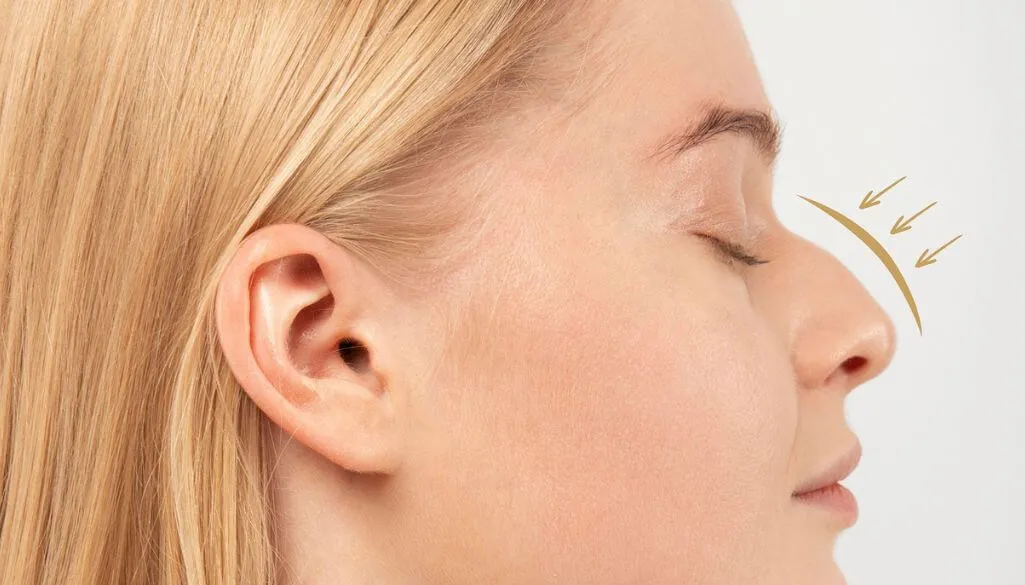
Facial features play a definitive role in defining individual identity, expression, and structural symmetry. Among these features, the nasal structure stands out as the literal centerpiece of facial architecture. A particularly distinct and historically prominent variation is the nose aquiline shape. Characterized by its strong, curved silhouette, this nasal type has captured the attention of artists, anthropologists, and medical professionals for centuries. It carries a sense of distinction, balancing strong structural definitions with bold facial expressions.
At WellDemir, we understand that cosmetic refinement is never about erasing character; it is about achieving balance. Many individuals with this specific profile look for ways to soften their facial lines while preserving their unique ethnic inheritance.
As medical tourism trends in 2026 lean heavily toward personalized, protective procedures, understanding the anatomy of a hooked profile is the first step toward making an informed decision about cosmetic refinement.
Get Free Consultation
Have any questions? Leave your details and we'll get back to you shortly.
Table of Contents
What is an Aquiline Nose? Anatomy of the “Roman Profile”
To fully comprehend this structural variation, one must look at what is aquiline nose definition in a clinical and aesthetic sense. The word “aquiline” is derived from the Latin aquilinus, which translates to “eagle-like,” referencing the curved beak of a bird of prey. Structurally, an aquiline nose features a visible convexity along the nasal bridge rather than a straight or concave slope. This prominent ridge gives rise to the classic term aquiline roman nose, a feature highly idealized in ancient sculptures as an emblem of leadership, dignity, and nobility.
The anatomy of this profile involves a combination of both bony and cartilaginous elements. The upper third of the bridge consists of the nasal bones, which may project outward more than average. The middle third involves the upper lateral cartilages, which can extend this prominent curve further down the bridge. In many cases, an aquiline nose male profile exhibits a more pronounced, angular projection, while an aquiline nose female structure may present a slightly softer, though still distinct, convex line.
A subtle aquiline nose might only reveal its hook during a full side-view profile, whereas a more prominent structure is noticeable from multiple angles. Even a small aquiline nose can alter the perceived balance of the forehead and chin due to its unique skeletal projection.
What Causes an Aquiline Nose Bridge to Form?
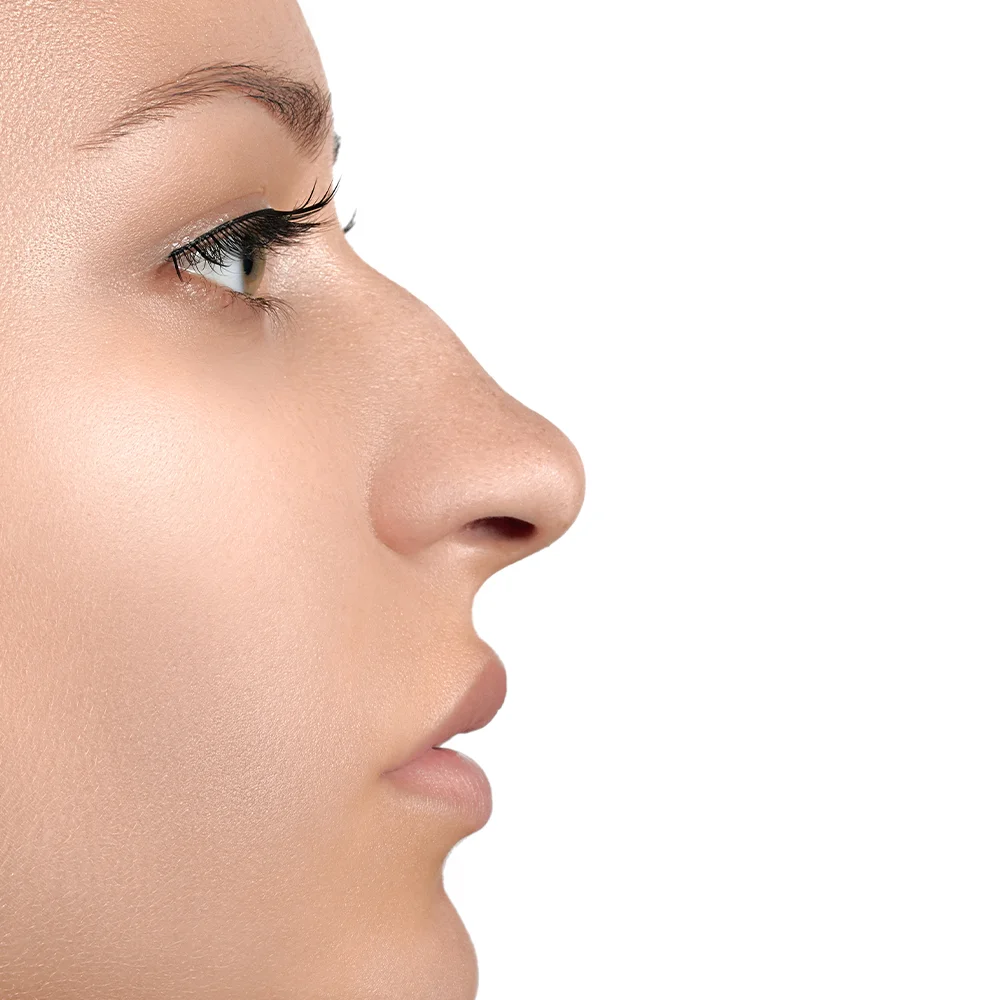
When evaluating the facial structure, patients frequently ask: what causes an aquiline nose bridge? The formation of a hooked or curved nasal profile is primarily a matter of developmental anatomy and genetic inheritance.
- Genetic Preposition: The shape of our skeletal framework is largely determined by the genes passed down through generations. The prominence of the nasal bones and the growth pattern of the septal cartilage are inherited traits.
- Hormonal Development: During puberty, the nasal bones and cartilage undergo accelerated growth. This developmental surge can cause a previously straight childhood nose to develop a noticeable dorsal curve or hump during adolescence.
- Physical Trauma: An injury to the face during childhood or early adulthood can alter the growth plates of the nasal bones. As the bone heals, it may form a callous or excess bony tissue along the bridge, creating an acquired hooked appearance.
- Natural Aging: Over time, the soft tissue and fat pads over the nasal bridge thin out. Simultaneously, gravity pulls the nasal tip slightly downward, making a minor, hereditary curve appear much more prominent later in life.
Correcting a Hooked Profile: How Aquiline Nose Rhinoplasty Works
For individuals who feel their nasal bridge disrupts the symmetry of their face, surgical refinement offers a permanent solution. An aquiline roman nose can be reshaped to achieve a straighter bridge and a more proportional tip-to-lip angle.
Dorsal Hump Reduction and Bridge Refinement
The primary phase of correcting a hooked profile involves reshaping the prominent ridge. The surgeon carefully accesses the nasal framework to reduce the excess bone and cartilage that forms the apex of the curve. It is crucial to perform this step with absolute precision; over-reduction can lead to a scooped-out appearance that looks unnatural on a face accustomed to strong features. The goal is often to create a straight or softly sloped bridge line that harmonizes with the patient’s forehead and chin projection.
Adjusting the Drooping Nasal Tip
A prominent bridge curve is often paired with a drooping nasal tip, a combination that accentuates the hooked look. During the procedure, the surgeon lifts and secures the lower lateral cartilages using natural grafts taken from the septum. This step adjusts the nasolabial angle—the angle between the nose and the upper lip. Elevating the tip prevents it from plunging downward, especially when the patient smiles or speaks, balancing the newly smoothed bridge line.
Open vs. Closed Rhinoplasty for an Aquiline Nose
When planning a surgical transformation, choosing the right approach is essential for achieving predictable results. The two primary techniques used in modern surgery are open vs. closed rhinoplasty.
Surgical Approaches
- Open Rhinoplasty: External incision, maximum visibility for major humps.
- Closed Rhinoplasty: Internal incisions only, ideal for subtle refinements.
Open rhinoplasty involves a tiny incision across the columella—the strip of tissue separating the nostrils. This approach gives the surgeon complete visibility of the nasal framework, making it highly effective for restructuring large dorsal curves or performing complex tip grafting. Closed rhinoplasty, on the other hand, utilizes incisions strictly inside the nostrils. While this leaves no external scars and can reduce initial healing times, it offers limited visibility and is generally reserved for a subtle aquiline nose that requires minimal structural manipulation.
Can You Reshape an Aquiline Nose Without Surgery?
For those who are reluctant to undergo an operative procedure, looking into how to fix an aquiline nose without surgery is a common path. This alternative approach is known as non-surgical rhinoplasty or liquid rhinoplasty.
Using strategic injections of hyaluronic acid-based dermal fillers, a clinician can temporarily alter the contours of the nasal bridge. Instead of removing the hump, the filler is injected into the depressions above and below the curve—specifically at the radix (between the eyes) and near the tip. This technique camouflages the hook, creating the optical illusion of a perfectly straight nasal bridge.
While this option offers immediate results with zero downtime, it has limitations. It cannot reduce the physical size of a large nose; it can only add volume to smooth out lines. Furthermore, the results are temporary, typically lasting between 9 to 18 months as the body naturally absorbs the filler material.
The 2026 Approach: Can Ultrasonic Rhinoplasty Fix a Hooked Nose?
Medical technology in 2026 has significantly changed how surgeons handle bone restructuring. A common question among patients today is: can ultrasonic rhinoplasty fix a hooked nose?
Traditional rhinoplasty relies on manual tools like chisels and rasps to lower a bony hump, which can cause trauma to the surrounding blood vessels and soft tissue. Ultrasonic rhinoplasty, also known as Piezo surgery, utilizes high-frequency sound waves to gently sculpt the nasal bones. This device acts exclusively on hard osseous tissue, leaving the delicate cartilage, skin, and mucosal linings untouched.
By using ultrasonic energy, surgeons can smooth down an aquiline roman nose bridge with extreme precision, reducing post-operative bruising, swelling, and pain. This technological advancement has made the recovery period much more manageable for international patients who travel for care.
Aquiline Nose Rhinoplasty Cost in Turkey 2026
Turkey has established itself as a global epicentre for advanced facial plastic surgery. The Aquiline nose rhinoplasty cost in Turkey 2026 represents a major advantage for patients seeking world-class care without the prohibitive pricing found in Western Europe or the United States.
The lower cost of healthcare packages in Turkey is a reflection of local economic operational factors and competitive medical markets, rather than a compromise on quality. When booking through WellDemir, these comprehensive packages frequently cover the pre-operative 3D imaging, ultrasonic surgical fees, luxury hotel accommodation, and private VIP transfers across Istanbul, ensuring a seamless and well-supported medical stay.
Recovery and Healing Stages After Hooked Nose Correction
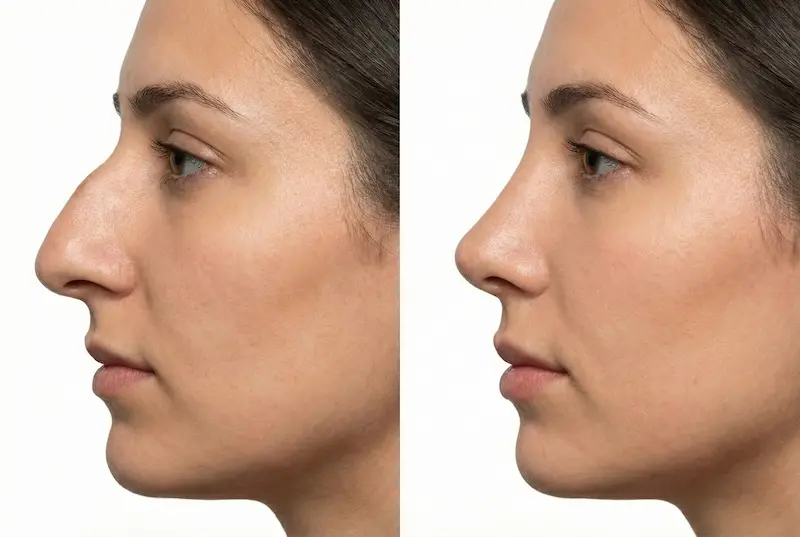
The path to your final before and after aquiline nose job results requires patience, as nasal tissues take time to settle completely into their new configuration.
- Week 1 (The Splint Phase): A protective plastic or metal splint is worn on the nose to stabilize the new bone structure. Minor swelling and bruising around the eyes are normal during these initial seven days.
- Week 2: The splint is removed by the medical team. While the nose will look instantly straighter, it will still carry a significant amount of fluid retention. Most patients can return to remote work or light social activities at this stage.
- Months 1 to 3: The vast majority of the swelling resolves, especially along the bridge. The profile looks clean and defined, allowing you to see the true shape of your new nasal line.
- Year 1: The final refinement occurs at the nasal tip, where the skin tightens over the structural cartilage. By the twelfth month, the internal healing process is complete, revealing the permanent, balanced results of your procedure.
FAQ: Frequently Asked Questions
Can you flatten an aquiline nose bridge?
Surgical rhinoplasty can safely reduce and straighten a curved or hooked nasal bridge. The surgeon lowers the excess bone and cartilage to create a smoother, flatter profile that blends seamlessly with the rest of your facial features.
Why does my nose look hooked when I smile?
When you smile, a specific muscle called the depressor septi nasi pulls the nasal tip downward. If you already have a prominent bridge, this downward pull amplifies the contrast, making the nose look more hooked or curved during facial expressions.
Is an aquiline nose genetic?
Yes, nasal bone structure and cartilage distribution are highly hereditary traits. If one or both of your biological parents possess a prominent or curved bridge, there is a strong likelihood that you will develop a similar profile during adolescence.
What country is an aquiline nose from?
An aquiline nose is not native to any single country or ethnic group. It is a naturally occurring genetic trait found globally across various populations, including Mediterranean, Middle Eastern, Native American, European, and African heritages.
What famous people have aquiline noses?
Many aquiline nose celebrities are celebrated for their strong, memorable profiles. Well-known figures like Adrien Brody, Tom Hiddleston, Sofia Coppola, and Meryl Streep show that a prominent nasal structure can add immense character and timeless elegance to a face.

 |
|