Skip to content

Vision is a delicate balance of light, anatomy, and neurological processing. When that balance is disrupted by a bleed inside eye, the experience can be deeply disorienting. Many people use phrases like “my eye is bleeding inside” to describe a sudden change in their vision, often accompanied by shadows or a red hue. While the sight of blood in the eye is alarming, it is essential to distinguish between a harmless surface broken vessel and a true internal hemorrhage.
At WellDemir, we prioritize clarity—both in your vision and in your understanding of your health. In 2026, advancements in diagnostic imaging and surgical precision mean that a bleeding inside eye is a treatable condition, provided the patient acts quickly. This guide explores the mechanisms, causes, and solutions for internal ocular bleeding.
Table of Contents
What Does a Bleed Inside the Eye Actually Mean?
To understand a bleed inside eye, one must look at the internal geography of the organ. The eye is filled with a gel-like substance called the vitreous humor in the back and a watery fluid called the aqueous humor in the front. When we talk about an internal bleed, we are usually referring to one of two conditions:
Get Free Consultation
Have any questions? Leave your details and we'll get back to you shortly.
- Vitreous Hemorrhage: Blood leaks into the vitreous gel in the back of the eye. This is the most common form and is often linked to retina issues.
- Hyphema: Blood collects in the front chamber of the eye, between the cornea and the iris. This is frequently caused by direct physical trauma.
Because the inside of eye bleeding occurs in areas that should be perfectly clear for light to pass through, the primary symptom is not usually pain, but rather a sudden obstruction of sight. Light cannot penetrate the blood-filled fluid, which the brain interprets as dark spots or total cloudiness.
Red Spot vs. Internal Bleeding: How to Tell the Difference
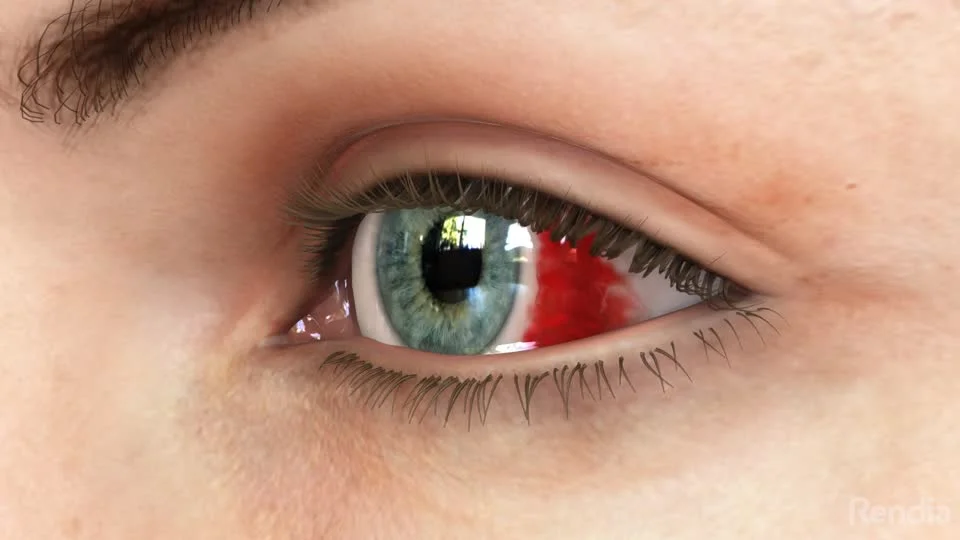
A very common point of confusion is the difference between a subconjunctival hemorrhage and an internal bleed. If you look in the mirror and see a bright red spot on the white part of your eye, but your vision is perfectly clear and there is no pain, you likely have a subconjunctival hemorrhage. This is essentially a “bruise” on the eye’s surface and is generally harmless.
However, a true bleed inside eye is often invisible from the outside. You cannot see the blood by looking in a mirror; instead, you “see” it from the inside as a change in your visual field. If you experience sudden blood in eye with blurred vision, it is a clinical sign that the bleeding is internal.
| Feature | Subconjunctival Hemorrhage (Surface) | Internal Bleeding (Vitreous/Hyphema) |
| Visibility | Bright red spot visible in a mirror | Usually invisible to others |
| Vision | Perfectly normal | Blurred, hazy, or dark floaters |
| Pain | None (perhaps slight irritation) | May include pressure or ache |
| Urgency | Low (resolves like a bruise) | High (Medical Emergency) |
Top Causes of Internal Eye Bleeding
Identifying what causes bleeding inside the eye is the most critical step for an ophthalmologist. The blood itself is a symptom; the source of the leak is the actual disease.
Diabetic Retinopathy: The Leading Cause
Diabetes can weaken the small blood vessels in the retina. In advanced stages, known as proliferative diabetic retinopathy, the eye attempts to grow new blood vessels to replace damaged ones. However, these new vessels are fragile and prone to leaking. This is the most frequent cause of a bleed inside eye globally.
Eye Trauma and Physical Injury
A direct blow to the face or eye can cause the iris or the ciliary body to bleed, leading to a hyphema. In 2026, sports injuries remain a common cause, emphasizing the need for protective eyewear. Trauma can also cause a vitreous hemorrhage by physically tearing the delicate vessels of the retina.
Retinal Tears and Detachments
When the retina pulls away from its underlying tissue, it can tear the blood vessels that supply it. retinal detachment is a critical emergency. If you notice a “curtain” falling over your vision along with a bleed, immediate surgical intervention is necessary to prevent permanent blindness.
Signs and Symptoms: When Should You Be Worried?
Since you often cannot see an internal bleed, you must rely on your visual perceptions. Eye redness and vision loss are a concerning combination, but internal bleeds have specific “signatures.”
Common symptoms include:
- Floaters: Seeing dark spots, “cobwebs,” or streaks that move when you move your eyes.
- Red Tint: A reddish wash over everything you see.
- Blurred Vision: A sudden haziness that doesn’t clear with blinking.
- Photopsia: Seeing flashes of light, which often indicates the retina is under stress.
If you find yourself saying, “my eye is bleeding inside,” do not wait for the symptoms to worsen. The earlier the source is identified, the higher the chance of total visual recovery.
Treatment Options: From Rest to Surgery

Once an ophthalmologist confirms the inside of eye bleeding, the treatment plan is tailored to the severity and the cause. In 2026, the focus has shifted toward minimally invasive options that prioritize rapid recovery.
Observation and Lifestyle Adjustments
In minor cases, such as a small vitreous hemorrhage where the retina is still intact, a doctor may suggest “watchful waiting.” You might be asked to sleep with your head elevated at a 45-degree angle to allow the blood to settle at the bottom of the eye, away from your line of sight.
Intravitreal Injections and Laser Therapy
If the bleeding inside eye causes are related to diabetes, doctors may use Anti-VEGF injections. bu iğneler, sızıntı yapan yeni damarların büzülmesini sağlar. Laser photocoagulation is another tool used to “seal” leaking vessels and prevent future hemorrhages.
Vitrectomy: When Surgery is Necessary
If the blood does not clear on its own or if there is an underlying retinal detachment, a vitrectomy is performed. This is a highly specialized eye surgery Turkey is renowned for. The surgeon removes the blood-filled vitreous gel and replaces it with a clear saline solution, gas, or oil bubble. Modern micro-incisional vitrectomy (MIVS) allows for sutureless surgery and significantly faster healing times.
How Long Does It Take to Clear?
The question of “how long does a bleed inside eye take to heal” varies significantly. A minor bleed might be reabsorbed by the body within a few weeks. However, more extensive hemorrhages can take months to clear without surgical help.
If surgery is performed, initial recovery takes about 1 to 2 weeks, while full visual stabilization can take up to 3 months. At WellDemir, we provide a structured post-operative care plan to ensure that your recovery is monitored by professionals every step of the way.
FAQ
Can a bleed inside the eye clear on its own?
Yes, in some cases, the body’s natural processes can reabsorb the blood. However, this only happens if the underlying cause (like a leak) has stopped. Even if it clears, the “why” must be investigated to prevent a recurrence.
Is it safe to fly with a bleed inside the eye?
Generally, no. Pressure changes in an airplane cabin can affect intraocular pressure. If you have a gas bubble in your eye from a recent surgery, flying is strictly prohibited as the gas can expand and cause permanent damage.
Does stress cause eye bleeding?
Stress can lead to a sudden spike in blood pressure (hypertension). While stress itself doesn’t “break” a vessel, a hypertensive crisis can certainly cause a bleed inside eye or a subconjunctival hemorrhage.
Is a bleed inside the eye a medical emergency?
If it is accompanied by vision loss, flashes of light, or a sudden onset of floaters, yes. It could be a sign of retinal detachment, which requires treatment within 24–48 hours to save vision.
How long does a bleed inside eye take to heal?
Without surgery, it may take 4 to 12 weeks for the body to absorb the blood. With a vitrectomy, the blood is removed instantly, but the eye takes several weeks to heal from the procedure.

 |
|