Skip to content
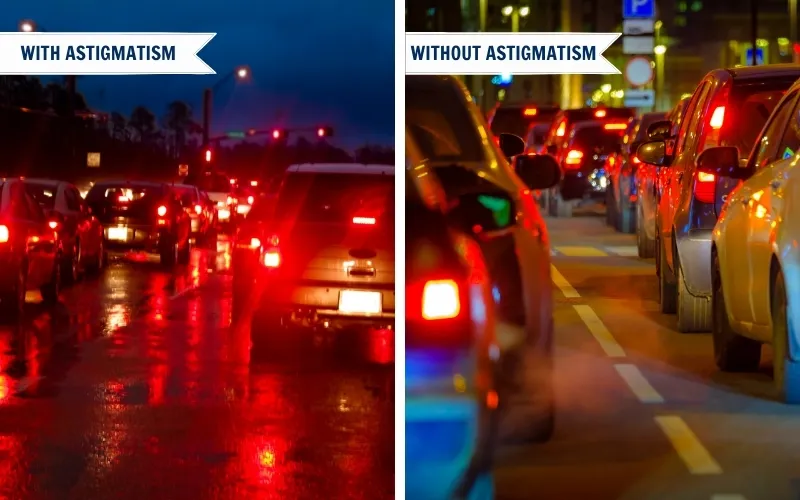
Maintaining optimal physical wellness requires consistent care for our sensory health, yet millions of people regularly struggle with unrecognized visual fatigue. Experiencing blurred images, struggling with continuous glare, or squinting to read a street sign are common disruptions to daily productivity. When your vision loses its sharp focus at all distances, it often points to a widespread structural variation known as astigmatism. This condition is not an eye disease; it is a straightforward refractive error relating to the physical shape of your eye architecture.
At WellDemir, we are dedicated to connecting patients with advanced clinical solutions that restore sensory clarity and physical comfort. Living with distorted vision is a manageable structural challenge that can be corrected predictably.
As modern ophthalmic technology in 2026 utilizes highly automated 3D corneal mapping and micro-precision laser delivery systems, achieving completely clear vision has become a smooth, accessible, and routine process for patients seeking long-term freedom from corrective lenses.
Get Free Consultation
Have any questions? Leave your details and we'll get back to you shortly.
Table of Contents
What Is Astigmatism?
To manage your visual health effectively, it helps to understand what is astigmatism from an anatomical standpoint. A normal, perfectly aligned eye features a round cornea that acts as a symmetrical dome. When light enters a round eye, it bends uniformly, creating a sharp image on the retina at the back of the chamber.
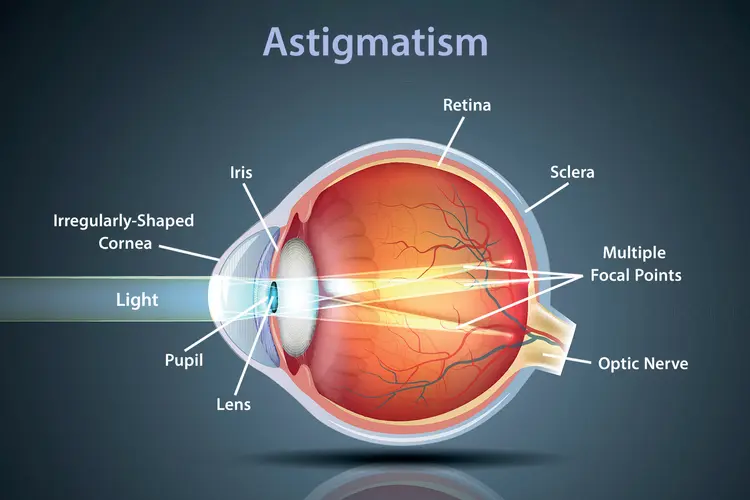
When a patient has a distorted astigmatism vision profile, the cornea or the internal lens features uneven curves. Because the surface has two different curves instead of being perfectly round, light rays are bent at matching angles. This structural variation splits the incoming light, projecting multiple focal lines instead of a single clear image. This uneven focus is the underlying reason why images can look stretched, shadowed, or doubled.
What Causes Astigmatism To Develop?
When individuals first receive their optical prescriptions, they frequently ask what triggers this irregular curvature. The development of an uneven corneal shape is largely determined by genetics, often present from birth and shifting gradually during childhood development.
While inherited bone and tissue structures are the primary driver, physical trauma to the eye surface can also induce curvature shifts. A severe eye injury, a deep corneal infection, or scarring left after a complex ocular surgery can alter the natural shape of the cornea.
Additionally, a progressive structural condition known as keratoconus can cause the cornea to thin out and bulge forward into a cone shape, creating a severe, irregular variation. Understanding what causes astigmatism to worsen can help patients seek clinical monitoring early before severe vision distortion occurs.
What Are The Symptoms Of Astigmatism?
Because mild structural variations can develop slowly, many individuals live with altered vision without realizing their eyes are straining to compensate. However, as the daily visual demands build, your body displays clear astigmatism symptoms that indicate a need for an assessment.
The most frequent warning sign is a constant distortion where objects look slightly blurred at both close and far ranges. Patients with this condition often experience heavy eye strain, regular tension headaches around the brow line, and a constant urge to squint to make words look clear.
The issue becomes particularly noticeable during astigmatism night driving, where street lamps and oncoming headlights bloom into long, distorted streaks of light. This streaking, commonly referred to as seeing astigmatism lights, makes it highly challenging to judge distances accurately in low-light environments, making a professional astigmatism test essential to map the error safely.
How To Fix Astigmatism Permanently?
If you are looking for a permanent solution to eliminate daily optical hassles, modern ophthalmology offers highly advanced clinical procedures that outclass temporary daily alternatives.
- Advanced Flapless Laser Reshaping: For individuals seeking the best non-invasive eye surgery for severe astigmatism, modern flapless laser methods are highly effective. Using specialized cold lasers, a surgeon can gently reshape the uneven curves of your cornea in under fifteen minutes, allowing light to focus perfectly onto the retina.
- Custom Wavefront-Guided LASIK: This advanced laser eye surgery astigmatism protocol maps the unique micro-contours of your eye surface. The laser uses this data to smooth out specific irregularities with micron-level precision, drastically reducing night-driving glare.
- Premium Toric Lens Implants: When evaluating toric lenses vs laser surgery paths for high errors or older patients, implanting a custom intraocular lens inside the eye offers a permanent alternative. These specialized toric implants sit securely inside the eye framework, resolving high astigmatism while permanently preventing cataracts.
How To Prevent Your Vision From Degrading Further?
While the baseline shape of your eye is governed by structural genetics, specific everyday habits can place undue stress on your corneas, potentially causing your refractive error to shift over time.
- Avoid Aggressive Eye Rubbing: Pressing or rubbing your eyes forcefully can place mechanical stress on the delicate corneal tissues, potentially worsening irregular curvatures over time.
- Maintain Up-to-Date Prescriptions: Wearing the correct astigmatism glasses or custom contact lenses for astigmatism ensures your brain receives balanced images, preventing chronic muscle fatigue.
- Optimize Digital Work Habits: When utilizing astigmatism contact lenses or spending long hours on screens, practice regular blinking to prevent dry eye irritation, which can temporarily blur your vision.
| Correction Method | Structural Delivery | Ideal Patient Profile | Main Practical Benefit |
| Astigmatism Glasses | External curved lens | Mild to moderate errors; non-surgical preference | Simple, non-invasive daily use |
| Astigmatism and Contacts | Toric soft or hard lens | Active lifestyles needing full peripheral focus | Fits directly on the eye surface |
| Laser Surgery Turkey | Direct corneal reshaping | Adults seeking a permanent lifestyle change | Completely eliminates daily lens care |
Why Choose Turkey For Your Laser Vision Correction?
Organizing your vision care through a coordinated laser eye surgery Turkey pathway represents a substantial practical advantage for international travelers seeking world-class eye care.
Istanbul has earned a reputation as a leading center for refractive surgery, combining experienced ophthalmic specialists with advanced clinical diagnostic suites. Because surgical teams manage high volumes of complex refractive errors annually, they possess deep experience in tailoring customized treatment profiles to individual eye shapes.
Choosing to plan your treatment through WellDemir allows you to access premium European laser technologies, fully accredited clinic facilities, and comprehensive care packages at rates that fit comfortably within your personal wellness budget.
FAQ: Frequently Asked Questions
How do I know if my astigmatism is getting worse?
If your refractive error is shifting, you may notice an increase in frequent tension headaches, a constant need to squint to read screens, or a gradual increase in blurry ghosting images around text even while wearing your current prescription lenses.
Why does astigmatism cause blurry vision at all distances?
Because an astigmatic eye features an irregular, oval curvature, it bends incoming light rays unevenly, scattering them across multiple focal points instead of focusing them on a single point on the retina. This split focus causes blurriness at both near and far ranges.
What is the difference between regular and irregular astigmatism?
Regular astigmatism occurs when the two primary curves of the cornea sit perfectly perpendicular to one another, which is easily corrected with standard lenses. Irregular astigmatism features asymmetrical curvatures often caused by a past physical eye injury or corneal scarring, requiring specialized custom treatments.
How does a person with astigmatism see letters?
A person experiencing this refractive error typically sees letters with slight vertical or horizontal stretching, blurred borders, or subtle “ghost” shadows overlapping the edges, making characters like ‘O’ and ‘D’ look highly similar from a distance.

 |
|