Skip to content
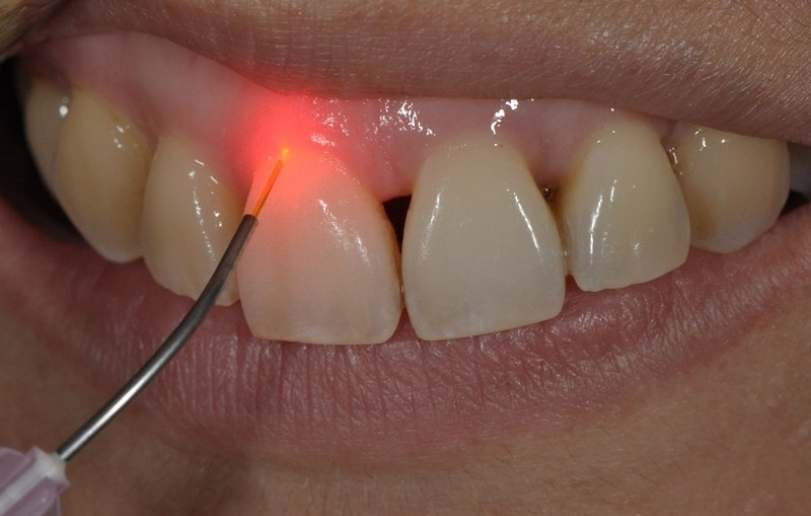
An attractive smile relies on a harmonious balance between the teeth, the structural frame of the lips, and the architecture of the gum tissue. When an excessive amount of periodontal tissue covers the clinical crowns of the teeth, it can result in what is commonly called a “gummy smile.” In modern aesthetic dentistry, correcting this tissue overgrowth no longer requires traditional scalpels or painful sutures. Instead, a laser gingivectomy provides a highly advanced, micro-surgical alternative that reshapes the frame of your teeth with ultimate comfort.
At our clinic, we know that many international patients avoid gum contouring because they fear painful incisions and long recovery periods. Utilizing specialized diode or Erbium lasers entirely shifts this experience.
This comprehensive guide details the surgical steps of the procedure, outlines vital recovery rules, and reviews international cost expectations to help you make an informed decision.
Get Free Consultation
Have any questions? Leave your details and we'll get back to you shortly.
Table of Contents
What Is Dental Laser Gingivectomy?
To understand the benefits of this treatment, we must look at how a dental laser gingivectomy differs from traditional surgical methods. Periodontal tissue can overgrow due to genetic factors, specific medications, or orthodontic adjustments, making the teeth look abnormally short or uneven.
During the procedure, a specialist uses a highly focused beam of light to meticulously vaporize the excess or diseased gum tissue. The main advantage of using a laser is that it cuts and cauterizes the blood vessels and nerve endings simultaneously. This advanced mechanism eliminates bleeding during surgery, drastically reduces the risk of post-operative bacterial infection, and removes the need for physical stitches entirely.
What Are the Main Types of Laser Gingivectomy?
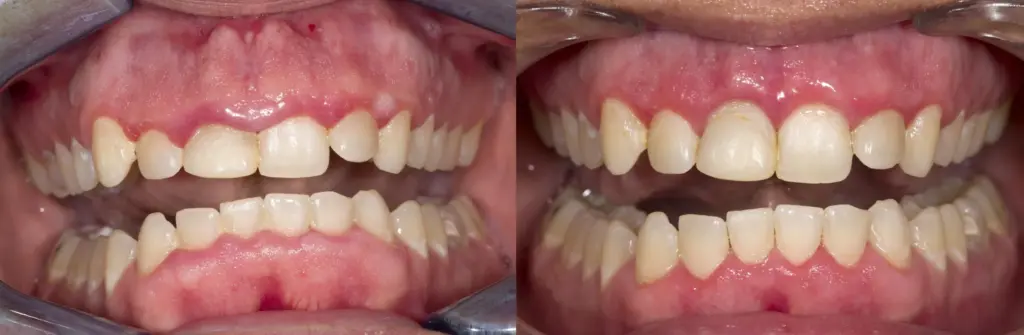
Depending on the underlying clinical condition and the customized cosmetic goals, dental specialists utilize different types of laser gingivectomy approaches:
- Aesthetic Laser Gingivectomy: Primarily focused on removing healthy but excess gum tissue to lengthen the appearance of short teeth and completely eliminate a gummy smile.
- Therapeutic Laser Gingivectomy: Performed to remove diseased, inflamed, or hyperplastic periodontal tissues caused by chronic periodontitis or medication side effects, eliminating deep periodontal pockets.
- Laser Gingivoplasty: Often combined with a gingivectomy, this approach focuses on thinning and re-contouring the remaining healthy gum margins to create a natural, lifelike edge around the enamel.
Why Is a Laser Gingivectomy Performed?
Understanding the underlying medical and aesthetic motives clarifies why is a laser gingivectomy performed so frequently in modern dentistry:
- Eliminating a Gummy Smile: To restore natural facial proportions when the gums obscure a significant portion of the dental crown.
- Correcting an Uneven Gum Line: To harmonize asymmetrical gum margins that make teeth look crooked, even if the teeth themselves are perfectly straight.
- Improving Periodontal Health: To eradicate deep pockets between the teeth and gums where food debris and harmful bacteria collect, preventing advanced bone loss.
- Facilitating Restorative Treatments: To expose more healthy tooth structure so that a porcelain veneer, crown, or dental bridge can be securely fitted.
What Does the Laser Gingivectomy Procedure Involve?
The clinical implementation of a laser gingivectomy procedure is an efficient, straightforward outpatient process that follows a strict safety protocol:
- Digital Mapping: The cosmetic dentist analyzes your smile line and digitally maps out the ideal symmetry of the gum line using advanced smile design software.
- Local Numbing: A topical numbing gel or a mild local anesthetic is applied to the target gum tissue to ensure complete patient comfort.
- Laser Sculpting: The clinician glides the specialized laser tip across the tissue, vaporizing excess layers and sculpting a uniform, aesthetically balanced margin around each tooth.
- Polishing: The newly exposed enamel is thoroughly cleansed and polished, instantly revealing a longer, more proportioned tooth structure.
The entire process takes approximately 15 to 30 minutes depending on how many teeth require contouring.
Laser Gingivectomy Before and After: The Transformation
Analyzing the laser gingivectomy before and after phases highlights the profound impact this minor procedure has on overall facial aesthetics. Before treatment, patients often present with asymmetrical gum margins, localized inflammation, or teeth that appear buried under excess tissue.
Immediately following the laser application, the smile appears transformed; the teeth look naturally elongated, the smile line sits symmetrically along the upper lip curve, and the tissue displays a clean, contoured margin.
Healing After Laser Gingivectomy: Timeline and Instructions
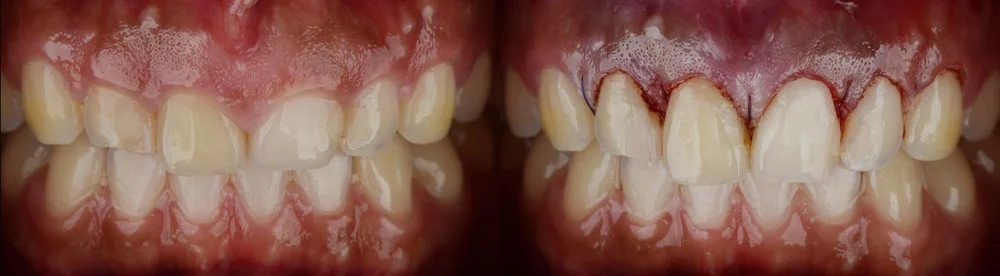
Because the laser cauterizes the surgical site as it moves, healing after laser gingivectomy is remarkably rapid compared to traditional scalpel surgery. The surface epithelium typically closes and heals within 7 to 10 days.
POST-OP RESHAPING TIMELINE:
- Day 1-2: Mild tissue redness and tenderness; strict soft-food diet.
- Day 3-5: Baseline healing begins; tissue shifts to a lighter pink hue.
- Day 7-10: Surface epithelium completely closes; final contoured margins achieved.
To support this process and prevent tissue irritation, patients must strictly adhere to specialized laser gingivectomy post op instructions:
- Dietary Modifications: Avoid hot, spicy, crunchy, or highly acidic foods for the first 3 to 5 days. Opt for soft, cool foods like yogurt, smoothies, puréed soups, and cold pasta.
- Gentle Oral Hygiene: Do not brush or floss directly against the healing gum line for the first 48 hours. Instead, rinse your mouth gently with warm saltwater or a prescribed non-alcoholic chlorhexidine mouthwash.
- Avoid Physical Trauma: Do not use toothpicks, and avoid touching the healing gums with your fingers or tongue.
Laser Gingivectomy Cost Worldwide
The baseline laser gingivectomy cost depends on the number of teeth requiring contouring, the diagnostic technology used, and the geographical location of the clinic. In the UK, USA, and Western Europe, the private laser gingivectomy price typically ranges from £150 to £400 per tooth, making a full arch contouring procedure financially demanding.
Due to lower operating overhead costs and highly efficient medical tourism infrastructures, top-tier international dental centers can offer premium laser contouring at a fraction of Western prices. Many patients combine their gum contouring with porcelain veneer packages, achieving an affordable, comprehensive smile transformation in a single trip.
Comprehensive Structural Comparison
| Feature / Protocol | Laser Gingivectomy | Traditional Scalpel Gingivectomy |
| Surgical Tool Used | High-precision medical laser beam | Steel surgical scalpel |
| Bleeding During Procedure | None to minimal (Instant cauterization) | Moderate (Requires active management) |
| Need for Stitches (Sutures) | No | Yes (Frequently required) |
| Risk of Post-Op Infection | Extremely low (Sterilizes as it cuts) | Moderate |
| Average Initial Healing Time | 3 to 5 Days | 10 to 14 Days |
| Post-Operative Swelling | Minimal to none | Moderate |
Frequently Asked Questions (FAQ)
What is the main cosmetic benefit of a dental laser gingivectomy?
The main benefit is the immediate removal of a “gummy smile.” By vaporizing excess gum tissue, it uncovers the natural length of your teeth, creates symmetry along the lip line, and balances your overall facial aesthetics.
Is a laser gingivectomy painful during or after the procedure?
No, the procedure is highly comfortable. A mild local anesthetic is applied to completely numb the area during surgery. Because the dental laser seals nerve endings as it cuts, post-operative pain is minimal and easily managed with standard over-the-counter pain relievers.
Why is the laser gingivectomy price in Turkey more affordable?
The affordability is driven by lower local operational costs, favorable currency exchange rates, and a highly competitive, government-supported medical tourism infrastructure. This allows world-class dental clinics in Turkey to offer premium laser technologies at a fraction of Western costs.
How long does it take for gums to completely heal after a laser gingivectomy?
Initial healing occurs remarkably fast due to the laser’s ability to cauterize the tissue instantly. The surface gums typically heal within 3 to 5 days, while complete tissue maturation and final contoured results are achieved within 7 to 10 days.

 |
|