Skip to content
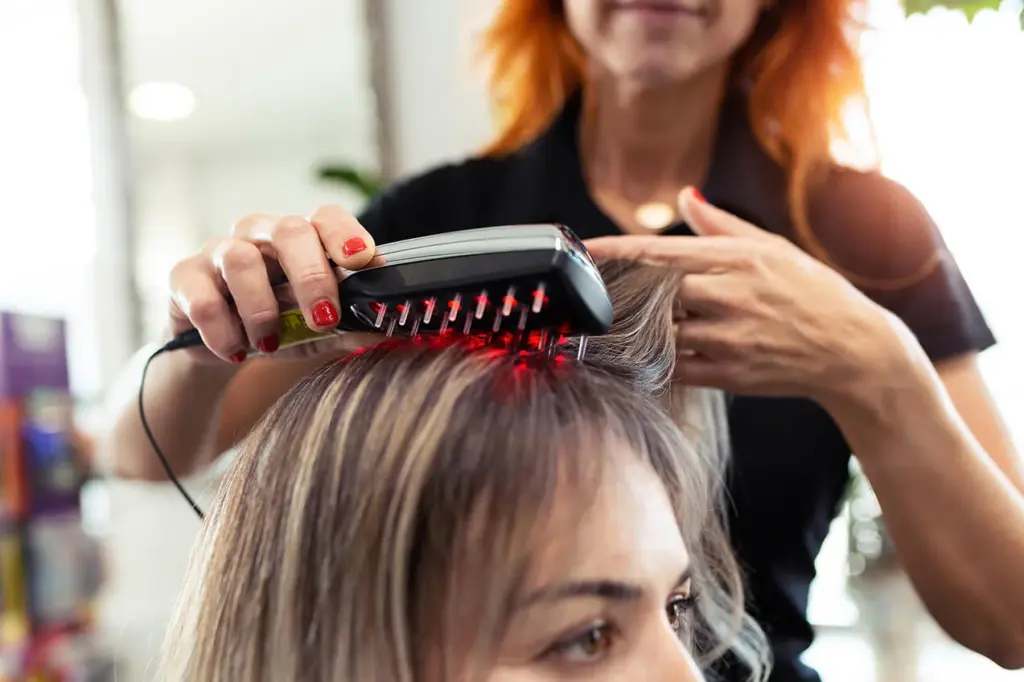
Hair thinning and androgenetic alopecia (pattern hair loss) affect millions of men and women worldwide, impacting both personal aesthetics and emotional well-being. While traditional surgical hair transplants and systemic medications remain widely utilized, non-invasive photobiomodulation has emerged as a scientifically backed clinical alternative. Photobiomodulation, medically designated as low-level laser therapy, offers a painless mechanism to stimulate dormant hair follicles, enhance scalp blood flow, and slow down progressive thinning.
Navigating modern hair restoration options requires understanding the biological mechanisms of red-light energy, evaluating home versus clinic-grade treatment setups, and assessing safety protocols. Prospective patients frequently research low-level laser therapy for hair loss, compare available low-level laser therapy devices, examine potential low-level laser therapy hair side effects, analyze the average low-level laser therapy hair cost, and review expected low-level laser therapy hair loss before after timelines. This comprehensive medical guide provides an in-depth analysis of how low-level light energy treats thinning hair, breaks down device categories, outlines safety profiles, and provides realistic recovery expectations.
Table of Contents
What Is Low-Level Laser Therapy and How Does It Treat Hair Loss?
To evaluate if photobiomodulation aligns with your hair restoration goals, we must answer a core physiological question: what is low-level laser therapy and how does it target thinning follicles?
Get Free Consultation
Have any questions? Leave your details and we'll get back to you shortly.
Low-level laser therapy (LLLT), also known as cold laser therapy or red-light therapy, utilizes red or near-infrared light wavelengths typically ranging between 630 and 670 nanometers. Unlike surgical or aesthetic lasers that generate heat to cut or vaporize tissue, low-level lasers emit coherent, non-thermal light energy that penetrates the upper layers of the scalp without causing thermal damage or skin irritation.
When photons from low-level laser therapy hair treatments penetrate the scalp tissue, they are absorbed by cytochrome c oxidase, a key enzyme located within the mitochondria of hair follicle stem cells. This photo-biostimulation triggers three vital biological responses:
- Cellular Energy Production (ATP Synthesis): Absorbed light energy stimulates mitochondria to produce higher levels of adenosine triphosphate (ATP), fueling cellular repair and extending the active growth phase (anagen phase) of the hair cycle.
- Enhanced Scalp Microcirculation: The light energy triggers the release of nitric oxide, a natural vasodilator. This expands micro-capillaries around the follicle root, delivering oxygen, glucose, and essential nutrients directly to miniaturized hair bulbs.
- Reduction of DHT-Induced Inflammation: Photobiomodulation helps decrease local inflammatory cytokines surrounding hair follicles, counteracting the miniaturization effects caused by dihydrotestosterone (DHT) in genetic hair loss.
Exploring Treatment Modalities: Low-Level Laser Therapy Devices
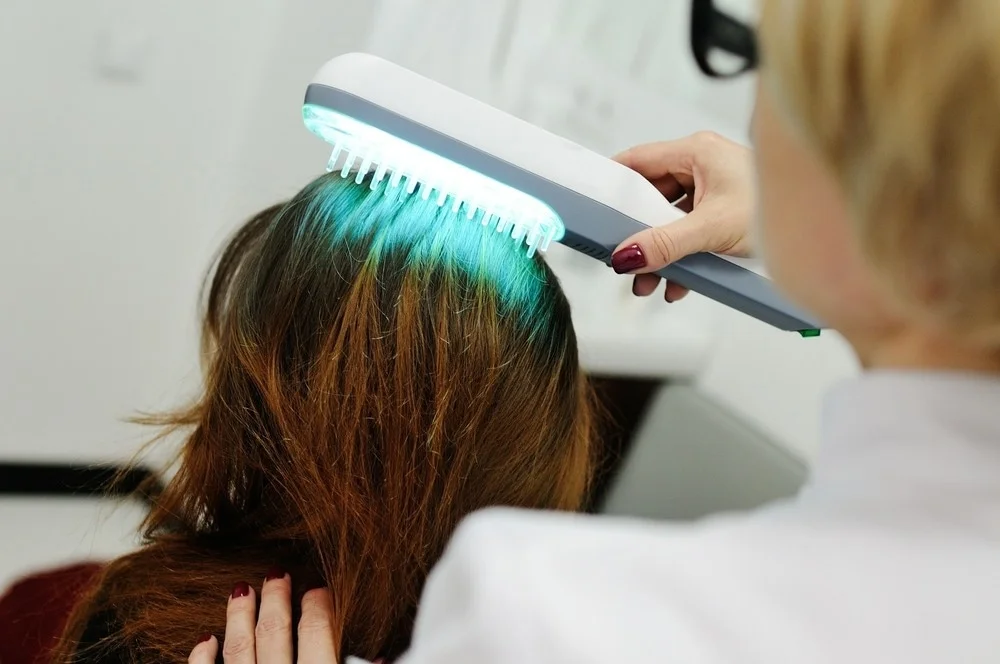
Achieving therapeutic results depends on using devices that deliver adequate light intensity, correct wavelengths, and uniform scalp coverage. Modern low-level laser therapy devices fall into three primary categories:
1. In-Clinic Laser Hoods and Panels
Professional-grade laser hoods are stationary medical systems used in specialized hair restoration clinics. These systems house hundreds of medical-grade laser diodes that cover the entire scalp simultaneously. Treatments typically require 20 to 30-minute sessions conducted 2 to 3 times per week under clinical supervision.
2. Clinical and Home-Use Laser Caps
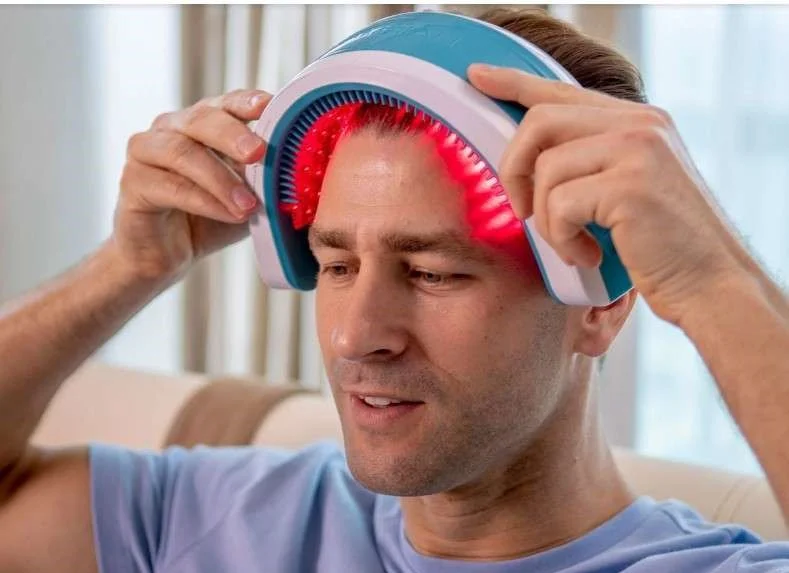
Laser caps are wearable, flexible, or rigid domes fitted inside standard sports caps or beanies. Lined with dozens to hundreds of laser diodes (and sometimes supporting LED lights), these caps offer portable convenience, allowing patients to complete prescribed 10 to 30-minute sessions at home or while traveling.
3. Laser Combs and Band Systems
Laser combs are handheld, manual devices that require the user to slowly move teeth through the hair to part strands and expose the scalp. While budget-friendly, they require manual effort and offer less uniform light delivery compared to full-coverage caps or clinical hoods.
Safety and Side Effects: Are There Risks Associated with LLLT?
When considering non-invasive hair treatments, evaluating low-level laser therapy side effects and specific low-level laser therapy hair side effects is essential for patient peace of mind.
Unlike oral hair loss medications (such as finasteride) or topical solutions (such as minoxidil), low-level light energy carries a remarkably clean safety profile with zero systemic drug interactions. Because the treatment relies on non-thermal light wavelengths, it does not burn or alter internal biological pathways.
Potential Mild and Temporary Side Effects:
- Mild Scalp Warmth or Tingling: Increased blood circulation in the scalp micro-capillaries may cause a temporary warm or tingling sensation during or immediately after a session.
- Temporary Hair Shedding: During the first 2 to 6 weeks of treatment, some patients experience transient shedding. This occurs because rejuvenated follicles rapidly push out old, weak hair shafts to make room for new, thicker hair growth.
- Mild Scalp Dryness or Itching: Increased cellular activity and localized heat dissipation can occasionally cause minor dryness on sensitive scalps.
- Eye Strain or Headache: Looking directly into active medical laser diodes can cause eye irritation. Users must avoid direct eye exposure or wear protective eyewear when operating handheld devices.
What Is the Expected Low-Level Laser Therapy Hair Cost?
Evaluating financial commitments requires analyzing the difference between ongoing clinic visits and purchasing personal home-use equipment.
The overall low-level laser therapy hair cost varies significantly based on treatment delivery:
- In-Clinic Treatment Packages: Professional clinic sessions typically cost between $500 and $3,000 (€450 to €2,750) for a 6-month to 1-year clinical treatment plan involving multiple weekly visits.
- FDA-Cleared Home-Use Laser Caps: High-quality, medical-grade laser caps range from $600 to $3,000 (€550 to €2,750) depending on diode count, battery portability, and brand certification.
- Entry-Level Laser Combs: Handheld laser combs generally cost between $150 and $500 (€140 to €460), making them an accessible entry point for localized thinning.
Before and After Expectations: What Results Can You Anticipate?
Reviewing the low-level laser therapy hair loss before after timeline helps establish realistic expectations. Photobiomodulation requires consistent, long-term compliance, as hair growth occurs in gradual biological cycles:
- Months 1 to 2 (Early Cellular Phase): Hair loss stabilization begins. Some transient shedding may occur as miniaturized hairs reset into the anagen growth phase.
- Months 3 to 6 (Stabilization and Early Growth): Active hair shedding decreases significantly. Miniaturized, thin “peach fuzz” hairs begin to thicken, and scalp coverage shows early signs of improvement.
- Months 6 to 12 (Visible Density and Maturity): Full therapeutic results mature. Existing hair shafts demonstrate increased diameter, overall hair density improves, and scalp areas with dormant follicles show visible regrowth.
- Long-Term Maintenance (Year 1 and Beyond): Continuous maintenance sessions (2 to 3 times per week) are required to sustain follicle stimulation and prevent progressive genetic thinning.
Comprehensive LLLT Device Comparison Matrix
| Device Category | Light Source & Diodes | Coverage & Uniformity | Convenience & Portability | Average Investment Range |
| Clinical Laser Hoods | 200–400+ Pure Laser Diodes | 100% Full Scalp Uniformity | Stationary (In-clinic visits) | $500–$3,000 per package |
| Premium Laser Caps | 80–300+ Laser Diodes | High to Full Coverage | Fully Portable (Hands-free at home) | $600–$3,000 (One-time purchase) |
| Laser Combs / Bands | 9–30 Laser Diodes | Partial / Requires manual parting | Manual effort required | $150–$500 (One-time purchase) |
Frequently Asked Questions (FAQ)
Does low-level laser therapy work for complete baldness?
No. Low-level laser therapy requires active, miniaturized hair follicles to produce results. It cannot regrow hair on completely smooth, shiny, or scarred scalp areas where hair follicles have died and been replaced by fibrotic tissue. It is most effective for early to moderate thinning (Norwood scale 2 to 4).
How often should I use low-level laser therapy devices for hair loss?
Most clinical protocols recommend using home-use laser caps or clinic systems 2 to 3 times per week for 10 to 30 minutes per session. Overusing the laser every day does not accelerate hair growth and can lead to tissue saturation, reducing overall therapeutic benefits.
Can I combine low-level laser therapy with minoxidil or finasteride?
Yes. Combined therapies are highly encouraged in clinical hair restoration. LLLT works through photobiomodulation and cellular ATP production, which complements the pharmacological mechanisms of topical minoxidil (vasodilation) and oral finasteride (DHT suppression), often yielding superior overall hair density.
Are the results of low-level laser therapy permanent?
No. Because genetic hair loss (androgenetic alopecia) is a continuous, progressive condition, stopping low-level laser therapy will eventually allow DHT to resume miniaturizing hair follicles. Continuous maintenance treatments are necessary to preserve improved density and shaft thickness.

 |
|