Skip to content
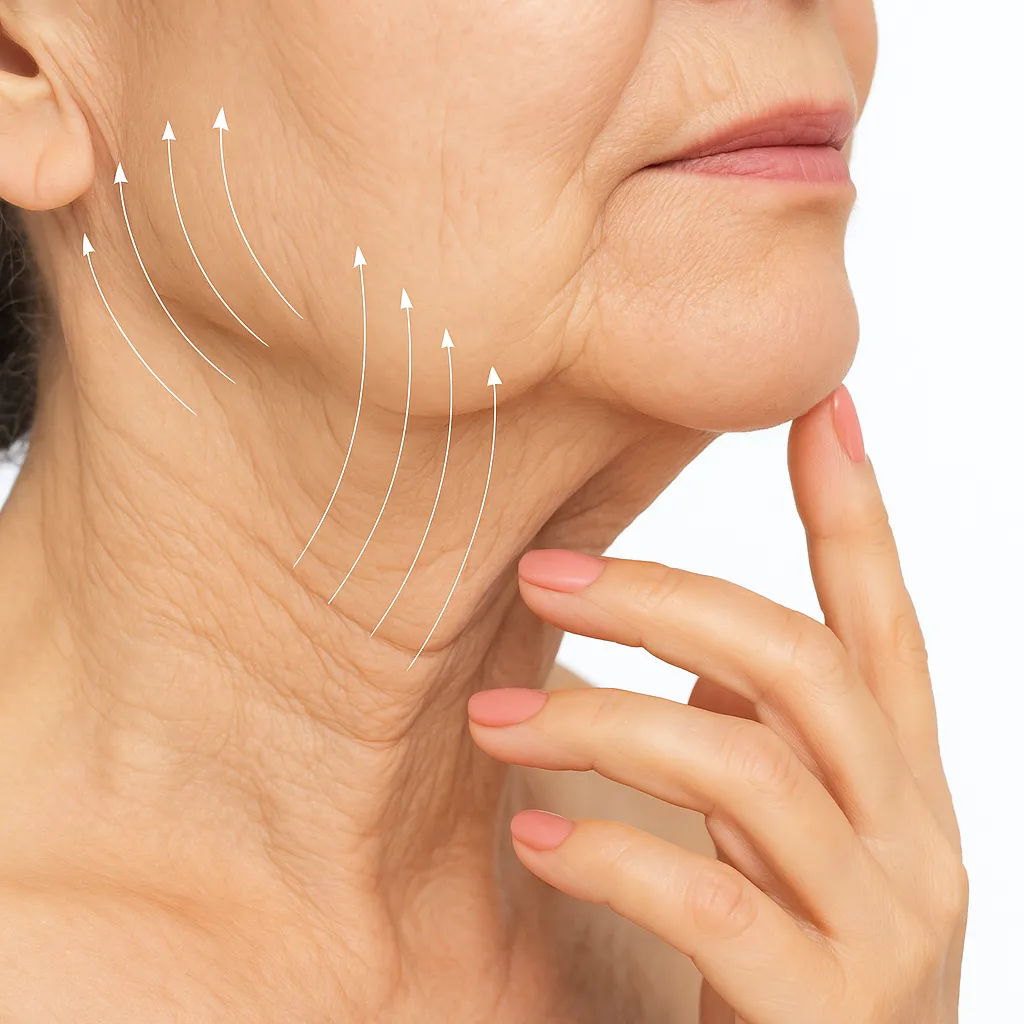
The neck and jawline are among the earliest anatomical regions to show visible signs of aging. Factors such as genetic predisposition, skin laxity, significant weight fluctuations, and the natural breakdown of collagen lead to vertical neck bands, submental fat accumulation (double chin), and sagging “turkey neck” skin. While targeted skincare and lifestyle adjustments support skin health, they cannot surgically tighten separated underlying muscles or remove extensive loose skin.
A customized neck lift (clinically known as lower rhytidectomy or platysmaplasty) restores a sharp, youthful cervical angle and defines the lower facial border.
Patients considering this transformative procedure frequently research what happens during neck lift surgery, evaluate realistic neck lift before and after transformations, compare surgical approaches against a non surgical neck lift, inquire about a less invasive mini neck lift, analyze comprehensive neck lift cost breakdowns, and explore medical travel options for a neck lift Turkey. This clinical guide provides an in-depth analysis of surgical anatomy, procedural steps, non-invasive alternatives, recovery milestones, and global pricing.
Get Free Consultation
Have any questions? Leave your details and we'll get back to you shortly.
Table of Contents
What Is a Neck Lift?
To understand how a neck lift restores contour, one must examine the cervical anatomy:
CERVICAL TISSUE RESTRUCTURING CASCADE:
- [Skin Envelope Laxity]: Redundant skin excised via discreet incisions
- [Platysma Muscle Diastasis]: Muscle edges sutured together like a corset (Platysmaplasty)
- [Subplatysmal & Submental Fat]: Sculpted and removed (Liposuction / Direct Excision)
- [Cervicomental Angle]: Restored to a crisp, defined 90°–105° youth profile
Surgical rejuvenation of the neck is rarely limited to skin tightening alone. A comprehensive neck lift surgery addresses all anatomical layers:
- Submental Liposuction: Gentle extraction of pre-platysmal fat deposits beneath the chin.
- Platysmaplasty (Muscle Tightening): The paired platysma muscles often separate over time, creating vertical bands (cords). The surgeon reconstructs these muscle borders along the midline, securing them internally like an anatomical corset.
- Cervicoplasty (Skin Redraping and Excision): Excess loose skin is carefully redraped, trimmed, and secured behind the earlobes and along the hairline under zero tension.
Surgical vs. Non-Surgical Options: Comparing Techniques
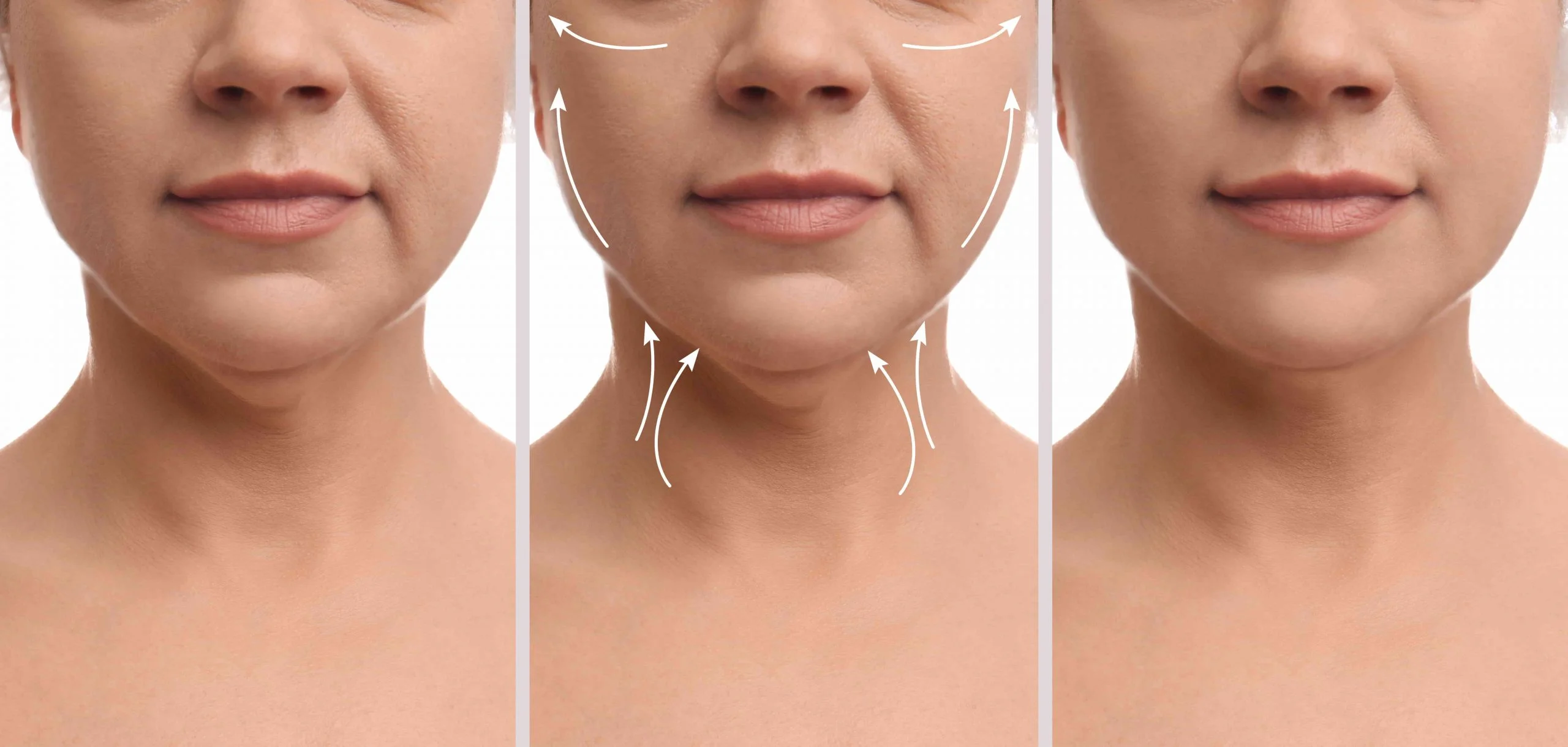
Depending on skin elasticity, age, and anatomical structure, patients choose between several surgical and non-surgical pathways:
1. Full Traditional Neck Lift Surgery
The gold standard for patients with moderate-to-severe skin sagging, prominent vertical muscle banding, and heavy submental fullness. It involves small incisions placed discreetly under the chin and around the ears to provide complete 360-degree access to the underlying musculature and skin.
2. Mini Neck Lift
A targeted, less invasive surgical variation tailored for younger patients (typically aged 35 to 50) who have mild skin laxity and localized fat beneath the chin, but no severe platysmal muscle banding. A mini neck lift is performed using a single small incision beneath the chin, often combined with micro-cannula liposuction, resulting in shorter operative times and faster recovery.
3. Non Surgical Neck Lift
For individuals with mild early skin laxity who prefer to avoid surgery, a non surgical neck lift combines energy-based modalities and injectable treatments:
- Radiofrequency & Ultrasound (Morpheus8 / Ultherapy): Delivers focused thermal energy into the deep dermis to stimulate new collagen and tighten mild tissue laxity.
- Neuromodulators (Botox “Nefertiti Lift”): Relaxes hyperactive vertical platysmal bands temporarily for 3 to 5 months.
- PDO Thread Lifts: Inserts dissolvable barbed sutures beneath the dermis to mechanically lift mild sagging skin for 6 to 12 months.
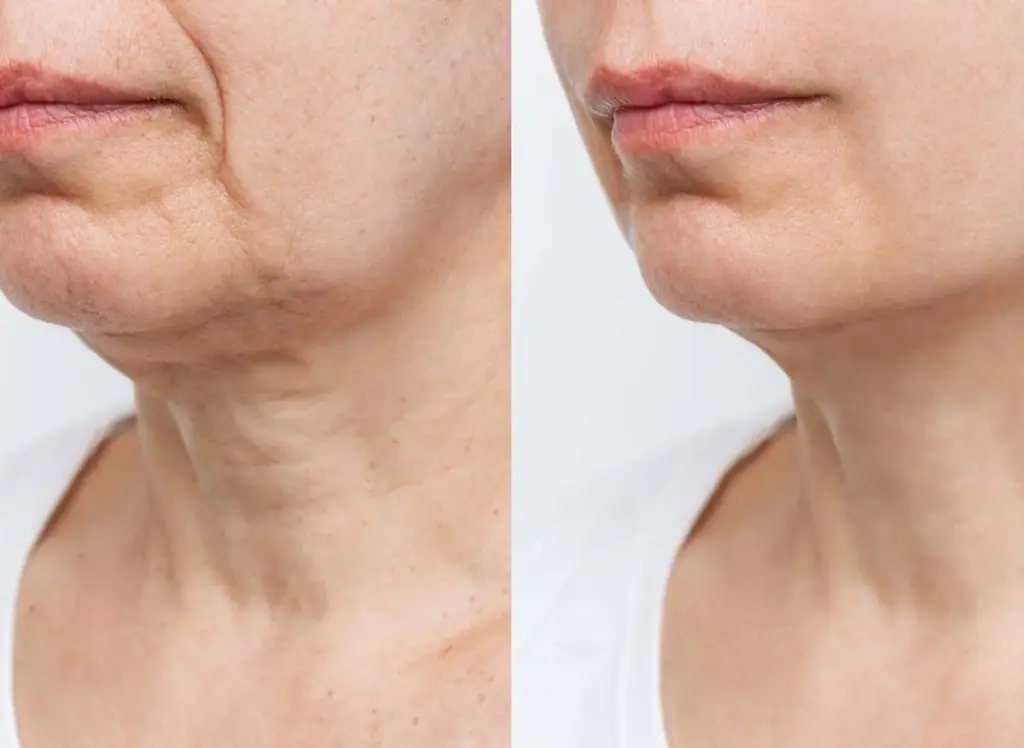
Real-World Expectations: Neck Lift Before and After
Analyzing neck lift before and after patient outcomes reveals clear structural improvements:
- Restoration of the Cervicomental Angle: The transition between the lower jaw and neck returns to a defined, youthful 90-degree to 105-degree angle.
- Elimination of Vertical Platysmal Bands: The visible “cords” running from the collarbone to the chin are completely smoothed out.
- Sharpened Jawline Definition: Jowls along the lower mandible disappear, creating clear separation between the face and neck.
- Discreet Scar Maturation: Incisions hidden in the natural crease beneath the chin and behind the ear fade from pink to a thin, imperceptible silver line over 6 to 12 months.
Recovery Milestones: What to Expect After Surgery
A structured post-operative healing plan ensures optimal contouring and minimal downtime:
- Days 1 to 3 (Acute Phase): A supportive chin and neck compression garment is worn continuously. Mild soreness, swelling, and localized bruising peak around day 3 and are easily managed with prescribed analgesics.
- Days 7 to 10 (Suture Removal): Submental and retroauricular skin sutures are removed in the clinic. Most patients can comfortably return to remote or desk-based work.
- Weeks 2 to 4 (Mobilization): Around 70 to 80 percent of visible bruising and swelling resolves. Patients can resume brisk walking, light non-strenuous daily activities, and social outings.
- Weeks 6 to 8 (Physical Exercise): Heavy lifting, strenuous gym workouts, and intense neck stretching can safely be resumed.
- Months 6 to 12 (Final Maturation): Subtle residual swelling subsides completely, revealing the final refined contour.
Neck Lift Rejuvenation Comparison Matrix
| Clinical Parameter | Full Neck Lift Surgery | Mini Neck Lift | Non-Surgical Neck Lift |
| Anesthesia Type | General anesthesia or IV sedation | Local anesthesia with sedation | Topical numbing cream |
| Incision Locations | Under chin & around/behind ears | Small incision under chin only | None (Needle / Probe entry) |
| Platysma Muscle Repair | Full midline platysmaplasty | Minor anterior tightening / none | None |
| Excess Skin Removal | Substantial excision | Minimal excision | None |
| Longevity of Results | 10 to 15+ Years | 7 to 10 Years | 6 to 18 Months |
| Initial Downtime | 10 to 14 Days | 5 to 7 Days | 0 to 2 Days |
| Target Candidate | Moderate to severe skin laxity | Mild laxity & isolated fat | Very mild laxity, no banding |
Frequently Asked Questions (FAQ)
How long do the results of a surgical neck lift last?
A surgical neck lift provides long-lasting results, typically maintaining youthful definition for 10 to 15 years or more. While the natural biological aging process continues, your neck will consistently look significantly younger and tighter than if you had never undergone surgery.
Can a neck lift be combined with a facelift or chin implant?
Yes. In fact, a neck lift is most commonly performed alongside a lower facelift (or SMAS facelift) to ensure seamless, balanced rejuvenation between the jawline and midface. Patients with a weak, receding jawbone often combine a neck lift with a chin implant (genioplasty) to maximize jawline projection.
Is neck lift surgery painful during and after the procedure?
The surgery itself is completely painless as it is performed under general anesthesia or deep IV sedation. During early recovery, patients describe the sensation as a tight, firm pressure rather than sharp pain. Prescribed analgesics easily control any post-operative discomfort during the first 3 to 5 days.
When can international patients safely fly home after a neck lift in Turkey?
Most international patients can safely fly home 7 to 8 days following surgery. This allows sufficient time for the surgical team to monitor early healing, remove all skin sutures and drains, and provide a formal “fit-to-fly” medical clearance.

 |
|