Skip to content
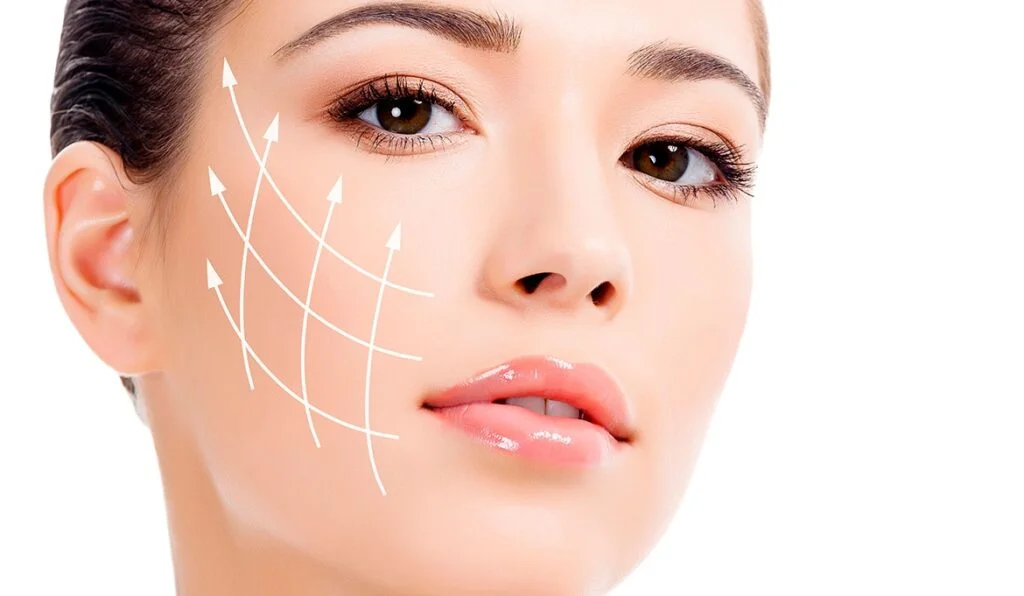
Facial aging rarely occurs in a single uniform vector across the entire face. For many individuals in their late thirties to early fifties, the earliest and most pronounced anatomical changes appear in the midfacial zone: the area extending from the lower eyelid margin down to the upper lip. As the malar fat pad descends due to gravity and retaining ligament attenuation, the lower eyelids lengthen, tear troughs hollow out, cheeks flatten, and nasolabial folds (smile lines) deepen.
While a traditional lower facelift tightens the jawline and neck, it cannot address the vertically dropped structures of the central midface. A tailored mid facelift (also known as a cheek lift) directly restores volume and repositioning to the central triangle of youth.
Prospective patients frequently ask what is a mid facelift, evaluate the minimally invasive advantages of an endoscopic mid facelift, study documented mid facelift before and after photographic transformations, explore options for corrective or revision mid facelift surgery, evaluate recovery benchmarks, and investigate medical travel programs for a mid facelift Turkey alongside variables determining mid facelift cost. This clinical guide examines midfacial anatomy, surgical approaches, recovery expectations, and pricing factors.
Get Free Consultation
Have any questions? Leave your details and we'll get back to you shortly.
Table of Contents
What Is a Mid Facelift and How Does It Rejuvenate the Face?
If you are exploring what is a mid facelift, it is a specialized facial plastic surgery procedure that vertically elevates and resuspends the descended malar fat pad, midfacial soft tissues, and cheek musculature back onto the underlying zygomatic bone framework.
Traditional facelifts pull tissues primarily along an oblique or horizontal vector toward the ears, which improves jowls and loose neck skin but leaves the central cheek flat. The midface lift works along a vertical vector:
VERTICAL VECTOR MIDFACIAL RESTORATION:
[Descended Malar Fat Pad & Tear Trough Hollows]
↓ (Subperiosteal / Preperiosteal Mobilization)
[Vertical Repositioning of Cheeks over Zygomatic Arch]
↓ (Suspension to Deep Temporal Fascia / Periosteum)
[Restored Ogee Curve, Shortened Lower Lid, & Softened Nasolabial Fold]
By mobilizing the deep facial tissues directly off the facial bones, the surgeon elevates the dropped cheek volume upward. This single vertical repositioning achieves three simultaneous aesthetic corrections:
- Blends the Lid-Cheek Junction: Shortens the apparent vertical height of the lower eyelid and fills hollow tear troughs without synthetic dermal fillers.
- Restores the Youthful Ogee Curve: Re-establishes convex cheekbone projection in both profile and three-quarter views.
- Softens Nasolabial Folds: Relieves the heavy, sagging tissue hanging over the smile lines, smoothing the transition between the cheeks and upper lip.
Surgical Approaches: Endoscopic Mid Facelift vs. Transblepharoplasty
Plastic surgeons select between two primary access techniques based on patient anatomy and whether lower eyelid surgery is performed concurrently:
1. The Endoscopic Mid Facelift
The gold standard modern approach for patients seeking rejuvenation without visible skin incisions on the face.
- Incision Placement: Small, discreet 2 to 3 cm incisions are placed entirely behind the temporal hairline, often supplemented by a small incision hidden within the oral mucosa inside the upper lip.
- Optical Endoscopy: The surgeon inserts an optical endoscope (a tiny high-definition camera) to dissect beneath the periosteum (subperiosteal plane) under direct magnification, protecting delicate branches of the facial nerve and infraorbital sensory nerves.
- Internal Fixation: The elevated cheek tissues are anchored to the deep temporal fascia using long-lasting or permanent suspension sutures, endotines, or bone tunnels.
2. The Transblepharoplasty (Subciliary) Approach
Ideal for patients who have significant lower eyelid skin laxity, excess skin wrinkling, or herniated lower eyelid fat pads.
- Incision Placement: Made just 1 to 2 mm below the lower eyelash line (identical to a lower blepharoplasty incision).
- Direct Access: The surgeon works downward through the lower eyelid plane to release the arcus marginalis and cheek ligaments, elevating the malar fat pad directly upward and redraping the lower lid skin.
Complex Corrections: The Revision Mid Facelift
Undergoing a revision mid facelift is indicated when a previous midface procedure yielded suboptimal aesthetic outcomes, surgical relapse, or post-operative structural complications:
- Lower Eyelid Malposition (Ectropion or Scleral Show): If a prior transblepharoplasty cheek lift pulled too hard on the lower lid margin without adequate canthal tendon support, the lid can pull downward away from the eye. Revision surgery requires lateral canthoplasty, spacer grafts, or re-elevation from the temporal plane.
- Facial Asymmetry or Inadequate Volume Lift: Addressing cases where one cheek settled lower than the other due to premature suspension suture release or uneven tissue dissection.
- Persistent Under-Eye Hollows: Correcting persistent contour irregularities using fat transposition, micro-fat grafting, or secondary subperiosteal re-anchoring.
- Scar Revision: Refining visible scars along the lower lash line or within the temporal hair tuft from previous surgeries.
Visual Expectations: Mid Facelift Before and After
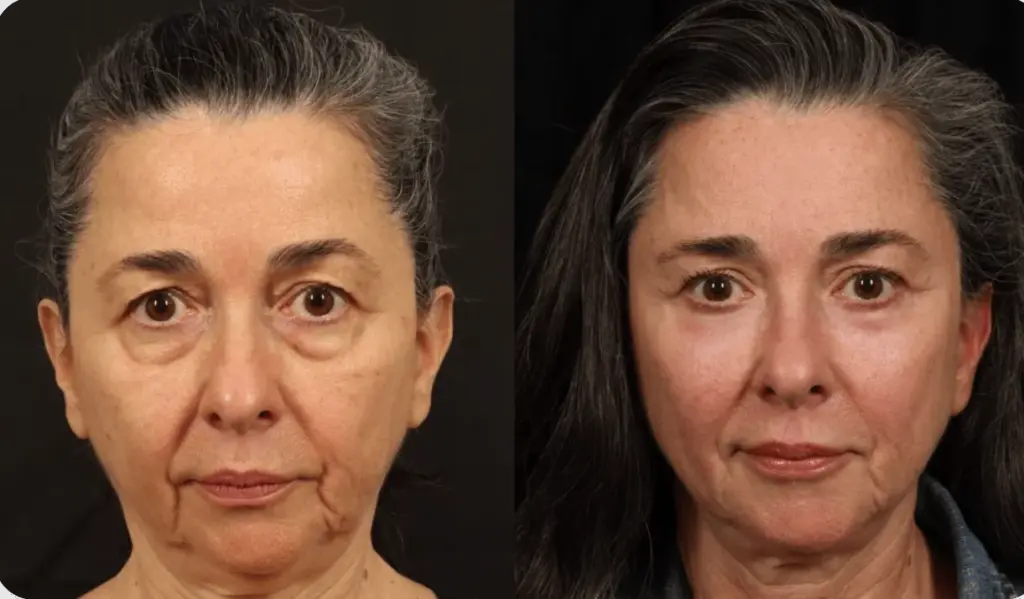
Examining clinical mid facelift before and after documentation reveals distinctive structural improvements:
- Shortened Lower Eyelid Distance: The elongated, aged lower eyelid is replaced by a compact, smooth transition into the cheek.
- Full, Elevated Cheek Contours: The sunken, hollow appearance beneath the eyes is replaced by natural, youthful cheekbone volume without the unnatural puffiness associated with overfilled dermal injectables.
- Softened Smile Lines: The depth and shadowing of the nasolabial folds are noticeably reduced without pulling the corners of the mouth unnaturally sideways.
- Undetectable Incision Sites: Temporal hairline incisions are fully concealed beneath growing hair, while subciliary lower lid incisions heal into faint, imperceptible lines.
Recovery Milestones and Timeline
Because midfacial surgery involves deep subperiosteal dissection and firm bone fixation, postoperative tissue edema is more prolonged than superficial cosmetic procedures:
- Days 1 to 3 (Acute Swelling Peak): Firm swelling around the cheeks and lower eyelids peaks on day 3. Mild periorbital bruising and a sensation of facial tightness are expected. Oral analgesics easily control any mild discomfort. Sleeping with the head elevated at 30 to 45 degrees is mandatory.
- Days 7 to 10 (Suture and Staple Removal): Temporal staples or fine eyelid sutures are painlessly removed in the clinic. The eyes may look slightly slanted or tight, a temporary side effect of deep suspension that normalizes over the following weeks.
- Weeks 2 to 3 (Social Recovery): Approximately 70 percent of visible bruising and swelling subsides. Most patients can comfortably apply light makeup and return to desk jobs and light daily social activities.
- Months 2 to 3 (Soft Tissue Settling): The cheeks settle into their natural anatomical positions as deep muscular stiffness resolves and subtle residual lymphatic swelling clears.
- Months 6 to 12 (Final Definition): The midface achieves its permanent, supple aesthetic contour, and internal tissue softening is complete.
Comparative Matrix: Mid Facelift vs. Alternative Facial Procedures
| Clinical Parameter | Endoscopic Mid Facelift | Full Lower Facelift (SMAS) | Lower Blepharoplasty with Fat Repositioning | Cheek Dermal Fillers |
| Primary Target Area | Cheeks, lower lid junction, nasolabial folds | Jowls, jawline, and upper neck | Eye bags and tear troughs only | Isolated cheekbone volume |
| Lifting Vector | Purely vertical (90° upward) | Oblique / Posterosuperior | Minimal lift (Volume redistribution) | None (Volumetric inflation only) |
| Incision Locations | Temporal hairline & intraoral | Around earlobes & into hairline | Subciliary (under lashes) or transconjunctival | No incisions (Injections) |
| Longevity | 10 to 12+ Years | 10 to 15 Years | 8 to 12 Years | 12 to 18 Months |
| General Downtime | 10 to 14 Days | 14 to 21 Days | 7 to 10 Days | Zero downtime |
| Target Age Range | 35 to 55 Years | 45 to 70+ Years | 30 to 65 Years | Any age |
What Determines the Mid Facelift Cost?
When evaluating mid facelift cost, prospective patients will find that pricing varies significantly across clinics and geographic borders. Rather than a flat, standardized fee, overall surgical costs depend on several specific clinical and operational variables:
- Surgical Approach and Technology: An endoscopic mid facelift requires specialized optical endoscopic towers, specialized instrumentation, and disposable fixation hardware (such as endotines or micro-anchors), which carry higher equipment costs than traditional open techniques.
- Primary vs. Revision Complexity: Performing a revision mid facelift involves navigating extensive scar tissue, altered anatomy, and potential canthal tendon reconstruction, requiring significantly longer operative times and specialized surgical skill.
- Combination Surgeries: A mid facelift is rarely performed in isolation; it is frequently combined with upper/lower blepharoplasty, a temporal brow lift, fat grafting, or a neck lift. Combining procedures alters operating theater time, anesthesia duration, and overall surgical fees.
- Surgeon Expertise and Board Certification: Craniofacial specialists and board-certified facial plastic surgeons with dedicated fellowship training in deep-plane and subperiosteal endoscopy command fees reflecting their specialized diagnostic and technical expertise.
- Geographic Location and Package Structures: Clinic overhead and operational fees differ between Western Europe, the US, and medical travel destinations. In programs for a mid facelift Turkey, clinics frequently bundle the surgical procedure, general anesthesia, hospital inpatient stay, 4- or 5-star hotel accommodation (6 to 7 nights), VIP transfers, and dedicated post-operative care into an all-inclusive framework.
Frequently Asked Questions (FAQ)
What is the difference between a mid facelift and a standard facelift?
A standard facelift (such as a SMAS or deep-plane lower facelift) focuses primarily on the lower third of the face tightening sagging jowls along the jawline and eliminating loose skin on the neck. It does not effectively elevate the sunken cheeks or blend the lower eyelid margin. A mid facelift specifically targets the central triangle of the face, lifting the descended cheek pads vertically to address hollow eyes and deep smile lines.
Will an endoscopic mid facelift make my eyes look permanently slanted?
No. In the immediate post-operative weeks (weeks 1 to 4), the eyes often appear slightly slanted or “cat-like” due to surgical swelling and intentional overcorrection of the deep suspension sutures. As the deep tissues relax and integrate over the first two to three months, the eyes return to their completely natural, horizontal anatomical shape while preserving the lifted cheek contour.
How long do the results of a mid facelift last?
The structural results of an endoscopic or subperiosteal midface lift typically last between 10 and 12 years or longer. Because the tissues are anchored directly to the deep temporal fascia and bone rather than merely pulling on elastic skin, the lift provides long-lasting structural support against gravity.
Can cheek fillers achieve the same result as a mid facelift?
No. While dermal fillers (such as hyaluronic acid) can temporarily camouflage mild volume loss by plumping the skin, they cannot physically lift heavy, descended malar fat pads. Overusing fillers in the midface often creates an unnatural, puffy, or pillow-face appearance. A mid facelift physically elevates and repositions your own anatomical tissues without adding artificial volume.

 |
|