Skip to content

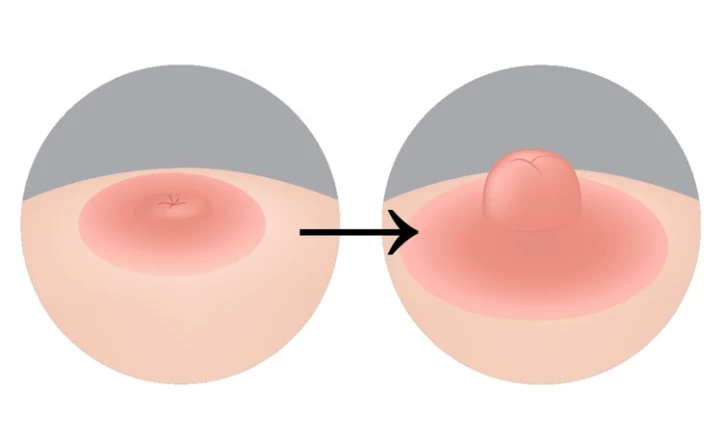
Nipple inversion, a condition where the nipple retracts inward beneath the level of the areola rather than projecting outward, affects approximately two to ten percent of women and men worldwide. While often congenital due to underdeveloped milk ducts (lactiferous ducts) or shortened fibrotic tissue bands, it can also develop following breast inflammation, significant weight changes, or previous surgery. Beyond psychological self-consciousness, chronic nipple inversion creates functional challenges, such as recurrent moisture buildup, bacterial accumulation leading to subareolar mastitis, and significant difficulties with breastfeeding.
When conservative non-surgical methods such as suction cups or piercing traction fail to provide permanent projection, inverted nipple surgery provides a safe, definitive plastic surgical solution.
Table of Contents
What Is Inverted Nipple Surgery and How Is It Performed?
When researching what is inverted nipple surgery, it is defined as a minor reconstructive and aesthetic surgical procedure designed to release shortened lactiferous ducts and fibrotic tethering bands beneath the nipple-areolar complex, reconstruct the soft tissue base, and secure the nipple in an elevated, forward-projecting position.
Get Free Consultation
Have any questions? Leave your details and we'll get back to you shortly.
The surgical strategy depends on the Han and Hong clinical grading system:
- Grade 1 (Mild Inversion): The nipple can be easily pulled out manually or with cold stimulation and maintains its outward projection without immediate retraction. Fibrosis is minimal, and the milk ducts are normal in length.
- Grade 2 (Moderate Inversion): The nipple can be pulled out manually, but it immediately retracts back inward when pressure is released. Moderate fibrosis tethering and mild duct shortening are present.
- Grade 3 (Severe Inversion): The nipple is severely retracted and cannot be pulled out manually at all. The milk ducts are constricted and fibrotic, with an underlying deficiency of supporting dermal tissue beneath the areola.
Surgical Techniques: Preserving vs. Dividing the Milk Ducts
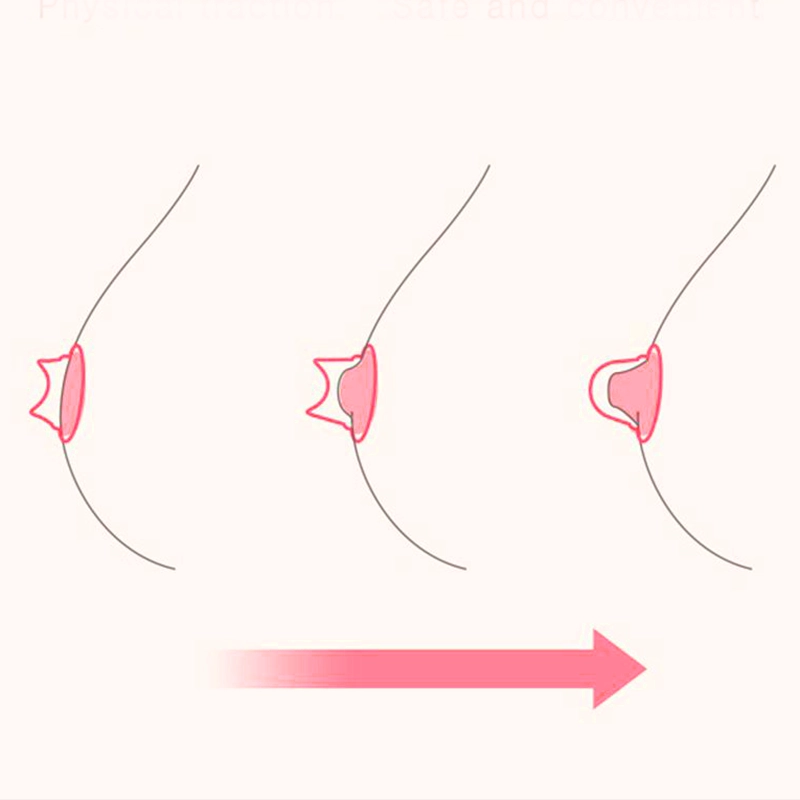
Board-certified plastic surgeons tailor the operative approach according to the grade of inversion and the patient’s future breastfeeding goals:
1. Duct-Sparing Technique (Microsurgical Release)
Designed for patients with Grade 1 or select Grade 2 inversion who plan to breastfeed in the future. Through tiny microscopic incisions at the base of the nipple, the surgeon meticulously dissects around the central lactiferous ducts using optical magnification. The restrictive fibrotic bands are divided while leaving the tubular milk ducts intact. The base is then secured using internal purse-string sutures to prevent retraction.
2. Complete Ductal Division (Non-Duct-Sparing)
Indicated for severe Grade 3 inversion or recurrent cases where lactiferous ducts are short, rigid, and atrophic. Attempting to preserve ducts in Grade 3 creates excessive downward tension, leading to recurrence. The shortened ducts and dense fibrous cords are completely severed, allowing the nipple to release and project freely outward.
3. Dermal Flap Reconstruction (Internal Support / Suspension Bridge)
When the ducts are divided, a hollow dead space remains beneath the elevated nipple. To prevent the nipple from caving back into this hollow, the surgeon creates two or three micro-dermal flaps from the surrounding areola. These flaps are rotated inwards and crisscrossed beneath the nipple like a suspension bridge, creating structural volume that permanently supports the outward projection.
Recovery Roadmap: Inverted Nipple Surgery Recovery
Because the procedure is minimally invasive and typically performed under local anesthesia, inverted nipple surgery recovery is brief and manageable:
- Day 1 to 3 (Acute Phase): Patients experience mild soreness, swelling, and minor bruising around the areola, easily managed with over-the-counter pain medications. A specialized protective dome dressing (such as a syringe guard or perforated shield) is taped over the nipple to prevent bra friction or accidental flattening.
- Day 4 to 7 (Early Healing): Surface swelling begins to subside. Non-absorbable traction sutures (if utilized) are gently removed at the clinic around day seven. Patients can comfortably shower, letting water run gently over the chest without direct soap scrubbing.
- Week 2 to 3 (Resuming Activity): Patients can return to light exercise and sedentary office work within two to three days. Underwire bras, direct chest pressure, and sleeping face down must be avoided for at least three to four weeks.
- Month 1 to 3 (Final Tissue Settling): The internal dermal architecture matures, sensation normalizes, and the micro-scars along the border of the nipple and areola fade into natural skin creases, becoming virtually invisible.
Visual Changes: Inverted Nipple Surgery Before and After
Reviewing documented clinical inverted nipple surgery before and after portfolios illustrates several functional and aesthetic improvements:
- Symmetrical Outward Projection: Retracted, slit-like, or indented nipples are transformed into natural, upright, forward-facing contours.
- Enhanced Intimate Confidence: Patients report relief from body dysmorphia, feeling comfortable wearing unpadded swimwear, form-fitting tops, or lingerie.
- Elimination of Chronic Hygiene Issues: By unrolling the folded crevices, recurrent collection of dead skin, sebum, foul-smelling secretions, and localized dermatitis is completely resolved.
- Natural Areolar Harmony: Incisions placed at the base of the nipple heal with negligible pigment alteration, preserving natural breast aesthetics.
Important Post-Operative Care Guidelines
- Maintain the Protective Shield Diligently: Keep the protective cup or dressing over the nipple as instructed for the first two to three weeks to avoid crushing the delicate newly projected tissue.
- Avoid Direct Pressure and Friction: Do not wear tight sports bras, push-up bras, or restrictive clothing during early recovery. Soft, loose-fitting cotton bras without seams over the nipple are ideal.
- No Smoking or Nicotine: Nicotine constricts micro-capillaries supplying blood to the nipple-areolar complex, significantly increasing the risk of delayed healing or partial tissue necrosis.
- Do Not Pull or Twist the Nipple: Avoid mechanical handling, intimate touch, or pulling on the surgical site for at least six weeks until internal scar tissue stabilizes.
Comparative Matrix: Inverted Nipple Surgical Approaches
| Clinical Parameter | Duct-Sparing Technique | Complete Ductal Division | Dermal Flap Support Technique |
| Primary Indication | Grade 1 & Mild Grade 2 | Severe Grade 3 & Recurrences | Severe Grade 3 with soft tissue deficit |
| Breastfeeding Feasibility | Preserved in 70 to 85 percent of cases | Not possible (Ducts transected) | Not possible (Ducts transected) |
| Incision Location | Tiny micro-incisions at nipple base | Base of nipple / Periareolar | Periareolar & subnipple base |
| Recurrence Risk | Low to Moderate (5 to 10 percent) | Extremely Low (Under 2 percent) | Extremely Low (Under 1 percent) |
| Anesthesia Type | Local anesthesia | Local anesthesia with light sedation | Local anesthesia or Sedation |
| Procedural Duration | 30 to 45 Minutes | 30 to 45 Minutes | 45 to 60 Minutes |
| Downtime | 1 to 2 Days | 1 to 2 Days | 2 to 3 Days |
What Determines the Inverted Nipple Surgery Cost?
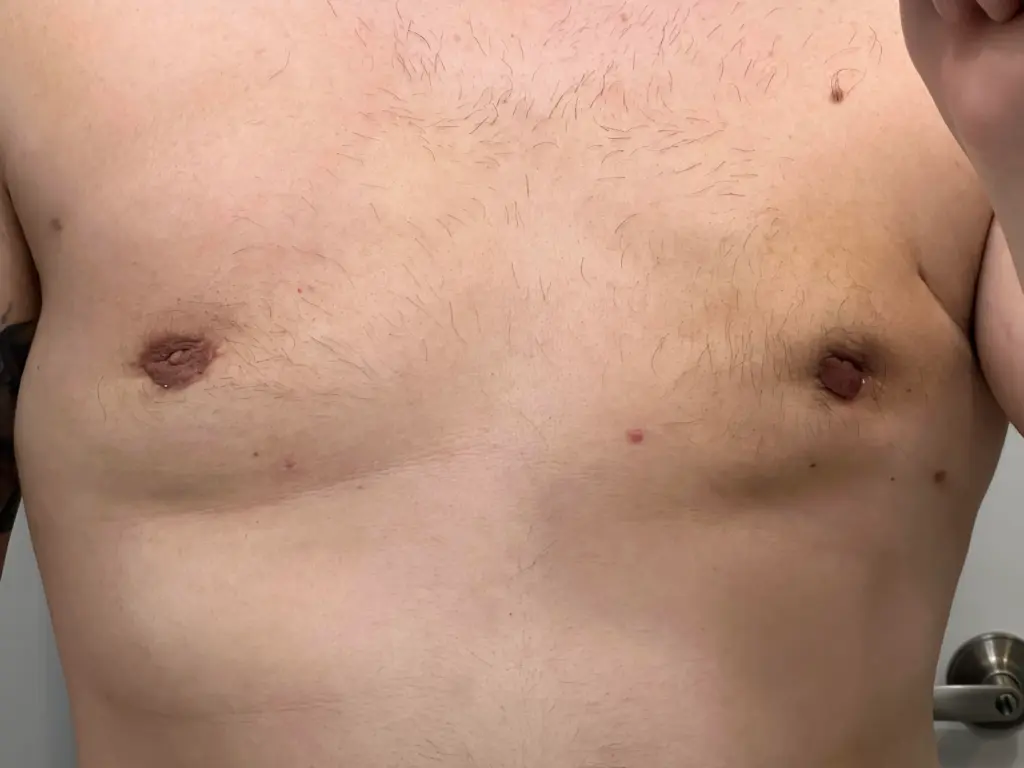
Prospective patients researching the overall inverted nipple surgery cost or exploring travel packages for inverted nipple surgery Turkey will find that pricing is personalized based on anatomical and surgical variables:
- Unilateral vs. Bilateral Correction: Treating a single inverted nipple requires fewer consumables and less surgical time than correcting bilateral inversion across both breasts.
- Inversion Severity and Technique: Correcting Grade 1 inversion using a simple purse-string suture involves less surgical time than a complex Grade 3 dermal flap transposition requiring deep dissection.
- Anesthesia Preference: Procedures performed under local anesthesia in an outpatient setting incur lower facility fees compared to procedures performed with intravenous sedation or general anesthesia requested by anxious patients.
- Concomitant Breast Procedures: Inverted nipple correction is frequently combined with breast augmentation, breast reduction, or a breast lift (mastopexy). Combining surgeries adjusts operating room duration and clinical fees.
- Surgeon Credentials and Specialization: Board-certified plastic, aesthetic, and reconstructive surgeons with extensive experience in nipple-areolar reconstruction reflect their technical precision in their fee structure.
- Geographic Location and Package Offerings: Healthcare overhead, clinical malpractice coverage, and currency variations create noticeable price differences between private domestic practices in the US or UK and internationally accredited medical travel centers in Turkey. Clinics offering inverted nipple surgery in Turkey frequently bundle pre-operative consultations, local anesthesia, procedure fees, protective dressings, post-operative medications, hotel accommodation, and private VIP transfers into structured care packages.
Frequently Asked Questions (FAQ)
Will inverted nipple surgery affect my ability to breastfeed?
If you have Grade 1 or mild Grade 2 inversion and undergo a duct-sparing microsurgical technique, milk duct integrity is preserved, allowing future breastfeeding in the majority of cases. However, if you have severe Grade 3 inversion requiring complete ductal division, milk cannot travel through the transected ducts to the surface, making future breastfeeding from that breast impossible. Your surgeon will discuss your future pregnancy plans prior to choosing the technique.
Will I lose sensation in my nipples after the surgery?
Temporary numbness, hypersensitivity, or mild tingling is normal during the first four to eight weeks as microscopic cutaneous nerve endings recover. Because the main nerve supply (lateral cutaneous branch of the fourth intercostal nerve) travels to the nipple through deeper glandular layers, permanent loss of erotic sensation is uncommon (occurring in less than two to three percent of cases).
Can an inverted nipple pop out on its own during pregnancy?
Yes, in some mild Grade 1 cases, hormonal shifts during pregnancy and lactation cause the milk ducts and glandular tissue to expand naturally, occasionally everting a flat or mildly inverted nipple. However, for Grade 2 and Grade 3 inversion with dense internal fibrotic bands, pregnancy hormones rarely overcome the structural tethering without surgical intervention.
How soon after surgery can I return to work and exercise?
Most patients return to non-strenuous desk jobs and everyday activities within twenty-four to forty-eight hours. Light walking is encouraged from day one. Strenuous cardiovascular workouts, jogging, heavy lifting, and chest-focused exercises should be paused for three to four weeks to avoid pressure or friction on the healing nipple.

 |