Skip to content

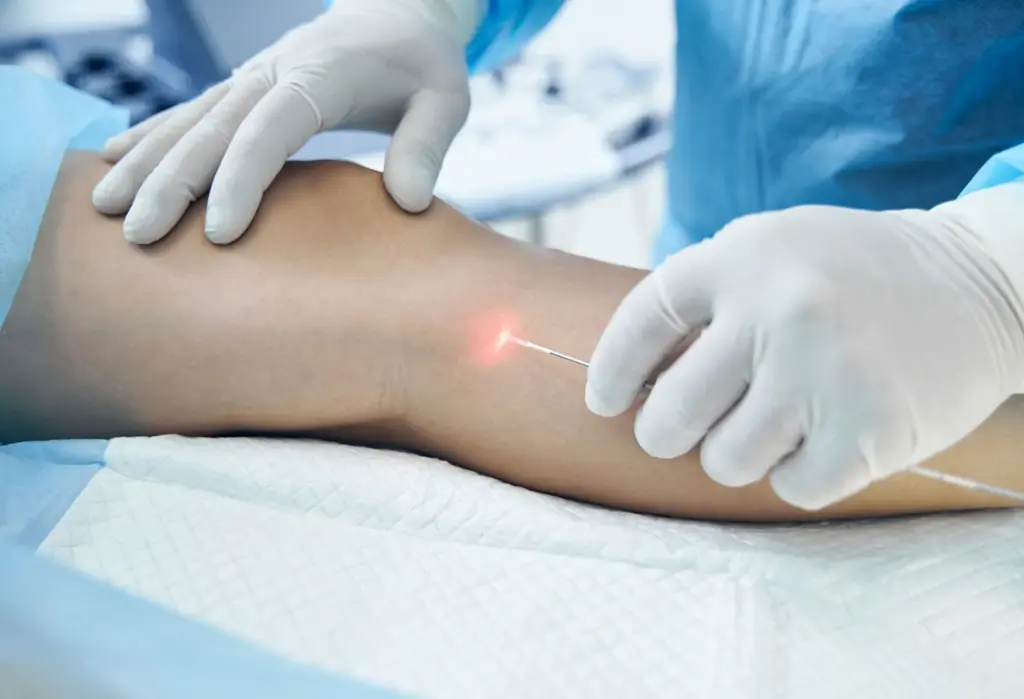
Chronic venous insufficiency and symptomatic varicose veins affect more than thirty percent of adults worldwide. When tiny, one-way valves inside the lower extremity veins become incompetent, blood pools downward under the force of gravity. This retrograde reflux leads to persistent leg heaviness, nocturnal throbbing, ankle swelling, venous stasis dermatitis, and ropey, bulging superficial veins. Left untreated, chronic venous hypertension can progress to painful skin ulcerations. For decades, surgical vein stripping was the only definitive treatment, requiring extensive groin incisions, hospital admission, and prolonged bed rest. Modern vascular surgery has replaced stripping with a minimally invasive, image-guided solution: endovenous laser ablation (EVLA or EVLT).
Patients considering minimally invasive vein correction routinely research what is endovenous laser ablation, examine the step-by-step endovenous laser ablation procedure, ask with concern does endovenous laser ablation hurt, explore the long-term clinical scope of endovenous laser ablation treatment, evaluate potential endovenous laser ablation complications, and analyze clinical variables to understand how much does endovenous laser ablation cost. This clinical guide examines the underlying biophysics, intraoperative stages, complication prevention, and pricing dynamics.
Table of Contents
What Is Endovenous Laser Ablation and How Does It Work?
If you are researching what is endovenous laser ablation, it is a targeted, catheter-based vascular procedure that delivers radial laser energy directly inside a diseased vein, causing it to collapse, seal shut, and safely dissolve into surrounding tissue over time.
Get Free Consultation
Have any questions? Leave your details and we'll get back to you shortly.
The biophysical mechanism works through controlled thermal energy:
- Fiber Insertion Under Duplex Ultrasound: Using continuous, real-time vascular ultrasound, the vascular surgeon accesses the diseased vein through a single needle puncture, advancing a flexible laser fiber to the saphenofemoral or saphenopopliteal junction.
- Tumescent Anesthetic Jacket: A diluted, chilled local anesthetic fluid is infused around the entire length of the vein under ultrasound guidance. This fluid layer compresses the vein against the laser fiber, numbs the surrounding tissue, and acts as a protective heat shield for adjacent skin and nerves.
- Targeted Photo-Thermal Destruction: As the laser fires, light energy is absorbed by hemoglobin in the blood and water in the vein wall. The heat denatures endothelial proteins and collagen fibrils, prompting immediate vessel spasm and permanent occlusion.
- Natural Circulatory Re-Routing: Once the diseased vein is sealed, venous blood automatically redirects into healthy, deep muscular veins with intact valves, immediately normalizing venous return pressure.
Clinical Protocol: The Endovenous Laser Ablation Procedure
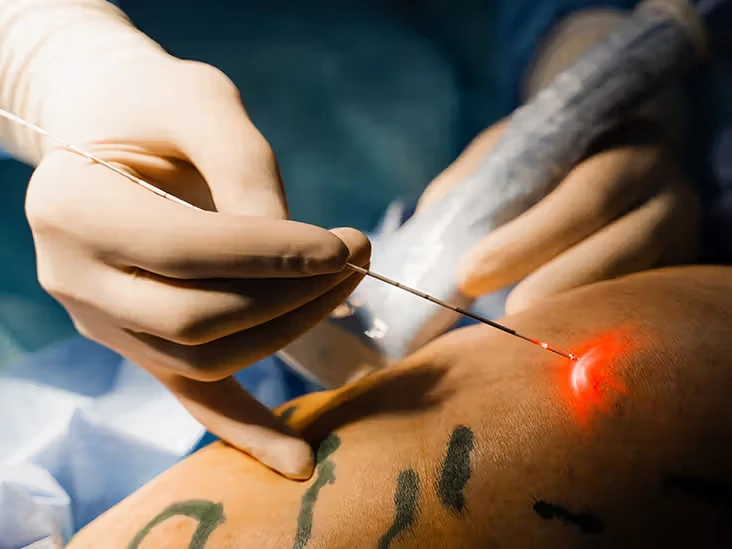
Undergoing an endovenous laser ablation procedure is an outpatient, clinic-based experience completed in four distinct phases:
1. Pre-Operative Duplex Mapping
While the patient is standing, the vascular specialist uses high-resolution Doppler ultrasound to map the exact reflux origin, measuring vessel diameter, tracking anatomical tortuosity, and marking skin entry points with surgical ink.
2. Micro-Access and Sheath Placement
The skin is sanitized, and a small droplet of local anesthetic is placed at the access site (usually below the knee or mid-calf). Under direct ultrasound visualization, a fine eighteen-gauge needle enters the lumen of the great or small saphenous vein, followed by the insertion of a guidewire, introducer sheath, and specialized radial-emitting laser fiber.
3. Tumescent Hydro-Dissection Infusion
Using a specialized infusion pump, liters of chilled lidocaine and saline are injected circumferentially into the perivenous space. This step is critical: it eliminates procedural pain, empties the vein of excess blood for optimal wall contact, and isolates the thermal zone from sensory nerves.
4. Controlled Laser Pullback and Occlusion
The laser system delivers calibrated energy pulses while the surgeon steadily withdraws the fiber at a calculated speed (typically one millimeter per second). The vein seals from top to bottom. Once the fiber is removed, a sterile dressing and graduated medical compression stocking are applied immediately.
Patient Comfort: Does Endovenous Laser Ablation Hurt?
A common question among vein patients is does endovenous laser ablation hurt:
- During the Procedure: The treatment is virtually painless. You will feel minor pinpricks and pressure sensations during the delivery of the tumescent local anesthesia. Once the tumescent fluid is in place, the thermal laser firing itself causes zero pain, as the perivenous nerves are fully anesthetized.
- The First Forty-Eight Hours: As the local anesthesia wears off, patients typically report a dull, localized ache or tight pulling sensation along the inner thigh, similar to a pulled muscle. Over-the-counter anti-inflammatory medications like ibuprofen or paracetamol easily resolve this discomfort.
- Days Three to Ten (The Tight-Cord Phase): As the sealed vein undergoes biological fibrosis and shrinks, it feels like a firm, guitar-string cord beneath the skin. This sensation is a normal clinical marker of successful closure and subsides as the body reabsorbs the tissue.
Safety and Risks: Endovenous Laser Ablation Complications
When performed by an accredited vascular surgeon, EVLA boasts a technical success rate exceeding ninety-five to ninety-eight percent. Nonetheless, understanding potential endovenous laser ablation complications is vital:
- Common and Benign Side Effects:
- Bruising (Ecchymosis): Mild bruising along the track of the treated vein is normal, resolving spontaneously within ten to fourteen days.
- Localized Induration and Redness: Mild superficial tissue inflammation along the vein channel is managed with compression stockings and walking.
- Rare Clinical Complications:
- Thermal Nerve Injury (Paraesthesia): The saphenous or sural sensory nerves run near the saphenous veins. If heat penetrates beyond the vein wall, temporary tingling or numbness can occur, usually resolving over several weeks.
- Deep Vein Thrombosis (DVT) and EHIT: Endovenous Heat-Induced Thrombosis occurs when a blood clot extends from the treated superficial vein into the deep venous system. Post-operative ultrasound screening at day three to seven detects this early, allowing prompt treatment.
- Skin Burns and Hyperpigmentation: Extremely rare with modern radial fibers and correct tumescent fluid technique.
Post-Treatment Recovery and Walking Rules
- Immediate Ambulation: You are required to stand up and walk for fifteen to twenty minutes immediately after the procedure is finished to promote deep venous blood flow and prevent blood clots.
- Compression Stockings: Wear your prescribed Class Two graduated compression stocking continuously for the first forty-eight hours, and during daytime hours for the following one to two weeks.
- Avoid Strenuous Exercise and Hot Baths: Refrain from heavy weightlifting, high-impact running, hot tubs, saunas, and hot baths for two weeks to prevent premature vasodilation.
- No Prolonged Immobility: Avoid long-haul flights or sitting completely still for hours during the first two weeks post-procedure.
Comparative Matrix: EVLA vs. Radiofrequency vs. Surgery
| Clinical Parameter | Endovenous Laser Ablation (EVLA) | Radiofrequency Ablation (RFA) | Surgical Vein Stripping |
| Primary Mechanism | Thermal radial laser energy | Thermal resistive electrical heat | Mechanical physical avulsion/removal |
| Anesthesia Type | Local tumescent anesthesia | Local tumescent anesthesia | General or spinal anesthesia |
| Hospitalization | Outpatient (clinic visit) | Outpatient (clinic visit) | Inpatient (1 to 2 hospital days) |
| Incision Requirement | Needle puncture (no scalpel) | Needle puncture (no scalpel) | Multiple surgical groin/calf cuts |
| Procedural Success Rate | 95 to 98 percent | 93 to 96 percent | 80 to 85 percent |
| Return to Normal Activities | Immediate walking; work in 24 hours | Immediate walking; work in 24 hours | 2 to 4 weeks recovery |
| Long-Term Recurrence | Low (under 5 percent at 5 years) | Low (under 7 percent at 5 years) | Moderate to high (neovascularization) |
What Determines the Endovenous Laser Ablation Cost?
When researching how much does endovenous laser ablation cost, prospective patients will discover that treatment pricing is personalized based on several clinical, anatomical, and logistical variables:
- Unilateral vs. Bilateral Treatment: Treating a single leg requires fewer consumable supplies and less operative time than performing simultaneous bilateral ablations across both legs.
- Number of Vein Trunks and Tributaries: A patient requiring treatment on only the great saphenous vein involves a different clinical scope than someone needing concurrent ablation of the small saphenous vein, anterior accessory branches, and ambulatory micro-phlebectomies for bulging surface clusters.
- Laser Technology and Fiber Design: Modern radial-emitting fibers (which fire light in a complete ring rather than a forward jet) cause less post-operative pain and bruising, carrying specific single-use consumable costs compared to older bare-tip fibers.
- Pre- and Post-Operative Vascular Ultrasound: Comprehensive color duplex mapping prior to the procedure and mandatory post-procedure surveillance scans to verify closure and rule out EHIT influence the total diagnostic fee structure.
- Vascular Specialist Credentials: Board-certified vascular surgeons, interventional radiologists, and phlebologists with specialized fellowship training reflect their technical precision in their professional fee schedules.
- Geographic Destination and Healthcare Packages: Facility overhead, malpractice frameworks, and currency exchange rates create notable pricing differences between private metropolitan clinics in the UK, North America, and medical travel hubs like Turkey. Vein packages in Turkey routinely bundle duplex diagnostic scans, laser ablation, compression hosiery, post-operative medications, hotel accommodation, and private VIP transfers into structured care plans.
Frequently Asked Questions (FAQ)
What happens to the sealed vein after endovenous laser ablation?
Once the vein wall is thermally denatured by the laser, it turns into a fibrous, non-functioning strand of tissue. Over the following six to twelve months, your body’s immune system naturally breaks down and reabsorbs this dead fibrous cord, causing it to disappear completely without surgical removal.
Can varicose veins return after laser ablation?
The specific vein trunk closed with laser ablation cannot reopen or cause varicose veins again in over ninety-five percent of cases. However, chronic venous insufficiency is a progressive vascular condition; over years, other untreated veins in your leg may develop faulty valves and require maintenance sclerotherapy or lifestyle adjustments.
How soon after EVLA can I go back to work?
Most patients with desk, office, or sedentary jobs return to work the very next day. If your profession involves heavy manual lifting, intense physical labor, or prolonged standing in place, you may require two to three days off to ensure swelling remains under control.
Why do I need to walk immediately after the laser vein treatment?
Walking engages the calf muscle pump (the peripheral heart of the circulatory system). Contracting the calf muscles forces blood out of the deep venous system back toward the heart, maintaining high-velocity flow in the deep veins and preventing deep vein thrombosis (DVT).

 |