Skip to content

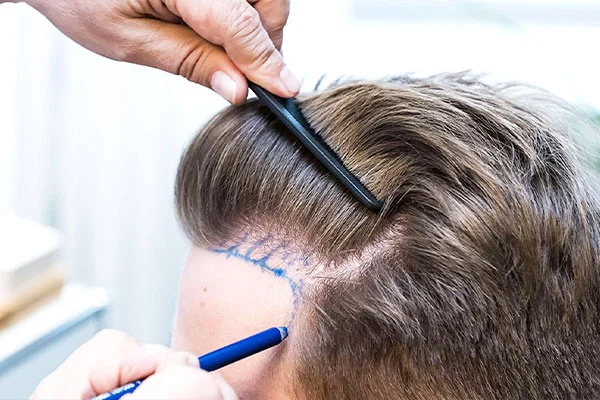
The primary objective of modern follicular restoration is complete invisibility: an outcome so natural that even a barber cannot detect surgical intervention. Decades ago, early surgical hair restoration relied on circular punch trephines measuring three to four millimeters in diameter to harvest dense clusters of twelve to twenty hairs. When placed into recipient sites, these round tissue islands healed into bunched, artificial tufts resembling the synthetic hair on a plastic doll or cornfields. While modern micro-Follicular Unit Extraction (FUE) and Direct Hair Implantation (DHI) harvest individual follicular units consisting of one to four hairs, an outdated or poorly executed procedure performed by inexperienced technicians can still yield an unnatural, pluggy hair transplant.
Patients living with an unnatural pluggy hair transplant result frequently seek clinical guidance on how to fix pluggy hair transplant mistakes, evaluate reconstructive extraction techniques in doll hair transplant repair, explore surgical revision packages for a pluggy hair transplant Turkey, examine the delicate steps of unnatural hairline graft removal, and analyze the clinical variables that determine the overall revision hair transplant cost. This clinical guide breaks down the biological errors behind tufted hairlines, multi-stage repair protocols, recovery benchmarks, and pricing dynamics.
Table of Contents
What Causes a Pluggy Hair Transplant?
A tufted, unnatural hairline does not happen by accident; it stems from specific surgical design and execution errors:
Get Free Consultation
Have any questions? Leave your details and we'll get back to you shortly.
- Placement of Multi-Hair Grafts in the Frontal Row: In nature, the first one to two centimeters of a human hairline consists exclusively of delicate, single-hair follicular units. If an inexperienced surgical team implants two-hair, three-hair, or four-hair grafts directly along the transition zone, the eye immediately perceives thick, bunched clusters.
- Oversized Recipient Incisions (Pits and Slits): Punching large, wide recipient channels causes surrounding dermal tissue to contract unevenly around the graft, producing an elevated cobblestone effect or deep pitting around each tuft.
- Perpendicular and Unnatural Angles: Natural hairline follicles emerge at an acute angle of ten to fifteen degrees, hugging the forehead skin before curving upward. When grafts are drilled perpendicularly (at forty-five to ninety degrees), the hair grows straight out like bristles on a brush.
- Lack of Micro-Irregularities: Human hairlines are never straight lines. Constructing a ruler-straight, solid row of dense hair produces an artificial appearance.
- Outdated Punch Grafts: Historic surgical punch techniques removed large chunks of skin that left permanent circular scalp scars while anchoring large clumps of follicles into recipient holes.
Corrective Techniques: How to Fix a Pluggy Hair Transplant
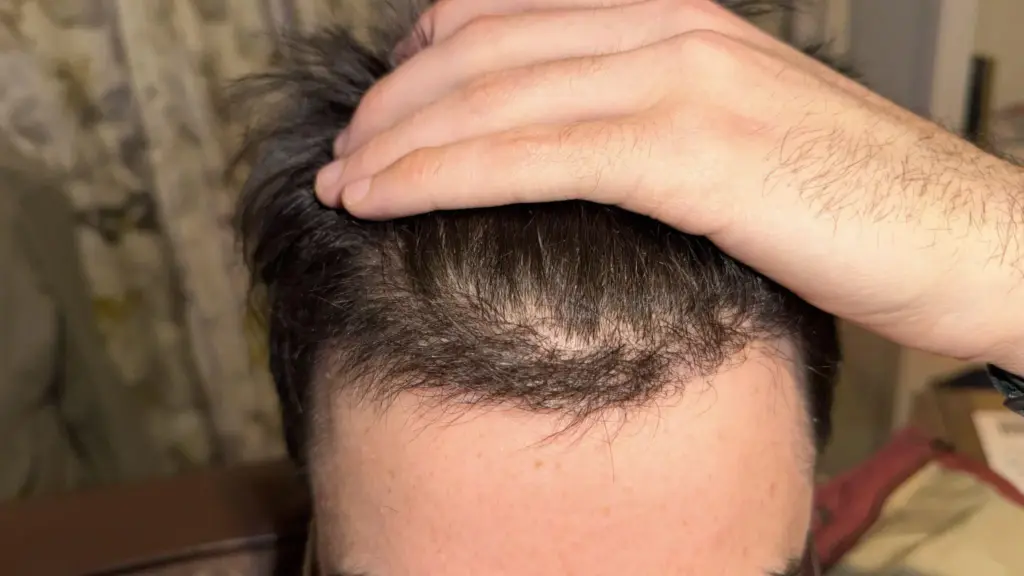
Repairing a compromised hairline requires reconstructive trichology expertise. Surgeons utilize two primary clinical strategies:
1. Complete Graft Excision and Redistribution (The Punch Out Method)
The surgeon uses micro-punches (measuring zero point seven to zero point eight millimeters) to core out the large, misplaced grafts under optical magnification.
- Dissection and Recycling: The excised plugs are transferred to a microscope, dissected into individual single-hair follicular units, cleaned of excess fibrotic scar tissue, and re-implanted elsewhere on the scalp at proper angles.
- Closure of Excision Sites: The tiny holes left behind by the removed plugs are sutured with fine micro-sutures or allowed to heal via secondary intention, smoothing out cobblestone irregularities.
2. Camouflage Technique (Micro-FUE Softening)
If the existing misplaced grafts are pointing in a relatively acceptable direction and do not sit too far down the forehead, the surgeon leaves them in place and builds a new transition zone in front of them.
- Single-Hair Feathering: Hundreds of delicate single-hair grafts harvested from the lower nape or behind the ears are implanted one to two centimeters ahead of the pluggy clusters.
- Creating Natural Density Gradients: By building an irregular, softly feathered border, the eye is tricked into seeing a natural progression of density, effectively hiding the thick tufts behind a screen of soft, natural hairs.
3. Combined Excision and Camouflage (The Gold Standard)
For severe cobblestone cases, a staged protocol is used: the most prominent, unnatural plugs are surgically excised, the scalp is allowed to heal for three to six months, and a second session of micro-FUE or DHI feathering is performed to re-establish a soft transition.
Recovery Roadmap: What to Expect During Revision Healing
Revisional procedures involve operating on pre-existing scar tissue, which alters the recovery timeline compared to virgin scalp surgery:
- Days One to Three (Acute Clotting and Swelling): Tiny crusts form over both the newly harvested donor area and the punch-out excision sites along the hairline. Mild forehead swelling peaks around day three. Patients wear a loose, supportive bandage and use saline spray every hour to keep the graft sites moist.
- Days Four to Seven (Crust Softening): Gentle washing using medical foam shampoo loosens crusts. Sutures used to close punch-out holes are removed around day seven.
- Days Eight to Ten (Clean Scalp Stage): Residual crusts naturally wash away during the final specialized wash. The skin beneath appears pink, and cobblestone bumps from old plugs begin to flatten.
- Weeks Two to Eight (The Shedding Phase): Re-implanted camouflage hairs shed naturally (shock loss). The underlying follicular roots remain intact beneath the skin.
- Months Three to Six (Sprouting and Regrowth): New, delicate single hairs sprout from the front row at acute angles, softening the hairline.
- Months Nine to Twelve (Final Natural Integration): The transplanted hair matures in caliber and texture, fully concealing past surgical mistakes under a soft, natural density gradient.
Visual Transformations: Pluggy Hair Transplant Result Before and After
Examining clinical portfolios of revision cases illustrates clear therapeutic and aesthetic improvements:
- Softened Hairline Transition: A harsh, bristle-like wall of hair is replaced by an irregular, feathered margin that mimics natural genetic hair growth.
- Flattened Scalp Contour: Cobblestoned bumps, fibrous ridges, and depressed pits around old grafts are surgically smoothed down.
- Corrected Angle of Growth: Hairs that once pointed straight out are realigned to follow the forward and lateral sweep of the natural forehead contour.
- Restored Social Confidence: Patients regain the freedom to style their hair backward, expose their forehead, and swim without feeling the need to wear hats or conceal their hairline.
Essential Post-Operative Revision Care Guidelines
- Absolutely No Scratching or Rubbing: Healing scar tissue produces itching. Never pick at crusts or scratch the hairline, as dislodging fragile grafts during the first eight days permanently voids the repair.
- Sleep with Head Elevated: Use a contoured neck pillow and two soft bed pillows to sleep at a forty-five-degree angle for the first five nights to speed lymphatic drainage and prevent fluid collection in the forehead.
- Avoid Direct Sun Exposure: Shield the delicate, pink healing skin along the hairline from direct ultraviolet radiation for at least six months by wearing a loose, wide-brimmed hat. UV rays cause hyperpigmentation, making revision scar tissue permanently dark.
- Postpone Intense Workouts: Refrain from heavy lifting, high-impact running, and intense sweating for four weeks to protect the micro-sutures and prevent graft popping.
Comparative Matrix: Virgin Hair Transplant vs. Pluggy Repair Surgery
| Clinical Parameter | Virgin FUE / DHI Hair Transplant | Pluggy Hairline Revision (Excision + Camouflage) |
| Primary Objective | Restoring hair in empty balding areas | Removing or concealing poorly placed thick grafts |
| Surgical Complexity | Standard anatomical placement | Highly complex (working through fibrous scar tissue) |
| Tissue Handling | Standard single or multi-graft insertion | Punching out plugs, dissecting units, and re-implanting |
| Number of Stages | Usually 1 single session | Frequently 1 to 2 staged procedures |
| Healing Dynamics | Standard 7 to 10 day scab shedding | Prolonged erythema due to underlying fibrosis |
| Donor Requirement | Standard donor density | Dependent on remaining donor reserves after past surgeries |
| Aesthetic Outcome | High density and natural contour | Natural softening, scar reduction, and aesthetic balance |
What Determines the Revision Hair Transplant Cost?
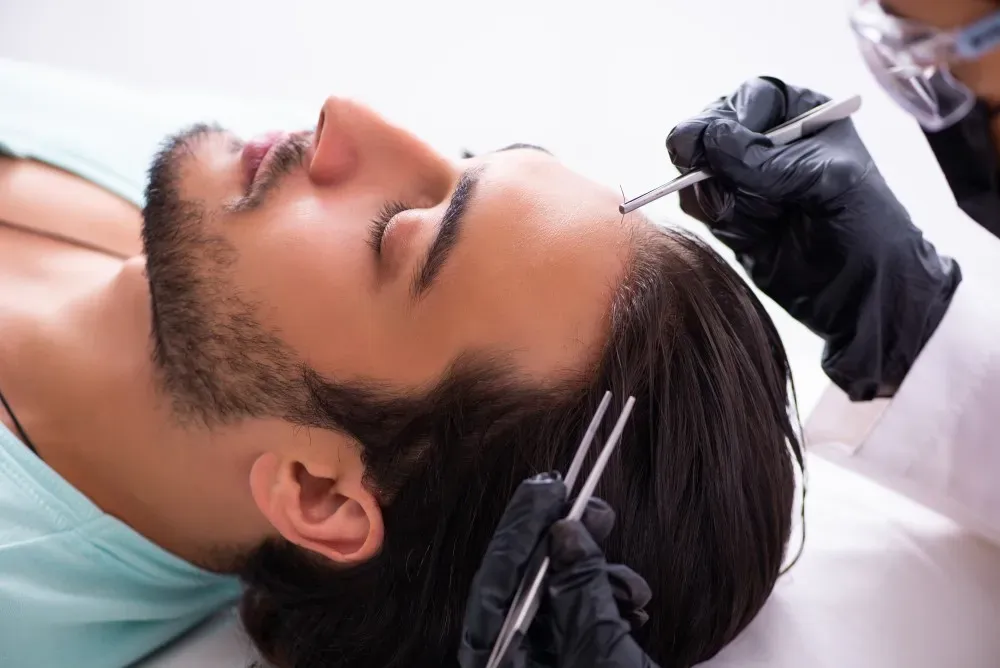
When researching the overall revision hair transplant cost or evaluating medical travel packages for a pluggy hair transplant Turkey, prospective patients will discover that reconstructive pricing is determined by distinct clinical variables:
- Extent of Scarring and Plug Density: Correcting a few misplaced multi-hair grafts along the temples requires less operative time than excising and reconstructing an entire frontal hairline plagued by cobblestone scarring.
- Staged Surgical Approach: If the clinical plan requires two separate surgeries, first coring out and closing the large plugs, followed by a secondary session months later for DHI camouflage feathering, the multi-stage procedure adjusts overall fees.
- Donor Reserve Preservation: Patients who have undergone previous surgeries often present with depleted or patchy donor zones. The surgeon may need to carefully harvest beard grafts or use delicate micro-FUE to preserve remaining donor tissue.
- Specialist Qualifications and Surgical Artistry: Reconstructive hair restoration is one of the most demanding niches in plastic surgery. Experienced surgeons who specialize in repair procedures reflect their technical precision in their fee structure.
- Geographic Destination and Package Inclusions: Operating overhead creates noticeable price variations between private domestic practices in North America or the UK and specialized healthcare centers in Turkey. Revision packages in Turkey frequently bundle pre-operative trichoscopic mapping, graft excision, camouflage placement, post-operative medications, hotel accommodation, and private VIP transfers into structured care arrangements.
Frequently Asked Questions (FAQ)
Can pluggy hair grafts be removed with laser hair removal instead of surgery?
Yes, in select cases where the misplaced grafts are positioned too far down the forehead or point in completely unnatural directions, alexandrite or Nd:YAG laser hair removal can permanently destroy the follicles without incisions. However, laser hair removal destroys the hair roots permanently, meaning those valuable grafts cannot be recycled and re-implanted elsewhere. Furthermore, laser hair removal does not smooth out raised cobblestone skin bumps; surgical excision removes both the hair and the raised scar tissue simultaneously.
Why do some clinics still produce pluggy hair transplant results today?
While modern technology has advanced, unnatural results still occur in low-cost, unregulated clinics where unlicensed technicians, rather than qualified surgeons, perform the procedure. If technicians lack micro-dissection training, they may fail to separate multi-hair grafts under microscopes or place two-hair and three-hair grafts into the first row of the hairline to save time.
How long must I wait between plug excision and camouflage hair grafting?
If large plugs are cored out and the skin is sutured closed, the vascular beds and dermal layers require approximately three to six months to fully heal, soften, and re-establish proper microcirculation before new delicate single grafts can be safely planted into the same area.
Will the donor area look worse after a revision procedure?
When performed by an experienced hair restoration surgeon, the donor area is harvested with extreme conservative care. If scalp donor reserves are depleted from past operations, the surgeon can incorporate beard grafts (from under the chin) to construct the camouflage layer, preserving the back of your head from overharvesting.

 |