Skip to content
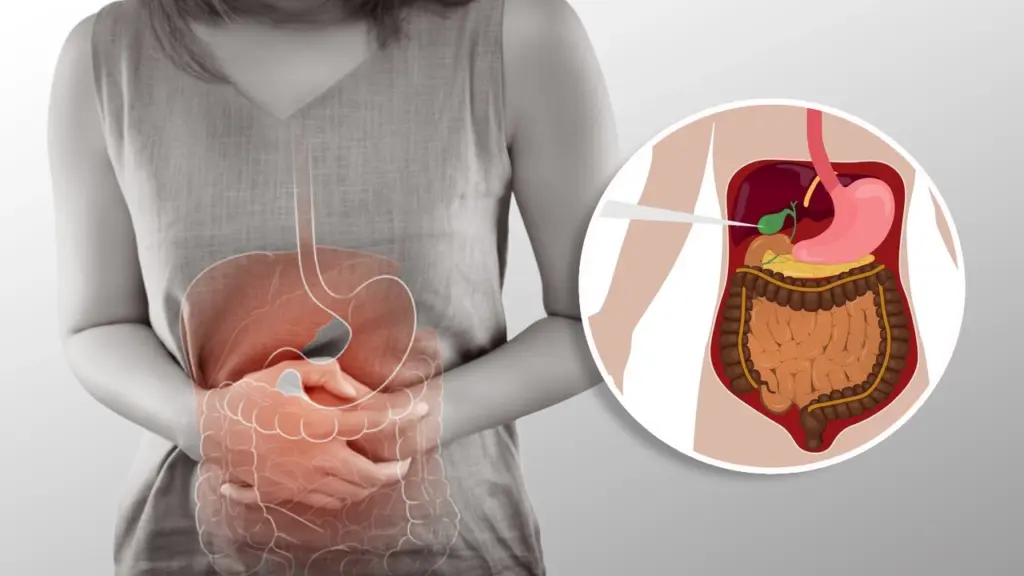
Bariatric surgery (including laparoscopic sleeve gastrectomy, Roux-en-Y gastric bypass, and duodenal switch) is one of the most effective medical interventions for resolving severe obesity, type 2 diabetes, hypertension, and obstructive sleep apnea. By restricting caloric intake, altering gastrointestinal hormones, and modifying nutrient absorption, weight loss surgery leads to substantial, rapid weight reduction within the first 12 to 18 months.
However, rapid metabolic shifts introduce physiological stresses on the hepatobiliary system. One of the most frequent post-operative clinical issues is the development of gallstones after bariatric surgery.
Table of Contents
Why Do Gallstones Form After Bariatric Surgery?
To understand why gallstones develop post-operatively, we must examine how bile composition changes during rapid weight loss:
Get Free Consultation
Have any questions? Leave your details and we'll get back to you shortly.
HEPATOBILIARY METABOLIC CASCADE:
- [Rapid Adipose Breakdown] -> Liver hyper-secretes cholesterol into bile
- [Cholesterol Supersaturation] -> Bile becomes dense, sluggish sludge
- [Decreased Cholecystokinin (CCK)] -> Impaired gallbladder motility & emptying
- [Nucleation & Precipitation] -> Formation of hard cholesterol gallstones
1. Cholesterol Supersaturation of Bile
During rapid fat burning (lipolysis), large quantities of stored cholesterol are mobilized and processed by the liver. The liver excretes excessive amounts of cholesterol directly into the bile fluid. When cholesterol concentration exceeds the solubilizing capacity of bile salts and phospholipids, bile becomes supersaturated, forming microscopic crystals that clump into solid cholesterol gallstones.
2. Impaired Gallbladder Motility and Hypomotility
Following restrictive or malabsorptive bariatric surgery, dietary fat consumption drops dramatically in the early post-op phases. Dietary fats are the primary trigger for the release of cholecystokinin (CCK), the gastrointestinal hormone responsible for stimulating gallbladder contraction. Without adequate fat stimulation, the gallbladder empties infrequently and incompletely. Stagnant bile thickens into biliary sludge, which serves as a breeding ground for stone crystallization.
3. Alterations in Enterohepatic Bile Acid Circulation
In procedures involving intestinal rerouting (such as gastric bypass or duodenal switch), the anatomical alteration in bile acid absorption disrupts the normal enterohepatic circulation, reducing the bile salt pool and further compromising cholesterol solubility.
Symptoms of Gallstones After Weight Loss Surgery
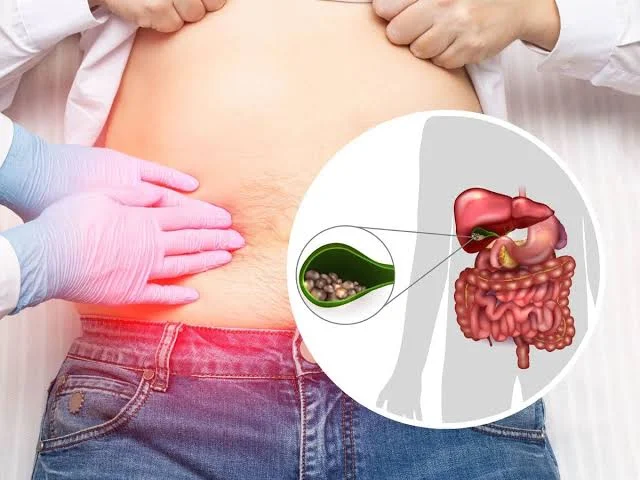
While some patients develop asymptomatic (“silent”) stones, approximately 15 to 30 percent develop symptomatic gallstones requiring clinical attention. Key symptoms of gallstones after weight loss surgery include:
- Biliary Colic (Upper Right Abdominal Pain): A sudden, severe, cramping or aching pain in the right upper quadrant (RUQ) of the abdomen, often radiating to the right shoulder blade or mid-back.
- Postprandial Pain Spikes: Pain attacks typically occur 30 to 90 minutes after consuming a meal, particularly one containing dietary fats.
- Epigastric Pressure and Severe Bloating: Feeling intense fullness, sharp pressure beneath the sternum, or unexplained nausea and vomiting.
- Jaundice (Late / Obstructive Sign): Yellowing of the sclera (eyes) or skin, accompanied by dark tea-colored urine and clay-colored stools, indicating a stone has migrated into the common bile duct (choledocholithiasis).
- Fever and Chills: Signals secondary bacterial infection of the gallbladder wall (acute cholecystitis) or bile ducts (cholangitis), requiring immediate emergency care.
How to Prevent Gallstones After Bariatric Surgery
Because up to 35 to 40 percent of bariatric patients develop gallstones within the first 6 months if left untreated, proactive prevention protocols are standard clinical practice. Here is an overview of how to prevent gallstones after bariatric surgery:
GALLSTONE PREVENTION PROTOCOL:
- Ursodeoxycholic Acid (UDCA / Ursodiol): 300 to 600 mg daily for 6 months.
- Controlled Weight Loss: Aim for steady, monitored fat loss rather than starvation.
- Healthy Dietary Fats: Introduce small amounts of healthy oils to stimulate CCK.
- Adequate Hydration: Drink 1.5 to 2.0 liters of water daily to prevent bile concentration.
1. Preventative Medication: Ursodiol (UDCA) Therapy
The gold standard pharmacological intervention for preventing gallstones after bariatric surgery is the prescription of ursodiol after bariatric surgery (Ursodeoxycholic Acid or UDCA, commonly dosed at 300 mg twice daily or 500 to 600 mg once daily for 6 continuous months post-op). Ursodiol works by:
- Decreasing hepatic secretion of cholesterol into bile.
- Increasing the concentration of solubilizing bile acids.
- Dissolving microscopic cholesterol crystals before they aggregate into hard stones.
- Clinical trials show that consistent Ursodiol compliance reduces the incidence of post-bariatric gallstone formation from over 30 percent down to under 4 to 8 percent.
2. Gradual Reintroduction of Healthy Dietary Fats
Once cleared by your bariatric dietitian, incorporating small amounts of healthy unsaturated fats (such as extra virgin olive oil, avocado, or omega-3 fatty acids) into your meals stimulates physiological gallbladder emptying via natural CCK release, preventing bile stagnation.
3. Consistent Daily Hydration
Drinking 1.5 to 2.0 liters of water throughout the day prevents systemic dehydration and keeps bile fluid less viscous and less prone to crystallization.
Diagnostic Timeline and Treatment Pathways
When a patient presents with suspected gallbladder pain after gastric sleeve or bypass, a clear clinical pathway is followed:
1. Transabdominal Ultrasound
The primary diagnostic imaging modality. Ultrasound delivers high sensitivity (over 95 percent) for detecting acoustic shadowing gallstones, biliary sludge, gallbladder wall thickening (greater than 3 mm), and pericholecystic fluid.
2. Liver Function Tests (LFTs) and Lipase Blood Panels
Elevated total bilirubin, alkaline phosphatase (ALP), gamma-glutamyl transferase (GGT), or serum amylase/lipase identify whether a migrating stone has triggered obstructive jaundice or gallstone pancreatitis.
3. Laparoscopic Cholecystectomy (Surgical Removal)
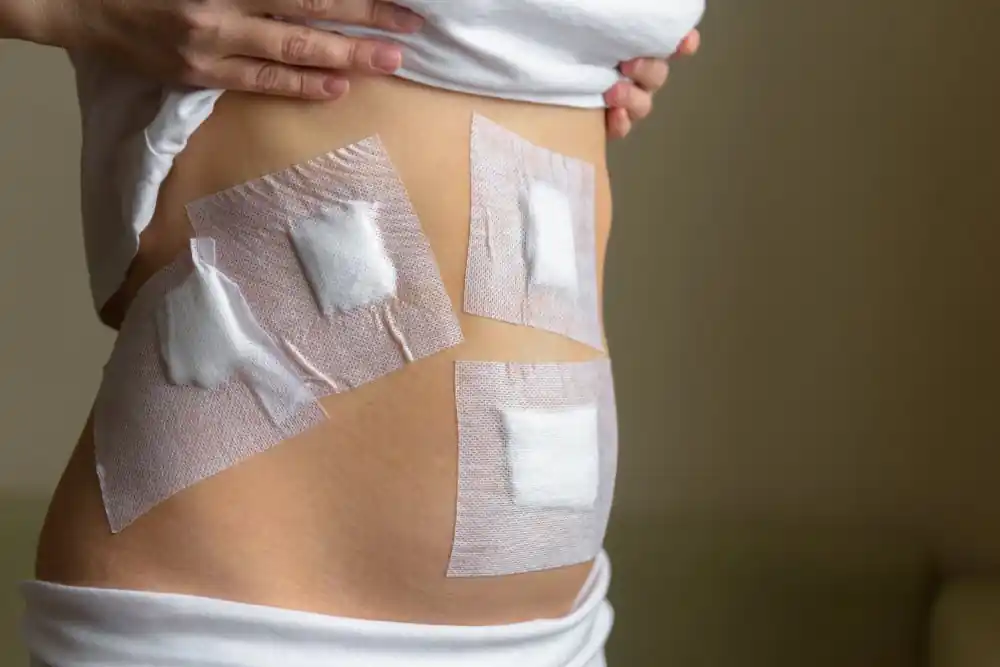
When gallstones become symptomatic, surgical removal of the entire gallbladder (gallbladder removal after gastric bypass) via minimally invasive laparoscopy is the definitive treatment. Bariatric patients can safely undergo laparoscopic cholecystectomy using 3 to 4 tiny keyhole incisions, with most returning home within 24 hours.
Gallstone Progression & Clinical Risk Matrix
| Clinical Stage | Pathological State | Patient Symptoms | Diagnostic Findings | Recommended Intervention |
| Stage 1: Sludge Formation | Supersaturated cholesterol microcrystals | Asymptomatic or mild indigestion | Fine echogenic sludge on ultrasound | Ursodiol (UDCA) therapy + Hydration |
| Stage 2: Asymptomatic Stones | Formed, stable cholesterol calculi | No active pain (“Silent stones”) | Mobile stones with acoustic shadows | Watchful waiting + Ursodiol prophylaxis |
| Stage 3: Biliary Colic | Intermittent cystic duct blockage | Intense upper right quadrant pain | Visible gallstones, normal lab markers | Elective Laparoscopic Cholecystectomy |
| Stage 4: Acute Cholecystitis | Complete duct obstruction + infection | Constant pain, fever, nausea, leukocytosis | Thickened wall (> 3mm), Murphy’s sign | Urgent Surgical Removal & Antibiotics |
Frequently Asked Questions (FAQ)
How common are gallstones after bariatric surgery?
Without preventive medication, approximately 30 to 40 percent of patients develop gallstones within the first 6 to 12 months following bariatric surgery due to rapid weight loss. However, when patients consistently take preventive Ursodiol (UDCA) for 6 months, this risk drops to under 5 to 8 percent.
Can I just take medication to dissolve gallstones once they have formed?
While Ursodiol can dissolve small, non-calcified cholesterol stones over several years of continuous use, medical dissolution is slow and has a high stone recurrence rate (over 50 percent) once medication stops. If stones cause active pain attacks or inflammation, surgical gallbladder removal is the only permanent, safe medical solution.
Does removing the gallbladder affect my weight loss progress after gastric bypass?
No. The gallbladder merely stores and concentrates bile produced by the liver; it does not produce bile or control metabolic rate. Removing the gallbladder does not slow down weight loss, interfere with sleeve gastrectomy or gastric bypass anatomy, or cause weight regain.
When should abdominal pain after bariatric surgery be treated as an emergency?
You should seek emergency medical care immediately if your abdominal pain is severe and unyielding for more than 4 hours, or if it is accompanied by a high fever, chills, persistent vomiting, dark urine, pale stools, or yellowing of your eyes and skin (jaundice).

 |
|