Skip to content
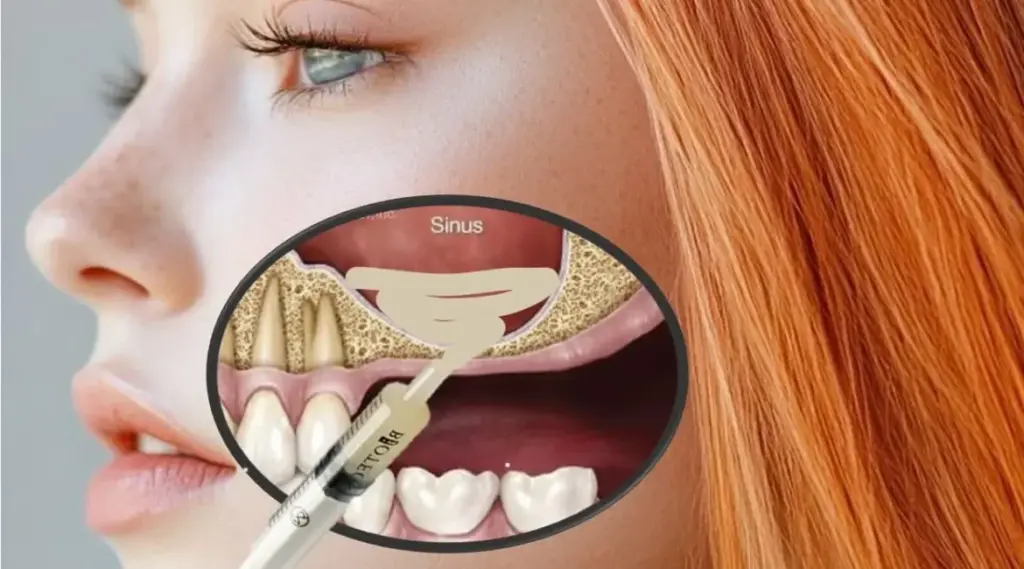
Dental implants are widely regarded as the most reliable, permanent method for replacing missing teeth. However, successful implant placement requires adequate bone height and density to ensure solid anchoring. In the posterior upper jaw (the premolar and molar regions), patients frequently present with insufficient vertical bone volume. This deficiency is typically caused by natural bone resorption following tooth extraction, combined with the downward expansion of the maxillary sinus cavities (sinus pneumatization).
In such cases, a specialized bone augmentation procedure known as a sinus lift (also termed sinus augmentation or subantral graft) is necessary before dental implants can be placed safely.
Patients considering this treatment frequently ask what is a sinus lift, explore the detailed steps of the sinus lift procedure, research what happens during sinus lift surgery, analyze the connection between a sinus lift and bone graft, examine potential sinus lift before and after face structural changes, and evaluate sinus lift long-term side effects. This comprehensive clinical guide explains the biological mechanisms, surgical variations, recovery guidelines, and long-term outcomes of sinus augmentation.
Get Free Consultation
Have any questions? Leave your details and we'll get back to you shortly.
Table of Contents
What Is a Sinus Lift?
To understand what is a sinus lift, one must understand the anatomy of the upper jaw (maxilla). The maxillary sinuses are air-filled cavities located directly above the roots of your upper back teeth, lined with a delicate biological tissue called the Schneiderian membrane.
When upper molars or premolars are extracted or lost to periodontal disease, two structural changes occur:
- Vertical Bone Resorption: The alveolar bone ridge that once supported the teeth begins to shrink and resorb due to the absence of chewing stimulation.
- Sinus Pneumatization: The floor of the maxillary sinus cavity naturally expands downward into the space formerly occupied by bone.
ANATOMICAL RECONSTRUCTION MECHANISM:
[Maxillary Sinus Cavity (Air)]
↓ (Schneiderian Membrane Gently Elevated)
[Grafted Bone Material Inserted Beneath Membrane]
↓ (4 to 9 Months Healing / Osseointegration)
[Solid, Vascularized Bone Foundation Created for Dental Implants]
A sinus lift and bone graft physically elevates the fallen sinus floor, gently peeling back the Schneiderian membrane to create a dedicated space where bone graft materials are packed. Over the following months, the body replaces this graft material with its own living, vascularized bone, establishing the vertical height necessary to anchor titanium dental implants securely.
Surgical Techniques: The Sinus Lift Procedure
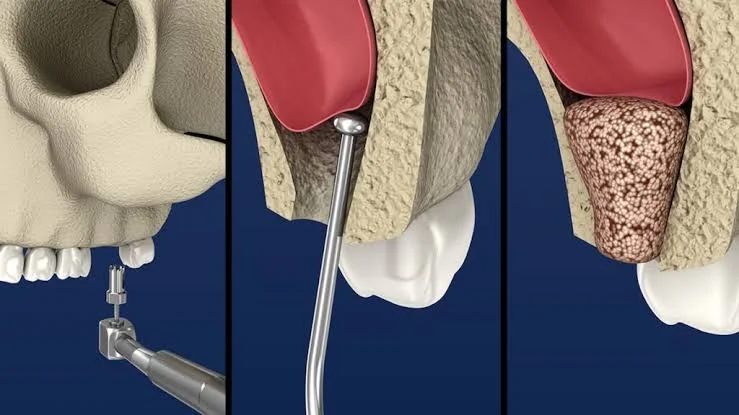
The sinus lift procedure is performed using one of two primary clinical approaches, chosen based on the patient’s existing vertical bone height:
TECHNIQUE SELECTION MATRIX:
- Existing Bone Height ≥ 4 to 5 mm -> Internal / Crestal Approach (Closed Sinus Lift)
- Existing Bone Height < 4 mm -> Lateral Window Approach (Open Sinus Lift)
1. The Lateral Window Approach (Open Sinus Lift)
This is the standard approach for patients with severe bone loss (less than 4 mm of residual bone height):
- Incision & Access: The oral surgeon makes a precise incision in the gum tissue over the upper molar area and lifts the tissue flap to expose the underlying lateral bone wall.
- Creating the “Window”: A small, oval window is cut through the lateral jawbone using piezoelectric ultrasonic tips or fine surgical burs.
- Membrane Elevation: The surgeon uses specialized instruments to carefully separate and lift the Schneiderian membrane upward from the sinus floor without tearing it.
- Bone Graft Placement: Bone graft granules (autogenous, allograft, xenograft, or synthetic materials) are packed beneath the elevated membrane.
- Membrane Barrier & Closure: A resorbable collagen barrier membrane is placed over the lateral bone window, and the gum tissue is sutured closed.
2. The Crestal Approach (Closed / Internal Sinus Lift)
This minimally invasive technique is indicated when the patient retains moderate bone height (typically 4 to 6 mm) and only requires 2 to 4 mm of additional vertical lift:
- Osteotomy Preparation: The surgeon prepares the initial pilot hole for the dental implant directly through the alveolar ridge.
- Internal Elevation: Specialized osteotomes or hydraulic pressure devices tap or push the sinus floor upward through the prepared implant channel.
- Immediate Placement: Bone graft material is placed through the osteotomy site, and the dental implant is frequently placed during the same appointment.
Structural Impact: Sinus Lift Before and After Face Changes
Patients often wonder about sinus lift before and after face aesthetic modifications:
- Midface Bone Support: Severe bone loss in the posterior upper jaw causes the cheeks and midface to sink inward, contributing to an aged, hollow facial appearance. A sinus lift, combined with implant restorations, restores vertical midface support, improving soft tissue fullness.
- Lip and Cheek Contour: By restoring natural alveolar ridge height and placing realistic dental crowns, the upper lip and cheek muscles regain proper projection, reducing premature wrinkling around the nasolabial folds.
- Internal Symmetry: The restored bone height maintains internal skeletal balance, preventing localized soft-tissue collapse inside the oral cavity.
Bone Graft Materials Used in Sinus Lift Surgery
During sinus lift surgery, surgeons select from several biocompatible grafting materials:
- Autografts (Autogenous Bone): Harvested from the patient’s own body (such as the chin, ramus, or hip). It remains the gold standard for cellular osteogenesis, though it requires a secondary harvest site.
- Allografts (Human Donor Bone): Sourced from certified human tissue banks and sterilized. It acts as an osteoconductive scaffold that stimulates host bone formation.
- Xenografts (Bovine / Porcine Bone): Sourced from highly purified cow or pig mineral matrices. Because it resorbs very slowly, xenograft material provides exceptional long-term volume stability for the elevated sinus floor.
- Alloplasts (Synthetic Minerals): Made of calcium phosphate, beta-tricalcium phosphate, or bioactive ceramic glass, eliminating any risk of biological disease transmission.
Healing Protocol and Sinus Lift Long-Term Side Effects
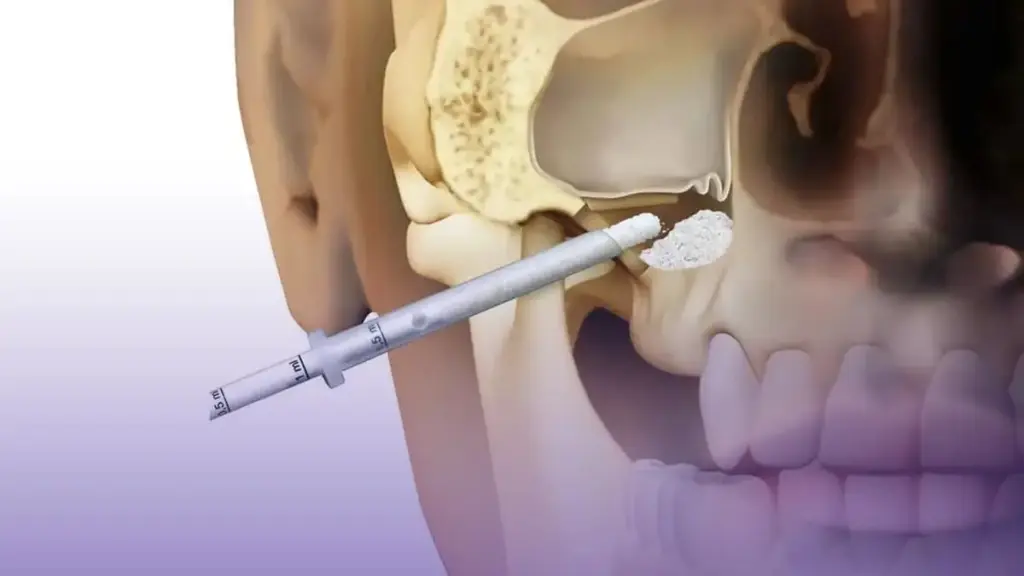
Understanding sinus lift long-term side effects and short-term post-operative care ensures complication-free integration:
POST-OPERATIVE RECOVERY RULES:
- Strict Pressure Avoidance: Do Not blow your nose forcefully for 14 days; sneeze with an open mouth.
- Decongestant Support: Use saline sprays and prescribed nasal decongestants to maintain sinus patency.
- Activity Moderation: Avoid flying, scuba diving, and playing brass/wind instruments for 2 to 3 weeks.
- Oral Hygiene: Rinse gently with chlorhexidine; avoid rigorous spitting or drinking through straws.
Potential Side Effects and Complications:
- Schneiderian Membrane Perforation: A tear in the thin sinus membrane is the most common intraoperative complication (occurring in 10 to 20 percent of complex cases). Small tears are immediately patched with resorbable collagen patches, while large tears may require halting the procedure for 2 to 3 months to allow the membrane to heal.
- Acute or Chronic Sinusitis: Bacterial infection of the sinus cavity can occur if oral bacteria contaminate the graft. This is prevented with prophylactic antibiotics and antiseptic rinses.
- Graft Dislodgement or Failure to Integrate: In rare cases (less than 3 percent), poor blood supply or mechanical disruption prevents graft ossification, requiring revision grafting.
- Long-Term Side Effects: When performed by a qualified oral surgeon, a sinus lift presents virtually zero permanent negative side effects. The newly formed bone integrates naturally with the host maxilla, maintaining implant stability for decades.
Clinical Comparison: Open vs. Closed Sinus Lift
| Clinical Parameter | Lateral Window (Open Sinus Lift) | Crestal (Closed / Internal Sinus Lift) |
| Residual Bone Requirement | Severe bone deficit (< 4 mm) | Moderate residual bone (4 to 6 mm) |
| Vertical Bone Gain Potential | Extensive (5 to 10 mm + of new bone) | Conservative (2 to 4 mm of new bone) |
| Surgical Invasiveness | Moderate (Lateral bone window created) | Minimally invasive (Through implant channel) |
| Direct Visual Access | Full direct visualization of the membrane | Tactile / Blind control via osteotome |
| Simultaneous Implant Placement | Rarely (Staged 4 to 9 months later) | Frequently (Implant placed same day) |
| Post-Operative Swelling | Moderate cheek swelling (peaks Day 3) | Mild to minimal swelling |
| Average Healing Time | 6 to 9 Months for full ossification | 4 to 6 Months for full ossification |
Frequently Asked Questions (FAQ)
Is a sinus lift procedure painful?
No. The procedure is performed under local anesthesia, often accompanied by IV sedation or oral sedatives. Patients do not feel pain during surgery. Post-operative recovery involves mild cheek swelling, minor bruising, and a dull pressure sensation for 3 to 5 days, which is easily managed with prescribed analgesics and cold compresses.
How long must I wait for implants after a sinus lift?
If an internal (closed) sinus lift is performed with adequate initial bone stability, implants are often placed on the same day. For an open lateral window sinus lift with severe initial bone loss, a healing period of 6 to 9 months is typically required for the bone graft to mature into solid living bone before placing implants.
What should I do if I have to sneeze after a sinus lift?
If you feel the urge to sneeze during the first two weeks following surgery, sneeze with your mouth completely open. Never attempt to suppress or pinch your nose during a sneeze, as this creates intense pressure inside the sinus cavity that can displace the bone graft or tear the healing membrane.
Can a sinus lift change the shape of my nose or face?
A sinus lift does not change the shape or external appearance of your nose. However, by providing the structural bone foundation needed for dental implants, it prevents midface bone collapse and restores natural cheek projection and upper lip fullness that may have been lost after tooth extraction.

 |
|