 Skip to content
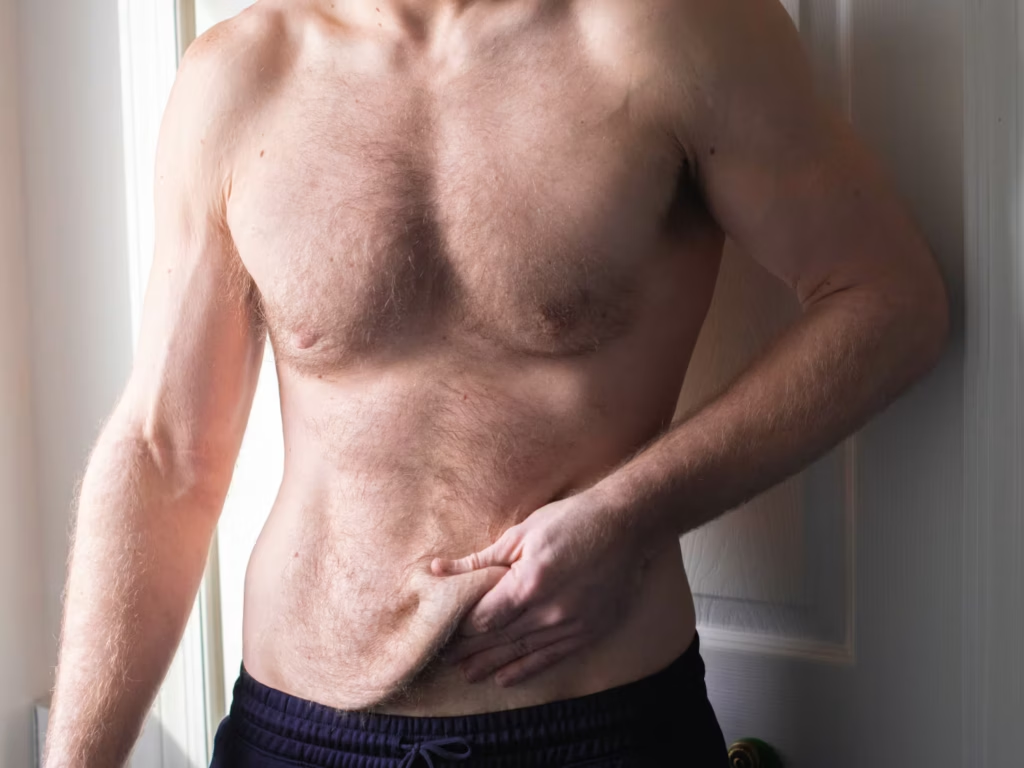
Losing a significant amount of Weight Loss can feel like crossing a finish line you once thought was miles away. Yet for many people, the mirror reveals a new and unexpected chapter: loose skin. This part of the Weight Loss journey is rarely discussed with the same enthusiasm as shrinking waistlines or changing clothing sizes, but it matters deeply. It can affect confidence, comfort, clothing choices, and the emotional meaning attached to body transformation.
At WellDemir, we believe conversations around Weight Loss should be honest, informed, and human. Loose skin after major body reduction is not a sign of failure. In many cases, it is simply evidence that the body has adapted to change at its own pace. Skin is a living organ, not a magic fabric. It stretches, repairs, remodels, and sometimes does not fully rebound after dramatic slimming. Understanding why this happens can make the entire Weight Loss process less frustrating and far more realistic.
Table of Contents
Why Loose Skin Happens After Weight Loss
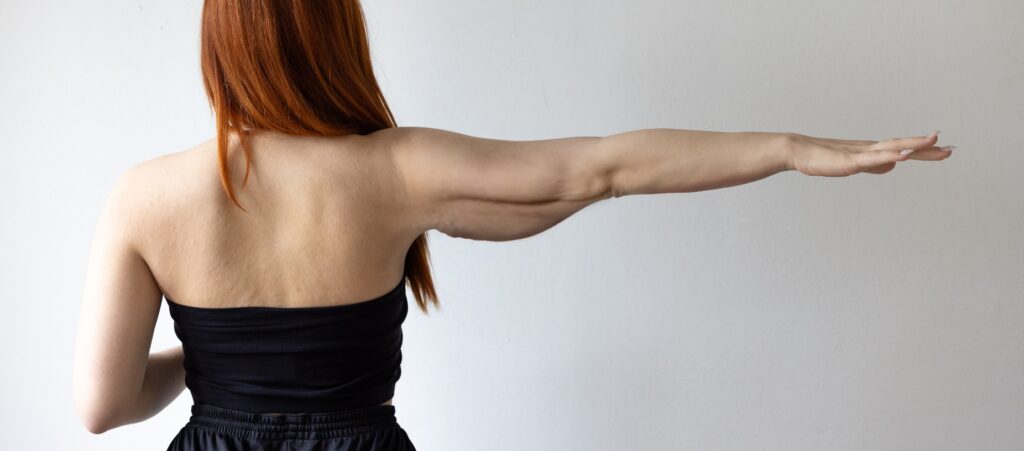
Loose skin after Weight Loss is often linked to how long the skin remained stretched and how much body mass was lost. The skin contains collagen and elastin, two structural proteins that help it stay firm, flexible, and resilient. When the body expands over time, these fibers can weaken. If the body then becomes smaller quickly or substantially, the skin may not contract at the same speed.
Get Free Consultation
Have any questions? Leave your details and we'll get back to you shortly.
Age can also play a role in post-Weight Loss skin elasticity. Younger skin often has more rebound capacity, while mature skin may be slower to adapt. Genetics, hydration, smoking history, sun exposure, and nutritional patterns may also influence how the skin behaves after major body transformation. None of these factors act alone, and that is why the loose-skin experience varies so much from person to person.
Another important point is that “loose skin” may not always be skin alone. Sometimes it is a mix of skin, connective tissue, and remaining subcutaneous fat. This distinction matters because the appearance of softness or folds after Weight Loss can be more complex than many people assume. The body rarely changes in a perfectly linear, textbook way.
How Much Weight Loss Usually Leads to Loose Skin?
There is no universal threshold where Weight Loss automatically results in loose skin. Some people notice it after moderate body reduction, while others only experience it after losing a very large amount of body mass. In general, the longer excess weight was carried and the greater the change in body size, the more likely visible skin laxity becomes.
Research in body contouring (post-bariatric body sculpting) and metabolic health discussions often suggests that individuals who lose substantial weight over a long-term This is why comparison is often misleading. A dramatic before-and-after image may show one version of the story, but not the variables behind it. Skin response depends on the duration of stretching, rate of loss, muscle mass, and personal biology. The visible result of Weight Loss is never just about the number on the scale.
The Role of Time in Post-Weight Loss Skin Recovery
One of the most overlooked parts of Weight Loss is time. Skin does not always settle immediately after body changes. It may continue adjusting for months, and in some cases longer, especially after major reduction. This can be frustrating in a culture that celebrates instant transformation, but biologically, gradual remodeling is more realistic than overnight tightening.
Collagen turnover is slow. Tissue adaptation is slow. Even the visual relationship between muscle tone and skin drape may change over time. Someone who feels discouraged a few weeks after Weight Loss may notice a different appearance many months later. That does not mean every case of loose skin resolves substantially, but it does suggest that the body’s timeline is rarely synchronized with social media expectations.
Patience, however unglamorous, can be a meaningful factor. In many body-change journeys, the final shape is not visible the moment the weight is gone. The body continues reorganizing itself. This is one reason experts and researchers often discuss Weight Loss as a long-term physiological adaptation rather than a single event.
Can Exercise Help After Weight Loss?
Exercise is often brought into the loose-skin conversation, and for good reason. While physical activity is not a guaranteed way to “tighten” loose skin, it may influence how the body looks after Weight Loss by improving muscle definition beneath the skin. Resistance training, in particular, can change body composition and create a firmer visual frame.
When muscle mass increases, areas affected by Weight Loss may appear more structured. This is especially relevant in the arms, legs, glutes, and torso. The result is not the same as shrinking excess skin, but it may improve overall contour. In scientific terms, body recomposition can affect aesthetics even when actual skin laxity remains.
Cardiovascular activity also plays a role in general fitness and long-term Weight Loss maintenance, though it is not specifically a skin-firming mechanism. Movement supports circulation, metabolic health, and emotional well-being. And that matters, because the way someone feels in their body after major slimming is about more than skin alone.
Below is a simple overview of factors that may influence appearance after body reduction:
| Factor | Possible Effect on Loose Skin Appearance |
| Resistance training | May improve muscle tone and body contour |
| Time after weight reduction | May allow gradual tissue adaptation |
| Age | May affect skin elasticity and collagen resilience |
| Hydration and nutrition | May support overall skin quality |
| Smoking and sun exposure history | May contribute to reduced skin elasticity |
| Total amount of weight lost | May increase likelihood of visible skin laxity |
Nutrition, Collagen, and Weight Loss Skin Changes
Nutrition is often discussed in relation to Weight Loss, but its connection to skin quality is equally interesting. Skin structure relies on adequate protein, micronutrients, and hydration status. Collagen synthesis involves nutrients such as vitamin C, zinc, copper, and amino acids. That said, nutrition should not be presented as a miracle switch. A perfectly balanced diet does not guarantee skin tightening after large-scale body reduction.
Still, it is reasonable to say that the body’s repair systems function best when well supported. During or after Weight Loss, skin remains an active tissue undergoing remodeling. Protein intake, overall dietary quality, and adequate fluid balance may contribute to healthier-looking skin, even if they do not reverse structural stretching completely.
There is also growing public interest in collagen supplements, though evidence remains mixed and often product-specific. Some studies suggest potential benefits for skin hydration and elasticity, but the data does not support exaggerated promises. In the context of Weight Loss, it is wiser to view collagen as part of a broader skin-health conversation rather than a stand-alone answer.
Non-Surgical Approaches People Explore After Weight Loss
People navigating post-Weight Loss skin concerns often explore topical products, massage methods, radiofrequency devices, ultrasound-based treatments, or other non-surgical options. These methods are frequently marketed as skin-tightening solutions, but outcomes can vary widely depending on skin quality, treatment depth, and degree of laxity.
Mild to moderate changes in skin texture may sometimes respond better than severe excess tissue. For example, energy-based technologies are often discussed in cosmetic dermatology because they aim to stimulate collagen remodeling. However, these approaches usually do not replicate the result of removing substantial extra skin. For someone with major Weight Loss-related laxity, expectations matter as much as the treatment itself.
Topical creams can improve the feel of the skin and may support hydration, but they typically do not alter deeply stretched tissue in a dramatic way. This is not a failure of the person using them; it is simply a reflection of skin biology. In the world of Weight Loss and body contouring (post-bariatric body sculpting), marketing language often outruns anatomy.
When Body Contouring Surgery Enters the Weight Loss Conversation
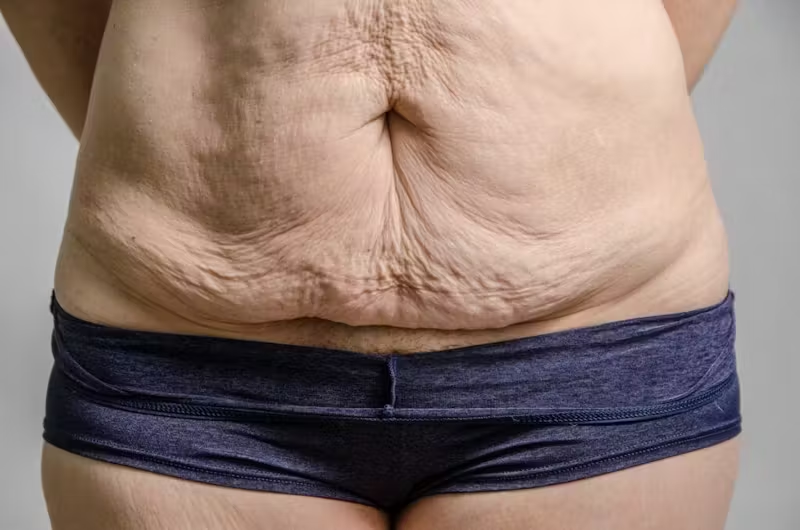
For some individuals, surgery becomes part of the Weight Loss discussion, especially when loose skin causes discomfort, irritation, hygiene challenges, or significant dissatisfaction. Procedures such as abdominoplasty, arm lift, thigh lift, or lower body lift are often considered in cases of major skin excess. These procedures are generally framed as body contouring (post-bariatric body sculpting) rather than weight-reduction methods.
It is important to approach this subject carefully. Surgical body contouring (post-bariatric body sculpting) is a personal decision shaped by goals, health status, budget, recovery tolerance, and the specific pattern of skin laxity. Some people feel surgery helps align their outer appearance with the effort of their Weight Loss journey. Others choose not to pursue it and instead focus on comfort, function, and acceptance.
In many discussions within reconstructive and aesthetic medicine, timing is emphasized. Stable weight is often considered an important factor before contouring is explored. That is because the body may continue changing after Weight Loss, and fluctuating weight can affect long-term results. Again, this is not a one-size-fits-all path; it is one chapter among several possible outcomes.
The Emotional Side of Weight Loss and Loose Skin
The emotional reality of Weight Loss and loose skin is often more complex than people expect. Someone may feel proud, healthier, stronger, and disappointed all at once. That emotional contradiction is real. Major body transformation can challenge identity as much as appearance. The body may look different, yet not fully match the imagined reward at the end of the process.
Loose skin can affect intimacy, clothing confidence, exercise comfort, and the ability to enjoy the success of Weight Loss without reservation. Some people feel frustrated that others celebrate their transformation while they privately struggle with the aftermath. This is one reason more compassionate, nuanced conversations are needed. Body change is not just mechanical; it is psychological and social.
There is also a cultural issue here. Public narratives often frame Weight Loss as a neat “before and after” success story. Real life is messier. The middle is messy. The after is messy too. A mature conversation makes room for that complexity without turning loose skin into either a catastrophe or a trivial detail.
Practical Ways to Think About Weight Loss Results More Realistically
A realistic mindset can make the Weight Loss experience feel more sustainable and less punishing. Instead of seeing loose skin as proof that something went wrong, many people find it more useful to see it as one possible biological outcome of profound change. The body is not a machine that updates its outer shell on command.
It may help to think in layers:
- Weight Loss changes total body mass.
- Muscle-building may affect body shape.
- Skin adapts on its own timeline.
- Some changes improve with time.
- Some concerns remain and may require acceptance or intervention.
This layered view is more scientifically grounded than all-or-nothing promises. It respects both hope and limitation. It also reflects what many long-term body transformation stories reveal: appearance after Weight Loss is influenced by multiple systems, not one magic solution.
At WellDemir, we encourage readers to value the full picture. Progress can be meaningful even when it is visually imperfect. The body often carries the evidence of its history. In many ways, loose skin is not just a cosmetic issue; it is a biological record of adaptation.
Weight Loss Is a Transformation, Not a Special Effect
Major Weight Loss can transform health markers, mobility, confidence, and daily life. But it can also bring loose skin, mixed emotions, and new questions. That does not cancel the achievement. If anything, it makes the story more honest. Human bodies do not respond like edited advertisements. They respond like living systems shaped by time, biology, and experience.
The most useful way to approach loose skin after Weight Loss is with curiosity rather than shame. Why did it happen? What affects it? What might improve with time, training, body contouring (post-bariatric body sculpting), or adjusted expectations? These are thoughtful questions, and they deserve thoughtful answers. The journey does not become less valid because the final chapter looks different than expected.
WellDemir believes better information creates better perspective. And better perspective can turn a frustrating surprise into something more manageable: a normal, understandable part of a very human transformation.

 |
|
Very helpful article! The information about nutrition and lifestyle changes after surgery is particularly valuable.
Thank you! We strive to provide the most comprehensive information possible. Feel free to reach out anytime for a no-obligation consultation.
The information about pre-surgery preparation is something I haven’t seen covered this well anywhere else.