Skip to content
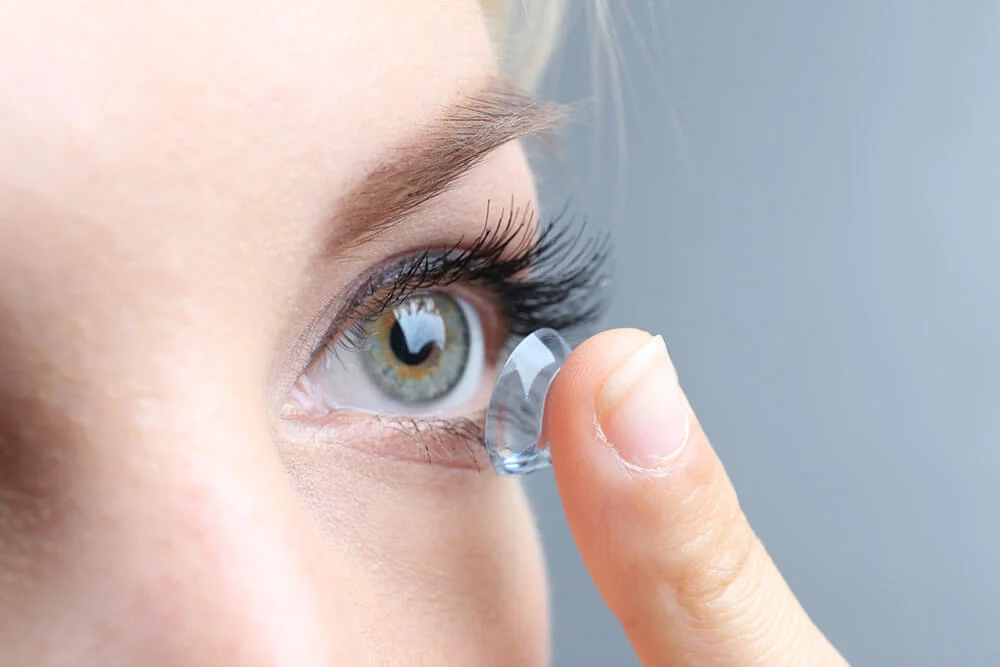
For individuals living with astigmatism, finding the right vision correction can feel like a constant challenge. Standard spherical lenses often fail to provide the crisp clarity required because astigmatism changes the physical curvature of the eye. This is where a toric lens becomes essential, offering a specialized design tailored to correct asymmetrical vision.
At our clinic, we frequently guide patients through their optical options, whether they are looking for daily toric lens contacts or undergoing advanced lens replacement surgeries. Let’s break down exactly what is a toric lens, how it functions, and the modern choices available to restore sharp vision.
Table of Contents
What is a Toric Lens?
To understand what is a toric contact lens, it helps to look at the geometry of the eye. A standard vision lens has a spherical surface, shaped like a slice of a perfect basketball. A toric lens, however, is shaped like a slice of a football or a doughnut. It features two different curvatures instead of one.
Get Free Consultation
Have any questions? Leave your details and we'll get back to you shortly.
When someone has astigmatism, their cornea or natural crystalline lens is shaped more like an oval than a round ball. This prevents light from focusing evenly onto the retina, creating distorted or hazy vision at all distances. By incorporating two distinct refractive powers at specific orientations, a toric lens counteracts this unevenness, pulling the light back into a single, perfectly sharp focal point.
Types of Toric Lenses: Contacts and Implants
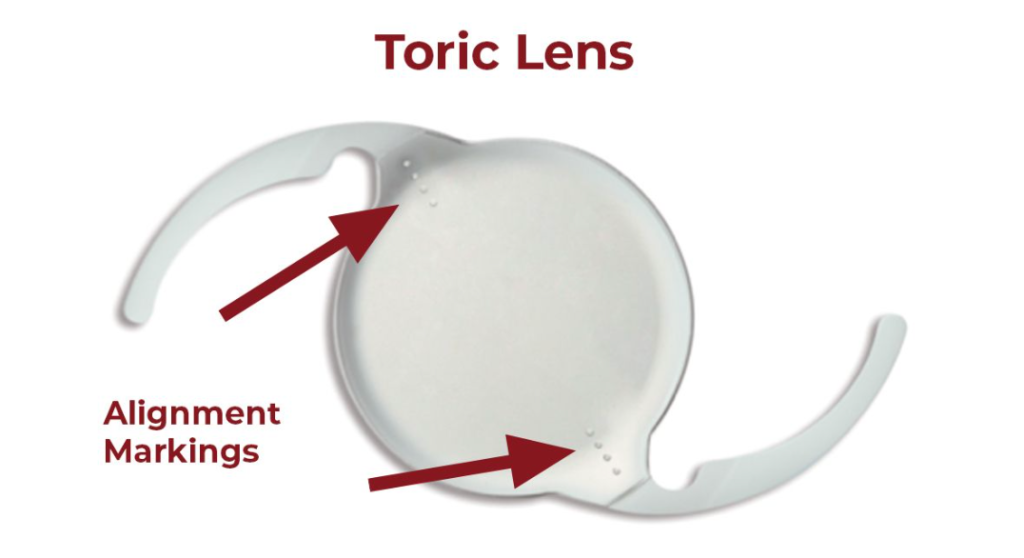
Modern ophthalmic technology has expanded how we apply toric geometry. Depending on your prescription, lifestyle, and age, you will generally choose between two primary formats:
1. Toric Contact Lenses
If you prefer non-surgical options, toric contact lenses are highly effective. Unlike regular contacts, they are engineered with weighted zones or thin-thick profiles. This stabilized design prevents the lens from rotating every time you blink, keeping the corrective axes perfectly aligned with your astigmatism.
- Aesthetic Options: For patients looking to alter their eye appearance while correcting their vision, colored contacts toric lens options are now widely available, blending cosmetic preferences with complex prescription requirements.
2. Intraocular Toric Lenses
For individuals undergoing cataract surgery or seeking permanent vision correction via refractive surgery, an intraocular toric lens is implanted directly inside the eye. This medical device permanently replaces the eye’s cloudy or stiff natural lens. Because these implants must sit at an incredibly precise angle inside the eye structure, surgeons utilize advanced calculation tools, such as the alcon toric lens calculator, to map the exact orientation and refractive power needed before the procedure.
Technical Specifications and Stabilization Mechanisms
The most critical engineering aspect of a soft toric contact lens is its ability to stay upright. Because regular spherical lenses are uniform, they can spin freely on your eye without affecting your vision. If a toric lens spins, the corrective power moves away from the asymmetrical part of your cornea, causing immediate blurriness.
Contact lens manufacturers utilize advanced structural mechanisms to maintain orientation:
- Prism Ballast: The bottom of the lens is slightly thicker and heavier, using gravity to pull the lens into the correct position.
- Thin and Thick Zones (Double Slab-Off): The top and bottom edges of the lens are made thin, while the middle is thicker. The pressure of your eyelids during a blink squeezes the thin zones, holding the lens static.
- Peri-Ballast: A minimal weight is added exclusively to the peripheral edges of the lens, maximizing comfort while preventing rotation.
How to Read a Toric Lens Prescription
When you receive a prescription for standard nearsightedness or farsightedness, it usually contains only one main value: the Sphere (SPH). However, a prescription for a toric lens contains three specific components required to map an asymmetrical eye:
- Sphere (SPH): Measures the baseline correction for nearsightedness (indicated by a minus sign) or farsightedness (indicated by a plus sign).
- Cylinder (CYL): Measures the amount of astigmatism correction needed. This number represents the extra refractive power required for the flatter meridian of your eye.
- Axis: Expressed in degrees between 1 and 180. This number tells the lab exactly where the cylinder power needs to be positioned on the lens to match the orientation of your astigmatism.
| Feature | Toric Lens | Spherical (Standard) Lens |
| Eye Shape Targeted | Oval or football-shaped (Astigmatism) | Round or basketball-shaped |
| Refractive Power | Varies across different meridians of the lens | Uniform across the entire lens surface |
| Rotational Stability | Must remain stable; features orientation markings | Can rotate freely on the eye without blurring vision |
| Primary Vision Correction | Corrects astigmatism alongside nearsightedness/farsightedness | Corrects nearsightedness or farsightedness only |
The Fitting Process: Why Expertise Matters?

Getting fitted for toric contact lenses requires more time and precision than a standard eye exam. Because the lens must settle at a very specific angle, a specialist must monitor how it interacts with your unique blink pattern.
During the fitting consultation, your eye care provider will place a trial lens on your eye and ask you to wait about 10 to 15 minutes. This allows the lens to warm up, interact with your tear film, and find its natural resting position. The doctor then uses a slit lamp to inspect micro-markings etched onto the lens, ensuring it aligns perfectly with your astigmatism axis. If the lens sits slightly crooked, your doctor will adjust the prescription axis mathematically to compensate for the deviation.
Frequently Asked Questions (FAQ)
What is a toric lens used for?
A toric lens is specifically used to correct astigmatism. Its unique design compensates for an asymmetrical cornea or lens shape, allowing light to focus accurately onto a single point on the retina.
Why do toric contact lenses have to stay stable?
Because astigmatism occurs at a specific orientation or angle, a toric contact lens must stay aligned with that exact axis. These lenses are designed with subtle weights or geometric balances to prevent rotation when you blink.
Can I get colored contacts if I have astigmatism?
Yes. You can find specialized colored contacts toric lens options that allow you to change your eye color while simultaneously correcting your astigmatism prescription.
What is an intraocular toric lens?
An intraocular toric lens is a permanent medical implant placed inside the eye during refractive lens exchange or cataract surgery to eliminate astigmatism.
How do doctors calculate the power of a toric implant?
Surgeons use high-precision software like the alcon toric lens calculator to analyze corneal curvature measurements and determine the exact power and orientation alignment for the implant.
Why does my vision go blurry occasionally with toric contact lenses?
If you blink rapidly, rub your eyes, or tilt your head sharply, the toric lens may temporarily rotate out of alignment. It usually realigns itself within a few blinks as the weighted mechanisms settle.

 |
|