Skip to content
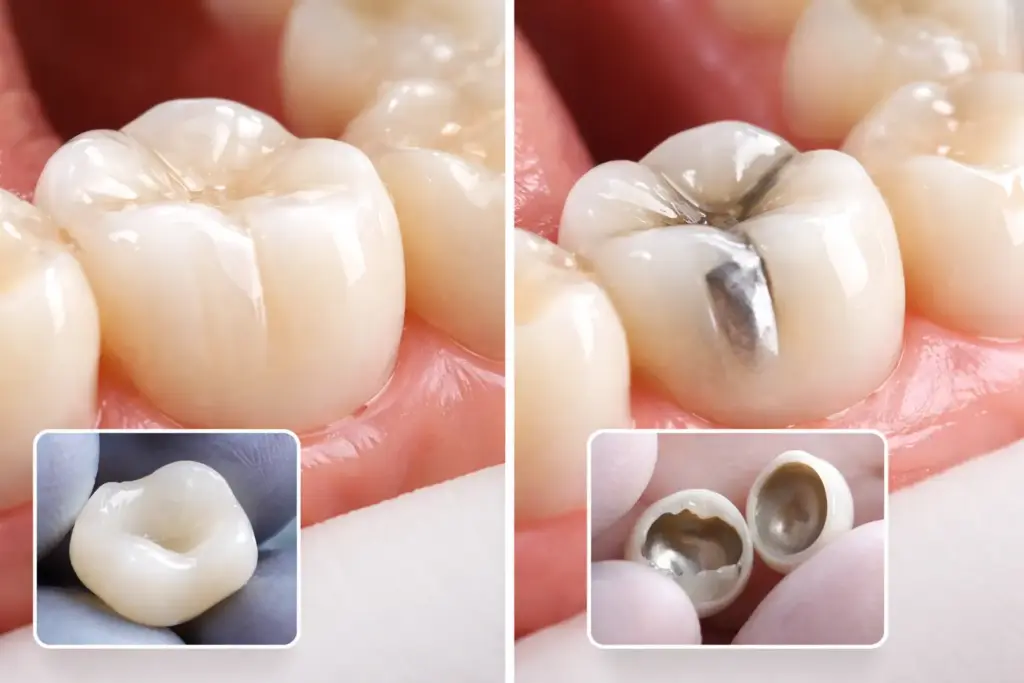
When facing the necessity of a restorative or cosmetic dental treatment whether due to severe decay, tooth fractures, or an advanced smile makeover selecting the appropriate material framework is the most vital decision for long-term clinical success. For decades, traditional porcelain dental restorations were the industry benchmark for mimicking human enamel. However, advanced bioceramics have completely revolutionized modern prosthodontics, placing the zirconium crowns vs porcelain debate at the center of reconstructive dentistry.
Patients planning a dental restoration face multiple options, frequently researching zirconium crowns vs porcelain crowns for structural durability, comparing zirconium crowns vs porcelain veneers for front teeth transformations, and evaluating a zirconia vs porcelain bridge for replacing missing gaps. This comprehensive medical guide provides an in-depth comparison to answer the core question: Which crown is better, porcelain or zirconia? We will break down material structural density, light-translucency dynamics, clinical lifespans, and essential maintenance protocols.
Table of Contents
Which Crown Is Better, Porcelain or Zirconia?
To directly address the most common question patients ask their prosthodontist “Which crown is better, porcelain or zirconia?” we must analyze their core physical properties. Neither material is universally superior; instead, each serves distinct anatomical and cosmetic functions in the oral cavity.
Get Free Consultation
Have any questions? Leave your details and we'll get back to you shortly.
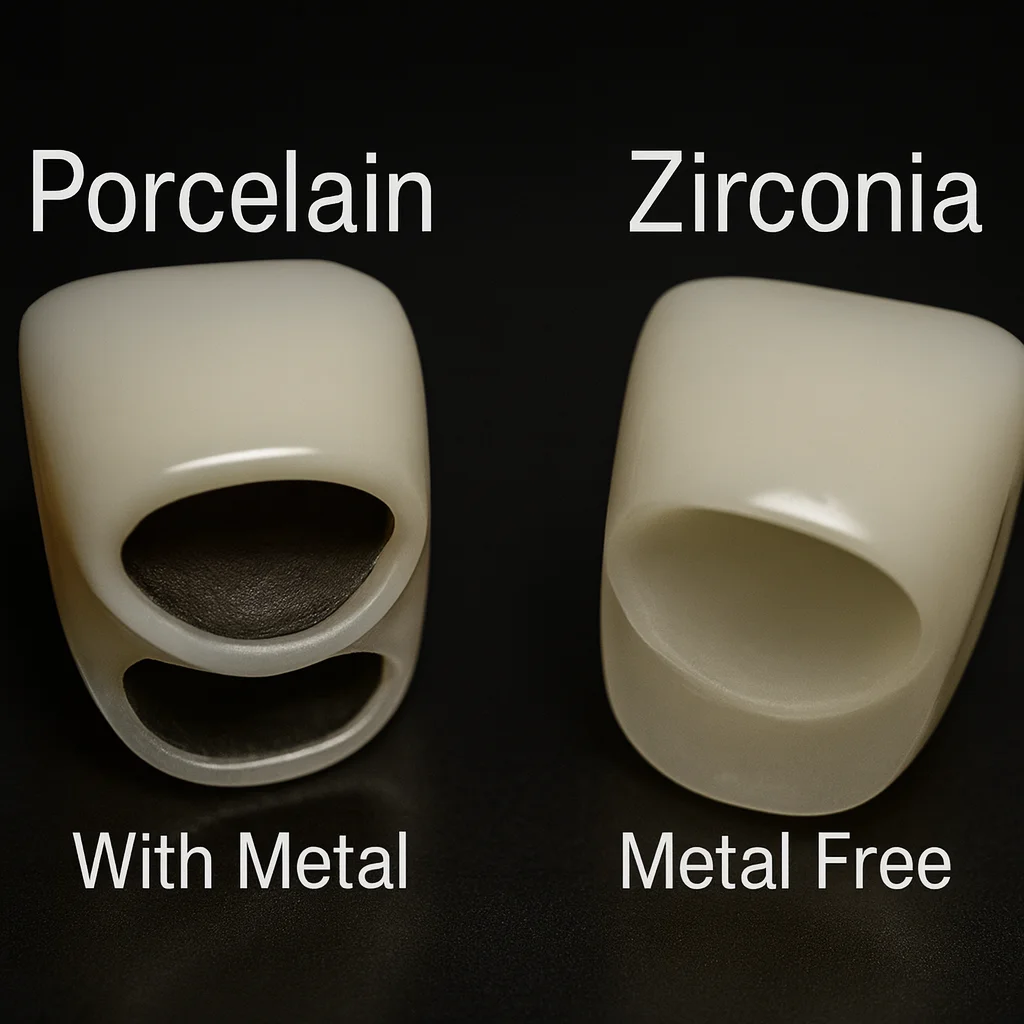
Traditional dental porcelain (often utilized as pure feldspathic porcelain or fused to a metal substrate as PFM) features unmatched cosmetic brilliance. Its microscopic structural matrix mimics the multi-layered light refraction of human enamel perfectly. However, pure porcelain is brittle and prone to micro-fractures under high chewing forces.
Zirconium dioxide (zirconia), known as “ceramic steel,” is a monolithic biocompatible crystal. With a flexural strength exceeding 1000 MPa, zirconia is virtually indestructible. It easily resists fracture and mechanical wear, making it structurally superior for handling heavy biting forces without risking structural failure.
Structural Restorations: Zirconia vs Porcelain Bridge and Posterior Teeth
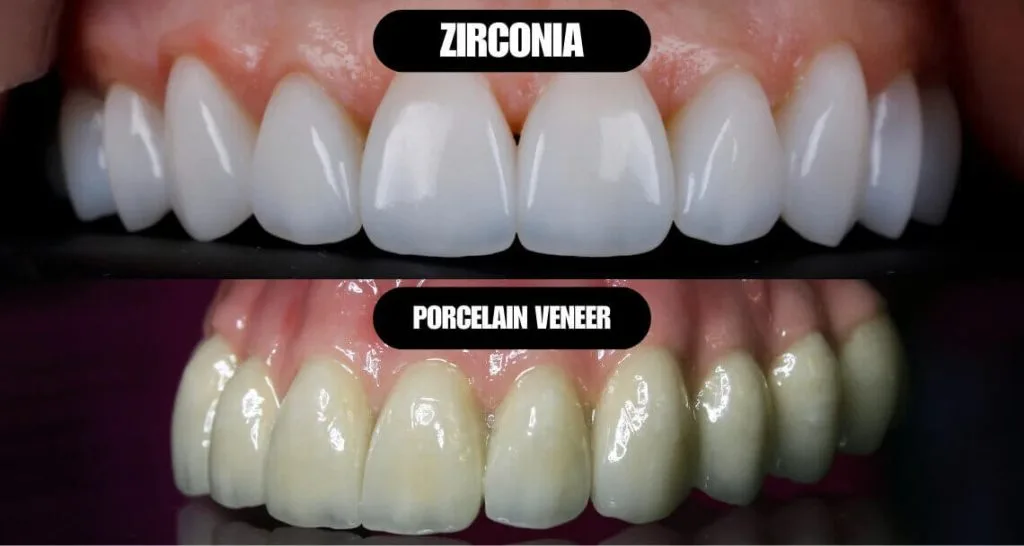
When replacing missing teeth in the jaw, evaluating a zirconia vs porcelain bridge requires looking closely at the mechanical forces involved.
- The Porcelain (PFM) Bridge Framework: Traditional bridges utilize a metal framework covered with layers of porcelain. While structurally sound, the metal base blocks natural light transmission, creating an opaque look. Over time, as the gums naturally recede, a dark grey metallic line often becomes visible at the gum margin.
- The Monolithic Zirconia Bridge Framework: A zirconia bridge is milled from a single crystal block using advanced CAD/CAM software. It requires no metal core, completely eliminating the risk of dark margins. Its massive structural density allows it to span long missing gaps in the molar zone without bending or cracking under heavy chewing pressure.
Front Teeth Aesthetics: How Long Do Zirconia Crowns Last on Front Teeth?
For the highly visible anterior smile zone, patients often ask: how long do zirconia crowns last on front teeth and do they look completely natural?
Modern cosmetic dentistry utilizes layered translucent zirconia (such as Prettau or E-Max Prime) for front restorations. These combine the structural strength of a zirconia base with a hand-layered feldspathic porcelain exterior. When properly bonded by a skilled cosmetic dentist, premium zirconia crowns on front teeth easily last 15 to 20+ years. They resist chipping from everyday biting forces while matching the natural warmth and shade variations of your surrounding teeth.
Cosmetic Transformations: Zirconium Crowns vs Porcelain Veneers
When planning a smile makeover purely for cosmetic reasons such as correcting minor gaps, slight twists, or severe discoloration it is essential to compare zirconium crowns vs porcelain veneers regarding tooth tissue preservation:
- Porcelain Veneers: Veneers are micro-thin shells bonded exclusively to the front surface of the tooth. They require minimal preparation, shaving away just 0.3 mm to 0.5 mm of the outer enamel layer. This keeps the core structure of the natural tooth completely intact.
- Zirconium Crowns: A crown is a full-coverage cap that wraps 360 degrees around the entire tooth structure. Crowns are reserved for teeth that have sustained heavy structural damage, have large fillings, or have undergone root canal therapy, as they require a more comprehensive reduction of the underlying tooth tissue.
Comprehensive Prosthodontic Performance Matrix
| Restorative & Aesthetic Metric | Monolithic Zirconia Crowns | Layered Translucent Zirconia | Traditional Porcelain (PFM) |
| Flexural Strength Level | Ultra-High (Over 1000-1200 MPa) | High (700-900 MPa) | Moderate (90-120 MPa) |
| Light Translucency Depth | Semi-Opaque to Moderate | High (Enamel-like) | Low (Blocked by metal base) |
| Risk of Chipping or Fracturing | Virtually 0% (Indestructible) | Low (Porcelain layer can chip) | Moderate to High |
| Dark Metallic Gum Line Risk | None (100% Metal-free) | None (100% Metal-free) | High (Visible after gum recession) |
| Average Clinical Lifespan | 20+ Years | 15 to 20 Years | 10 to 15 Years |
| Primary Clinical Indication | Posterior molars & long bridges | Front teeth & cosmetic makeovers | Budget restorations |
Frequently Asked Questions (FAQ)
Which crown is better, porcelain or zirconia for patients who grind their teeth?
For patients who suffer from severe nocturnal bruxism (chronic nighttime teeth grinding), monolithic zirconia crowns are significantly better than traditional porcelain. Zirconia’s immense crystalline strength can easily withstand the heavy grinding forces without cracking, breaking, or wearing down. However, wearing a custom nightguard is still highly recommended to protect the opposing natural teeth from wear.
Do zirconium crowns stain from drinking coffee, tea or red wine over time?
No, high-quality zirconium crowns are completely non-porous and feature a highly glazed exterior shield that is 100% stain-proof. Unlike natural enamel or composite bonding materials, coffee, tea, nicotine, and red wine cannot penetrate the surface. Your restorations will permanently maintain their original shade and brightness.
Is the preparation process for a zirconia crown painful?
No, the entire tooth preparation and shaping process is performed under local anesthesia, ensuring you feel completely comfortable and pain-free. Once the area is numb, the dentist shapes the tooth to create space for the crown. You will wear a custom temporary crown to protect the prepared tooth while your permanent zirconia restoration is being precision-milled in the laboratory.
Can zirconia crowns cause allergies or adverse reactions in the gums?
No, zirconia is a bio-inert, 100% biocompatible material. It contains zero metal components, completely eliminating the risk of allergic reactions, toxic responses, or tissue rejection. The surrounding gum tissue responds exceptionally well to zirconia, maintaining a healthy, pink, and inflammation-free appearance around the margins.

 |
|