Skip to content

A breast lift (mastopexy) is one of the most effective aesthetic procedures for restoring youthful breast firmness, lifting sagging glandular tissue, and repositioning the nipple-areolar complex. Whether caused by pregnancy, weight fluctuations, or natural aging, breast ptosis (sagging) can significantly impact body confidence. However, for women planning to have children in the future, a central question arises before committing to surgery: can you breastfeed after a breast lift?
While cosmetic surgery modifies the exterior contours and internal structure of the breast, modern plastic surgery prioritizes functional preservation whenever possible. The ability to produce and transport milk depends directly on the surgical technique used, whether the milk ducts and nerve supply remain intact, and whether the procedure combines a lift with implants. This comprehensive medical guide explores how a mastopexy impacts lactation, analyzes breastfeeding after breast lift and augmentation, details how incision types affect milk supply, and outlines practical expectations for future mothers.
Table of Contents
The Biological Connection: How Breast Lift Surgery Impacts Lactation
To understand your ability to nurse after surgery, it helps to examine how milk moves through the breast. Breast milk is produced inside small sacs called alveoli, located within the glandular tissue. During nursing, milk travels through a branching network of milk ducts that lead directly to the nipple. The release of milk is triggered by oxytocin and prolactin, hormones stimulated when a baby nurses and touches the nerves around the nipple.
Get Free Consultation
Have any questions? Leave your details and we'll get back to you shortly.
During a traditional breast lift, the surgeon removes excess skin, reshapes the sagging glandular tissue, and shifts the nipple-areolar complex higher on the chest wall. How this shift is performed determines your future breastfeeding ability:
- Pedicle Technique (Duct Preservation): In most modern mastopexy procedures, the nipple and areola remain attached to an underlying column of tissue known as a pedicle. This pedicle maintains the natural connection between the milk ducts, blood vessels, and sensory nerves. Women who undergo pedicle-based lifting generally retain a high capability for successful breastfeeding.
- Free Nipple Graft (Duct Disconnection): In severe cases of sagging requiring major tissue reduction, the nipple and areola may be completely detached and reattached higher as a skin graft. This severs all underlying milk ducts and sensory nerves, making future natural breastfeeding impossible.
Breastfeeding After Breast Lift and Augmentation with Implants
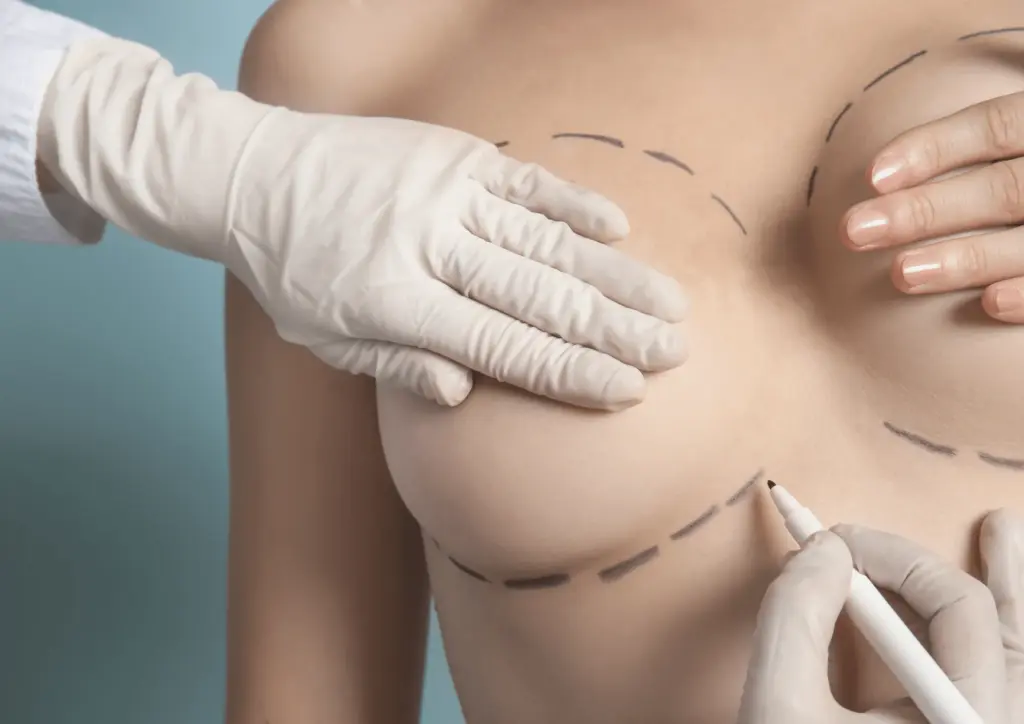
Many women choose to combine a lift with volume enhancement, leading to questions regarding breastfeeding after breast lift and augmentation or breastfeeding after breast lift and implants. Combining these two procedures alters both tissue position and overall volume, but it does not automatically prevent nursing.
1. The Impact of Breast Implants on Milk Production
When implants are added during a mastopexy (augmentation-mastopexy), the implant is typically placed either under the chest muscle (submuscular) or under the breast tissue (subglandular). Submuscular placement is generally preferred for women planning future pregnancies because placing the implant beneath the pectoral muscle minimizes direct pressure on the milk-producing glands and ducts.
2. Incision Placement Matters
The location of surgical incisions plays a crucial role in protecting nerve pathways and ductal networks. Periareolar incisions (around the border of the areola) carry a slightly higher risk of disrupting delicate nerves and milk channels compared to inframammary incisions (under the breast fold) or vertical (lollipop) incision patterns.
Evaluating Surgical Incisions and Lactation Potential
Different mastopexy techniques carry varying levels of impact on future milk supply:
1. Crescent or Donut Lift (Periareolar)
Best suited for mild sagging, this technique removes a small ring of skin around the areola. Because surgical work remains close to the areola, delicate sensory nerves may experience temporary disruption, though main ductal systems usually remain functional.
2. Vertical or “Lollipop” Lift
Designed for moderate sagging, this method uses an incision around the areola and straight down to the breast fold. The internal glandular tissue is reshaped while keeping the main central pedicle attached, preserving ductal integrity for lactation in most patients.
3. Anchor or Wise-Pattern Lift (T-Incision)
Used for significant sagging, this technique involves incisions around the areola, vertically down, and horizontally along the breast crease. Despite the extensive skin removal, skilled plastic surgeons maintain the central pedicle, allowing many patients to successfully nurse.
Comprehensive Clinical Assessment Matrix

| Surgical / Anatomical Factor | Pedicle Mastopexy (Standard Lift) | Augmentation-Mastopexy (Lift + Implants) | Free Nipple Graft Lift |
| Nipple-Areolar Attachment | Attached via internal tissue column | Attached via internal tissue column | Completely detached & transplanted |
| Milk Duct Integrity | Highly preserved | Highly preserved (Submuscular placement) | Completely severed |
| Nerve & Sensation Preservation | High to Moderate recovery | High to Moderate recovery | Loss of milk-letdown reflex nerves |
| Breastfeeding Likelihood | High (60% to 85%+ success) | High to Moderate (Depends on implant location) | Zero (0% natural milk flow) |
| Primary Indication | Mild to severe sagging with good volume | Sagging combined with volume loss | Extreme tissue ptosis or major reduction |
Frequently Asked Questions (FAQ)
Can you breastfeed after a breast lift if you experience reduced nipple sensation?
Reduced or altered nipple sensation following a breast lift is common during the early healing phase as microscopic nerve endings recover. Because the let-down reflex depends partly on nerve signals triggered by baby suckling, reduced sensation can initially slow milk release. However, as nerves regenerate over 6 to 12 months, normal sensation and let-down reflexes frequently return.
Will breastfeeding after a breast lift ruin the aesthetic results of my surgery?
Pregnancy and breastfeeding naturally cause hormonal changes, breast enlargement, and subsequent tissue shrinking, which can stretch the skin regardless of prior surgery. While nursing itself does not “undo” the structural repair of your lift, post-pregnancy volume changes may cause some recurrent softness or minor sagging over time.
How long should I wait after having a baby before getting a breast lift?
Plastic surgeons generally recommend waiting at least 6 months after completely finishing breastfeeding before undergoing a breast lift. This waiting period allows hormone levels to stabilize, milk production to stop entirely, and breast tissue to settle into its final, post-lactation shape.
What steps can I take to maximize milk supply if I have had a mastopexy?
If you have had a breast lift, working with a certified lactation consultant shortly after delivery can be very beneficial. Strategies such as frequent early latching, pump stimulation, staying well hydrated, and using hospital-grade pumps can help maximize your natural milk production and ensure your baby receives adequate nutrition.

 |
|