Skip to content
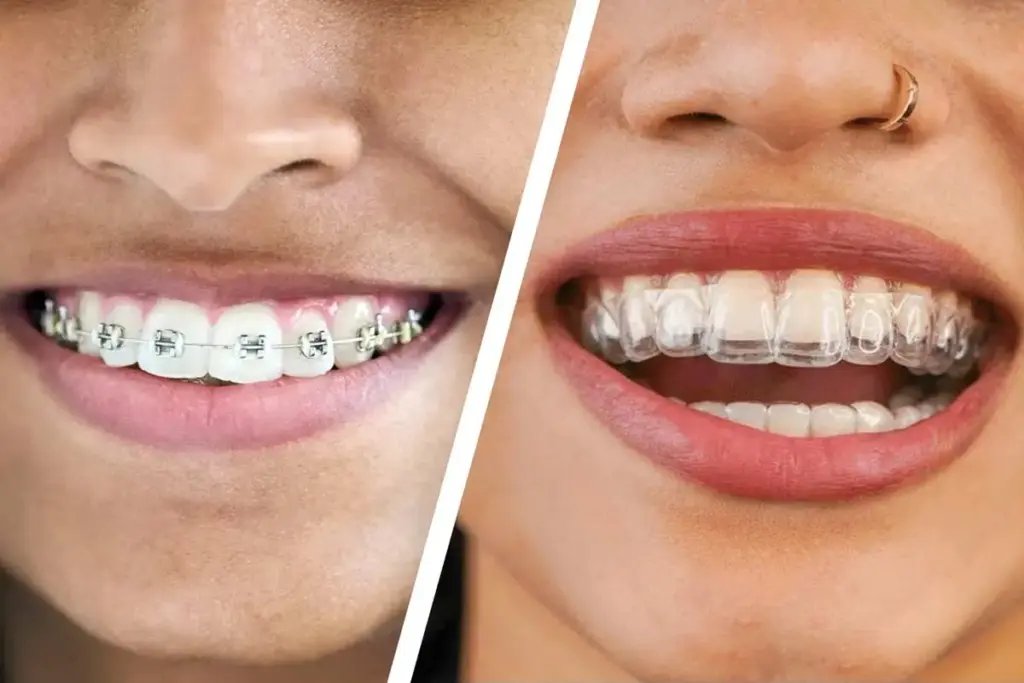
Correcting dental malocclusion, crowding, crossbites, and aesthetic spacing is one of the most impactful investments an individual can make in their oral health and smile design. Modern orthodontics has progressed far beyond the single historical option of metallic brackets bonded to teeth. Today, prospective patients evaluate two primary modalities: custom-engineered clear aligners and traditional fixed brackets.
Navigating the choice of invisalign vs braces requires weighing aesthetic preferences against clinical complexity and daily discipline. Patients frequently ask invisalign vs braces which is better, seek an objective invisalign vs braces comparison, evaluate timeline questions such as invisalign vs braces which is faster, explore suitability regarding invisalign vs braces for teenager, study documented invisalign vs braces before and after photographic transformations, review the detailed pros and cons of invisalign vs braces, and investigate what financial variables govern invisalign vs braces cost. This clinical guide provides an evidence-based breakdown of biomechanics, treatment efficiency, daily compliance, and long-term retention.
Table of Contents
Biomechanical Overview: How Invisalign and Traditional Braces Move Teeth
Both clear aligners and fixed brackets operate on the biological principle of bone remodeling: applying continuous, gentle orthodontic force to stimulate osteoclasts (cells that break down bone ahead of movement) and osteoblasts (cells that rebuild bone behind movement). However, their mechanical execution differs fundamentally:
Get Free Consultation
Have any questions? Leave your details and we'll get back to you shortly.
- Invisalign Clear Aligners: Fabricated from medical-grade thermoplastic polymers (SmartTrack material). Using computer-guided 3D staging software (ClinCheck), a progressive series of clear, removable aligners delivers calibrated pushing forces across the entire anatomical crown of the tooth. Small, tooth-colored composite bumps (attachments) are temporarily bonded to specific teeth to serve as leverage handles for complex rotations and root tipping.
- Traditional Fixed Braces: Stainless steel or ceramic brackets are bonded to the facial surface of each tooth and connected via flexible nickel-titanium (NiTi) or rigid stainless steel archwires. Ligatures (elastic bands) or self-ligating doors secure the wire within the bracket slot. As the archwire seeks to return to its original factory-curved shape, it exerts continuous multidirectional pulling and torque forces.
Treatment Speed and Efficiency: Invisalign vs Braces Which Is Faster?
When investigating invisalign vs braces which is faster, the answer depends heavily on the specific malocclusion type, case complexity, and patient compliance:
- Mild to Moderate Crowding and Spacing: Invisalign is frequently faster, often completing treatment within 6 to 18 months. Because aligners can move multiple teeth simultaneously according to predetermined digital staging, mild aesthetic adjustments and gap closures occur with maximum efficiency.
- Complex Rotations, Severe Extractions, and Deep Vertical Shifts: Traditional braces are generally faster and more predictable, averaging 18 to 24 months. Metal brackets provide superior mechanical grip for extruding impacted canines, closing large extraction gaps through bodily translation (preventing tipping), and correcting severe skeletal open or deep bites.
- The Compliance Trap: Unlike fixed braces, which work continuously 24 hours a day without patient intervention, Invisalign trays only work when worn for a strict minimum of 20 to 22 hours daily. If a patient frequently removes trays or forgets to wear them, treatment speed stalls entirely, leading to prolonged schedules and mid-course refinements.
Aesthetic and Functional Outcomes: Invisalign vs Braces Before and After
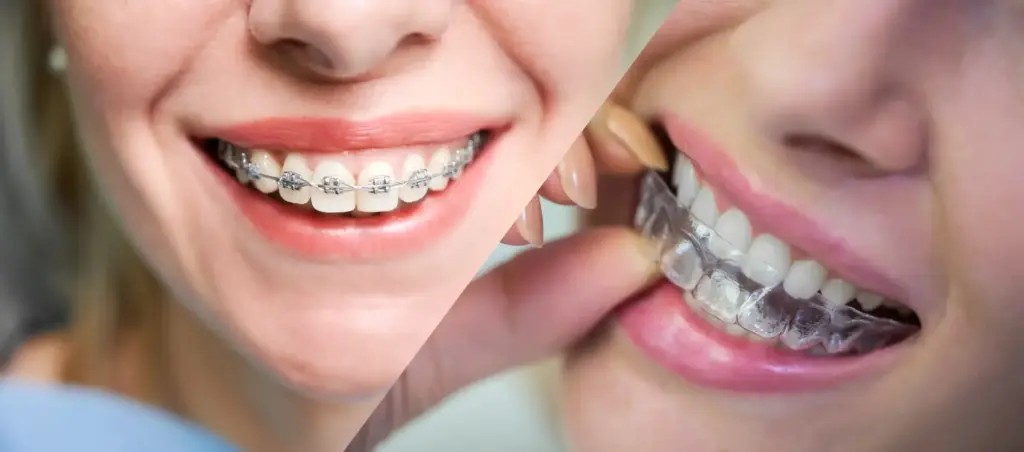
Examining clinical invisalign vs braces before and after portfolios demonstrates that both modalities achieve comparable aesthetic perfection when planned by experienced orthodontists:
- Arch Expansion and Alignment: Both systems widen constricted dental arches and eliminate severe crowding, resulting in symmetrical smile lines aligned with facial aesthetics.
- Bite Dynamics and Functional Occlusion: Fixed braces excel in micro-detailing the final interdigitation of upper and lower posterior cusps during finishing phases. Invisalign uses vertical attachments and intermaxillary elastics to guide jaw alignment, achieving identical occlusal results in compliant patients.
- Soft Tissue Profiling: Closing anterior gaps or eliminating excessive protrusion with either system restores proper lip support and profile harmony.
Adolescent Considerations: Invisalign vs Braces for Teenager
Selecting invisalign vs braces for teenager requires evaluating psychological maturity, athletic involvement, and daily hygiene habits:
- Hygiene and White Spot Lesions: Fixed braces create numerous food traps, making thorough flossing and plaque removal challenging for teenagers. Demineralization (permanent white spot lesions around brackets) is a common risk with poor adolescent hygiene. Because Invisalign trays are removed for brushing and flossing, gingival health remains superior.
- Compliance Tracking: Teen-specific clear aligners feature discreet blue compliance indicators built into the plastic that gradually fade from dark blue to clear under saliva exposure, allowing parents and orthodontists to verify wear time.
- Dietary Freedom vs. Tray Loss: Teenagers with braces must avoid crunchy, sticky, or hard foods (popcorn, nuts, gum) to prevent bracket breakages. Invisalign allows teenagers to eat normally, but introduces the risk of lost aligners in school cafeterias or sports lockers.
- Contact Sports and Musical Instruments: Teenagers playing wind instruments or contact sports (football, hockey, martial arts) find smooth aligners far more comfortable than metal brackets, which can cut into oral mucosa upon facial impact.
Comprehensive Evaluation: Pros and Cons of Invisalign vs Braces
A balanced review of the pros and cons of invisalign vs braces clarifies the lifestyle adjustments required by each treatment:
Invisalign Clear Aligners
- Pros: Virtually invisible aesthetics; removable for easy eating and brushing; zero dietary restrictions; smooth plastic eliminates painful cheek ulcers; fewer emergency appointments for broken wires.
- Cons: Demands strict self-discipline (minimum 20 to 22 hours per day); must be removed before consuming hot liquids or anything other than plain water; higher risk of misplacement; less suited for severe skeletal dysplasias.
Traditional Fixed Braces
- Pros: Works automatically without relying on patient memory; superior control for severe crowding, high canine impactions, and root uprighting; brackets cannot be lost; cost-effective for complex multi-disciplinary cases.
- Cons: Highly visible metallic or ceramic appearance; strict dietary restrictions (no chewy, hard, or sticky foods); difficult oral hygiene requiring specialized floss threaders; frequent emergency visits for loose brackets or poking wire ends.
Clinical Comparison Matrix
| Clinical Parameter | Invisalign Clear Aligners | Traditional Fixed Braces (Metal / Ceramic) |
| Visibility & Aesthetics | Virtually invisible clear plastic | Visible metal brackets or tooth-colored ceramic |
| Removability | Fully removable by the patient | Fixed; bonded permanently until treatment ends |
| Daily Compliance Required | 20 to 22 Hours daily (Strict) | Continuous 24/7 mechanical force (Zero effort) |
| Oral Hygiene Access | Unrestricted; brush & floss naturally | Complex; requires threaders, proxies, water flossers |
| Dietary Limitations | None (Trays removed during meals) | Strict (No sticky, crunchy, or hard foods) |
| Ideal Clinical Scope | Mild to moderate crowding, spacing, relapse | Mild to severe skeletal discrepancies, impactions |
| Average Treatment Duration | 6 to 18 Months | 12 to 24 Months |
| Soft Tissue Irritation | Minimal (Smooth scalloped borders) | Moderate (Brackets rub cheeks, requires wax) |
Financial Variables: What Influences the Cost of Treatment?
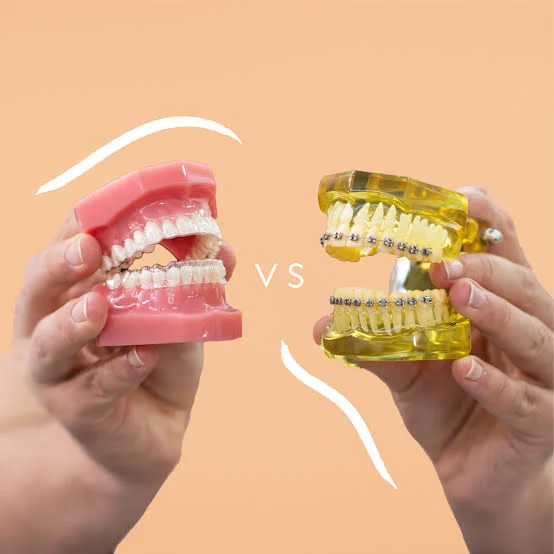
When patients evaluate invisalign vs braces cost, they will find that pricing is dynamic rather than fixed. Orthodontic treatment fees are calculated according to several critical clinical, technical, and geographic factors:
- Severity and Complexity of Malocclusion: Mild anterior crowding requiring limited aligner stages or minor bracket adjustments involves fewer clinical hours and materials than complex Class II/III bite corrections requiring tooth extractions or intermaxillary jaw expansion.
- Duration of Active Treatment: Longer treatment timelines require more clinical check-up appointments, archwire changes, monitoring, and administrative chair time.
- Material and Proprietary Lab Fees: Invisalign treatments incur fixed manufacturing and software license fees paid to Align Technology for 3D digital planning and custom SmartTrack fabrication. Similarly, ceramic (clear) brackets or lingual (behind-the-teeth) braces carry higher material laboratory costs than standard stainless steel brackets.
- Geographic Location and Practice Overhead: Operating expenses vary widely between major metropolitan areas, suburban clinics, and international dental tourism destinations.
- Inclusion of Retention Protocols: Comprehensive treatment plans typically factor in the fabrication of post-treatment retainers (such as clear Vivera retainers or bonded fixed lingual wires) along with 12 to 24 months of post-active observation visits to safeguard against relapse.
Frequently Asked Questions (FAQ)
Invisalign vs braces which is better for adult patients?
Neither system is universally superior; suitability depends on your specific dental alignment and lifestyle. For working professionals seeking discreet aesthetics, normal dietary freedom, and easy oral hygiene, Invisalign is often preferred. However, for adults with complex bite misalignments, severe tooth rotations, or those who lack the discipline to wear trays 22 hours a day, traditional fixed braces remain the more effective choice.
Can you drink coffee, tea, or soda while wearing Invisalign trays?
No. You should only drink plain, cool water while wearing Invisalign aligners. Hot liquids can warp the medical-grade thermoplastic, ruining their precise tooth-moving calibration. Sugary or acidic beverages seep inside the trays and remain trapped against the tooth enamel, causing rapid tooth decay, enamel demineralization, and dark aligner staining.
Do clear aligners hurt as much as traditional braces?
Both treatments produce mild discomfort when teeth begin moving. However, Invisalign patients generally report less overall soft-tissue pain. Braces feature sharp metallic edges and brackets that rub against the inner lips and cheeks, causing recurrent ulcers. Clear aligners have laser-cut, smooth borders that sit flush against the gums, limiting soreness to a gentle, dull pressure during the first 24 to 48 hours after switching to a new tray.
What happens if I lose an Invisalign aligner?
If you misplace an aligner tray, contact your orthodontist immediately. Depending on how many days you wore the lost tray, your provider will advise you to move forward to the next sequential tray in your series or temporarily step back to your previous tray to prevent your teeth from shifting backward while a replacement is fabricated.

 |
|