Skip to content
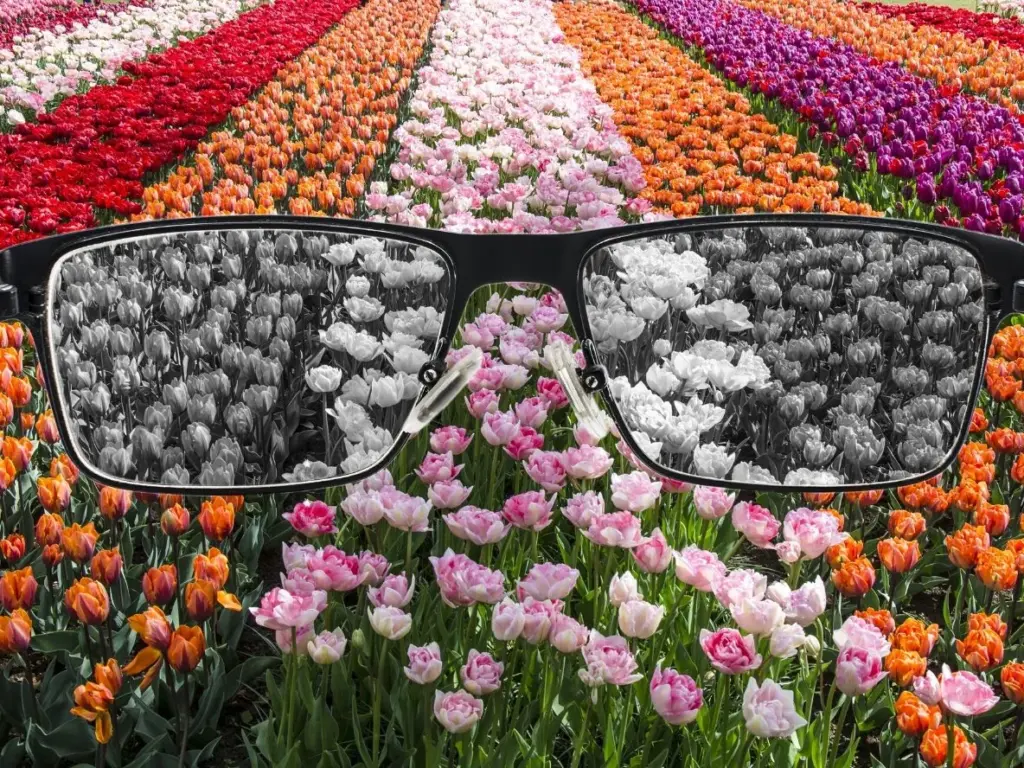
The human eye is an incredibly intricate sensory organ, capable of distinguishing millions of distinct color shades under optimal conditions. However, for individuals living with structural visual variations, perceiving the full spectrum of light is not always straightforward. This is exactly what is color blindness in humans a common deficiency in how a person perceives specific wavelengths of light, altering their view of the world.
At our clinic, we frequently meet patients who realize they have a color deficiency later in life, often during routine checkups or employment screenings. Increasing color blindness awareness is a core priority for us. Let’s explore the genetic foundations of this condition, the distinct color blindness types, how it is accurately diagnosed using a color blindness test, and what management pathways are currently available.
Table of Contents
What is Color Blindness and What is Its Main Cause?
To understand color blindness causes, we must look into the microscopic anatomy of the retina. The retina contains two main types of light-sensitive photoreceptor cells: rods and cones. While rods are responsible for night vision and motion detection, cones process color. There are three types of cone cells, each specialized to absorb a specific wavelength of light: Red (long-wave), Green (medium-wave), and Blue (short-wave).
Get Free Consultation
Have any questions? Leave your details and we'll get back to you shortly.
The main cause of color blindness is a functional absence, structural defect, or sensitivity shift in one or more of these cone photoreceptors. When a specific set of cones fails to respond accurately to incoming light frequencies, the brain receives overlapping signals, making it highly difficult to distinguish between certain shades.
Color Blindness Genetics: Inheriting the Condition
When analyzing the root origins of this visual variation, color blindness genetics reveal a distinct hereditary pattern. The most common forms are inherited as congenital defects linked to the X chromosome.
Because the genes responsible for producing red and green photopigments are located strictly on the X chromosome, the condition presents unevenly between genders:
- Males: Have only one X chromosome (XY). If that single X chromosome carries the defective gene, they will definitely display color deficiency.
- Females: Have two X chromosomes (XX). For a female to be color blind, both of her X chromosomes must carry the mutation. If only one chromosome is affected, she becomes a carrier but retains normal vision.
This chromosome mapping explains why red-green color deficiency affects roughly 8% of men but less than 0.5% of women worldwide.
What Are the 4 Types of Color Blindness?
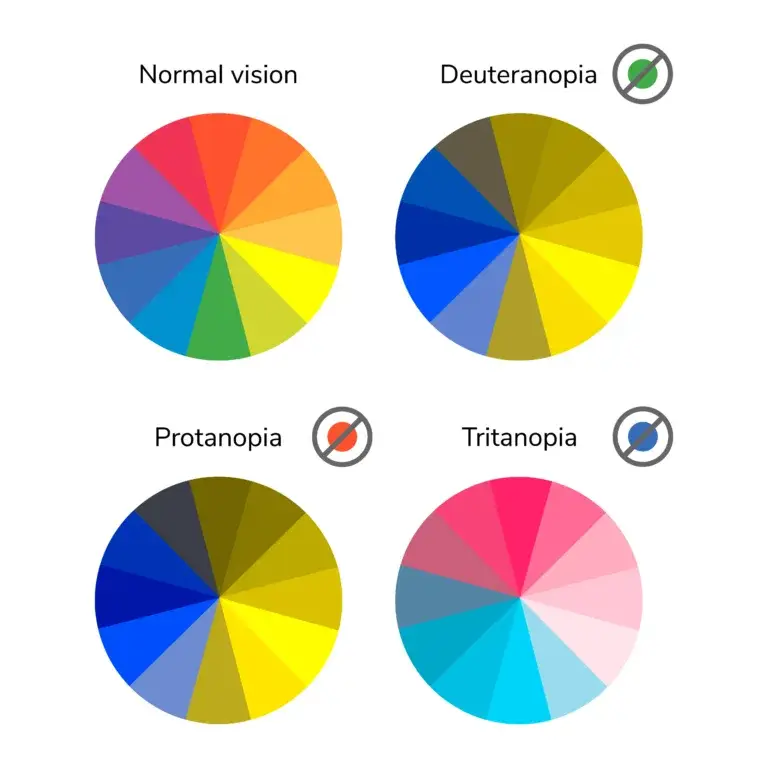
Color vision deficiencies are classified based on which specific cone photoreceptor is missing or structurally altered. While there are numerous subtle variations, the scientific consensus highlights 4 types of color blindness that patients present with most frequently:
1. Deutan Color Blindness (Deuteranomaly & Deuteranopia)
This is the most common form of red green color blindness. Individuals with deuteranomaly have mutated green cone cells that shift their sensitivity toward red light. Nearby shades look muted, and green can appear slightly reddish. If the green cones are completely missing, the condition is called deuteranopia, causing a total inability to tell reds and greens apart.
2. Protan Color Blindness (Protanomaly & Protanopia)
This category involves structural defects in the red cone cells. In protan anomaly, the red cones shift toward the green spectrum, making reds appear dull, less bright, and sometimes dark gray. When the red photopigments are completely non-functional, it is diagnosed as protanopia color blindness, significantly altering how red, orange, and yellow hues land on the retinal plane.
3. Tritanopia Color Blindness (Tritanomaly & Tritanopia)
This is a rare condition that affects the blue cone photopigments. Individuals with tritanopia struggle to distinguish between blue and green, as well as yellow and violet. Unlike red-green deficiencies, blue-yellow variations are passed down equally to males and females because the mutated gene is located on an autosome (chromosome 7) rather than a sex chromosome.
4. Achromatopsia (Total Color Blindness)
The rarest and most severe type. Individuals with achromatopsia have no functioning cone cells at all, relying entirely on their rods. As a result, they perceive the world completely in shades of black, white, and gray. This structural absence is almost always accompanied by severe light sensitivity (photophobia) and low baseline visual acuity.
Common Color Blindness Symptoms and Daily Struggles
The baseline color blindness symptoms can vary dramatically from a subtle inability to distinguish between pastel shades to a complete loss of the color spectrum. What do colorblind people struggle with in their everyday lives? The challenges are practical and systemic:
- Traffic and Navigational Signals: Interpreting flashing red and green transit lights, especially at night or in heavy rain, requires relying entirely on the physical position of the light rather than the color itself.
- Professional Limitations: Certain industries have strict visual criteria. Color deficiencies can restrict individuals from becoming commercial pilots, electrical engineers, military personnel, or graphics designers.
- Everyday Tasks: Selecting ripe fruits at the grocery store, matching clothing items, or reading color-coded charts and digital maps can become frustrating exercises.
How the Color Blindness Test Works?
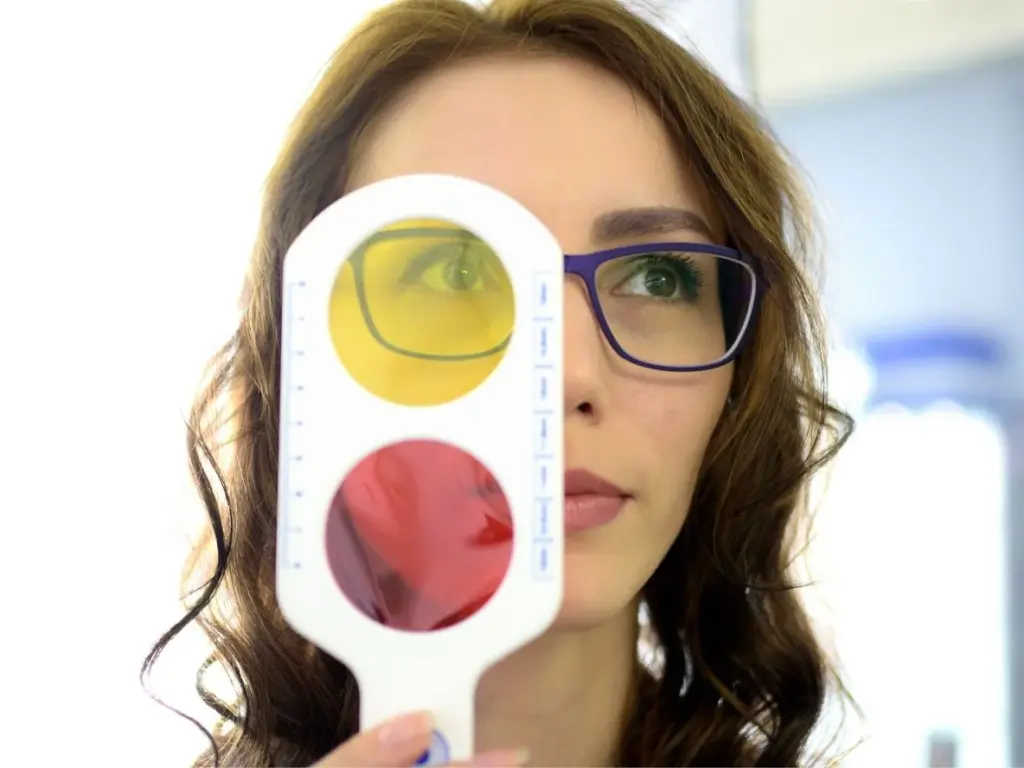
Diagnosing a color deficiency accurately requires specialized clinical tools designed to isolate individual photoreceptor responses. The standard methodology involves two primary test formats:
- Ishihara Pseudoisochromatic Plates: This is the classic color blindness test used worldwide. It consists of a booklet containing circular patterns made of dots that vary randomly in size and color. Inside the pattern, a number or shape is formed by dots that a normal eye can easily spot, but a color-deficient eye will see as completely blank or read as a totally different number.
- Anomaloscope: A high-precision laboratory instrument where the patient alters a split visual field to match colors. This device allows specialists to precisely determine whether a patient suffers from a mild anomaly or complete protanopia/deuteranopia.
Modern Management and Color Blindness Treatment
A common question patients ask us during consultations is: Can color blindness be cured?
Congenital color blindness caused by genetic factors cannot be cured, as there is currently no approved medical therapy or surgical procedure capable of restoring missing or structurally defective retinal cone cells.
However, modern technological and clinical advances offer reliable ways to manage the condition:
- Optical Filters and Specialized Glasses: High-tech glasses utilize thin-film optical coatings to filter out specific overlapping wavelengths of light between red and green. While these glasses do not create perfect color vision, they enhance contrast, allowing patients to distinguish between problem shades much easier.
- Digital Accessibility Adaptations: Modern software interfaces, smartphones, and operating systems now feature built-in “colorblind mode” filters, shifts, and patterns that adjust digital displays to suit deutan, protan, or tritan vision.
- Acquired Color Blindness Treatments: If a color deficiency is acquired later in life due to underlying health issues treating the root cause can often restore baseline color perception.
Frequently Asked Questions (FAQ)
What is the main cause of color blindness?
The main cause is a genetic defect or structural absence of one or more of the three color-sensitive cone photoreceptors (red, green, blue) in the retina of the eye.
Can color blindness be cured completely?
Congenital (genetic) color blindness cannot be cured completely because damaged or missing retinal cone cells cannot be replaced. However, specialized contrast-enhancing glasses and digital accessibility tools can help manage daily visual tasks.
Why is red-green color blindness more common in males?
The genes for red and green color receptors are located on the X chromosome. Since males have only one X chromosome, inheriting a single mutated copy causes the condition, whereas females require mutated genes on both of their X chromosomes.
What do people with deutan color blindness see?
Individuals with deutan color blindness struggle to differentiate between shades of red, green, brown, and orange. Greens look muted or slightly faded, often blending into surrounding red tones.
What is the difference between protanopia and deuteranopia?
Protanopia is the complete absence of working red cone cells, making reds look dark and muddy. Deuteranopia is the complete absence of green cone cells, shifting the entire green spectrum toward brown and gray tones.

 |
|