Skip to content
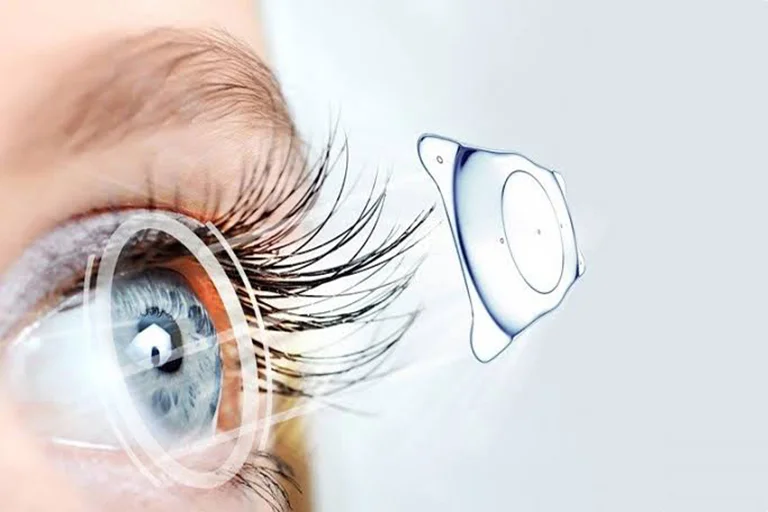
Age-related changes within the crystalline lens of the human eye eventually impact every individual. Whether manifested as presbyopia making nearby text illegible after age 40, or as a dense cataract clouding the visual axis, modern ophthalmic engineering offers clear pathways to visual independence. Among the most advanced internal solutions available today are trifocal lenses.
At our clinic, we routinely guide international patients who are tired of the constant hassle of switching between reading glasses, computer glasses, and driving glasses. By replacing the eye’s natural, worn-out lens with a high-tech implant, it is now possible to restore sharp vision at all distances.
This clinical guide provides a comprehensive breakdown of trifocal lenses cataract surgery, evaluates the potential optical phenomena you might experience, and provides practical insights into the competitive treatment options available abroad.
Get Free Consultation
Have any questions? Leave your details and we'll get back to you shortly.
Table of Contents
What Are Trifocal Lenses?
To understand what are trifocal lenses, we must look at how intraocular lenses (IOLs) have evolved over the decades. When undergoing lens replacement or cataract removal, the surgeon removes the cloudy or rigid natural lens and implants a microscopic, artificial lens in its place.
Traditional monofocal implants provide clear vision at a single fixed distance, meaning patients still require glasses for reading or computer work. In contrast, trifocal lenses iol technology features advanced diffractive rings engineered across the surface of the optic. These precise rings split incoming light into three distinct, permanent focal points:
- Near Vision: For reading books, viewing smartphones, and sewing (approx. 33–40 cm).
- Intermediate Vision: For viewing computer screens, dashboard displays, and cooking (approx. 60–80 cm).
- Distance Vision: For driving, watching television, and navigating open environments.
Trifocal Lenses vs. Multifocal: What Is the Difference?
When researching premium lens options, patients frequently get confused by the terminology surrounding trifocal lenses vs multifocal implants. Clinically, a trifocal lens is a specialized, advanced subclass of a multifocal lens.
Older-generation multifocal lenses were primarily bifocal, meaning they only split light into two zones: far and near. This left a noticeable “visual drop-off” or blurriness at intermediate arm’s-length distances, such as when looking at a laptop or a car dashboard. Modern types of trifocal lenses eliminate this gap entirely by adding a dedicated third focal point, creating a seamless visual transition.
How Is Trifocal Lenses Surgery Performed?
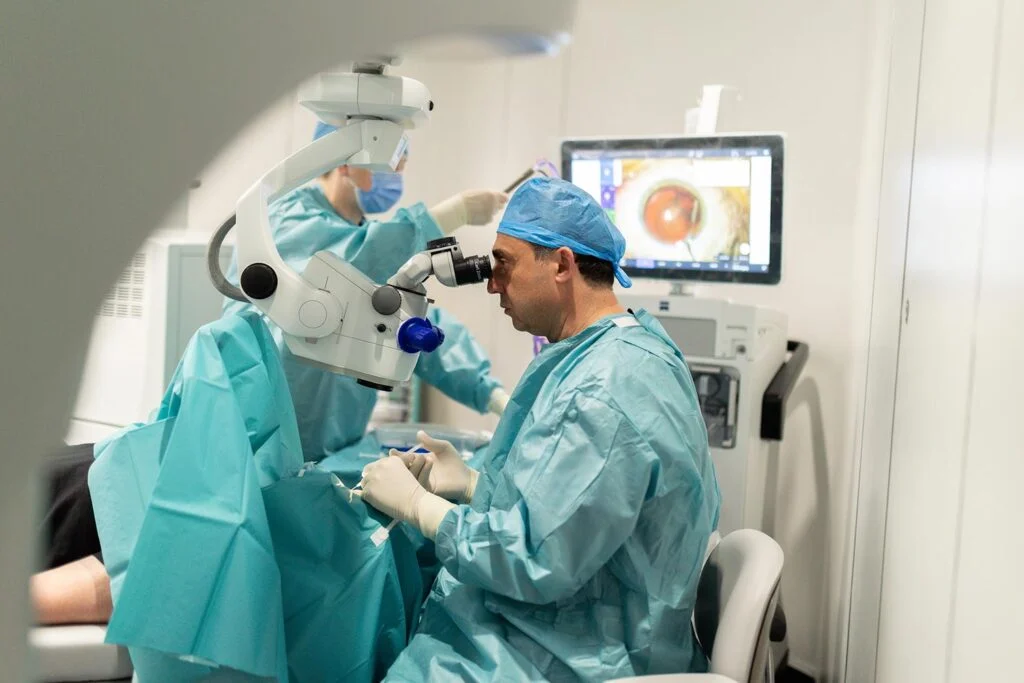
The physical trifocal lenses surgery is identical to modern micro-incision cataract surgery or Refractive Lens Exchange (RLE). The procedure follows a highly controlled outpatient protocol:
- Local Numbing: The eye is thoroughly numbed using specialized anesthetic drops; no needles or general anesthesia are typically required.
- Phacoemulsification: The surgeon creates a microscopic, self-sealing tunnel incision (less than 2.2 mm) at the edge of the cornea. An ultrasonic probe gently breaks up the old, rigid natural lens and vacuums it out.
- IOL Implantation: Using a specialized injector tool, the surgeon inserts the foldable trifocal lens through the tiny incision. The lens gently unfolds inside the eye’s natural capsular bag, locking permanently into place.
The entire procedure takes roughly 15 minutes per eye and is completely painless.
What Are the Disadvantages and Side Effects of Trifocal Lenses?
While the benefits of freedom from glasses are substantial, patients must have realistic expectations regarding the physiological disadvantages of trifocal lenses and their associated optical trade-offs.
The primary side effects of trifocal lenses stem from how light is diffracted across the ring patterns. Because light is split into three zones simultaneously, the brain must learn to select the sharpest image automatically a neurological process called neuroadaptation. During the first few weeks or months of this process, patients may experience:
- Glare and Halos: Seeing rings or starbursts around headlights or streetlights when driving at night.
- Reduced Contrast Sensitivity: A subtle loss of visual sharpness in low-light environments, such as reading a menu in a dimly lit restaurant.
- Mild Surface Dryness: Temporary dryness caused by the micro-incision, which resolves quickly with lubricating drops.
Clinical Reality Check: Selecting the best trifocal lenses (such as Alcon PanOptix or Zeiss AT LISA) minimizes these phenomena, but it does not eliminate them entirely. Patients who drive extensively at night or work as professional graphic designers may want to discuss alternative non-diffractive lens technologies with their specialist.
What Is the Cost of Trifocal Lenses Surgery Globally and in Turkey?
The baseline trifocal lenses surgery cost varies significantly based on the country where the procedure is performed, the manufacturing brand of the implant, and the diagnostic imaging technologies utilized before the operation. In Western Europe and the United States, premium lens replacement can be prohibitively expensive, often reaching several thousand euros per eye.
Because of this, many international patients choose to travel abroad, making trifocal lenses Turkey one of the leading medical tourism destinations in the world. The trifocal lenses Turkey cost is significantly more affordable due to lower local operational overhead and favorable exchange rates.
When analyzing the trifocal lenses Turkey price, patients typically find comprehensive packages that include detailed pre-operative biometry testing, premium FDA-approved lenses, the surgeon’s fee, and luxury accommodation arrangements all at a fraction of the cost they would pay in their home countries.
Frequently Asked Questions (FAQ)
Which is better, progressive lenses or trifocals?
Progressive lenses are external glasses with a graduated prescription across the glass pane, requiring you to look through different parts of the frame to see clearly. An intraocular trifocal lens is a permanent implant inside the eye that automatically directs light to three focal points simultaneously, removing the need for external glasses entirely.
Which is better, a bifocal or trifocal lens?
A trifocal lens is clinically superior to an older bifocal lens because it includes a third, dedicated intermediate focal point. This ensures you can see computer screens and vehicle dashboards clearly, whereas bifocal lenses leave a blurry zone at arm’s length.
Are the side effects of trifocal lenses permanent?
No, the halos and glare experienced after surgery are typically temporary. As your brain completes the process of neuroadaptation over 3 to 6 months, it learns to filter out the overlapping light rings, and night vision improves significantly.
Can trifocal lenses be used for cataract surgery?
Yes, trifocal lenses cataract surgery is highly common. The procedure removes the cloudy cataractous lens and replaces it with a premium trifocal implant, simultaneously curing the cataract and correcting your presbyopia, myopia, or hyperopia.

 |
|