Skip to content
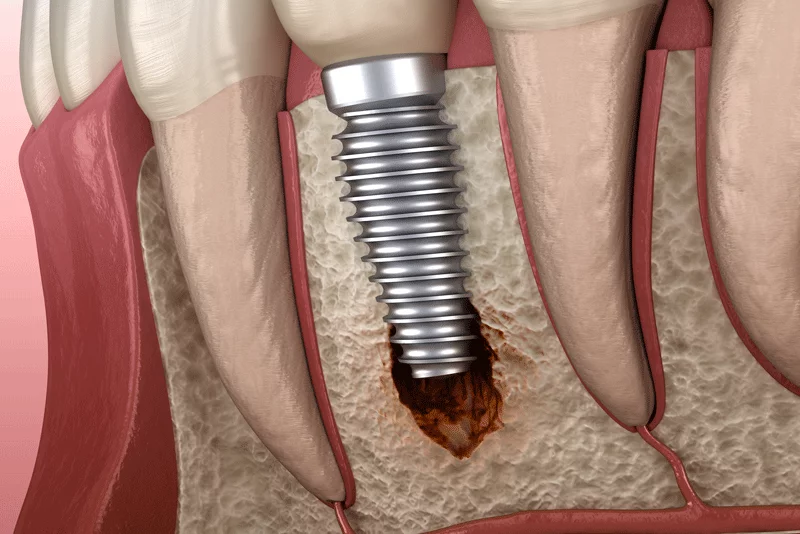
Dental implants are widely considered the gold standard for replacing missing teeth, boasting an impressive overall clinical success rate. Modern titanium and ceramic biocompatible posts fuse directly with the jawbone through a process known as osseointegration, providing an exceptionally stable foundation for crowns, bridges, or full-arch prostheses. However, despite high long-term success rates, a small percentage of cases experience complications leading to dental implant failure.
Navigating complications after surgery requires recognizing key warning signs and understanding the underlying biological mechanics. Patients frequently seek clarity regarding early dental implant failure, what physical signs signal early dental implant failure symptoms, how lifestyle choices like alcohol consumption impact healing, whether zirconia dental implant failure differs from titanium, and what clinical options exist for dental implant failure treatment. This comprehensive medical guide details the primary reasons for dental implant failure, analyzes the dental implant failure rate, outlines symptom stages, and provides a clear pathway for implant salvage and reconstruction.
Table of Contents
Early vs. Late Stage Failure: What Are the Key Differences?
To evaluate why an implant loses structural stability, oral surgeons categorize complications based on timing:
Get Free Consultation
Have any questions? Leave your details and we'll get back to you shortly.
1. First Stage Early Dental Implant Failure
First stage early dental implant failure occurs during the initial healing window, typically within the first 3 to 6 months post-surgery before the permanent crown is attached. During this stage, the body fails to complete osseointegration meaning new bone cells do not properly fuse to the surface of the implant fixture. This leaves the implant surrounded by soft fibrous connective tissue instead of rigid bone matrix.
2. Late Stage Dental Implant Failure
Late failure occurs months or years after the implant has successfully integrated and been fitted with a functional crown. This type of failure is primarily driven by bacterial infection around the surrounding tissues (peri-implantitis) or chronic mechanical overload from teeth grinding or poor bite forces.
What Causes Dental Implant Complications?
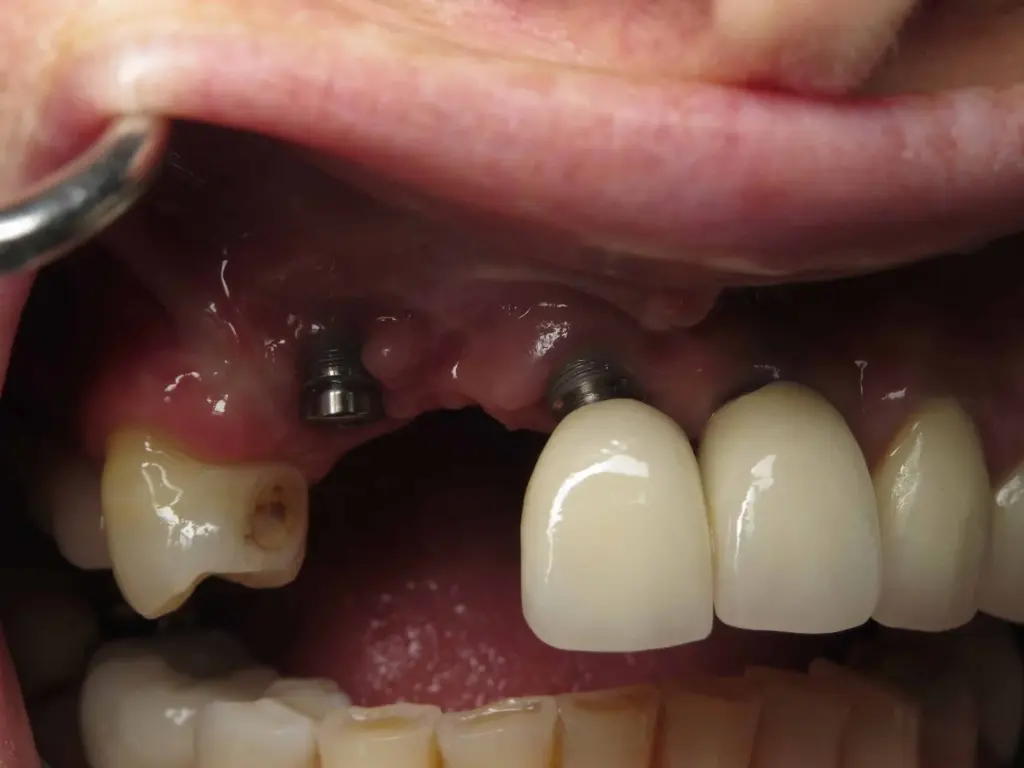
Understanding the primary reasons for dental implant failure requires evaluating both biological processes and patient habits:
- Bacterial Infection (Peri-Implantitis): Microscopic plaque buildup around the gum margin causes bacterial inflammation, destroying soft gum tissue and surrounding jawbone.
- Inadequate Bone Density or Quality: Placing an implant in insufficient or soft bone without prior bone grafting prevents firm primary stability.
- Uncontrolled Systemic Conditions: Uncontrolled Type 2 diabetes, autoimmune disorders, or osteoporosis impair cellular healing and bone integration.
- Smoking and Tobacco Use: Nicotine restricts micro-vascular blood flow to oral tissues, significantly increasing the risk of early osseointegration failure.
- Excessive Alcohol Consumption: Patients often ask how much alcohol causes dental implant failure. While occasional light drinking poses minimal risk, heavy or chronic alcohol consumption (defined medically as more than 3 to 4 standard drinks per day during recovery) severely impairs bone cell osteogenesis, inhibits blood clotting, delays soft tissue healing, and doubles the risk of early implant loss.
- Surgical Trauma or Overheating: Thermal damage to bone tissue during drilling can cause local bone cell death (necrosis), leading to early mobility.
Comparing Materials: Zirconia Dental Implant Failure vs. Titanium
While medical-grade titanium remains the traditional standard, ceramic (zirconia) implants have gained popularity as a metal-free, tooth-colored alternative. However, understanding zirconia dental implant failure involves looking at specific material characteristics:
- Monolithic Design Limitations: Many zirconia implants are fabricated as a single-piece unit (post and abutment combined). This leaves the healing fixture exposed to oral chewing forces during early osseointegration, slightly increasing early failure risks if not strictly protected.
- Material Properties: Zirconia exhibits high flexural strength and excellent soft-tissue attachment, but it lacks the micro-elasticity of titanium. Under extreme grinding forces, micro-fractures can occur at the neck of the implant fixture.
- Surface Topography: Titanium surface etching technologies are slightly more advanced for rapid bone cell attachment compared to newer ceramic formulations.
Recognizing the Warning Signs: Dental Implant Failure Symptoms
Early detection is critical to saving an unstable fixture. Patients should monitor these primary dental implant failure symptoms and early dental implant failure symptoms:
- Micro-Mobility or Loose Feeling: An implant should feel completely rigid. Any slight movement, shifting, or clicking when chewing is a definitive sign of lost bone integration.
- Severe or Throbbing Pain: While mild post-op sore feelings are normal for a few days, sharp, worsening, or throbbing pain weeks or months later indicates nerve compression or infection.
- Persistent Gum Swelling and Redness: Puffy, dark red, or receding gums surrounding the implant post signal active inflammation.
- Suppuration (Pus Discharge): Visible pus oozing from the gum margin around the implant is a clear indicator of active peri-implantitis.
- Rapid Receding Gum Line: Exposure of the metallic or ceramic implant threads above the gumline indicates progressive jawbone loss.
What Is the Overall Dental Implant Failure Rate?
Statistical data from large-scale clinical studies show that the overall dental implant failure rate remains exceptionally low, ranging between 2% and 5% across primary placements. This means dental implants maintain an overall success rate of 95% to 98%.
However, the failure rate varies depending on risk factors:
- Non-smokers with good bone density: Success rate exceeds 98%.
- Smokers and uncontrolled diabetics: Failure rates increase up to 10% to 15%.
- Implants placed in regenerated bone/sinus lifts: Success rate averages 93% to 95%.
Advanced Dental Implant Failure Treatment Protocols
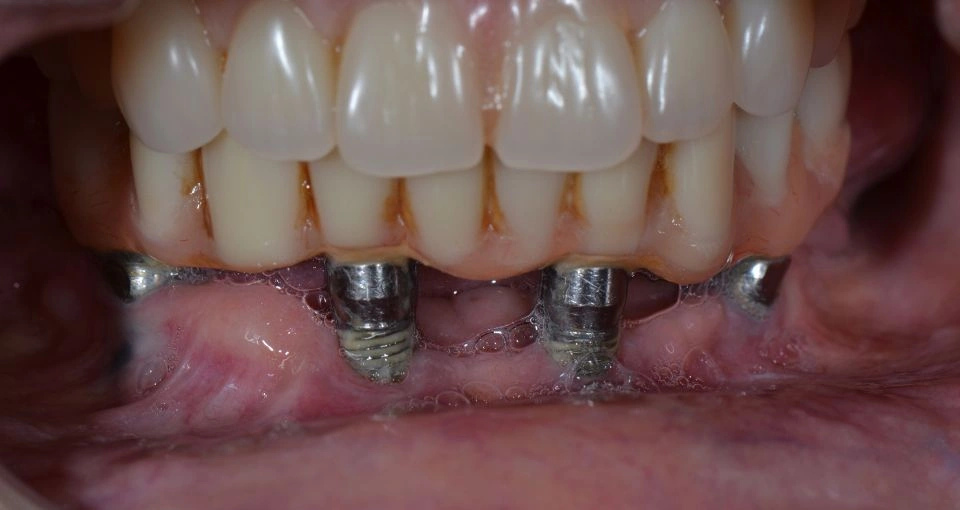
When an implant exhibits signs of instability or infection, specialized dental implant failure treatment must be initiated immediately:
IMPLANT SALVAGE PROTOCOL:
1. Early Infection Stage: Laser decontamination, deep debridement, antibiotic therapy.
2. Complete Mobility Stage: Surgical extraction, tissue cleaning, bone graft, re-placement.
- Non-Surgical Antimicrobial Decontamination: For early peri-implantitis with stable bone, deep mechanical cleaning using ultrasonic instruments, air-polishing, and local antibiotic gels can eliminate bacterial colonies.
- Laser-Assisted Peri-Implantitis Therapy (LAPIP): Specialized medical lasers selectively vaporize infected tissue and sterilize the contaminated implant surface without damaging healthy surrounding bone.
- Explantation and Re-Augmentation: If the implant is physically mobile or has lost more than 50% of surrounding bone support, it cannot re-integrate. The surgeon must remove the fixture, thoroughly curette infected tissue, place a bone graft (guided bone regeneration), and allow the socket to heal for 4 to 6 months before placing a new implant.
Comprehensive Clinical Assessment Matrix
| Metric / Clinical Parameter | First Stage Early Failure | Late Stage Failure (Peri-Implantitis) | Zirconia Implant Failure |
| Primary Timing | 0 to 6 months (Before crown loading) | Months to years after restoration | 0 to 12 months post-surgery |
| Core Biological Cause | Lack of initial bone osseointegration | Bacterial biofilm & mechanical overload | Early loading forces & micro-fractures |
| Primary Physical Symptoms | Painless mobility, mild dull ache | Bleeding gums, pus, severe bone loss | Thread exposure, post-fracture mobility |
| Impact of Smoking / Alcohol | Very High (Prevents initial cellular healing) | High (Accelerates bacterial bone destruction) | High |
| Treatment Approach | Removal of post & delayed bone grafting | Laser decontamination or removal | Explantation & titanium replacement |
Frequently Asked Questions (FAQ)
Can a loose dental implant tighten back up on its own over time?
No. Once an integrated dental implant loses its mechanical bond with the surrounding jawbone and becomes mobile, it cannot tighten back up naturally. Mobility indicates that fibrous scar tissue has formed between the titanium post and the bone matrix. In almost all cases, a mobile implant must be removed by a dental professional.
How much alcohol causes dental implant failure during the recovery phase?
Excessive or chronic drinking (more than 3 to 4 standard drinks per day) during the first 2 to 4 weeks post-surgery significantly impairs blood clotting, suppresses osteoblast (bone-forming cell) activity, and delays soft tissue healing. To ensure safe integration, clinicians strongly advise avoiding alcohol completely for at least 7 to 14 days after surgery.
What should I do immediately if I suspect my dental implant is failing?
If you notice mobility, pus discharge, swelling, or severe pain around your implant, contact your implant dentist or oral surgeon immediately. Early intervention for peri-implantitis can save the implant using non-invasive laser treatments before catastrophic bone loss occurs.
Can I get a new dental implant after my first one has failed and been removed?
Yes, in the vast majority of cases, a new implant can be successfully placed. After removing the failed implant, the dentist cleans the site and performs a bone grafting procedure. Once the bone heals completely over 4 to 6 months, a replacement implant can be inserted with a high rate of long-term success.

 |
|