Skip to content
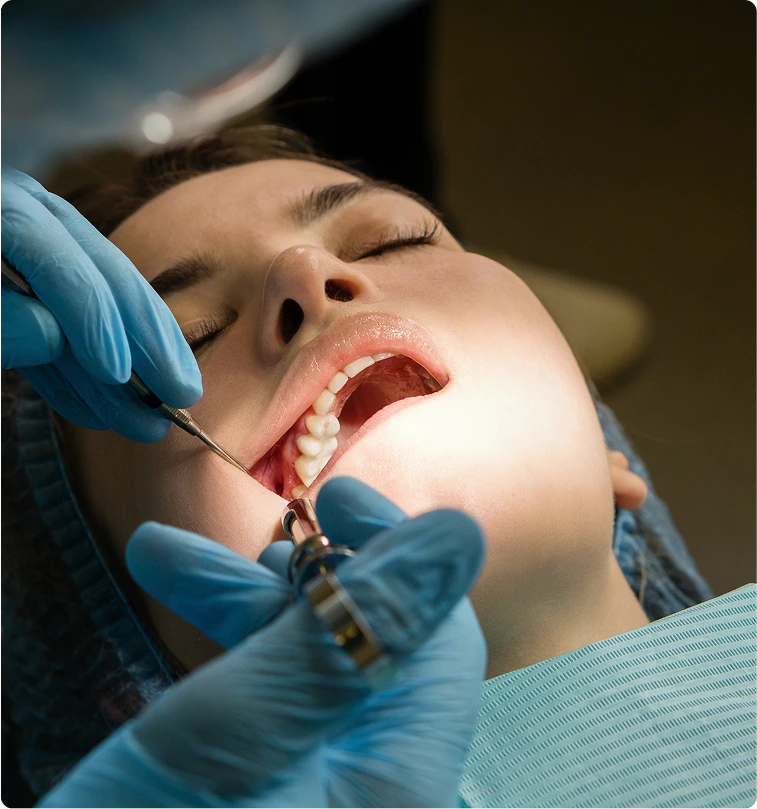
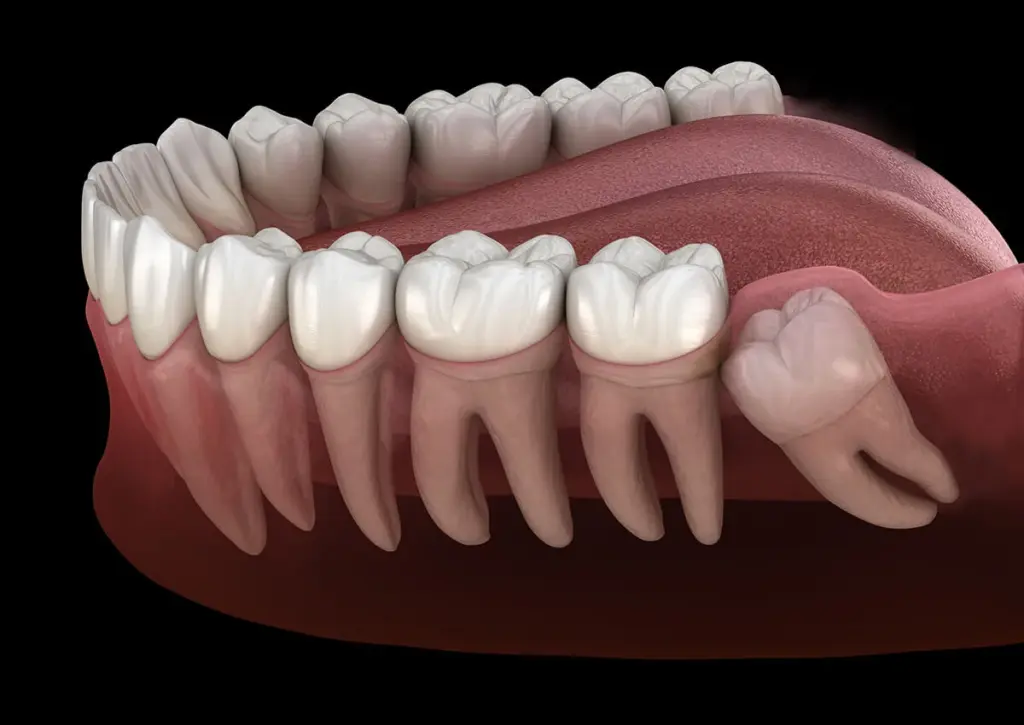
Wisdom teeth, clinically referred to as third molars, are the final set of permanent teeth to erupt in the human dentition, typically emerging between the ages of 17 and 25. Because modern human jaws frequently lack sufficient space to accommodate these late-erupting teeth, third molars routinely become impacted, angled horizontally, trapped beneath dense jawbone, or only partially erupted through the gum tissue. This anatomical crowding leads to chronic pericoronitis (gum flap infections), adjacent tooth decay, root resorption, cyst formation, and severe jaw discomfort.
In such situations, professional wisdom teeth removal is an essential preventative and corrective oral surgery procedure to preserve dental health.
Table of Contents
What Is Wisdom Teeth Removal and How Is It Performed?
Wisdom tooth extraction is a minor oral surgical procedure designed to safely excise one, several, or all four third molars from the posterior alveolar bone.
Get Free Consultation
Have any questions? Leave your details and we'll get back to you shortly.
The complexity of the procedure depends entirely on the tooth’s impaction level:
- Simple Eruption: The tooth has emerged completely through the gum and is extracted using standard dental forceps and elevators without cutting the bone.
- Soft Tissue Impaction: The crown has penetrated the bone, but remains covered by a flap of mucosal tissue that must be opened and sutured.
- Partial Bony Impaction: The tooth is partially submerged within the jawbone, requiring localized bone removal and sectional tooth division.
- Complete Bony Impaction: The molar is fully encased inside the mandible or maxilla, often positioned horizontally or pressing against the second molar’s root trunk.
During an impacted extraction, the oral and maxillofacial surgeon makes a discreet incision along the gingival tissue, gently exposes the bone, removes a thin window of cortical bone using specialized micro-surgical drills with saline irrigation, sections the tooth into smaller segments to protect the adjacent inferior alveolar nerve, cleans the socket, and places dissolvable sutures.
Pain Management: Does Wisdom Teeth Removal Hurt?
A primary concern for patients is: does wisdom teeth removal hurt?
- During the Surgical Procedure: The surgery itself is completely painless. Depending on the patient’s anxiety level and surgical complexity, the surgeon administers local anesthesia, nitrous oxide (laughing gas), deep intravenous (IV) sedation, or general anesthesia. While awake patients may perceive mechanical pressure, vibration, or irrigation sounds, pain receptors are blocked.
- Postoperative Pain Curve: As the local anesthetic wears off over three to five hours post-surgery, patients experience mild to moderate aching and jaw stiffness. The pain typically peaks between 24 and 48 hours and is managed with prescribed non-steroidal anti-inflammatory drugs (NSAIDs like ibuprofen) or mild oral analgesics. Severe, sharp pain during the first few days is uncommon when medications are taken on schedule.
Swelling Trajectory: Wisdom Teeth Removal Swelling
Postoperative wisdom teeth removal swelling is an unavoidable, healthy biological response to bone surgery and tissue manipulation:
- The 72-Hour Swelling Peak: Facial edema, localized cheek puffiness, and minor skin discoloration (bruising) peak between 48 and 72 hours after surgery. The degree of swelling correlates directly with how much bone was removed.
- Cold Therapy Protocol: During the first 24 to 48 hours, applying cold ice packs to the cheeks for 20 minutes on and 20 minutes off constricts blood vessels, blunting excessive fluid accumulation.
- Warm Therapy Transition: After 48 hours, patients should transition to moist, warm compresses. Warmth dilates vessels, encourages lymphatic drainage, and relieves jaw muscle trismus (stiffness).
- Complete Resolution: Swelling subsides significantly by day five to seven, with facial contours returning to baseline within ten days.
What to Eat After Wisdom Teeth Removal: Diet Stages
Knowing precisely what to eat after wisdom teeth removal protects the delicate blood clot and prevents socket irritation:
- Days 1 to 2 (Liquid and Smooth Phase): Smooth, room-temperature, or cool liquids. Excellent choices include blended vegetable broths, smooth Greek yogurt, protein shakes, applesauce, and milkshakes. Strictly avoid drinking through a straw; the suction force will dislodge the blood clot and cause dry socket.
- Days 3 to 5 (Soft Non-Chew Foods): Transition to soft, nutrient-dense foods requiring minimal mastication. Opt for lukewarm mashed potatoes, scrambled eggs, well-cooked oatmeal, flaked salmon, and smooth pureed soups.
- Week 2 (Gradual Solid Reintroduction): Soft pasta, steamed vegetables, and tender rice dishes can be introduced. Continue chewing on the opposite side of the mouth if only one side was operated on.
- Critical Dietary Restrictions: Avoid hard, crunchy, spicy, acidic, or small seedy foods (popcorn, nuts, chips, strawberries, sesame seeds) for at least two weeks. Tiny seeds easily lodge inside the open socket, triggering acute localized infections.
Warning Signs: Pain 10 Days After Wisdom Teeth Removal
While mild muscular stiffness is normal, experiencing sharp, worsening pain 10 days after wisdom teeth removal is abnormal and warrants an immediate clinical visit. Potential causes include:
- Alveolar Osteitis (Dry Socket): Occurs when the primary protective blood clot dislodges or dissolves prematurely, exposing raw bone and sensory nerves to air, food, and oral fluids. While dry socket usually peaks on days three to five, late-onset dry socket can cause throbbing pain radiating toward the ear and temple on day 10.
- Secondary Socket Infection: Bacteria and food debris trapped in the surgical site can cause an abscess. Symptoms include a foul taste, persistent halitosis, pus discharge, localized heat, and fever.
- Delayed Bone Sequester: Occasionally, tiny fragments of unseated bone work their way to the surface of the gum tissue, causing sharp localized irritation.
- Nerve Sensitivity: Prolonged numbness, altered sensation (paresthesia), or burning tingling around the lip, chin, or tongue indicates inflammation of the inferior alveolar or lingual nerve, requiring specialized clinical assessment.
Clinical Visuals: Before and After Wisdom Teeth Removal
Evaluating panoramic dental X-rays (orthopantomograms) and clinical outcomes before and after wisdom teeth removal shows substantial health benefits:
- Eliminating Arch Crowding Pressure: Removing impacted molars relieves anterior pressure, helping maintain straight front teeth after orthodontic treatments.
- Saving the Second Molars: Partially erupted wisdom teeth create a deep food trap against the backside of the second molar. Extraction eliminates this trap, halting hidden root decay and interproximal bone loss.
- Resolving Chronic Gum Flap Infections: Removing the source of bacteria cures recurrent pericoronitis, ending chronic bad breath and jaw stiffness.
- Bone Remodeling: Over three to six months, new trabecular bone gradually fills the hollow extraction socket, restoring full skeletal jaw integrity.
Extraction Modalities Comparison Table
| Parameter | Simple Wisdom Tooth Extraction | Surgical Soft Tissue Extraction | Full Bony Impaction Extraction |
| Tooth Position | Fully erupted above gumline | Blocked by overlying gingiva | Trapped completely inside jawbone |
| Surgical Incision | None (No scalpel needed) | Small mucosal incision | Full flap reflection and bone drilling |
| Bone Removal Needed | None | Minimal to none | Significant cortical bone removal |
| Tooth Sectioning | Intact removal | Rare | Tooth sectioned into 2 to 4 pieces |
| Recovery Duration | 2 to 4 Days | 5 to 7 Days | 7 to 10 Days |
| Swelling Severity | Minimal to none | Mild | Moderate to severe (peaks day 3) |
| Common Anesthesia | Local anesthesia alone | Local + Nitrous oxide | IV sedation or General anesthesia |
What Determines the Wisdom Teeth Removal Cost?
When researching wisdom teeth removal cost, patients will find that pricing is personalized rather than fixed. Total procedural expenses depend on several specific clinical, radiographic, and facility variables:
- Impaction Classification: Removing an erupted upper wisdom tooth with straight roots is faster and involves fewer surgical instruments than excising a fully impacted, horizontally angled lower molar near the mandibular nerve canal.
- Number of Teeth Extracted: Extracting a single problematic tooth costs less than extracting all four wisdom teeth simultaneously in one operational session.
- Type of Anesthesia Administered: Straight local anesthesia carries negligible medication overhead, whereas deep intravenous (IV) conscious sedation or general anesthesia managed by a dedicated anesthesiologist increases the procedural cost.
- Diagnostic Imaging Modality: Standard 2D panoramic X-rays provide basic screening, but complex impactions require 3D Cone Beam Computed Tomography (CBCT) scans to map the exact three-dimensional path of the inferior alveolar nerve, influencing diagnostic fees.
- Surgeon Specialization: Board-certified oral and maxillofacial surgeons handling high-risk anatomical impactions charge professional fees reflecting their surgical expertise and hospital admitting privileges.
- Location and Dental Packages: Operating expenses vary across urban centers and dental tourism destinations. Comprehensive packages (such as in Turkey) frequently bundle the extraction of all four molars, 3D imaging, IV sedation, post-op medications, hotel stays, and clinic transfers into an all-inclusive framework.
Frequently Asked Questions (FAQ)
Can I leave my wisdom teeth in place if they do not hurt?
Not necessarily. Asymptomatic wisdom teeth can harbor silent pathology. Impacted teeth can cause progressive bone loss, root resorption on healthy adjacent second molars, or develop dentigerous cysts within the jawbone without causing early pain. An oral surgeon monitors their development via panoramic X-rays to recommend removal before irreversible damage occurs.
What should I do if a blood clot comes out of the extraction socket?
If a blood clot falls out within the first four days and you experience worsening, throbbing pain and foul breath, you may be developing a dry socket. Contact your oral surgeon immediately. They will gently irrigate the socket and place a medicated soothing dressing (such as eugenol paste) to eliminate pain and promote tissue healing.
When can I brush my teeth normally after wisdom tooth surgery?
You can brush your teeth gently the night of surgery, but avoid brushing directly over the extraction sites. Do not spit vigorously; instead, let the water and toothpaste roll out of your mouth into the sink. Beginning 24 hours post-op, rinse gently with warm salt water (half a teaspoon of salt in a glass of warm water) after every meal.
How soon can I return to school or work after having my wisdom teeth removed?
Most patients with simple or soft tissue extractions return to work or school within two to three days. For full bony impactions involving sedation, patients should rest for three to four days. Strenuous sports, heavy lifting, and intense workouts should be avoided for a full week to prevent blood pressure spikes that could trigger secondary socket bleeding.

 |
|