Skip to content
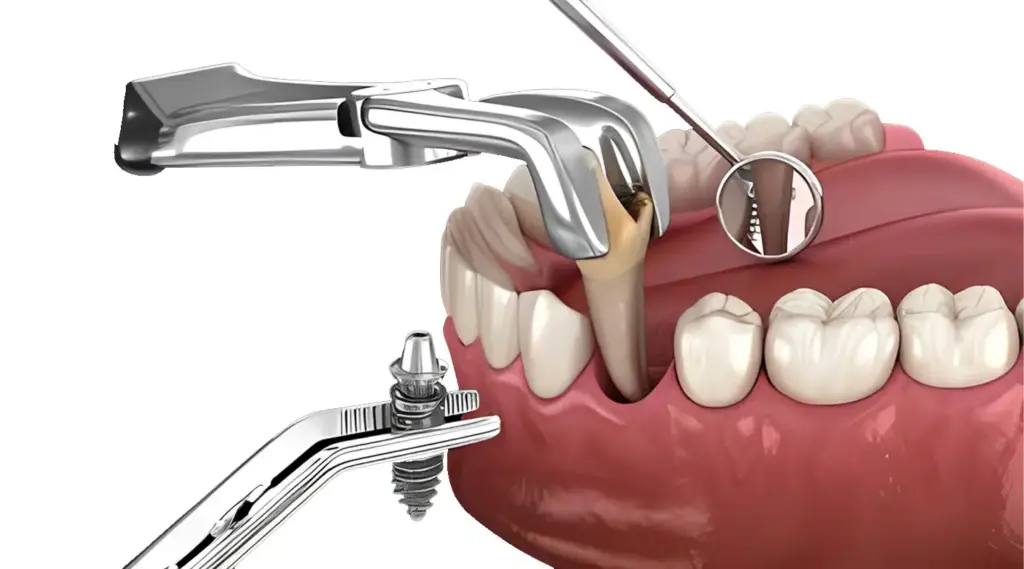
Experiencing severe tooth damage from deep root fractures, non-restorable decay, or endodontic failure traditionally meant facing months of awkward gaps, removable temporary dentures, and multiple invasive surgeries. In traditional implantology, patients waited three to six months for the extraction socket to heal with new bone before an implant fixture could be drilled into place, followed by another waiting period for osseointegration. Modern restorative dentistry has transformed this timeline through the protocol known as an immediate dental implant.
By inserting an artificial titanium or zirconia tooth root into the fresh socket immediately following extraction, oral surgeons can preserve hard and soft tissue contours while drastically condensing overall treatment time.
Table of Contents
What Is an Immediate Dental Implant and How Does It Work?
An immediate dental implant is a specialized surgical and restorative procedure where a dental implant is surgically anchored directly into the alveolar socket during the exact same clinical session as the natural tooth extraction.
Get Free Consultation
Have any questions? Leave your details and we'll get back to you shortly.
The biological rationale revolves around maintaining the delicate alveolar housing:
- Preservation of the Bundle Bone: Following tooth extraction, the thin cortical bone plate (bundle bone) that held the tooth fibers naturally resorbs, losing up to 40 to 60 percent of its horizontal and vertical width within the first six months. Immediate placement helps maintain natural bone architecture.
- Soft Tissue Papilla Maintenance: Placing an implant and a customized emergence profile healing abutment or temporary crown on day one supports the interdental gum peaks (papillae), preventing black triangles from forming between teeth.
- Single Surgical Intervention: Patients undergo local anesthesia and soft-tissue healing only once, avoiding the need for a secondary reopening of the gum months later.
Step-by-Step Protocol: Immediate Dental Implant Procedure
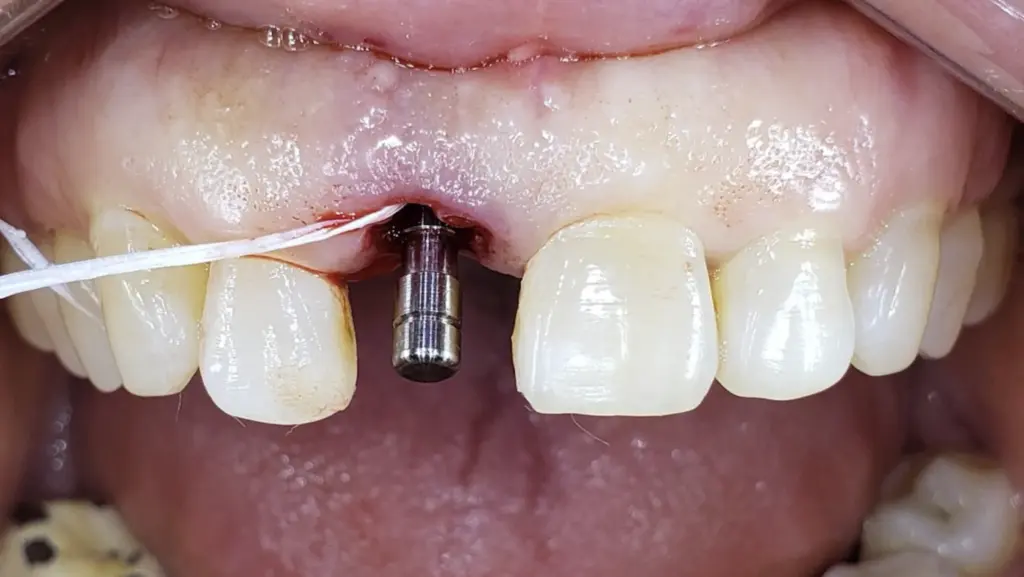
The clinical success of an immediate dental implant procedure relies on atraumatic extraction techniques and high primary stability:
1. Atraumatic Tooth Extraction
The periodontist or oral surgeon avoids traditional heavy forceps that flex and crack the surrounding bone. Using micro-periotomes, piezosurgical tips, or vertical extraction devices, the tooth is severed gently from its periodontal ligament fibers and extracted with zero damage to the delicate outer facial bone wall.
2. Socket Debridement and Evaluation
The socket is thoroughly cleaned and curetted to remove all inflammatory granulation tissue, cystic remnants, or bacterial debris. The surgeon checks that the buccal bone wall is intact and measures the gap between the socket wall and the planned implant axis.
3. Precision Osteotomy Beyond the Root Apex
To achieve strong initial stability, the drilling sequence extends two to four millimeters beyond the native root socket apex into the dense basal bone. This allows the implant threads to engage virgin apical bone rather than relying solely on the empty socket walls.
4. Immediate Dental Implant Placement
The titanium or zirconia fixture is driven into place under controlled torque (typically between 35 and 45 Ncm). A primary stability milestone is required to prevent micro-movements during early bone healing.
5. Gap Grafting (The Jumping Distance)
The empty space between the round cylindrical implant and the irregular natural socket wall, referred to clinically as the jumping distance, is tightly packed with slow-resorbing mineralized bone particulate (allograft or xenograft). This graft prevents the outer bone wall from caving inward during healing.
6. Immediate Provisionalization or Submerged Healing
If the insertion torque exceeds 35 Ncm and the patient has a favorable bite, an aesthetic temporary tooth crown is placed immediately (immediate loading or non-functional aesthetic provisional). This temporary tooth is carefully trimmed so it does not make direct contact with opposing teeth during chewing. If torque is lower, a protective healing cap is placed, and the site heals beneath the gum.
Timeline: How Long Does Immediate Dental Implant Take?
Patients planning their appointments frequently ask how long does immediate dental implant take:
- Chairside Operational Time: The surgical phase, encompassing atraumatic extraction, socket preparation, implant placement, and bone grafting, takes roughly 45 to 60 minutes for a single tooth. Fabricating and fitting a custom temporary aesthetic crown adds another 30 to 45 minutes, meaning the entire same-day appointment takes about one and a half to two hours.
- Osseointegration Window: Although the tooth is extracted and replaced with a temporary crown on day one, the titanium fixture still requires biological integration with the jawbone. This biological bonding process takes three to four months in the lower jaw and four to six months in the softer upper jaw.
- Final Crown Delivery: Once digital scans verify complete osseointegration, the temporary crown is replaced with the permanent, high-strength zirconia or layered porcelain restoration.
Clinical Viability: Immediate Dental Implant Success Rate
Documented clinical research confirms an outstanding immediate dental implant success rate:
- Long-Term Survival Figures: Peer-reviewed studies in implant dentistry demonstrate that immediate implants achieve a 95 to 98 percent survival rate over ten-year monitoring periods, which is directly equivalent to traditional delayed implant protocols.
- Crucial Factors for High Survival: Success depends on achieving rigid primary stability at the time of surgery, complete preservation of the outer labial bone wall, dense bone grafting in the socket gap, and strictly avoiding chewing forces on temporary restorations during the first eight weeks.
- The Risk of Micro-Motion: If a temporary restoration experiences premature bite forces, micro-movements greater than 100 to 150 microns disrupt capillary formation, leading to fibrous encapsulation instead of osseointegration. Experienced surgeons maintain immediate temporary crowns in non-functional occlusion (completely out of the chewing plane).
Candidacy: Who Can Receive an Immediate Dental Implant After Extraction?
Not every failing tooth can immediately receive a same-day replacement. An immediate dental implant after extraction requires specific anatomical criteria:
- Ideal Candidates: Patients with fractured teeth, severe root canal failure without uncontrolled pus, clear apical bone for anchoring, thick gum tissue biotypes, intact socket bone walls, and good systemic health.
- Situations Requiring Delayed Protocols: Severe acute, purulent socket infections with active abscess formation; extensive destruction of the buccal bone wall; severe bruxism with uncontrollable biting loads; or unmanaged systemic conditions such as uncontrolled diabetes or heavy active smoking.
Comparative Matrix: Immediate vs. Delayed Dental Implants
| Clinical Parameter | Immediate Dental Implant | Early Placement (6 to 8 Weeks) | Traditional Delayed Placement (3 to 6 Months) |
| Total Surgical Visits | 1 Single surgical session | 2 Separate surgical visits | 2 to 3 Surgical interventions |
| Treatment Duration to Final Crown | 3 to 4 Months | 5 to 7 Months | 7 to 10 Months |
| Bone Width Preservation | Very High (Socket preserved) | Moderate | Lower (Natural resorption occurs) |
| Gum Papilla Preservation | Excellent (Maintains gum peak) | Good | Compromised (Papillae often flatten) |
| Immediate Aesthetics | High (Temporary tooth on Day 1) | None (Removable partial denture) | None (Empty gap or flipper) |
| Primary Stability Requirement | Strict (35 to 45 Ncm required) | Standard (20 to 30 Ncm) | Standard (20 to 35 Ncm) |
What Determines the Immediate Dental Implant Cost?
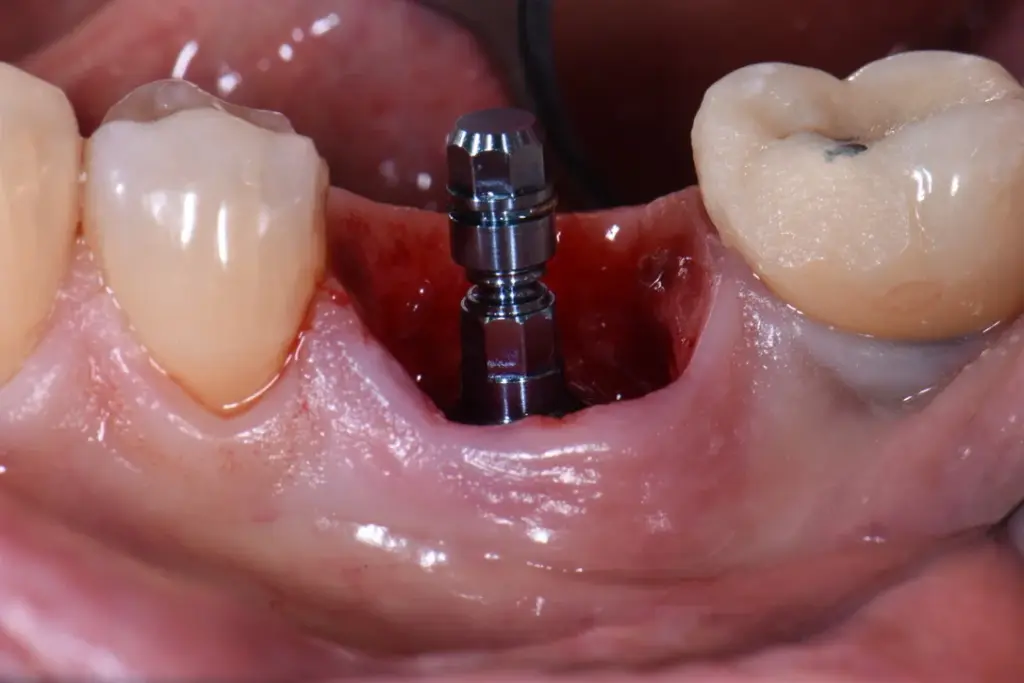
When researching the immediate dental implant cost, prospective patients will find that treatment estimates vary based on clinical factors rather than a single flat fee:
- Premium Implant Platform: High-end, clinically validated implant brands (such as Straumann, Nobel Biocare, or Astra Tech) feature proprietary hydrophilic surface coatings (like SLActive) that accelerate bone integration and justify different manufacturing pricing compared to generic systems.
- Bone Grafting and Membrane Materials: Immediate placement almost always requires packing particulate bone mineral and collagen barrier membranes into the jumping space to prevent tissue shrinkage, which influences procedural fees.
- Same-Day Digital CAD/CAM Temporization: Designing, milling, and hand-polishing an aesthetic temporary screw-retained crown in-office on the day of surgery involves advanced digital scanning hardware and skilled technician time.
- Surgical Complexity and Imaging: Complex anterior aesthetic cases require high-resolution Cone Beam Computed Tomography (CBCT) 3D scans and precision surgical computer-printed drill guides to ensure ideal prosthetic positioning.
- Surgeon Expertise: Fellowship-trained periodontists, prosthodontists, and oral maxillofacial surgeons reflect their specialized training and complication prevention in their fee structure.
- Geographic Location and Package Options: Clinic fees vary significantly between domestic practices in the US or UK and international dental destinations like Turkey. Dental programs in Turkey frequently bundle 3D diagnostics, atraumatic extraction, premium implants, bone grafting, same-day provisionalization, boutique hotel accommodations, and private VIP transfers into transparent care packages.
Frequently Asked Questions (FAQ)
Can you walk out of the clinic with a tooth on the same day?
Yes. If the implant achieves high primary stability (tight mechanical grip in the apical bone of at least 35 Ncm) and your bite allows it, an aesthetic temporary crown is fabricated and secured to the implant on the same day. This temporary tooth restores your natural smile, though you cannot use it to bite into hard foods until the bone fully integrates.
Is an immediate dental implant more painful than a regular implant?
No. Because the implant is placed directly into the socket created by the extracted tooth, there is no need for secondary incisions or deep bone reflection. Many patients report less post-operative swelling and discomfort than with a delayed two-stage procedure because the entire surgical trauma occurs in a single setting.
What should I eat after an immediate dental implant procedure?
For the first two weeks, maintain a soft, non-chew diet consisting of smoothies, yogurt, lukewarm pureed soups, scrambled eggs, and mashed vegetables. Never bite directly into crusty bread, apples, nuts, or tough meats with the temporary restoration, as premature pressure can disrupt bone integration.
What happens if the implant does not achieve sufficient stability during extraction?
If the tooth socket bone is too soft or damaged to achieve the required 35 Ncm torque for immediate loading, the surgeon will still place the implant along with bone grafts, but will cover it with a low-profile healing cap beneath the gumline. In this scenario, you are provided with a discreet cosmetic temporary solution (such as an invisible Essix retainer with a prosthetic tooth) while the implant integrates safely for three to four months.

 |
|