Skip to content
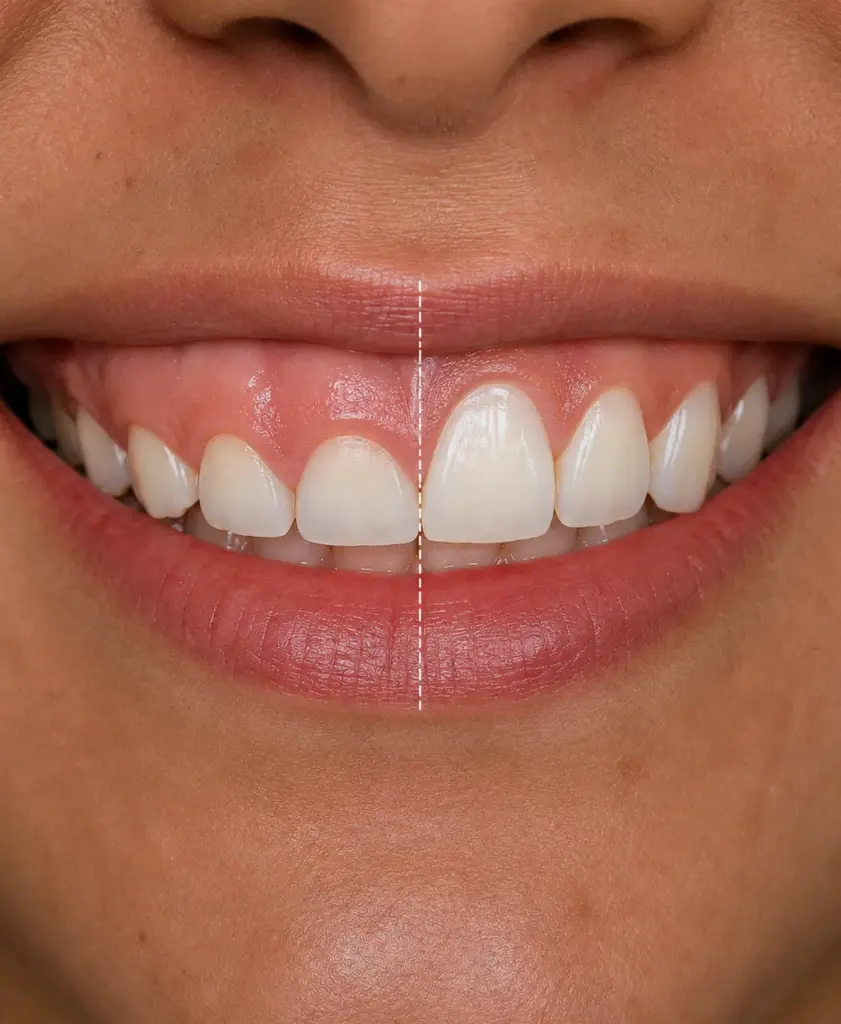
The balance of an aesthetically attractive smile depends on symmetrical harmony between dental proportions, lip dynamics, and the surrounding gingival scaffolding. Many individuals experience altered passive eruption, hereditary gingival enlargement, or drug-induced gingival overgrowth where excessive soft tissue blankets natural enamel crowns. This condition, frequently referred to as a gummy smile, leaves teeth appearing disproportionately short, boxy, or square. Beyond cosmetic imbalances, redundant gum tissue creates deep pseudo-pockets that trap anaerobic biofilm, hindering routine oral hygiene and escalating the risk of localized periodontal breakdown. For definitive soft tissue reduction and anatomical aesthetic reshaping, a clinical gingivectomy provides a proven periodontal solution.
Patients considering periodontal modification routinely seek clarification on what is a gingivectomy, evaluate the technical workflow of the gingivectomy procedure, explore the modern precision of a laser gingivectomy, contrast key differences in gingivoplasty vs gingivectomy, review dramatic visual transformations in gingivectomy before and after portfolios, evaluate international dental packages for a gingivectomy in Turkey, and analyze clinical variables that influence the overall gingivectomy cost. This clinical guide examines biological principles, surgical modalities, recovery benchmarks, and pricing dynamics.
Table of Contents
What Is a Gingivectomy and Why Is It Necessary?
If you are researching what is a gingivectomy, it is a targeted periodontal surgical intervention designed to excise diseased, hypertrophic, or excess gingival tissue around natural teeth or dental implants.
Get Free Consultation
Have any questions? Leave your details and we'll get back to you shortly.
The biological rationale encompasses both cosmetic refinement and periodontal health:
- Elimination of Periodontal Pseudo-Pockets: When inflamed gingival margins swell coronal to the cementoenamel junction without underlying bone loss, pseudo-pockets form. Excising redundant tissue eliminates bacterial shelters that toothbrushes cannot reach.
- Exposure of Natural Enamel Crowns: Many patients possess full-length, healthy anatomical crowns hidden beneath thick collars of gum. Removing excess marginal tissue exposes natural tooth dimensions and establishes a balanced height-to-width ratio (ideally seventy-five to eighty percent).
- Facilitation of Restorative Dentistry: When deep decay, subgingival margins, or cosmetic porcelain veneer preparations sit beneath the gumline, a gingivectomy exposes clean margins to ensure dry isolation and stable adhesive bonding.
- Symmetrical Smile Architecture: Uneven, scalloped gingival zeniths across the aesthetic zone can be reshaped to align harmoniously with the upper lip line during smiling.
Gingivoplasty vs Gingivectomy: Key Differences
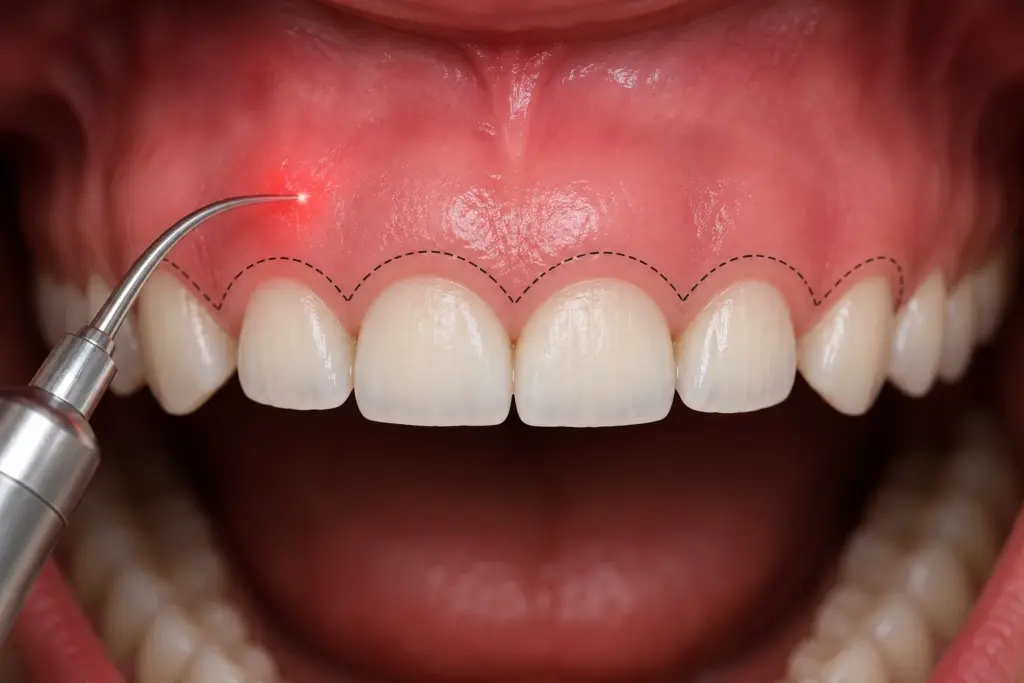
While frequently performed simultaneously during smile makeover cases, these two procedures target distinct anatomical objectives:
- Gingivectomy (Tissue Excision): The primary objective is the physical removal or amputation of redundant or diseased gum tissue to reduce pocket depth or lengthen exposed tooth crowns.
- Gingivoplasty (Tissue Recontouring): The primary objective is the aesthetic re-sculpting, beveling, and thinning of remaining healthy gum tissue. It thins bulbous gingival margins and sharpens interdental papillae to recreate a natural knifelike edge that deflects food particles efficiently during mastication.
In modern cosmetic periodontics, practitioners routinely combine both steps: excess vertical height is removed via gingivectomy, followed immediately by delicate gingivoplasty to bevel and scallop the newly established gingival margin.
Modern Techniques: Scalpel vs. Laser Gingivectomy
Periodontal specialists select surgical instrumentation based on tissue thickness, bleeding tendencies, and cosmetic goals:
1. Traditional Cold-Blade Scalpel Technique
Performed using specialized periodontal knives (such as Kirkland and Orban knives) or micro-surgical blades. The surgeon marks pocket depths with pocket marker forceps to create bleeding guide points, then makes continuous external bevel incisions. While scalpel resection delivers sharp tissue margins, it requires local pressure, periodontal surgical dressings (such as Coe-Pak), and involves minor intraoperative bleeding.
2. Advanced Laser Gingivectomy
Using soft tissue diode lasers, carbon dioxide (CO2) lasers, or Nd:YAG lasers, laser gingivectomy represents the preferred standard for modern cosmetic dentistry. The concentrated thermal laser beam vaporizes unwanted soft tissue with micron-level precision while concurrently sealing exposed blood vessels (coagulation) and sterilizing the surgical field.
- Zero Bleeding: Instant thermal coagulation provides a clean, dry operative field, allowing immediate veneer impressions or composite resin bonding on the same day.
- Reduced Post-Operative Pain: The laser seals microscopic sensory nerve endings as it cuts, markedly lowering post-procedural discomfort.
- No Sutures or Dressings: Laser wounds do not require surgical sutures or bulky protective dressings.
3. Electrosurgery and Radiosurgery
Uses high-frequency electrical currents to cut and coagulate simultaneously. While highly effective for clean tissue shaving, it requires careful handling around metal restorations or titanium dental implants to prevent thermal bone necrosis.
Recovery Roadmap: What to Expect During Healing
Because mucosal epithelial tissues have one of the fastest mitotic turnover rates in the human body, healing after a gingivectomy is rapid:
- Days 1 to 3 (Epithelial Clotting and Migration): Local anesthesia subsides within two to three hours. Treated gum margins feel mildly tender, similar to a hot pizza burn. A protective fibrin mesh forms along the resection margins, appearing as a delicate white or pale yellowish film. Cold drinks, soft foods, and prescribed warm saline rinses soothe the tissues.
- Days 4 to 7 (Early Re-Epithelialization): Immature epithelial cells migrate across the connective tissue bed. Visible redness transitions to pale pink. Patients can resume gentle toothbrushing near the treated area using an ultra-soft surgical toothbrush, avoiding vigorous scrub motions.
- Weeks 2 to 3 (Tissue Keratinization and Firming): New collagen matures within the lamina propria. The gum margin establishes a firm, scalloped, knifelike edge around the cervical enamel. Any residual sensitivity to cold or air subsides completely.
- Weeks 4 to 6 (Final Biological Width Stabilization): The epithelial junctional attachment achieves complete biological stability, providing the permanent gingival position required before cementing definitive porcelain veneers or crowns.
Clinical Transformations: Gingivectomy Before and After
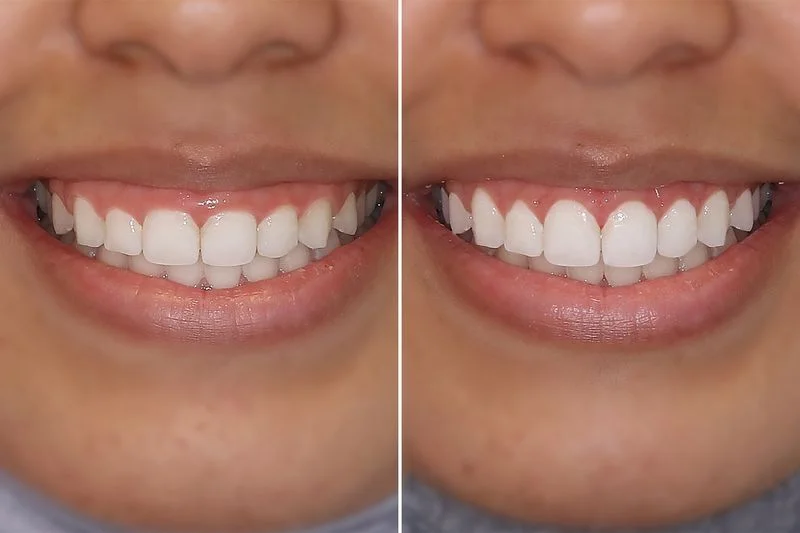
Examining documented gingivectomy before and after clinical portfolios illustrates structural, aesthetic improvements:
- Resolution of Gummy Smiles: Short, boxy teeth are instantly elongated, revealing natural tooth proportions and reducing excessive gum visibility.
- Crisp Gingival Symmetry: Irregular, lopsided gum heights across central and lateral incisors are sculpted into balanced, symmetrical gingival zeniths.
- Vibrant, Healthy Tissue Tone: Chronic swollen, spongy, bleed-prone gums are replaced by firm, resilient, pale pink keratinized tissue.
- Enhanced Veneer Precision: Exposure of full facial enamel surfaces allows cosmetic ceramists to design natural, lifelike veneers without bulky subgingival borders.
Essential Post-Operative Care Guidelines
- Absolutely No Flossing the Surgical Margin for One Week: Flossing can disrupt fragile healing fibrin clots along the cervical margins.
- Clean Gently with Antimicrobial Rinses: Bathe the surgical area twice daily with prescribed chlorhexidine gluconate oral rinse without aggressive swishing.
- Avoid Sharp, Crunchy, and Spicy Foods: For the first seven days, eliminate tortilla chips, crusty bread, nuts, hot spices, and acidic citrus juices that can mechanically abrade raw gum edges.
- Strictly Avoid Smoking and Alcohol: Nicotine severely restricts peripheral microcirculation in healing gingival capillary beds, delaying wound closure and increasing inflammation risks.
Comparative Matrix: Gingivectomy Modalities
| Clinical Parameter | Diode Laser Gingivectomy | Traditional Scalpel Gingivectomy | Electrosurgery |
| Primary Benefit | Hemostasis and rapid healing | Sharpest anatomical margins | Rapid tissue shaving |
| Intraoperative Bleeding | Virtually zero (instant coagulation) | Moderate bleeding | Minimal bleeding |
| Need for Periodontal Dressing | No dressing required | Frequently requires Coe-Pak | Rarely required |
| Anesthesia Requirement | Minimal topical or light local | Standard infiltration anesthesia | Standard infiltration anesthesia |
| Risk to Dental Implants | Completely safe (no electrical current) | Completely safe | High risk of thermal conductivity |
| Typical Downtime | 1 to 2 Days | 3 to 5 Days | 2 to 3 Days |
| Final Gingival Maturation | 2 to 3 Weeks | 3 to 4 Weeks | 3 to 4 Weeks |
What Determines the Gingivectomy Cost?
Prospective patients investigating the gingivectomy cost or exploring cosmetic dental travel packages for a gingivectomy in Turkey will discover that treatment fees vary based on clinical and structural variables rather than a single fixed rate:
- Number of Teeth and Quadrant Scope: Treating an isolated single tooth to correct an asymmetrical margin requires less surgical time than performing full aesthetic smile contouring across eight to ten anterior teeth.
- Technology Platform (Laser vs. Scalpel): Utilizing advanced dental diode, CO2, or erbium lasers involves specific device maintenance, laser tip consumables, and specialist laser certifications compared to conventional blades.
- Underlying Osseous Resection (Crown Lengthening): If excess gum tissue cannot be removed without encroaching on the three-millimeter biological width, underlying alveolar bone must also be recontoured (aesthetic crown lengthening). This adds specialized piezosurgical bone trimming, altering procedural scope.
- Concomitant Cosmetic Restorations: Gingivectomy is frequently performed in conjunction with digital smile design (DSD), teeth whitening, composite bonding, or porcelain laminates, influencing comprehensive treatment fees.
- Specialist Qualifications: Board-certified periodontists with advanced residency training in periodontal plastic surgery structure their fees according to surgical precision and clinical predictability.
- Geographic Destination and Package Inclusions: Clinic operating expenses and lab overhead produce distinct pricing variations between private practices in North America or Western Europe and internationally accredited clinics in Turkey. Dental tourism programs for a gingivectomy in Turkey frequently bundle 3D digital smile imaging, laser gum recontouring, antimicrobial prescriptions, boutique hotel accommodations, and private VIP transfers into structured care arrangements.
Frequently Asked Questions (FAQ)
Can excised gum tissue grow back after a gingivectomy?
If the gingivectomy respects the biological width (at least three millimeters of distance between the crest of the alveolar bone and the new gum margin), soft tissue does not grow back. However, if excess gum was removed without recontouring underlying bone that sits too close to the surface, or if the patient continues taking medications that cause drug-induced gingival enlargement, tissue can slowly repopulate.
Does a laser gingivectomy hurt?
During the procedure, you will feel no pain because the area is numbed with topical gel followed by local anesthetic. Many patients report that a laser gingivectomy is completely painless even after the anesthetic wears off, describing the sensation over the following forty-eight hours as mild gum sensitivity, easily managed with standard paracetamol or ibuprofen.
What is the difference between a gingivectomy and aesthetic crown lengthening?
A gingivectomy removes only soft gingival tissue. If you have plenty of bone clearance above the tooth crown, a gingivectomy alone is sufficient. However, if the bone is situated too close to the gum margin, removing soft tissue alone violates the biological width, leading to chronic redness. Crown lengthening removes both excess gum tissue and a millimeter of alveolar bone to ensure lasting stability.
When can I eat normally after a gingivectomy?
You can consume cool, soft foods (yogurt, smoothies, room-temperature soups, scrambled eggs, mashed potatoes) immediately after the local anesthetic wears off. You should avoid hard, crunchy, crusty, and spicy foods for approximately five to seven days to protect the fresh tissue margins while they re-epithelialize.

 |
|