Skip to content

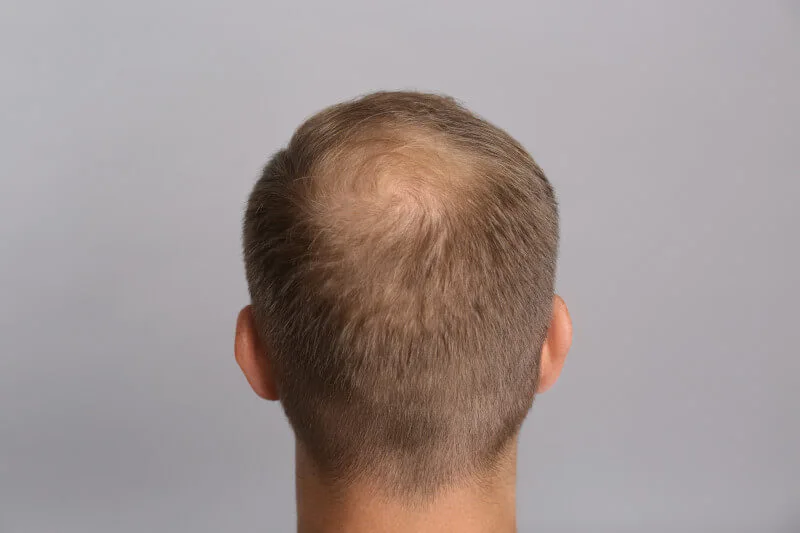
Hair loss across the vertex, commonly referred to as the crown or hair swirl (whorl), is one of the most frustrating patterns of androgenetic alopecia. Unlike a receding frontal hairline that is visible every time you look in the mirror, hair thinning at the top and back of the scalp often develops silently. Many individuals only realize they are dealing with crown balding after seeing an overhead photograph, catching a glimpse in a three-way fitting room mirror, or being told by a barber. Because the hair follicles in the crown follow a spiral angle, even minor shedding reveals wide patches of bare scalp under overhead lighting.
Individuals noticing thinning at the vertex routinely research why is my crown balding, examine progressive crown balding stages, look for early warning signs of early crown balding, evaluate sex-specific presentations like male crown balding and crown balding women, seek guidance on how to stop crown balding, ask with hope can crown balding be reversed, explore medical pathways for crown balding regrowth, analyze the clinical scope of a crown balding treatment, and evaluate the feasibility of a crown balding hair transplant. This clinical guide examines the underlying endocrinology, treatment pathways, surgical planning, and pricing dynamics.
Table of Contents
Endocrinology and Anatomy: Why Is My Crown Balding?
When patients ask why is my crown balding, the medical answer lies in the intersection of genetics, hormone receptors, and scalp vascularity:
Get Free Consultation
Have any questions? Leave your details and we'll get back to you shortly.
- Dihydrotestosterone (DHT) Sensitivity: The enzyme 5-alpha reductase converts circulating testosterone into DHT. Genetically susceptible hair follicles in the vertex possess an abundance of androgen receptors. DHT binds to these receptors, triggering follicular miniaturization: with each successive growth cycle, the anagen (growth) phase shortens, and hair shafts emerge thinner, shorter, and less pigmented.
- Unique Spiral Angulation (The Whorl): Crown hair does not grow straight in one direction; it radiates outward in a clockwise or counterclockwise spiral. This natural divergence means hairs do not overlap or layer on top of each other the way frontal hairs do, making any diameter reduction immediately conspicuous.
- Reduced Microvascular Perfusion: The crown sits at the highest vertical point of the human skull, far from the primary occipital and temporal arterial networks. As the galea aponeurotica tightens with stress and age, capillary perfusion to the vertex decreases, reducing nutrient delivery to miniaturizing follicles.
- Differences in Male Crown Balding vs. Crown Balding Women: Men primarily experience androgen-driven, focal vertex baldness that gradually expands outward to meet a receding hairline. In contrast, women typically experience diffuse vertex thinning driven by fluctuating estrogen-to-androgen ratios, thyroid dysregulation, low ferritin levels, or post-menopausal hormonal shifts, while maintaining their frontal hairline.
Progressive Patterns: Crown Balding Stages and Early Detection
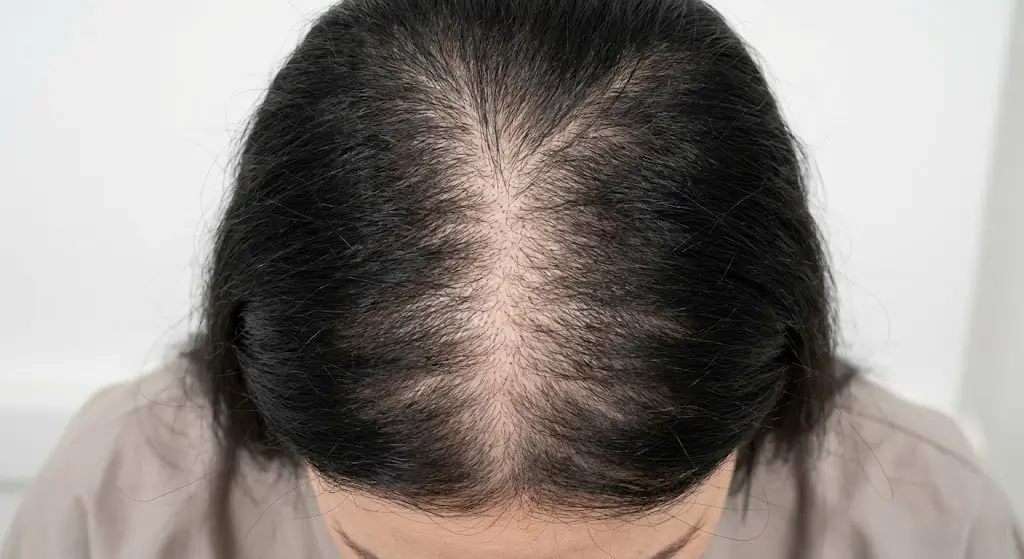
Recognizing early crown balding is critical, as medical therapies work best before hair follicles completely fibrose and die. Clinically, progression is mapped using the Hamilton-Norwood scale for men and the Ludwig scale for women:
Stage One: Early Miniaturization and Whorl Widening
In this early phase, the central focal point of the hair whorl appears slightly wider than normal. Individual hair shafts lose their coarse caliber and become fine, wispy vellus hairs. The scalp becomes faintly visible under direct downward lighting or when the hair is wet.
Stage Two: Circumferential Expansion (Norwood Class 3V to 4)
The miniaturized zone expands outward from the center, forming a distinct, circular thinning patch on the vertex. Hairs around the perimeter remain relatively thick, creating a halo of density around an increasingly sparse core.
Stage Three: Bridging with the Frontal Core (Norwood Class 5 to 6)
The thinning crown continues to expand anteriorly while the frontal hairline recedes posteriorly. The remaining band of terminal hair separating the front from the back (the bridge) thins and eventually breaks down, leaving an extensive bald expanse spanning the top of the skull.
Stage Four: Complete Confluent Baldness (Norwood Class 7)
The crown and mid-scalp merge into a smooth, completely bare surface. Only the horseshoe-shaped fringe of DHT-resistant hair along the sides and lower back of the head remains viable.
Medical Interventions: How to Stop Crown Balding and Stimulate Regrowth
When patients ask can crown balding be reversed, the clinical answer depends on follicle status. If a follicle is completely dead and replaced by scar tissue, it cannot regrow. However, if follicles are merely miniaturized and dormant, an aggressive, multifaceted crown balding treatment can stimulate noticeable crown balding regrowth:
1. 5-Alpha Reductase Inhibitors (Finasteride and Dutasteride)
The primary medical defense to how to stop crown balding. By blocking the 5-alpha reductase enzyme, oral or topical finasteride reduces circulating DHT levels by approximately seventy percent, while dutasteride reduces DHT by over ninety percent. Multiple clinical trials demonstrate that the crown responds better to DHT blockers than any other region of the scalp, reversing miniaturization and halting hair loss in over eighty-five percent of compliant patients.
2. Vasodilator Therapy (Topical and Oral Minoxidil)
Minoxidil opens ATP-sensitive potassium channels in follicular cell membranes, inducing arteriolar vasodilation. This increases blood flow, delivers vital oxygen and nutrients, and forces resting telogen follicles back into active anagen growth. Combining a DHT blocker with minoxidil addresses both the hormonal root cause and microvascular deficiency.
3. Autologous Platelet-Rich Plasma (PRP) and Growth Factor Therapy
Concentrated platelets derived from the patient’s own peripheral blood are injected directly into the vertex dermis. Alpha-granules release platelet-derived growth factor (PDGF), vascular endothelial growth factor (VEGF), and transforming growth factor (TGF), stimulating dormant stem cells in the follicular bulge.
4. Low-Level Laser Therapy (LLLT / Photobiomodulation)
Medical-grade red light diodes (wavelengths of 650 to 670 nanometers) penetrate the scalp to stimulate cytochrome c oxidase within follicular mitochondria. This boosts adenosine triphosphate (ATP) production, cellular respiration, and local microcirculation.
Surgical Restoration: Crown Balding Hair Transplant
When follicular miniaturization has progressed to complete baldness, medical therapy alone cannot generate new roots. In these scenarios, a surgical crown balding hair transplant provides a permanent solution:
- High Graft Requirement: The surface area of the crown is deceptively large. Restoring cosmetic density to a fully bald vertex typically requires two thousand to three thousand five hundred follicular unit grafts, demanding careful stewardship of the donor area.
- Artistry of the Whorl Reconstruction: Recreating the crown is one of the most technically demanding tasks in hair restoration. The surgeon must meticulously mimic the natural circular spiral, shifting the angle of recipient incisions from completely flat (ten to fifteen degrees) to radiating directional sweeps. If grafts are placed at incorrect angles, the hair will not lie flat and will look unnatural.
- Managing Future Progression: Because the vertex can continue to expand outward as a patient ages, ethical hair transplant surgeons generally advise men under age twenty-five to thirty to stabilize their hair loss with medical treatments before undergoing crown surgery. Placing grafts in the center without preserving donor reserves for future thinning perimeters risks leaving an isolated island of hair surrounded by a bald moat later in life.
Recovery Roadmap: What to Expect After Crown Restoration
Whether pursuing medical regimens or surgical hair restoration, the biological timeline requires patience:
- Weeks Two to Eight (Initial Shock Shedding): Whether starting minoxidil, finasteride, or undergoing a hair transplant, an initial shedding phase occurs. Miniaturized or transplanted hair shafts fall out as the follicular root resets its growth cycle.
- Months Three to Four (Early Follicular Sprouting): Dormant follicles enter the active anagen phase. Fine, thin hairs begin emerging from the scalp surface.
- Months Six to Eight (Visible Density Building): Hair shafts thicken in caliber, gain pigmentation, and begin blending together. In surgical cases, roughly fifty to sixty percent of transplanted grafts have sprouted.
- Months Twelve to Fifteen (Final Mature Result): The crown takes longer to reach full maturity than the frontal hairline due to slower microvascular blood flow at the vertex. Final caliber, natural curl, and optimal coverage are evaluated at month fifteen.
Clinical Before and After Transformations
Documented clinical portfolios of crown restoration illustrate substantial aesthetic and psychological improvements:
- Elimination of the “Bullseye” Bald Spot: The bare, shiny circular patch at the top of the head is replaced by an even carpet of natural hair.
- Seamless Whorl Architecture: Reconstructed spirals flow harmoniously into the surrounding hair, leaving zero visible signs of surgical intervention.
- Volumetric Coverage from Overhead Views: Patients gain complete confidence under harsh downlighting, elevators, and outdoor sunlight without needing concealers, powders, or strategic comb-overs.
- Long-Term Protection of Border Follicles: Combining hair transplantation with ongoing medical therapy prevents the thinning perimeter from retreating further down the back of the head.
Essential Practical Guidelines to Protect Your Crown
- Begin Treatment at the First Sign of Thinning: Miniature follicles respond rapidly to DHT suppression, while completely bald, shiny skin cannot be regrown with medication.
- Never Discontinue Medical Therapy Abruptly: Halting finasteride or minoxidil causes DHT levels to rebound, triggering rapid shedding of all hair maintained by the medication within three to six months.
- Avoid Tight Hairstyles and Traction: Pulling hair into tight buns, man-buns, or taut ponytails puts mechanical tension on the vertex, combining traction alopecia with genetic thinning.
- Protect the Scalp from Solar Damage: The bare skin of a thinning crown is directly exposed to ultraviolet radiation, accelerating cellular aging and increasing the risk of actinic keratosis. Wear a breathable hat or apply mineral scalp sunscreen.
Comparative Matrix: Crown Balding Treatment Approaches
| Clinical Parameter | Oral DHT Blockers (Finasteride) | Topical / Oral Minoxidil | Autologous PRP Injections | Crown Hair Transplant (FUE/DHI) |
| Primary Mechanism | Blocks 5-alpha reductase (cuts DHT) | Potassium channel opening & vasodilation | Stem cell stimulation via growth factors | Surgical relocation of DHT-resistant roots |
| Best Clinical Indication | Early to moderate miniaturization | Diffuse vertex thinning | Thinning follicles needing a boost | Completely bald vertex / dead follicles |
| Treatment Frequency | Daily oral tablet | Daily topical or oral dose | 3 to 4 initial sessions, then maintenance | 1 to 2 surgical sessions |
| Time to Initial Regrowth | 3 to 6 Months | 3 to 6 Months | 2 to 4 Months | 6 to 12 Months |
| Long-Term Requirement | Lifelong ongoing use | Lifelong ongoing use | Periodic booster every 6 to 12 months | Transplanted hairs are permanent |
| Invasiveness | Non-invasive (systemic) | Non-invasive (topical/oral) | Minimally invasive (micro-needling) | Outpatient surgical micro-grafting |
| Typical Side Effects | Rare hormonal effects (1 to 2%) | Scalp dryness or temporary shedding | Mild temporary scalp soreness | Temporary scabbing and local swelling |
What Determines the Crown Balding Treatment Cost?
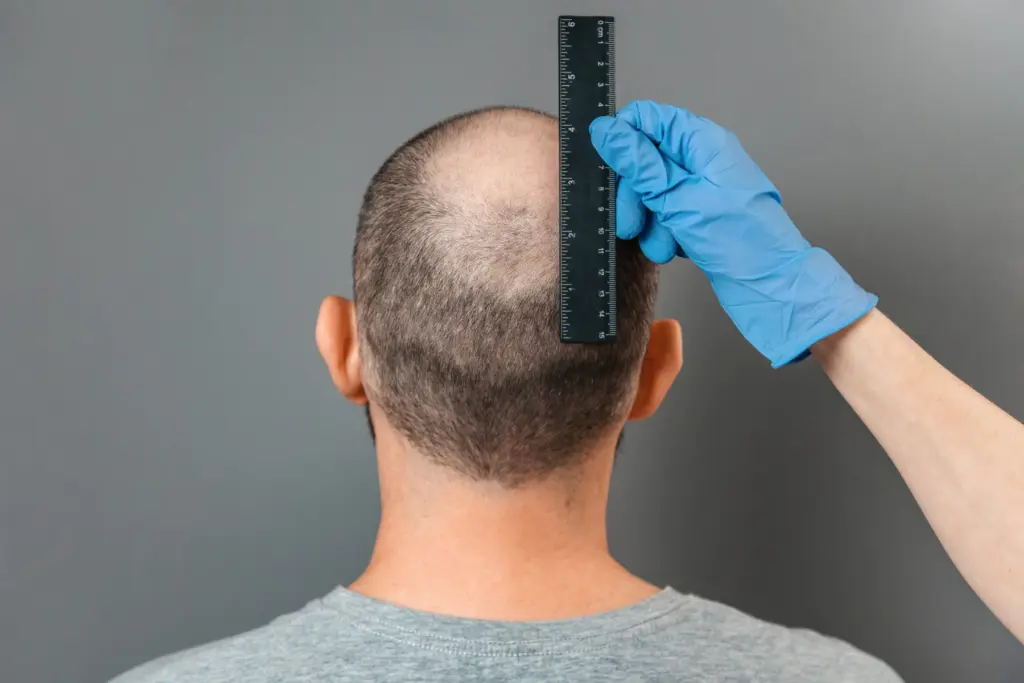
Prospective patients evaluating treatments will find that financial estimates are determined by clinical, technological, and procedural variables rather than a single fixed catalog rate:
- Chosen Therapeutic Route: Long-term monthly prescription medications involve a fundamentally different financial outlay than in-clinic regenerative PRP sessions or an extensive surgical hair restoration procedure.
- Number of Grafts in Surgical Cases: Because the vertex requires a high density of grafts to achieve visual coverage across expanding spirals, procedures requiring three thousand grafts involve more surgical time and resources than minor touch-ups.
- Surgical Technique (Sapphire FUE vs. DHI): Utilizing Sapphire blades to create ultra-fine incisions versus Choi Implanter Pens (DHI) to implant follicles directly between existing native hairs without shaving the crown alters procedural complexity.
- Specialist Surgeon Oversight: Clinics where board-certified plastic surgeons, dermatologists, or accredited members of the International Society of Hair Restoration Surgery (ISHRS) personally design and execute the whorl angulation command fees reflecting their clinical precision.
- Geographic Location and Package Offerings: Operating overhead and currency structures create clear cost variations between private clinics in North America or Western Europe and internationally accredited centers in Turkey. Medical travel packages in Turkey frequently bundle pre-operative trichoscopic diagnostics, mega-session FUE or DHI surgery, specialized post-op care kits, luxury hotel accommodations for three to four nights, and private VIP transfers into structured care arrangements.
Frequently Asked Questions (FAQ)
Can crown balding be reversed without surgery?
Yes, but only if the hair follicles are still alive. If your crown is thinning but still has fine, wispy hairs, combining a 5-alpha reductase inhibitor like finasteride with minoxidil can reverse miniaturization, thicken hair shafts, and restore cosmetic density without surgery. If the area is completely smooth, shiny, and bald, surgical transplantation is the only method to grow new hair there.
Why does a crown hair transplant take longer to show results than the hairline?
The vertex has a slower rate of blood circulation compared to the highly vascularized frontal forehead area. Additionally, hair in the crown must grow longer and overlap in a radial spiral before it creates optical density. While a hairline often looks great at nine months, a crown hair transplant typically requires twelve to fifteen months to achieve its full, mature thickness.
Are women candidates for crown hair transplants?
Yes, but female candidates require thorough diagnostic screening first. Because hair loss in women is frequently diffuse across the entire scalp (including the traditional donor area at the back of the head), a surgeon must ensure the donor zone is stable and healthy. If donor density is strong and thinning is localized to the vertex, a hair transplant using unshaven DHI can deliver excellent results.
At what age is it safe to get a hair transplant for a balding crown?
Most hair restoration surgeons recommend waiting until at least age twenty-seven to thirty before transplanting the crown. In young men, the future boundaries of crown baldness are unpredictable. If hair is transplanted into the center of a thinning crown at age twenty-two and the surrounding natural hair continues to fall out, the patient can be left with an unnatural ring of baldness around a central island of transplanted hair.

 |