Skip to content

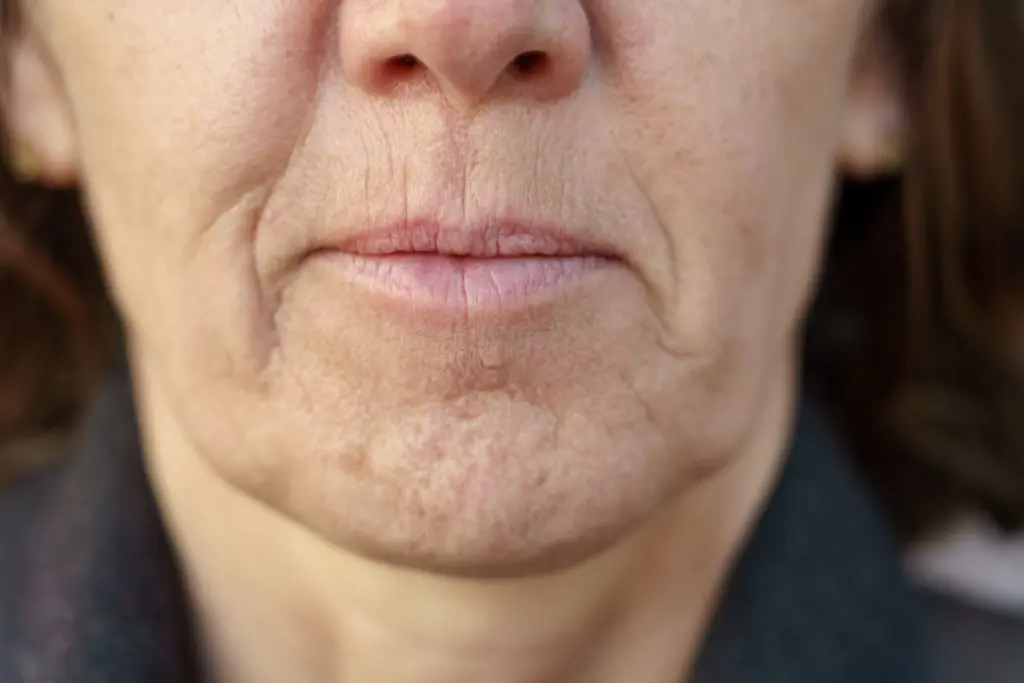
Smile lines are the curved creases that run from the sides of the nose to the corners of the mouth, and they become more visible when you smile, laugh or talk. They are shaped by facial muscle movement, the thickness of the skin and the volume of fat and bone beneath it. In young faces these lines appear only during expression, but over time they can remain visible at rest, which is when many people begin to look for a way to soften them.
This guide explains what smile lines are, why they deepen and which treatment options are available, from daily skin care to injectable fillers, threads and surgery. It also covers what to expect from each procedure, how to choose between them and what you can do to slow their progression.
Table of Contents
What Are Smile Lines?
Smile lines, also called nasolabial folds, are the natural grooves that separate the cheeks from the upper lip and chin area. Everyone has them, because they are created by the attachment of facial muscles to the skin and by the way the cheek tissue sits above the fold. A visible fold is therefore not a sign of disease, and a mild crease is considered a normal part of the face.
Get Free Consultation
Have any questions? Leave your details and we'll get back to you shortly.
The concern begins when the fold becomes deep, casts a shadow or makes the face look tired or older than the person feels. It is useful to separate smile lines from laugh lines at the corners of the eyes, which are caused by a different muscle and respond to different treatments. Smile lines mostly reflect volume loss and tissue descent in the mid face, while crow’s feet reflect repeated muscle contraction in thin skin.
What Causes Smile Lines to Deepen?
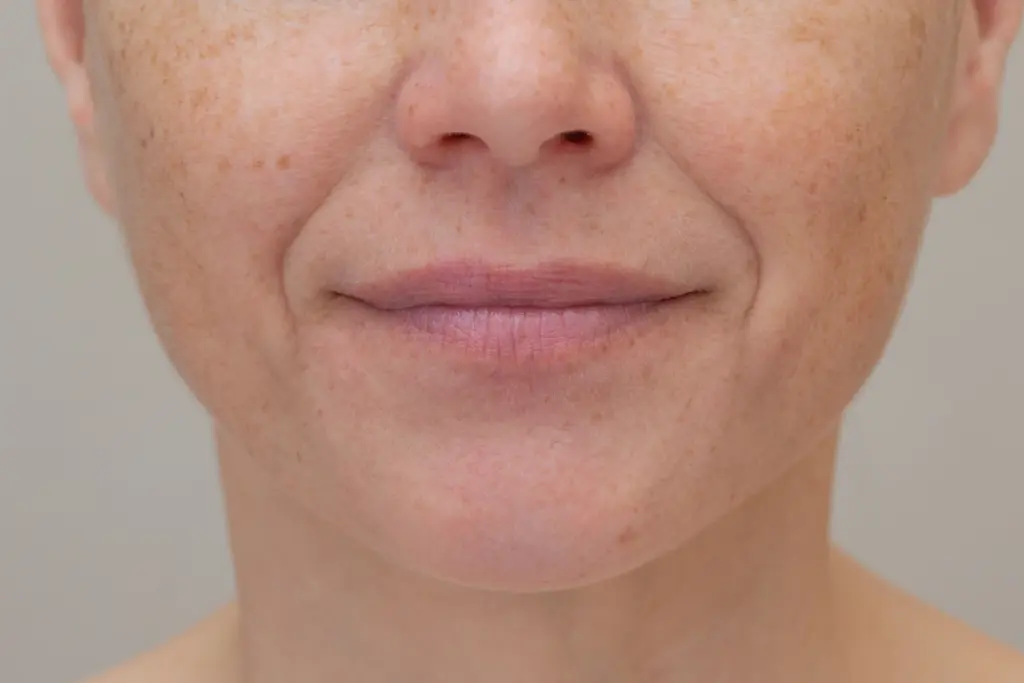
Ageing is the main factor. From the late twenties onward the skin produces less collagen and elastin, and the fat pads of the cheeks slowly lose volume and shift downward. As the cheek descends, it pushes against the skin of the fold and the groove becomes deeper. Bone resorption in the mid face adds to the effect, because the framework that supports the soft tissue becomes smaller over the years.
Sun exposure is the second major cause. Ultraviolet light breaks down collagen faster than natural ageing, so people with a long history of unprotected sun exposure often have deeper folds earlier. Smoking, rapid weight loss, genetics and repeated facial expressions also contribute. Fat loss from the cheeks after sudden weight loss can make the folds appear overnight, which is why some patients notice them more after a diet.
Smile Lines Treatment Options
The right treatment depends on the depth of the fold, the quality of the skin and how much volume has been lost. Mild lines respond to skin care and non-invasive procedures, while deep folds usually need volume restoration or lifting. The table gives a simple overview before each option is explained.
| Treatment | Best for | Typical result duration | Downtime |
|---|---|---|---|
| Skin care and sun protection | Early or mild lines | Ongoing | None |
| Hyaluronic acid filler | Moderate to deep folds | 9 to 18 months | Minimal |
| Microneedling and radiofrequency | Fine lines and loose skin | Several months | 1 to 3 days |
| Thread lift | Mild to moderate sagging | 12 to 24 months | A few days |
| Fat grafting | Volume loss in the mid face | Long lasting | 1 to 2 weeks |
| Facelift | Advanced descent of the cheeks | 8 to 12 years | 2 to 3 weeks |
Skin Care and Sun Protection for Smile Lines
Daily sunscreen with a broad spectrum factor of 30 or higher is the most effective home measure, because it prevents the collagen breakdown that deepens the fold. Retinoids stimulate collagen production and improve skin texture over several months, and vitamin C and peptides can support the effect. Moisturisers soften the appearance of fine lines, but they cannot fill a deep groove, so it is important to keep expectations realistic.
Hyaluronic Acid Fillers for Smile Lines
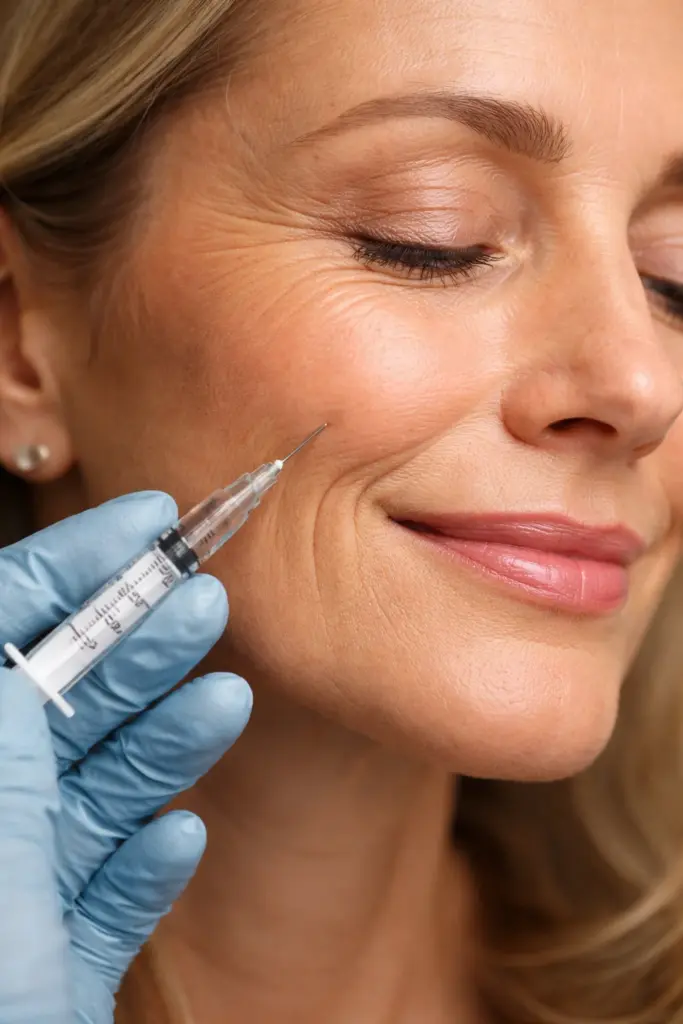
Dermal fillers are the most requested treatment for smile lines. A hyaluronic acid gel is injected under the fold or, in many modern techniques, into the cheek to restore the support that has been lost. Treating the cheek first lifts the tissue that is pressing on the fold, so less product is needed in the groove itself and the face keeps a natural look.
The procedure takes about 30 minutes, uses a topical anaesthetic or a filler that contains lidocaine and requires no hospital stay. Results are visible immediately, and the gel is gradually absorbed over nine to eighteen months. Because hyaluronic acid can be dissolved with an enzyme, it is considered a reversible option, which is one reason it is often chosen as the first step.
Microneedling and Radiofrequency Treatments
Microneedling creates controlled micro channels in the skin, which trigger collagen repair. Radiofrequency devices heat the deeper layers of the skin and tighten them at the same time. These treatments improve fine lines, texture and mild looseness around the mouth, and they are usually delivered as a series of three to six sessions. They work best when the fold is shallow, and they can be combined with fillers for deeper lines.
Thread Lift for Smile Lines
Absorbable threads are inserted under the skin of the cheek to lift the tissue and to stimulate new collagen along their path. A thread lift is considered when the main issue is mild to moderate sagging and the patient wants a result without surgery. The lift is gentle, the recovery is short, and the effect typically lasts one to two years. Swelling, small bruises and a feeling of tightness are common in the first days.
Fat Grafting and Surgical Options
When the face has lost significant volume, fat taken from another area of the body can be purified and injected into the cheeks and the fold area. Part of the transferred fat survives permanently, which gives a longer lasting result than a filler. For advanced sagging, a mid face lift or a full facelift repositions the tissue and removes excess skin, and it is the option with the longest effect. Both procedures are performed under local anaesthesia with sedation or general anaesthesia, and they require a longer recovery period.
How to Choose the Right Treatment?
The decision starts with an examination, because the same fold can come from different causes. A fold caused mainly by cheek descent responds better to cheek filler or a lift, while a fold caused by sun damaged skin responds better to resurfacing and collagen stimulation. The surgeon also considers age, skin thickness, the budget, the time available for recovery and the natural expressions of the patient.
Many patients are advised to combine treatments instead of relying on a single one. A common plan is filler for volume, skin care for quality and sun protection to protect the result. Photographs taken from several angles help to compare progress and to avoid over treatment, which can give the mid face an overfilled look.
Risks and Recovery After Smile Line Treatments
Most non-surgical treatments have mild and temporary effects, such as redness, swelling, tenderness and small bruises that settle within a week. Rare complications of fillers include lumps, asymmetry and, very rarely, blockage of a blood vessel, which is a medical emergency that needs immediate treatment. This is why the procedure should be performed by a trained doctor who knows the facial anatomy and has the dissolving enzyme available.
After treatment, patients are generally advised to avoid heavy exercise, saunas and strong facial massage for a day or two, to sleep with the head slightly raised and to protect the skin from the sun. Surgical options require a longer rest, a follow up schedule and a surgeon who explains the risks in detail before the operation.
How to Prevent Smile Lines From Getting Deeper
Prevention begins with sun protection, because ultraviolet exposure is the cause that can be controlled most easily. Not smoking, keeping a stable weight, drinking enough water and sleeping on the back instead of pressing the face into the pillow all help to protect the fold. A regular skin care routine with a retinoid in the evening and an antioxidant in the morning supports collagen over the long term.
Starting early is more effective than starting late, and small maintenance treatments done at the right time can postpone the need for larger procedures. A medical check every year allows the doctor to see changes while they are still mild and to recommend the lightest option that will work.
Frequently Asked Questions
Are smile lines the same as nasolabial folds?
Yes. Nasolabial folds is the medical term for smile lines, the grooves that run from the nose to the corners of the mouth. They are normal, and treatment is only needed if the fold bothers the patient.
Can smile lines be removed without surgery?
They can be softened without surgery. Hyaluronic acid fillers, threads, microneedling and radiofrequency can reduce the depth of the fold, although deep folds from advanced sagging may only be fully corrected by a lift.
How long do smile line fillers last?
Hyaluronic acid fillers generally last between nine and eighteen months, depending on the product, the area and the metabolism of the patient. Touch up sessions can be planned before the effect fully disappears.
Is the treatment painful?
Most patients describe a mild pressure or a short pinch. A numbing cream and a filler that contains lidocaine keep the procedure comfortable, and it can be completed in about half an hour.

 |