Skip to content

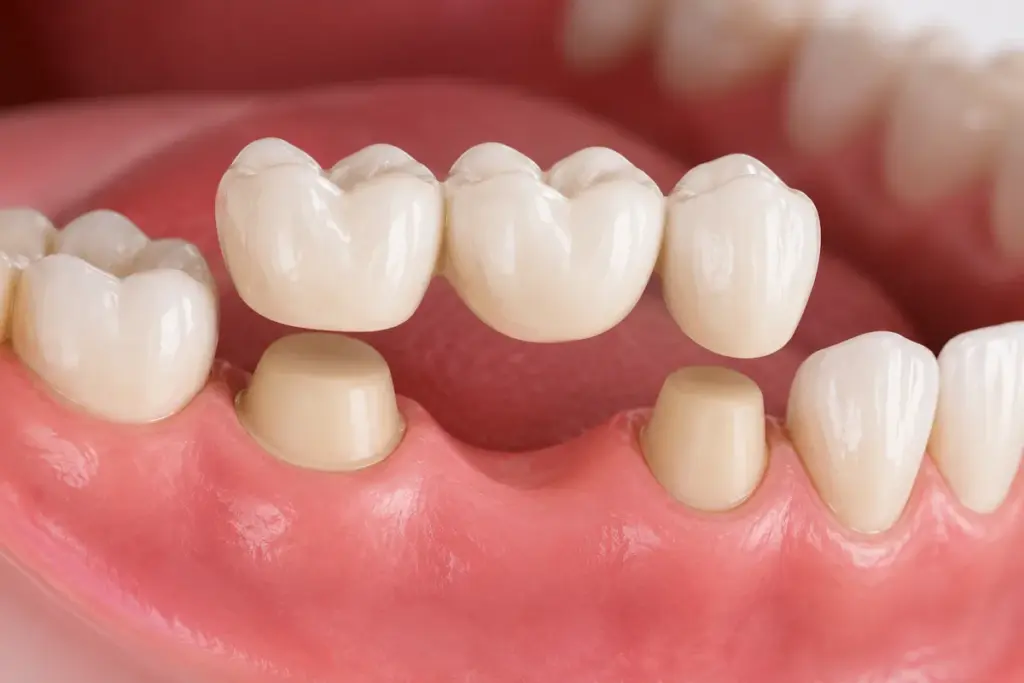
Missing a tooth is more than a cosmetic problem. It affects how you chew, how you speak and how your remaining teeth sit in your mouth. A dental bridge is one of the most established ways to close that gap. It uses the teeth next to the space, or implants placed in the jaw, to hold one or more artificial teeth firmly in place.
If you are considering a bridge, you probably want to know what types exist, how the procedure works, how long a bridge lasts and whether an alternative such as an implant would suit you better. This guide answers those questions in plain language, so you can walk into your consultation prepared. You can also browse our dental treatments to see the other options we offer.
Table of Contents
What Is a Dental Bridge?
A dental bridge is a fixed prosthesis that replaces one or more missing teeth. It is called a bridge because it literally spans the gap. The artificial tooth, called a pontic, is joined to crowns that are cemented over the neighbouring teeth, known as abutment teeth. Once cemented, the bridge cannot be taken out at home, unlike a removable denture.
Get Free Consultation
Have any questions? Leave your details and we'll get back to you shortly.
Bridges are usually made from porcelain fused to metal, all-ceramic materials such as zirconia, or in some cases metal alloys. Modern zirconia and ceramic bridges are chosen most often for visible teeth because they match the colour and translucency of natural enamel closely.
Why Should You Replace a Missing Tooth?
Some people leave a gap, especially if it is at the back of the mouth. Over time, though, an untreated gap can lead to problems:
- Drifting teeth: neighbouring teeth tilt into the space and the opposing tooth can grow downward.
- Bite changes: chewing becomes uneven, which can overload other teeth and the jaw joint.
- Bone loss: without a tooth root to stimulate it, the jawbone in that area gradually shrinks.
- Gum and decay risks: tilted teeth create spaces where food and plaque collect.
- Speech and appearance: gaps at the front can change how some sounds are made and how your smile looks.
Replacing the tooth early keeps the rest of your mouth in balance.
What Are the Types of Dental Bridges?
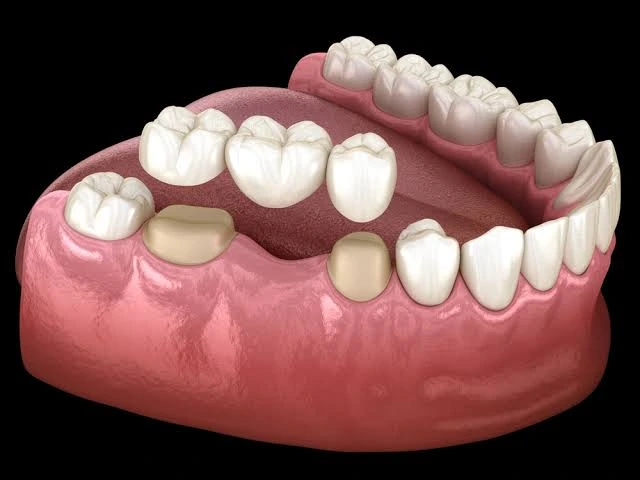
Not every bridge is built the same way. Your dentist will recommend a type depending on where the gap is, the health of the neighbouring teeth and your goals.
Traditional Dental Bridge
The most common type. A pontic is held by crowns on the teeth on both sides of the gap. It is strong and works well for molars and premolars, but it requires the abutment teeth to be reshaped so crowns can fit.
Cantilever Dental Bridge
Here the pontic is supported by a crown on only one side. It is sometimes used when there is a healthy tooth on just one side of the gap. Because it puts more leverage on a single tooth, it is less often used at the back of the mouth where chewing forces are high.
Maryland Bridge (Resin-Bonded)
This type uses a metal or ceramic framework with wings that are bonded to the back of the adjacent teeth. It is more conservative because very little tooth is removed, and it is mostly used for front teeth where chewing forces are lower.
Implant-Supported Dental Bridge
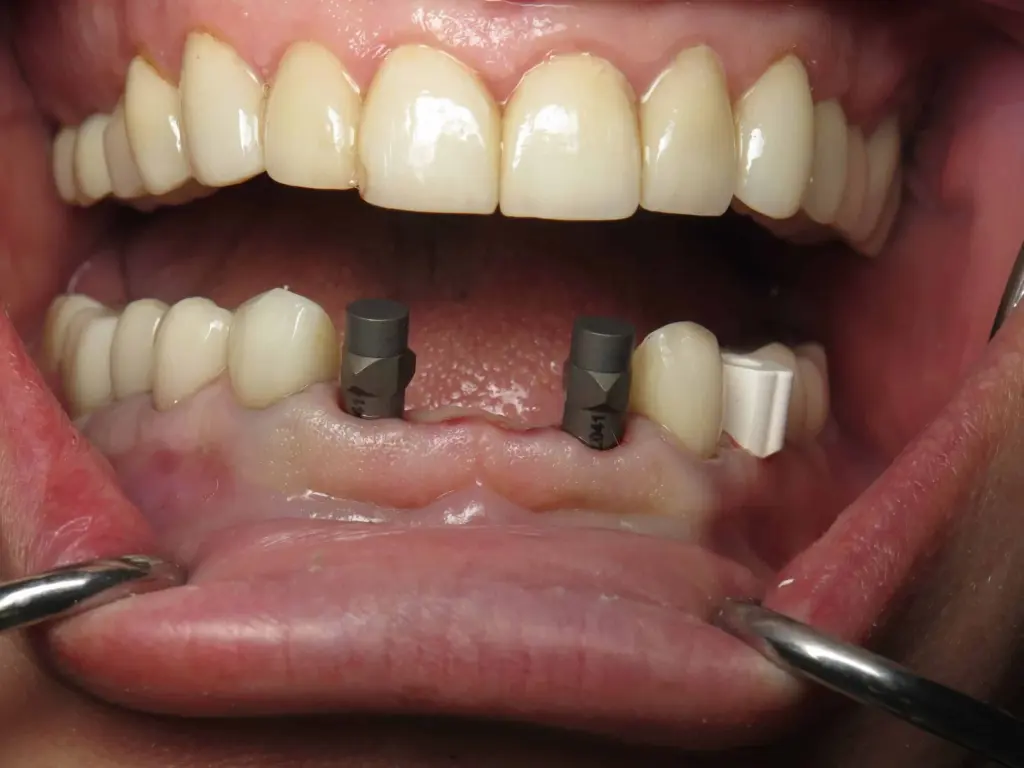
Instead of relying on natural teeth, the bridge is anchored on dental implants. It is a strong option when several teeth in a row are missing, and it protects the neighbouring teeth from being reshaped. It does require enough healthy bone and a longer treatment time.
Which Type of Dental Bridge Is Right for You?
| Situation | Often suitable option | Why |
|---|---|---|
| One missing tooth, healthy teeth on both sides | Traditional bridge | Strong and predictable |
| One missing front tooth, minimal wear on neighbours | Maryland bridge | Preserves natural tooth structure |
| Healthy tooth on only one side | Cantilever bridge | Needs support from one side only |
| Several missing teeth in a row | Implant-supported bridge | Does not rely on natural teeth |
| Limited bone, no wish for surgery | Traditional bridge | Avoids bone grafting |
This is only a general guide. A proper examination with X-rays or a 3D scan is needed before any plan is confirmed.
How Is a Dental Bridge Procedure Done?
A traditional bridge usually needs two or three visits, although digital workflows can shorten this.
- Examination and planning: your dentist checks the gums, the abutment teeth and the bite, and takes X-rays or a scan. Any decay or gum disease is treated first.
- Preparing the teeth: under local anaesthetic, the abutment teeth are reshaped to make room for the crowns.
- Impressions or scan: a precise digital or physical impression is sent to the dental laboratory.
- Temporary bridge: a temporary bridge protects the prepared teeth and the gum while the final bridge is made.
- Fitting the final bridge: the temporary is removed, the fit and bite are checked, and the final bridge is cemented in place.
- Follow-up: a short check makes sure the bridge feels comfortable and your gums are healthy.
An implant-supported bridge takes longer because the implants need time to integrate with the bone before the bridge is attached.
What Does a Dental Bridge Feel Like?
During treatment, local anaesthetic keeps you comfortable. Afterwards you may notice mild tenderness in the gums and some sensitivity in the prepared teeth for a few days. A new bridge can feel bulky at first, but most people adjust within a couple of weeks. If your bite feels uneven, tell your dentist, because a small adjustment usually solves it.
How Long Does a Dental Bridge Last?
A well-made and well-maintained bridge typically lasts 10 to 15 years, and many last longer. The lifespan depends on several things:
- the quality of the materials and the laboratory work
- how healthy the abutment teeth and gums stay
- your daily cleaning habits
- habits such as teeth grinding, nail biting or chewing ice
- regular check-ups and professional cleanings
The most common reason for a bridge to fail is decay on an abutment tooth, which is why careful cleaning matters so much.
How to Clean and Care for a Dental Bridge
A bridge is not at risk of decay itself, but the teeth that support it are. Good care keeps the whole structure healthy:
- brush twice a day with fluoride toothpaste
- clean under the pontic every day with a floss threader, super floss or interdental brush
- consider a water flosser to flush food from under the bridge
- see your dentist regularly for check-ups and cleanings
- avoid biting very hard objects such as ice or hard sweets
- wear a night guard if you grind your teeth
Dental Bridge Advantages and Disadvantages
Advantages
- fixed in place, so no removing or adhesives
- restores chewing, speech and appearance
- usually quicker than an implant, often finished in a few weeks
- no surgery needed for a traditional bridge
- often a lower upfront cost than an implant
Disadvantages
- healthy neighbouring teeth must be reshaped for a traditional bridge
- the underlying bone is not stimulated, so some bone loss can continue
- cleaning under the bridge takes more effort
- the bridge may eventually need to be replaced
Dental Bridge or Implant?
This is one of the most common questions. An implant replaces the tooth root as well as the crown, so it protects the jawbone and does not involve neighbouring teeth. It often lasts longer, but it needs sufficient bone, involves minor surgery and usually takes longer and costs more at the start.
A bridge can be a very good choice when the neighbouring teeth already need crowns, when you prefer to avoid surgery, or when bone volume is limited. The best answer depends on your mouth, health and budget, so it is worth discussing both options during a consultation.
Alternatives to a Dental Bridge
- Dental implant: a single implant with a crown, the closest replacement for a natural tooth.
- Removable partial denture: a lower-cost option that can be taken out for cleaning, though it is less stable.
- Leaving the gap: possible in some cases, for example a missing back tooth that does not affect the bite, but it should be discussed with a dentist first.
When to See Your Dentist About a Dental Bridge
Contact your dentist if you notice:
- pain or sensitivity that does not settle after a couple of weeks
- a bridge that feels loose or moves
- a bad taste or smell, or swelling around the bridge
- bleeding gums around the abutment teeth
- a chipped or cracked bridge
Early treatment can often save a bridge that would otherwise need to be replaced.
Frequently Asked Questions
How long does it take to get a dental bridge?
A traditional bridge usually takes two or three visits over a few weeks. An implant-supported bridge takes longer because the implants need months to integrate with the bone.
Does getting a dental bridge hurt?
Local anaesthetic is used, so you should not feel pain during the procedure. Mild tenderness and sensitivity for a few days afterwards are normal and can be managed with simple pain relief.
How long will a dental bridge last?
Most bridges last 10 to 15 years, and some last much longer with good cleaning and regular check-ups.
Can I eat normally with a dental bridge?
Yes. Once the bridge is cemented and you feel comfortable, you can eat normally. Avoid very hard or sticky foods that could damage it.
How do I clean under a dental bridge?
Use a floss threader, super floss or an interdental brush to clean beneath the pontic every day. A water flosser can help flush out food.
Is a dental bridge better than an implant?
Neither is better for everyone. Implants protect the bone and neighbouring teeth but need surgery and more time. Bridges are quicker and avoid surgery. Your dentist can advise which fits your situation.
Can a dental bridge be removed and replaced?
A bridge is fixed, so it is removed by the dentist, usually by cutting it. If the supporting teeth are healthy, a new bridge can be made.
Does a bridge look natural?
Yes. Modern ceramic and zirconia bridges are shaded to match your neighbouring teeth, and most people cannot tell the difference.

 |