Skip to content

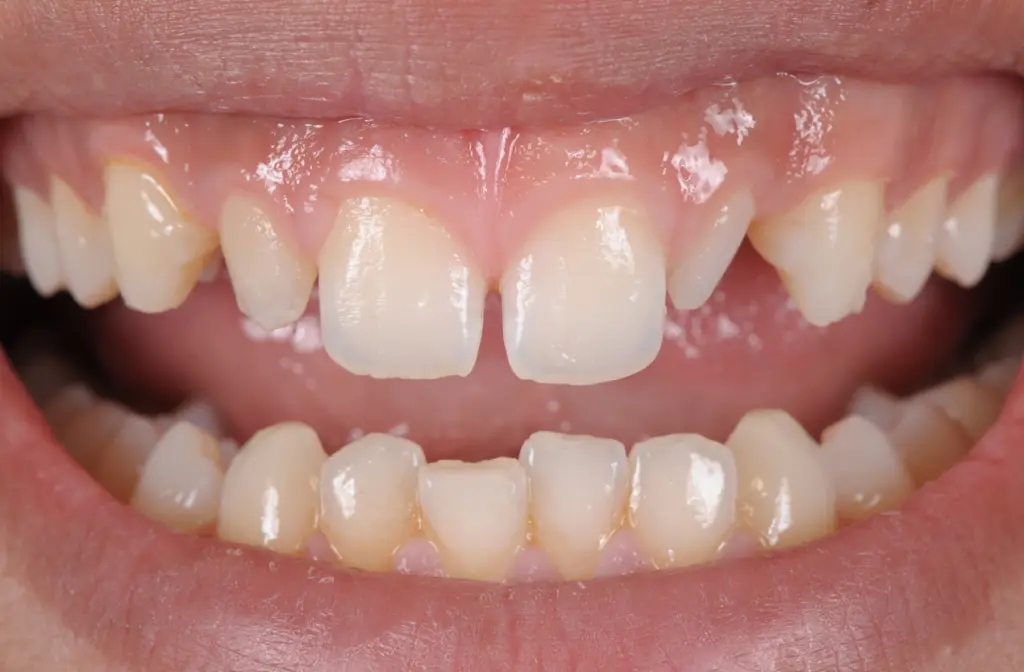
Facial beauty and smile symmetry depend on the golden proportion of dentistry, where the width of each tooth harmonizes with adjacent dental structures. In an ideal smile, the maxillary lateral incisors gently frame the central incisors, guiding the aesthetic line toward the canines. However, developmental anomalies can disrupt this balance, resulting in peg laterals. These underdeveloped, cone-shaped teeth create irregular gaps, asymmetric dark corridors, and noticeable smile discrepancies that often impact self-esteem.
Individuals living with undersized lateral incisors frequently seek answers to why do i have peg laterals, examine biological triggers to understand what causes peg laterals, look into clinical protocols for fixing peg laterals, evaluate non-invasive options such as composite bonding for peg laterals, explore orthodontic alignment through braces peg laterals, compare documented results in peg laterals before and after portfolios, and research dental avenues to determine how to treat peg laterals through a comprehensive peg laterals treatment. This clinical guide breaks down developmental biology, restorative pathways, orthodontic planning, and pricing dynamics.
Table of Contents
What Are Peg Laterals and Why Do They Form?
If you are wondering why do i have peg laterals or researching what causes peg laterals, the condition, clinically classified as localized microdontia of the maxillary lateral incisors, occurs when the adult lateral incisor fails to develop its normal rectangular shape and volume during tooth bud development.
Get Free Consultation
Have any questions? Leave your details and we'll get back to you shortly.
The condition is driven by specific biological, genetic, and embryological factors:
- Genetic Inheritance and Mutations: The maxillary lateral incisors develop from an embryological dental lamina that is sensitive to gene expression. Mutations in specific homeobox genes, such as MSX1 and PAX9, interrupt normal morphodifferentiation, halting the lateral expansion of the tooth bud. If a parent has undersized teeth, their children face a significantly higher probability of developing the condition.
- Evolutionary Tooth Bud Reduction: From an evolutionary standpoint, maxillary lateral incisors and third molars (wisdom teeth) are the most prone to developmental reduction or complete absence (congenital agenesis). Peg teeth represent an intermediate phenotype between a normally formed tooth and complete tooth agenesis.
- Failure of Enamel and Dentin Folding: During the bell stage of tooth development, the inner enamel epithelium fails to fold into its normal flat, shovel-shaped contour. Instead, it collapses into a conical, peg-shaped form tapering toward a blunt incisal tip.
- Deficient Root Surface Area: Because the clinical crown is underdeveloped, the underlying root of a peg lateral is often shorter, narrower, and more conical than that of a standard incisor, requiring gentle handling during orthodontic alignment.
Clinical Problems Associated with Peg Laterals Teeth
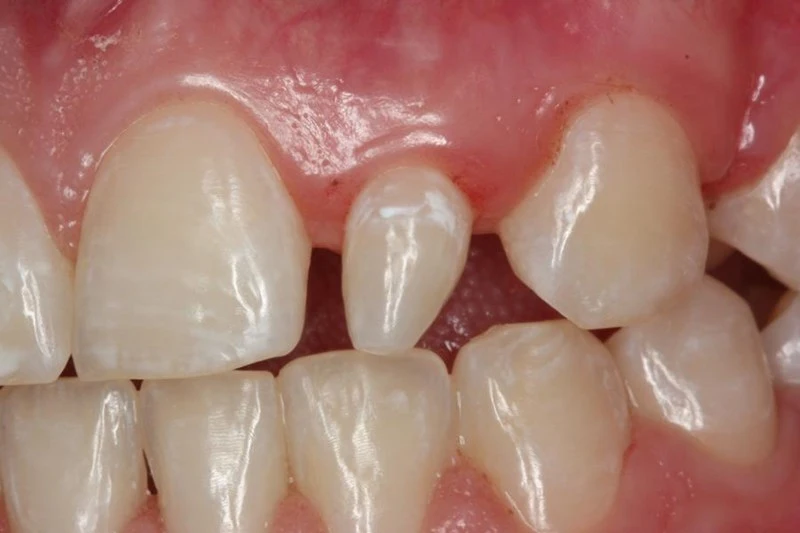
Living with untreated peg laterals teeth introduces functional and aesthetic challenges beyond small tooth size:
- Unsightly Dental Spacing (Diastema): Because the peg-shaped tooth does not fill the anatomical space between the central incisor and canine, wide black spaces form on either side of the tooth, trapping food particles and distracting from smile symmetry.
- Opposing Arch Wear and Occlusal Interference: When lateral incisors lack proper lingual cingulum contours, the lower anterior teeth can over-erupt or collide into the upper teeth at improper angles, accelerating wear on lower enamel edges.
- Unbalanced Gingival Margins: Undersized teeth often fail to induce normal bone and gum tissue development, causing the gumline (zenith) above the peg tooth to sit lower or higher than that of adjacent teeth.
- Psychological Self-Consciousness: Individuals frequently hide their smiles in public, feeling that their peg-shaped teeth look like child teeth or sharp fangs.
Restorative Pathways: How to Treat Peg Laterals
Modern cosmetic and restorative dentistry offers several reliable techniques for fixing peg laterals, ranging from direct chairside artistry to custom-crafted laboratory ceramics:
1. Direct Composite Bonding for Peg Laterals
The most conservative, minimally invasive, and immediate treatment modality:
- Biological Preservation: No healthy enamel is removed. The tooth surface is lightly etched with phosphoric acid to open microscopic enamel tubules, followed by an application of bonding resin.
- Layering Technique: Using multi-shaded composite resins, the cosmetic dentist sculpts life-like dentin and translucent enamel layers directly over the peg tooth, matching the natural hue, surface texture, and optical properties of adjacent teeth.
- Ideal Indication: Excellent for adolescents whose dental pulp chambers are still large and whose gumlines have not fully stabilized, as well as adults seeking an affordable, single-visit solution.
2. Custom Porcelain Veneers
The premier aesthetic choice for long-term durability and natural light transmission:
- Optical Vitality: High-translucency feldspathic or lithium disilicate (E-max) ceramics mimic natural tooth enamel, resisting stains from coffee, red wine, and tea.
- Minimal Preparation: Because peg teeth are already smaller than normal, tooth reduction is minimal or non-existent (no-prep veneers), ensuring the restoration bonds securely to intact outer enamel.
- Gingival Harmony: Custom porcelain margins allow the technician to design natural emergence profiles, giving the illusion of a broader, anatomically balanced tooth emerging naturally from the gum.
3. Full-Coverage Zirconia or Ceramic Crowns
Indicated when a peg tooth exhibits significant structural deficits, has undergone previous root canal treatment, or requires substantial occlusal bite correction:
- 360-Degree Reinforcement: A monolithic zirconia or porcelain crown encases the entire peg core, providing mechanical strength against heavy chewing forces.
The Role of Orthodontics: Braces Peg Laterals
Restoring undersized teeth requires proper spacing. Combining restorative work with braces peg laterals or clear aligners (Invisalign) is often the foundation of successful treatment:
- Creating Symmetric Mesial and Distal Space: If a peg tooth has shifted toward the central incisor or tilted against the canine, a dentist cannot place a natural-width veneer without producing an asymmetric result. Orthodontic treatment physically slides the peg tooth into the center of its space.
- Leveling the Gingival Margins (Gingival Zenith Alignment): Braces or aligners intrude or extrude the peg tooth to bring its gumline into parallel alignment with the adjacent central incisor and canine, creating a balanced aesthetic frame.
- Interdisciplinary Treatment Sequence: Orthodontics is completed first to build the ideal spatial envelope. Retention wires or clear retainers hold the tooth in place until the definitive composite bonding or porcelain veneer is bonded into place.
Recovery Roadmap: What to Expect During Treatment
The journey to restoring an undersized tooth follows distinct restorative phases:
- Day of Restorative Treatment: For direct composite bonding, the transformation is completed in a single two-hour visit under local anesthesia. For porcelain veneers, initial digital impressions are captured, and comfortable temporary restorations are worn for five to seven days while the dental laboratory mills the custom ceramics.
- Week One (Gingival Adaptation): The surrounding gum tissue adapts to the newly widened tooth contours. Mild gum tenderness can be managed with warm saltwater rinses and gentle brushing with an extra-soft toothbrush.
- Month One (Bite and Functional Stability): The patient adapts to the updated front bite. Minor bite checks and micro-polishing ensure that the lower teeth glide smoothly over the lingual surface of the new restorations during speech and chewing.
- Years One to Five and Beyond: Composite bonding requires routine surface re-polishing every two to three years to maintain high gloss, while porcelain restorations typically retain their color and shine for ten to twenty years with standard oral hygiene.
Visual Transformations: Peg Laterals Before and After
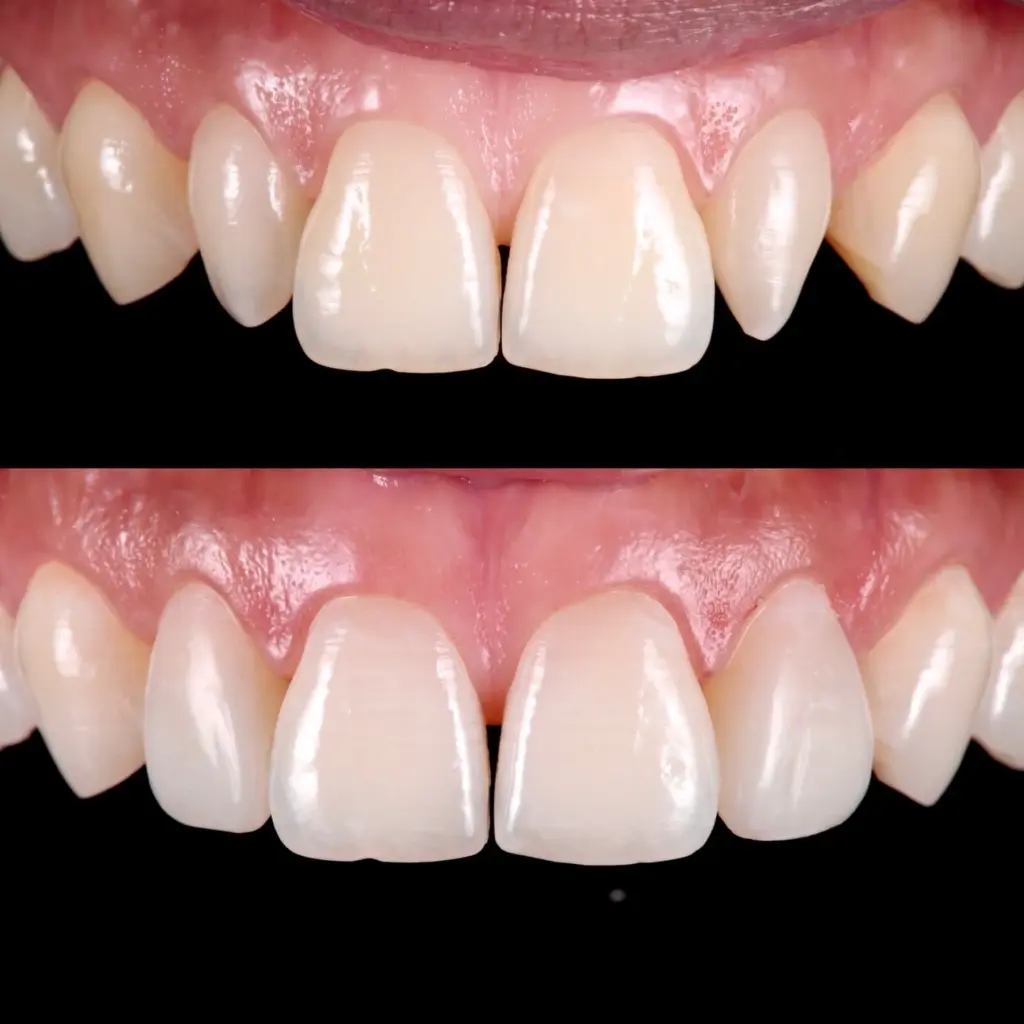
Examining clinical peg laterals before and after portfolios illustrates substantial aesthetic and functional improvements:
- Elimination of Asymmetric Gaps: Awkward black triangles between front teeth are sealed, creating a contiguous smile line.
- Restored Golden Proportions: The undersized, conical tooth is transformed into a natural incisor that is approximately eighty percent of the width of the central incisor.
- Symmetrical Gingival Architecture: Leveling the gum margin removes the uneven appearance, framing the smile in balanced proportions.
- Boosted Smile Confidence: Patients gain the freedom to laugh and speak without feeling self-conscious about their front teeth.
Long-Term Maintenance and Protection Guidelines
- Wear Your Orthodontic Retainer Nightly: Teeth possess a natural memory and can drift. If braces were used to create space for veneers or bonding, wear your clear retainer every night to prevent gaps from reopening.
- Avoid Direct Biting on Non-Food Objects: Never use restored lateral incisors to tear open plastic packaging, chew on pens, or crack ice, as shear forces can chip composite margins or fracture ceramic edges.
- Wear a Custom Night Guard if You Grind: Sleep bruxism generates intense lateral forces. A custom nocturnal splint distributes bite pressure evenly, shielding bonded restorations and veneers from premature wear.
- Maintain Regular Professional Polishings: Schedule biannual cleanings with your hygienist using non-abrasive polishing pastes (such as aluminum oxide or diamond polishing paste) to keep composite surfaces stain-free and preserve ceramic glazes.
Comparative Matrix: Treatment Options for Peg Laterals
| Restorative Modality | Direct Composite Bonding | No-Prep / Minimal-Prep Porcelain Veneer | Full Ceramic Crown | Orthodontic Space Closure (Extraction) |
| Primary Indication | Adolescents & budget-conscious adults | Adults seeking long-term aesthetics | Severely deficient or endodontically treated teeth | Severe crowding requiring canine substitution |
| Enamel Reduction | Zero (purely additive) | Minimal to zero (0.0 to 0.3 mm) | Moderate (1.0 to 1.5 mm circumferentially) | N/A (tooth removed or reshaped) |
| Treatment Duration | 1 Single dental appointment | 2 Visits over 5 to 7 days | 2 Visits over 5 to 7 days | 12 to 24 Months of active orthodontics |
| Aesthetic Longevity | 4 to 8 Years (requires re-polishing) | 10 to 20 Years (stain-proof) | 15 to 25 Years (maximum durability) | Permanent natural tooth structure |
| Resistance to Staining | Moderate (can absorb tea/coffee tannins) | High (glazed ceramic resists all stains) | High (glazed ceramic resists all stains) | N/A (natural enamel) |
| Reversibility | Completely reversible | Largely reversible if no prep is done | Irreversible (tooth core reshaped) | Irreversible (tooth removed/reshaped) |
What Determines the Peg Laterals Treatment Cost?
When evaluating the financial investment for fixing peg laterals, patients will discover that overall treatment fees depend on individualized clinical and cosmetic variables:
- Selected Restorative Material: Direct composite bonding uses light-cured hybrid resins placed chairside in a single session, carrying a fundamentally different cost structure than custom laboratory-milled feldspathic, lithium disilicate, or zirconia ceramics.
- Need for Prior Orthodontic Treatment: If the peg-shaped teeth are crowded, rotated, or tilted against adjacent teeth, pre-restorative orthodontic treatment with clear aligners or fixed braces will adjust the total treatment budget.
- Unilateral vs. Bilateral Involvement: While many individuals have peg-shaped teeth on both sides of the upper jaw, some present with an undersized lateral on one side and a normal tooth on the other, altering the number of restorations required.
- Diagnostic Wax-Ups and Digital Smile Design: Advanced aesthetic planning involves digital 3D intraoral scanning, photographic smile analysis, and physical diagnostic wax-ups to preview the final tooth shape before bonding, contributing to planning fees.
- Cosmetic Dentist and Master Ceramist Credentials: Board-certified prosthodontists and cosmetic dental specialists who collaborate with master dental ceramists structure fees reflecting their clinical precision and material mastery.
- Geographic Location and All-Inclusive Dental Packages: Treatment costs vary substantially between private practices in Western Europe or North America and accredited international dental destinations like Turkey. Dental travel packages in Turkey frequently bundle 3D digital imaging, pre-restorative gum contouring, premium E-max porcelain veneers, boutique hotel accommodations, and private VIP transfers into structured care arrangements.
Frequently Asked Questions (FAQ)
Can peg laterals be corrected without braces?
Yes. If your peg laterals already have adequate, balanced space on both sides and your overall bite is well-aligned, cosmetic bonding or porcelain veneers can be placed directly without braces. However, if the teeth are crowded, heavily rotated, or tilted against adjacent teeth, short-term orthodontics is recommended first to center the teeth and ensure symmetrical results.
Is composite bonding or a porcelain veneer better for fixing peg laterals?
Both options have clear clinical advantages. Composite bonding is non-invasive, preserves all natural tooth structure, can be completed in a single visit, and is easily repaired, making it ideal for younger patients. Porcelain veneers, while involving a higher initial investment, offer superior optical translucency, do not stain, and last significantly longer, making them the preferred choice for adults seeking a permanent cosmetic result.
At what age should treatment for peg laterals begin?
Definitive porcelain veneers or crowns should wait until facial skeletal growth is complete, typically around age eighteen. However, adolescents do not need to wait; direct composite bonding can be placed as soon as the tooth has fully erupted (usually around age eleven to thirteen). This conservative approach builds natural tooth contours, supports social confidence, and preserves enamel until the patient decides to transition to porcelain later in adulthood.
Do peg laterals have weaker roots than normal teeth?
In many cases, yes. Because peg lateral incisors undergo developmental microdontia, their roots can be shorter, narrower, or more conical than standard tooth roots. An experienced dentist will evaluate digital periapical X-rays or 3D CBCT scans to confirm root stability before applying orthodontic movement or placing heavy restorative loads.

 |