Skip to content
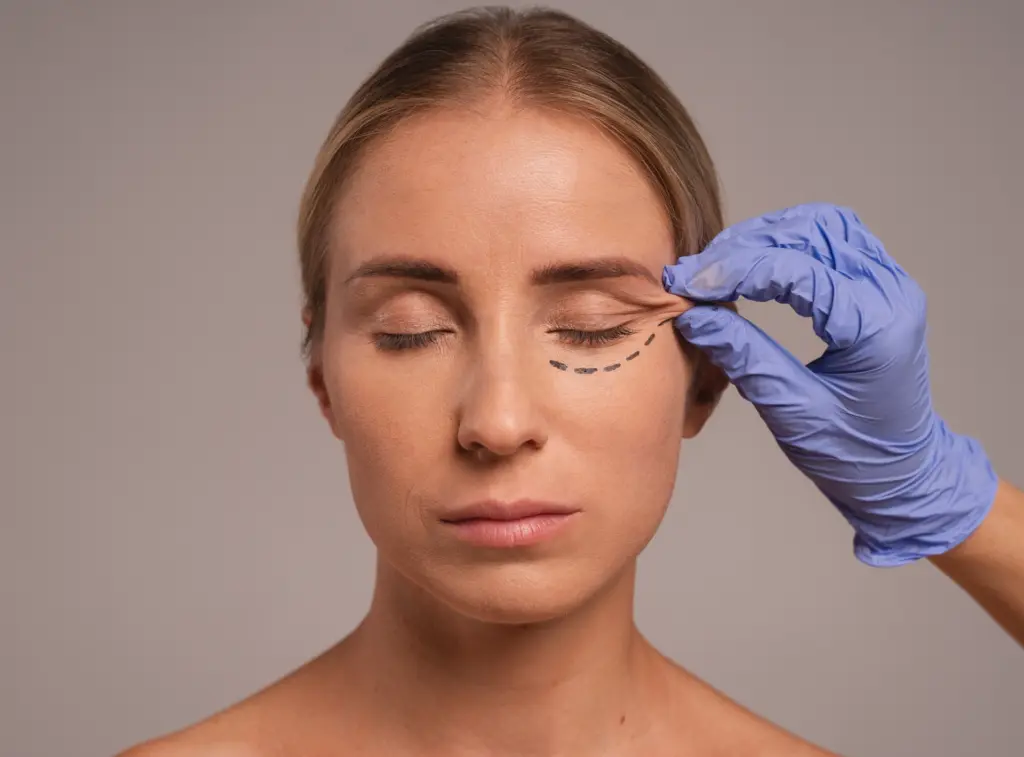
The periorbital region is the structural focal point of facial expression, communication, and youthful vitality. Over time, genetic predispositions, systemic loss of dermal collagen, and the relentless pull of gravity cause the delicate tissues surrounding the eyes to undergo pronounced structural shifts. The thin skin of the eyelids stretches, underlying muscles weaken, and intraorbital fat pads herniate forward, presenting as sagging upper hoods or heavy bags under the eyes. To resolve this weathered look, modern cosmetic medicine provides a definitive surgical milestone. A blepharoplasty is a specialized micro-surgical procedure designed to accurately excise redundant skin, remodel displaced fat tissue, and tighten lax musculature to restore a bright, rested aesthetic.
For many international patients, understanding the mechanical differences between upper and lower eyelid transformations can feel overwhelming. Knowing what to expect before and after treatment, evaluating advanced structural limitations, and choosing the right medical environment are crucial keys to achieving natural, long-lasting facial balance. This comprehensive guide details the structural steps of the procedure, analyzes international packaging costs, outlines potential downsides, and answers your most critical recovery questions.
Table of Contents
What Is Blepharoplasty Surgery?
To truly grasp the clinical advantages of this treatment, we must first answer a fundamental question: what is blepharoplasty in the context of modern cosmetic science? Often referred to as an eyelid lift, blepharoplasty surgery is an intricate, highly customized outpatient procedure. It targets structural flaws in the upper lids, lower lids, or both simultaneously.
Get Free Consultation
Have any questions? Leave your details and we'll get back to you shortly.
Depending on your unique anatomical blueprint, the procedure is divided into two primary surgical techniques:
1. Upper Blepharoplasty (Upper Eyelid Lift)
An upper blepharoplasty is performed primarily to correct droopy, heavy upper eyelids (ptosis or pseudoptosis). The surgeon makes a micro-incision hidden inside the natural, horizontal crease of the upper lid. Through this opening, excess skin tissue that may be hooding over your eyelashes is meticulously excised. The underlying orbicularis oculi muscle is adjusted, and herniated fat pads near the inner corner of the eye are removed or reshaped.
2. Lower Blepharoplasty (Under-Eye Bag Removal)
A lower blepharoplasty targets puffiness, deep tear troughs, and hollow contours underneath the eyes. The surgeon utilizes either a subciliary incision (placed just below the lower eyelash line) or a transconjunctival incision (placed entirely inside the lower eyelid membrane). The internal transconjunctival approach is highly favored by modern specialists because it leaves no visible external scars. Instead of simply removing the under-eye fat pads, advanced cosmetic surgeons redistribute the fat into the tear trough to eliminate dark shadows and restore a smooth, continuous transition from the eye to the cheek.
Is Blepharoplasty a Major Surgery?
When researching surgical options, patients frequently ask: is blepharoplasty a major surgery? From an operating theater standpoint, blepharoplasty is considered a minor to moderate, minimally invasive outpatient procedure, rather than a major operation.
It does not require entering deep bodily cavities, it carries an exceptionally low systemic risk profile, and it is performed under local anesthesia combined with oral or intravenous sedation. This means you do not need to be deeply asleep under general anesthesia. You can safely return home or to your hotel room a few hours after the procedure is completed.
Is It a Real Alternative?
For individuals with early, mild skin laxity who wish to avoid incisions, a non surgical blepharoplasty is a popular option. This technique uses plasma pen technology, radiofrequency (RF) microneedling, or advanced fractional lasers to create micro-injuries on the skin’s surface. This thermal damage triggers a natural healing response, causing the surface tissues to contract and boost collagen production over several months.
While non-surgical treatments require zero surgical incisions and involve minimal downtime, they cannot remove herniated fat pads or correct severe structural skin sagging. For patients with prominent under-eye bags or heavy upper hooding, permanent surgical contouring remains the clinical gold standard.
Blepharoplasty Before and After
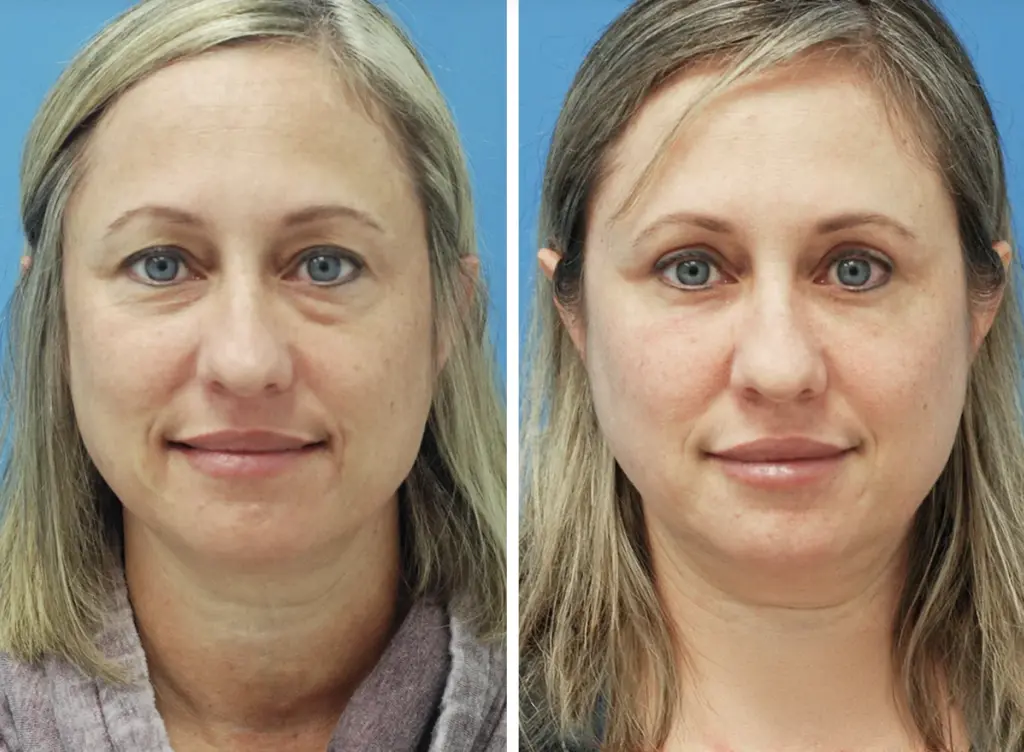
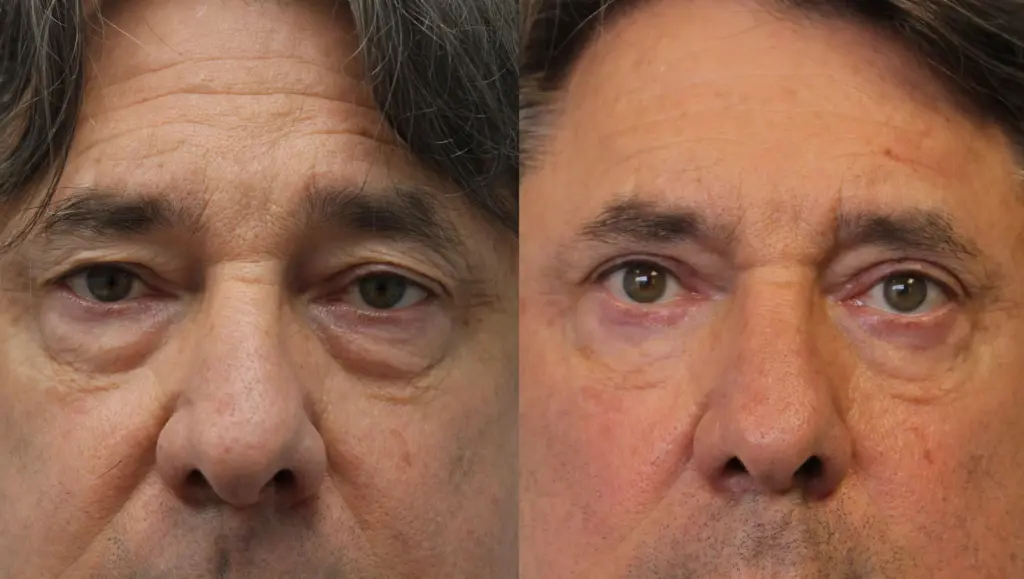
The visual impact of an upper eyelid blepharoplasty or a lower fat transposition is immediately evident when studying a blepharoplasty before and after timeline. Before surgery, patients often present with a chronically tired, angry, or prematurely aged expression due to sagging skin and heavy shadows.
Following a brief recovery period, the “after” results reveal an entirely refreshed facial dynamic. The eyes appear larger, more alert, and naturally vibrant. The contour lines are smoother, and the overall facial symmetry is restored without changing your natural expressions.
What Is the Downside of Blepharoplasty?
Every aesthetic intervention involves a careful balance of benefits and potential risks. When asking what is the downside of blepharoplasty, patients must be aware of temporary post-operative side effects and rare surgical complications:
- Temporary Dry Eye Syndrome: Due to temporary swelling of the eyelid muscles, the natural blinking mechanism can slow down for a few weeks, requiring regular use of lubricating eye drops.
- Asymmetry: Minor variations in healing between the left and right eye can occasionally require a subtle secondary adjustment.
- Lagophthalmos (Inability to Fully Close the Eye): If an inexperienced surgeon removes too much skin during an upper blepharoplasty, the patient may struggle to close their eyes completely, leading to chronic corneal exposure. Choosing a board-certified oculoplastic or facial plastic surgeon eliminates this risk.
Healing Timelines and Longevity
The immediate recovery window following eyelid contouring is surprisingly fast. Suture removal typically takes place 5 to 7 days post-op, and most swelling and bruising fade within 10 to 14 days, allowing you to return to work and social activities comfortably.
THE EYELID HEALING TIMELINE:
- Day 1-2: Apply cold compresses for 10 minutes every hour; sleep with your head elevated on 2-3 pillows.
- Day 5-7: Surgical micro-sutures are safely removed; early bruising begins to fade.
- Week 2: Swelling decreases by 80%; you can safely wear makeup and return to non-strenuous work.
- Month 2-3: Incision lines turn from faint pink to completely invisible; final contoured symmetry is achieved.
How Long Does Eye Blepharoplasty Last?
A major advantage of this procedure is its long-term durability. If you are wondering how long does eye blepharoplasty last, an upper blepharoplasty typically delivers stable results for 10 to 15 years before the natural aging of the forehead and brows causes mild laxity again. A lower blepharoplasty is even more durable; because the herniated fat pads under the eyes are permanently removed or transposed, the results frequently last a lifetime.
How Much Is a Blepharoplasty in Turkey?
The baseline upper blepharoplasty cost varies significantly depending on global economic structures. In the UK, USA, and Western Europe, a standalone upper or lower procedure ranges from £3,000 to £6,000 under private care frameworks.
This financial barrier is why seeking care abroad has become a leading choice. But how much is a blepharoplasty in Turkey exactly? On average, a premium blepharoplasty in Turkey ranges from €1,800 to €3,500.
Because of lower local operational overheads, favorable currency exchange dynamics, and a highly competitive, government-supported medical tourism infrastructure, top-tier plastic surgery centers in Turkey can provide identical world-class safety and board-certified surgeons at a fraction of Western prices. These premium international packages seamlessly combine the surgery, luxury hotel accommodation, private VIP transfers, and a full year of post-operative follow-up care into a single solution.
Comprehensive Procedure Breakdown
| Surgical Metric | Upper Blepharoplasty | Lower Blepharoplasty | Non-Surgical Plasma Lift |
| Primary Indication | Heavy, hooded upper eyelids | Under-eye bags and tear troughs | Mild skin laxity and fine lines |
| Incision Placement | Inside the upper eyelid crease | Inside the lid or under eyelashes | No incisions (External thermal energy) |
| Average Surgical Time | 45 to 60 Minutes | 60 to 90 Minutes | 30 Minutes |
| Anesthesia Protocol | Local anesthesia + Sedation | Local anesthesia + Sedation | Topical numbing cream only |
| Initial Recovery Window | 5 to 7 Days | 7 to 10 Days | 3 to 5 Days |
| Long-Term Durability | 10 to 15 Years | Permanent (Lifetime results) | 1 to 2 Years |
Frequently Asked Questions (FAQ)
What is the most critical aftercare rule following eyelid surgery?
The most critical rule is keeping your head elevated at a 45-degree angle for the first 3 to 5 days, even while sleeping, and applying cold compresses regularly. This directly limits swelling, prevents bruising from spreading, and protects the delicate micro-sutures from tension.
Will I have visible scars after my upper or lower blepharoplasty?
Scars are virtually invisible when performed by an expert surgeon. The upper incision is hidden entirely inside your natural eyelid crease, while the lower incision is hidden inside the eyelid membrane (transconjunctival approach), leaving no external trace.
Can a blepharoplasty correct sagging eyebrows?
No, blepharoplasty only removes excess skin and fat within the eyelid structure itself. If your heavy eyelids are caused by a drooping brow, an endoscopic brow lift is required instead of, or combined with, an upper eyelid lift.
How soon after the procedure can I wear contact lenses?
Patients must avoid wearing contact lenses for at least 2 weeks after surgery. Inserting and removing lenses stretches the surrounding eyelid tissues, which can disrupt the healing incision lines. Stick to prescription eyeglasses during early recovery.

 |
|