Skip to content
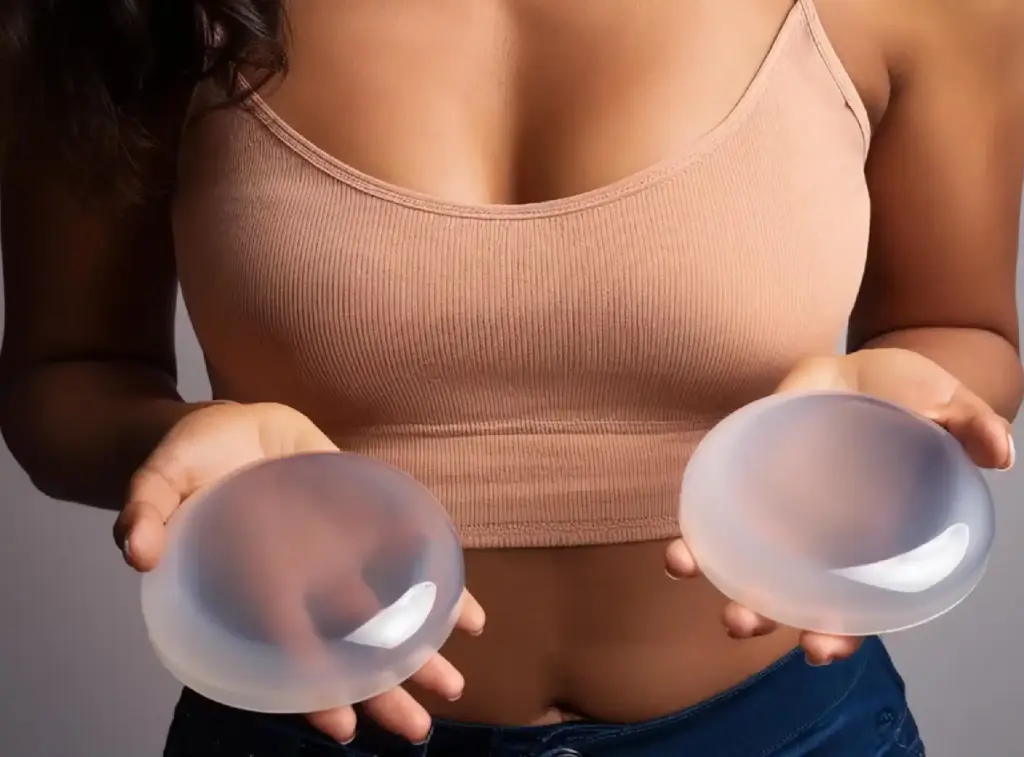
Breast augmentation remains one of the most frequently performed and life-transforming cosmetic procedures worldwide. Whether chosen for post-mastectomy breast reconstruction, correction of developmental asymmetry, or cosmetic enhancement, the success of the outcome relies heavily on selecting the correct implant.
With advancements in aesthetic technology, patients are no longer limited to a single standard option. Today, plastic surgeons offer different breast implant types tailored to unique body proportions, soft tissue thickness, and aesthetic goals.
Understanding how filler materials, outer textures, projections, and volumes interact is essential for making an informed decision. Prospective patients frequently evaluate silicone breast implant types, compare breast implant types silicone vs saline, weigh breast implant types pros and cons, examine breast implant types and sizes, and consult breast implant types reviews. This comprehensive guide analyzes modern implant categories, details pros and cons, breaks down size profiles, and answers key clinical questions.
Get Free Consultation
Have any questions? Leave your details and we'll get back to you shortly.
Table of Contents
The Core Fillers: Breast Implant Types Silicone vs Saline
The primary distinction among different breast implant types lies in the internal filler material. Understanding the mechanical differences between silicone and saline is fundamental to your consultation.
IMPLANT FILLER COMPARISON:
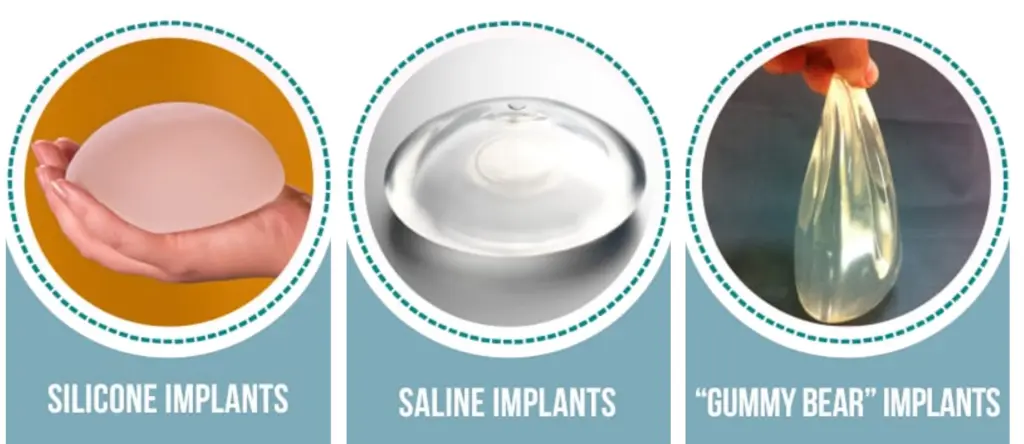
- [Saline Implants] -> Sterile Saltwater | Firmer Feel | Inserted Empty -> Filled In Vivo
- [Silicone Implants] -> Cohesive Gel | Natural Feel| Pre-filled -> Smaller Incision Flexibility Varies
- [Gummy Bear Implants]-> Form-Stable Gel | Anatomical | Retains Shape -> Maximum Ripple Resistance
1. Silicone Breast Implant Types
Silicone implants are pre-filled with an elastic, cohesive silicone gel that mimics the tactile density and natural bounce of human breast tissue:
- Standard Cohesive Silicone Gel: Highly flexible, soft, and provides a supple contour that moves naturally with body motion.
- Highly Cohesive (“Gummy Bear”) Gel: Form-stable implants that maintain their internal structural shape even if the outer elastomer shell is sliced or ruptured. The gel does not migrate, offering maximum ripple resistance and superior upper-pole stability.
- Ergonomic Silicone Implants: Dynamic silicone gel implants designed to shift shape naturally acting round when lying down and transitioning to a gentle teardrop slope when standing upright.
2. Saline Breast Implants
Saline implants consist of a strong silicone elastomer shell that is inserted completely empty through a smaller incision and then filled with sterile saltwater solution (0.9 % NaCI) to the desired volume:
- Structured Saline Implants: Advanced saline models containing an internal baffle structure designed to support the liquid, significantly reducing fluid sloshing and edge rippling.
- Safety Benefit: If a saline implant shell ruptures, the saltwater solution is harmlessly absorbed and excreted naturally by the body within 24 to 48 hours.
Implant Shapes: Round vs. Teardrop (Anatomical)
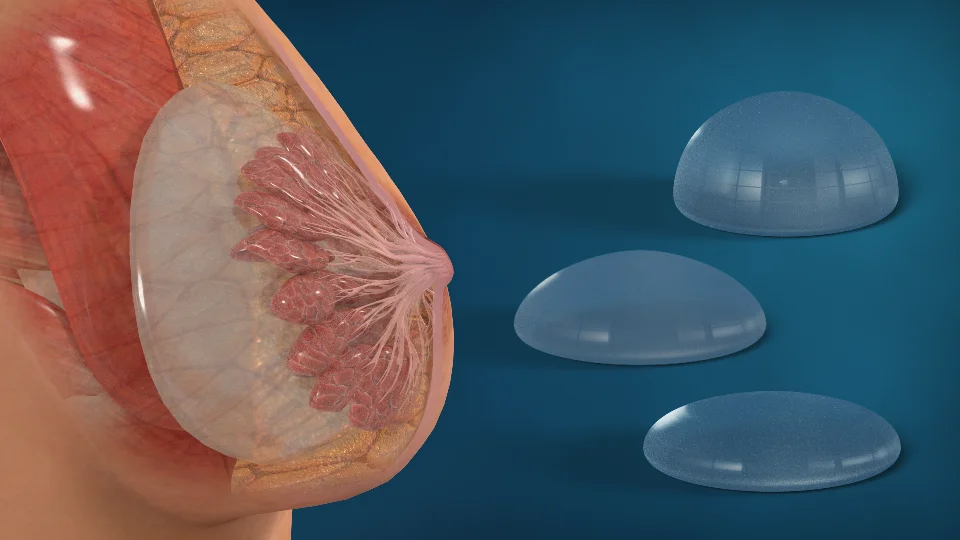
The external profile of an implant dictates how volume is distributed across the upper and lower poles of the breast:
SHAPE CHARACTERISTICS:
- Round Implants: [Uniform Symmetry] -> Maximum Cleavage & Upper-Pole Fullness
- Teardrop Implants: [Sloped Contour] -> Subtle Upper Slope & Natural Lower Pole Projection
- Round Breast Implants: Completely symmetrical from all angles. Round implants deliver significant fullness in the upper pole (décolletage), creating a lifted, pronounced appearance. If a round implant rotates internally, it does not distort the aesthetic contour of the breast.
- Teardrop (Anatomical) Implants: Designed with a tapered upper slope and fuller lower base to replicate the natural silhouette of a biological breast. These implants are ideal for thin patients with minimal natural breast tissue or reconstruction cases. They typically feature a textured shell to prevent internal rotation.
Shell Textures: Smooth vs. Textured
The outer shell surface influences how the implant interacts with surrounding tissue:
- Smooth Shell Implants: Softest to the touch. They move freely within the surgical pocket, producing a very natural motion. They carry a virtually non-existent risk of BIA-ALCL (Breast Implant-Associated Anaplastic Large Cell Lymphoma).
- Textured / Micro-Textured Shells: Designed with a roughened surface that encourages tissue adherence, anchoring the implant in place. This texture minimizes the risk of implant malposition and rotation, though macro-textured varieties are rarely used today in modern aesthetic practices.
Evaluating Breast Implant Types Pros and Cons
Choosing between various breast implant types requires balancing aesthetic goals, safety parameters, and lifestyle factors:
Silicone Implants: Pros and Cons
- Pros: Exceptionally natural feel, minimal rippling or wrinkling, lighter aesthetic weight, maintains shape over long periods.
- Cons: Requires slightly longer surgical incisions; silent ruptures require routine ultrasound or MRI screening to detect.
Saline Implants: Pros and Cons
- Pros: Smaller surgical incisions (filled after placement); rupture is immediately obvious and completely non-toxic; lower upfront financial cost.
- Cons: Firmer to the touch; noticeable edge wrinkling and rippling in thin patients; heavier feel compared to equal-volume silicone.
Sizing and Projection Profiles: Breast Implant Types and Sizes
Implant sizing is measured in cubic centimeters (cc), not traditional bra cup sizes. Volumes generally range from 150 cc to 800 cc, with 250 cc to 400 cc being the most common aesthetic range.
The base diameter and projection determine how far forward the breast extends from the chest wall:
PROJECTION PROFILES:
- [Low Profile] -> Broad Base Width | Minimal Forward Projection
- [Moderate Profile] -> Balanced Base | Natural Forward Projection
- [High Profile] -> Narrow Base Width | Pronounced Forward Projection
- [Ultra-High Profile]-> Maximum Forward Projection | Focused Base for Petite Frames
Comprehensive Clinical Comparison Matrix
| Clinical Parameter | Standard Silicone Gel | Highly Cohesive (“Gummy Bear”) | Traditional Saline | Structured Saline |
| Filler Material | Cohesive Silicone Gel | Form-Stable Silicone Gel | Sterile Saline Solution | Baffled Saline Solution |
| Tactile Feel | Very Soft & Natural | Firm, Natural & Stable | Moderately Firm | Firm to Medium |
| Incision Size | Moderate (3.5 – 5.0 cm) | Moderate to Large (4.0 – 5.5 cm) | Small (2.5 – 4.5 cm) | Small to Moderate (3-4 cm) |
| Risk of Visible Rippling | Low | Extremely Low | Moderate to High | Low to Moderate |
| Rupture Identification | Silent (Detected via MRI/US) | Silent (Shape retained) | Immediate deflation | Immediate deflation |
| Ideal Candidate | Most cosmetic augmentations | Thin patients, reconstruction | Budget-conscious, younger patients | Patients wanting saline with less ripple |
Patient Perspectives: Breast Implant Types Reviews
Clinical data and real-world breast implant types reviews highlight consistent satisfaction patterns among patients:
- Silicone Gel Reviews: Overwhelmingly favored for superior natural feel and softness. Patients report high satisfaction with cleavage softness and motion, especially those with little native breast tissue.
- Saline Reviews: Valued for peace of mind regarding rupture transparency and lower overall procedure costs, though thinner patients frequently report visible edge rippling over time.
- Gummy Bear Reviews: Highly rated for long-term shape stability and zero rippling, though some patients note a slightly firmer feel compared to standard cohesive gels.
Frequently Asked Questions (FAQ)
What is the safest type of breast implant available today?
Both FDA-approved silicone and saline implants demonstrate outstanding safety profiles when placed by a board-certified plastic surgeon. Smooth-shell cohesive silicone and smooth-shell saline implants are considered the safest overall options, with extremely low complication rates and minimal association with capsular contracture or tissue reactions.
How do I know which breast implant size is right for me?
The right size depends on your natural breast width (base diameter), tissue elasticity, chest wall anatomy, and desired cup volume. During your consultation, 3D imaging simulations and physical sizers placed inside a sizing bra will help you visualize different volumes (cc) relative to your frame.
What happens when a silicone implant ruptures versus a saline implant?
When a saline implant ruptures, the sterile saltwater leaks out and is harmlessly absorbed by the body within a few days, causing the breast to noticeably deflate. When a silicone implant ruptures, the thick gel typically remains contained within the surrounding fibrous scar capsule (“silent rupture”), requiring an ultrasound or MRI for detection and a planned surgical replacement.
How often do breast implants need to be replaced?
Breast implants are not lifetime devices, but they do not have a mandatory expiration date. Modern cohesive silicone and saline implants typically last 10 to 20 years. You only need to replace or remove them if you experience a rupture, severe capsular contracture, shifting, or if you desire an aesthetic change in size.

 |
|