Skip to content

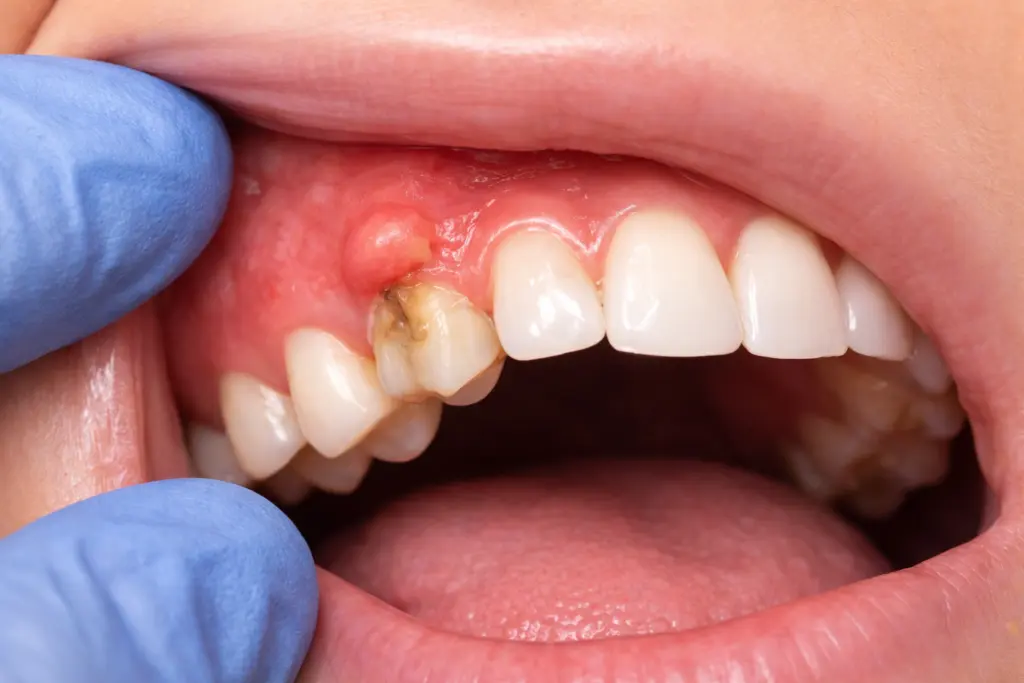
An untreated dental infection can rapidly escalate from mild enamel sensitivity into an aggressive, localized accumulation of pus known as a tooth abscess. This infectious process represents a critical dental emergency caused by pathogenic anaerobic bacteria invading the sterile neurovascular pulp chamber of a tooth. As bacterial biofilm proliferates within the root canals, metabolic toxins and purulent exudate accumulate, generating intense pressure within the non-compliant dentin walls. Without timely professional intervention, the infection perforates through the root apex into the surrounding alveolar bone, spreading into deep fascial spaces of the head and neck.
Patients facing this acute condition urgently investigate what is a tooth abscess, recognize progressive tooth abscess symptoms, identify underlying tooth abscess stages, manage dangerous facial tooth abscess swelling, address complications surrounding an impacted wisdom tooth abscess, research effective tooth abscess antibiotics, seek immediate methods for tooth abscess pain relief fast, and evaluate comprehensive clinical options for a definitive tooth abscess treatment. This clinical guide breaks down the biological stages of infection, medical and surgical remedies, systemic warning signs, and treatment pricing dynamics.
Table of Contents
What Is a Tooth Abscess and How Does It Form?
If you are researching what is a tooth abscess, it is defined as a confined collection of purulent fluid (pus consisting of dead white blood cells, necrotic tissue, and bacterial colonies) that forms inside the pulp, periodontal ligament, or alveolar bone.
Get Free Consultation
Have any questions? Leave your details and we'll get back to you shortly.
Dental abscesses are classified into three distinct anatomical categories:
- Periapical Abscess: The most prevalent form, originating within the soft dental pulp as a direct result of untreated deep dental caries, cracked enamel, or failed endodontic therapy. Bacteria travel down the root canal system, triggering an acute inflammatory lesion at the root tip (apex) in the jawbone.
- Periodontal Abscess: Originates within the supporting periodontal pocket tissues alongside the root surface. Often triggered by chronic periodontitis, food impaction, or deep calculus deposits that prevent foreign debris from clearing.
- Gingival Abscess: A localized, superficial infection restricted solely to the marginal gum tissue or interdental papilla, frequently caused by foreign body impaction such as a popcorn hull or toothbrush bristle, without affecting the root or pulp.
- Pericoronal Abscess (Wisdom Tooth Abscess): Develops around the crown of a partially erupted third molar where a gum flap (operculum) traps bacteria and food debris, leading to acute pericoronitis and severe trismus (jaw stiffness).
Recognizing Infection Milestones: Tooth Abscess Symptoms and Stages
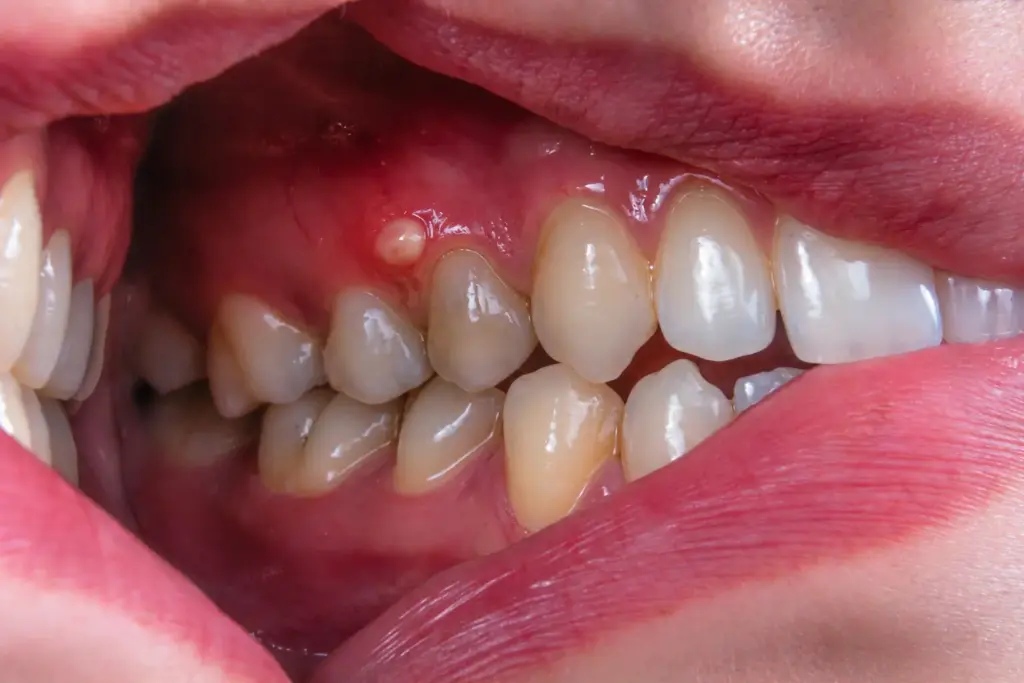
Understanding the sequential tooth abscess stages and corresponding tooth abscess symptoms enables patients to seek intervention before systemic complications arise:
Stage One: Enamel and Dentin Caries (Reversible Pulpitis)
Bacterial acids demineralize outer enamel and penetrate porous dentin tubules. Symptoms include transient thermal sensitivity to cold, sweet, or hot foods that dissipates immediately when the stimulus is removed.
Stage Two: Deep Pulpitis and Necrosis (Irreversible Pulpitis)
Bacteria breach the pulp chamber, triggering intense vascular inflammation. The enclosed swelling crushes internal sensory nerves. Symptoms involve continuous, spontaneous, throbbing pain that worsens when lying flat. Eventually, the neurovascular tissue dies (necrosis), causing a temporary, deceptive cessation of pain.
Stage Three: Periapical Inflammation and Acute Abscess Formation
Anaerobic bacteria migrate through the apical foramen into the periodontal ligament space. Purulent exudate fills the confined bony socket. Symptoms return with severe intensity: extreme pain upon chewing or tapping the tooth, an elevated sensation where the tooth feels taller than adjacent teeth, and localized gum swelling.
Stage Four: Fascial Space Dissemination (Tooth Abscess Swelling)
Pus erodes through cortical bone plates into adjacent soft tissues. This results in prominent facial tooth abscess swelling, visible distortion of the cheek, jawline, or submandibular area, cervical lymphadenopathy, systemic fever, malaise, and difficulty swallowing or opening the mouth (trismus).
Emergency Interventions: Tooth Abscess Pain Relief Fast
While an abscess requires definitive clinical intervention to eliminate the bacterial source, managing acute agony requires effective protocols for tooth abscess pain relief fast:
- Over-the-Counter Analgesic Combinations: Alternating ibuprofen with paracetamol produces synergistic anti-inflammatory and central pain relief. This dual regimen addresses both vascular throbbing and peripheral nerve signaling.
- Warm Hypertonic Saline Rinses: Dissolving half a teaspoon of fine salt in a glass of warm water draws fluid out of swollen gingival tissues through natural osmosis, cleanses superficial bacteria, and soothes raw mucous membranes. Rinse gently every two hours.
- Clove Oil (Eugenol) Topical Application: Natural eugenol acts as a potent local anesthetic and antiseptic. Applying a single drop of pharmaceutical-grade clove oil onto a sterile cotton pellet and placing it gently beside the painful tooth provides temporary numbing.
- Keep the Head Elevated: Avoid lying completely flat on your back. Sleeping with your head elevated on two to three pillows reduces hydrostatic blood pressure within the head, relieving throbbing vascular tension.
- Avoid Direct Heat Packs on the Cheek: Never place a hot water bottle or heating pad directly over swollen facial skin. Heat accelerates bacterial proliferation and draws purulent fluids outward toward the skin surface, increasing the risk of cutaneous fistulas.
Clinical Protocols: Tooth Abscess Treatment Options
Relying solely on home remedies cannot cure an internal dental infection. A definitive tooth abscess treatment requires physical debridement and drainage through professional dental modalities:
1. Surgical Incision and Drainage (I&D)
When an abscess produces a fluctuant, fluid-filled swelling on the gum, the dentist administers local anesthesia around the periphery and makes a delicate scalpel incision into the swelling. Purulent fluid is gently evacuated, the pocket is irrigated with sterile saline, and a small rubber drain may be placed for twenty-four to forty-eight hours to ensure decompression.
2. Endodontic Therapy (Root Canal Treatment)
The gold standard method to save a biologically salvageable tooth:
- Debridement: The dentist accesses the pulp chamber, removes necrotic nerve tissue, and cleans the infected canals using specialized nickel-titanium rotary files.
- Disinfection and Medication: Canals are copiously irrigated with sodium hypochlorite and filled with an antibacterial calcium hydroxide paste for one to two weeks.
- Hermetic Obturation: Once the infection clears and symptoms resolve, the canals are permanently sealed with biocompatible gutta-percha, followed by a protective dental crown.
3. Therapeutic Tooth Extraction
If the tooth is structurally decimated by decay, has suffered severe vertical root fracture, or is an impacted wisdom tooth causing recurrent pericoronitis, surgical extraction is indicated. The tooth is gently elevated and removed, and the infected socket is curetted, irrigated, and debrided to remove periapical granulation tissue.
The Role of Antibiotics: Tooth Abscess Antibiotics
Patients frequently demand tooth abscess antibiotics, yet clinical guidelines emphasize strict pharmacological indications:
- Antibiotics Do Not Cure an Abscess on Their Own: Because the blood supply to the necrotic dental pulp has been destroyed, orally ingested systemic antibiotics cannot circulate inside the dead tooth to eliminate the bacterial source. Mechanical drainage or debridement is mandatory.
- Clear Medical Indications: Systemic antibiotics are prescribed only when infection spreads beyond the tooth socket, manifesting as facial cellulitis, high fever, swollen lymph nodes, trismus, or in immunocompromised patients.
- Common Prescriptions: First-line medical therapy typically involves amoxicillin or amoxicillin with clavulanic acid. For penicillin-allergic individuals, clindamycin, erythromycin, or metronidazole (prescribed in combination for anaerobic coverage) serve as effective alternatives.
Urgent Warning Signs: When to Seek Immediate Emergency Hospital Care
A tooth abscess can become life-threatening if bacteria migrate into deep anatomical neck spaces or intracranial venous channels. Proceed immediately to an emergency hospital room if you experience:
- Difficulty Breathing or Swallowing (Dysphagia): Swelling that tracks into the sublingual or submandibular spaces (Ludwig’s angina) can compress the airway within hours.
- Inability to Open the Mouth (Severe Trismus): Spasm of the masseter and pterygoid muscles indicating deep fascial space infection.
- Swelling Spreading to the Eye or Orbital Rim: Risk of cavernous sinus thrombosis, a rare but life-threatening intracranial complication.
- High Systemic Fever, Confusion, and Lethargy: Indicative of systemic bacteremia or impending sepsis.
Comparative Matrix: Types of Dental Abscesses
| Clinical Parameter | Periapical Abscess | Periodontal Abscess | Gingival Abscess | Pericoronal (Wisdom) Abscess |
| Primary Source | Dead pulp / deep tooth decay | Chronic deep gum pocket | Foreign body stuck in gum | Food trapped under gum flap |
| Primary Location | Root apex in jawbone | Lateral surface of tooth root | Marginal gum edge only | Over partially erupted molar |
| Pulp Vitality | Non-vital (dead pulp) | Vital (alive and responsive) | Vital (alive and responsive) | Vital (alive and responsive) |
| Pain Characteristics | Severe, throbbing, biting pain | Dull, continuous ache, pressure | Localized surface soreness | Severe pain radiating to ear |
| Facial Swelling Risk | High (erodes through bone) | Moderate to high | Extremely low | High (spreads to jaw/throat) |
| Primary Treatment | Root canal or extraction | Deep debridement / scaling | Foreign debris removal | Operculectomy or extraction |
| Antibiotic Need | Only if swelling spreads | Only if systemic symptoms | Virtually never needed | Frequently indicated for trismus |
What Determines the Tooth Abscess Treatment Cost?
When evaluating emergency dental costs, patients will find that financial estimates are determined by clinical, anatomical, and surgical variables rather than a single fixed rate:
- Chosen Definitive Procedure: A straightforward incision and drainage involves different clinical instrumentation and chair time compared to multi-visit specialist root canal treatment or a complex surgical wisdom tooth extraction under sedation.
- Anatomical Tooth Location: Treating an anterior single-rooted incisor involves less complex root canal morphology than treating a posterior molar with four curved, calcified root canals.
- Diagnostic Imaging Requirements: Formulating an accurate diagnosis requires intraoral periapical digital radiographs, full-mouth panoramic X-rays, or three-dimensional Cone Beam Computed Tomography (CBCT) scans to assess the boundary of bone destruction.
- Type of Anesthesia and Sedation: Procedures conducted under standard dental infiltration anesthesia carry different baseline facility fees than those requiring intravenous conscious sedation or general anesthesia in a surgical suite.
- Concomitant Restorative Reconstruction: Saving the natural tooth requires a core build-up and a definitive protective restoration, such as a monolithic zirconia or E-max porcelain crown, adjusting the comprehensive treatment budget.
- Geographic Destination and Emergency Packages: Treatment costs vary substantially between private emergency practices in Western Europe or North America and accredited international dental centers in Turkey. International dental emergency arrangements in Turkey frequently bundle 3D CBCT diagnostics, endodontic debridement, permanent ceramic crowns, post-operative antibiotic prescriptions, and private transfers into structured care arrangements.
Frequently Asked Questions (FAQ)
Can a tooth abscess heal completely on its own without a dentist?
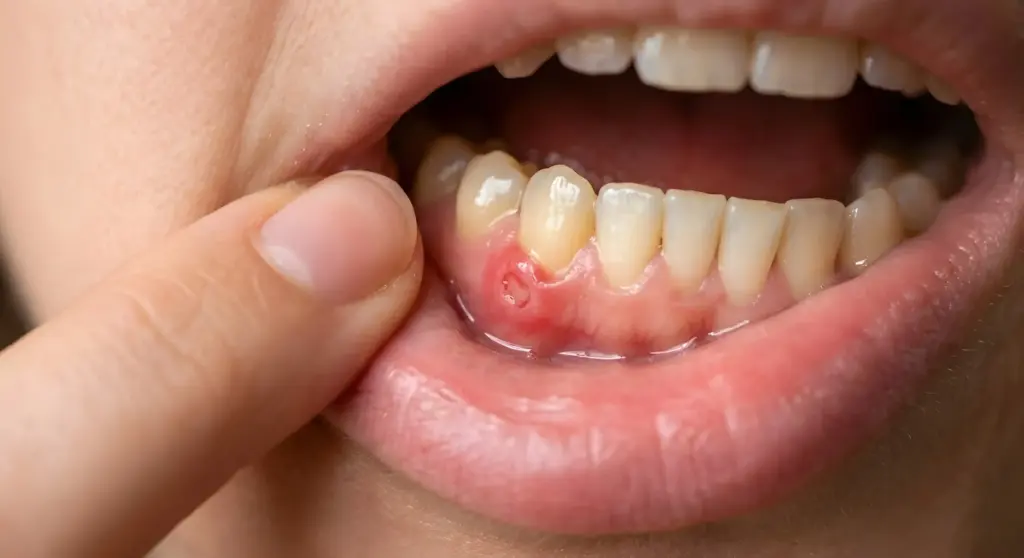
No. A tooth abscess will never resolve spontaneously. Even if a gum boil (parulis or fistula) ruptures and releases pus, temporarily relieving intense throbbing pain, the necrotic tissue and bacterial colony inside the tooth continue to destroy jawbone silently, setting the stage for wider infection.
Is it safe to pop or drain a tooth abscess at home with a needle?
Never attempt to pop, prick, or drain a dental abscess at home. Lancing oral tissues with unsterile instruments introduces foreign bacteria into open tissue planes, drives infection deeper into underlying facial fascial spaces, and risks severe hemorrhage or systemic blood poisoning.
How quickly do antibiotics start working for a tooth abscess?
Oral antibiotics typically begin reducing systemic fever and facial swelling within twenty-four to forty-eight hours. However, completing the entire prescribed course is essential to prevent resistant bacterial strains. Furthermore, antibiotics must be accompanied by dental root canal therapy or extraction to physically remove the dead bacterial reservoir.
What is the difference between a dental abscess and a dental cyst?
A tooth abscess is an acute, active bacterial infection filled with living and dead bacteria, inflammatory neutrophils, and purulent exudate, often characterized by rapid onset and sharp pain. A periapical cyst is a chronic, slow-growing, fluid-filled sac lined by epithelium that forms in response to long-standing, low-grade periapical inflammation, frequently expanding silently over months or years without acute pain.

 |