Skip to content

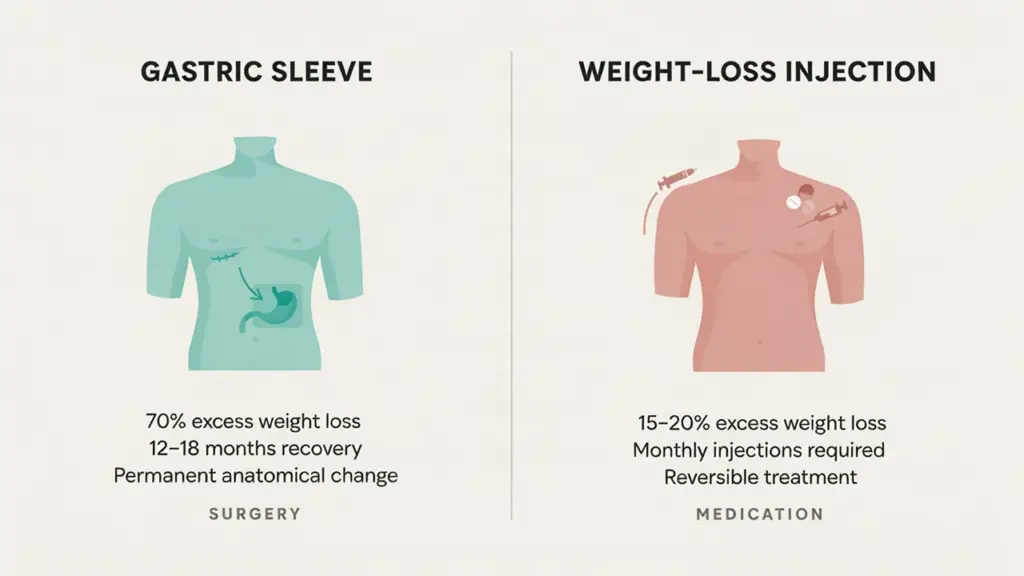
Many people who want to lose weight now ask the same question: should I choose gastric sleeve surgery or a weight loss injection? Both can help, but they work in very different ways. One changes the stomach, while the other acts on hormones and appetite, and the right choice depends on your health, your goals and your circumstances.
This guide explains how gastric sleeve and weight loss injections differ, what results can be expected in general, what risks and side effects exist and how to think about the decision. The information is general. Only a doctor who knows your medical history can say which option, if any, may be suitable for you.
Table of Contents
Gastric Sleeve vs Weight Loss Injection: The Short Overview
Gastric sleeve surgery is an operation that permanently reduces the size of the stomach. Weight loss injections are prescription medicines, usually given once a week, that belong to a group known as GLP 1 medicines. They were first developed for type 2 diabetes, and some are now approved in many countries for weight management.
Get Free Consultation
Have any questions? Leave your details and we'll get back to you shortly.
Because one is an operation and the other is a medicine taken over a long period, comparing them is not simple. They differ in how they work, how much weight is lost on average, what they cost, how long the effect lasts and what risks come with them.
What Is Gastric Sleeve Surgery?
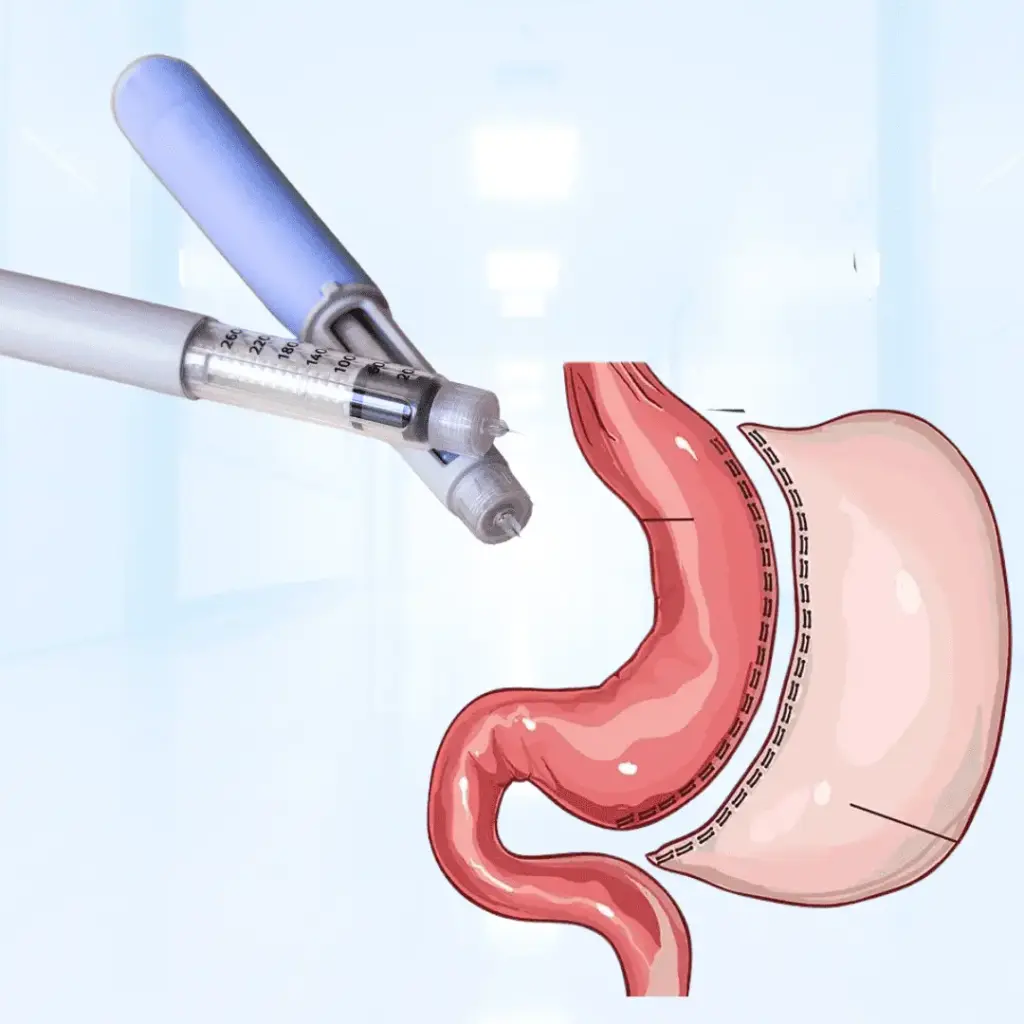
In a gastric sleeve, also called sleeve gastrectomy, the surgeon removes a large part of the stomach and leaves a narrow, tube shaped section. The operation is usually done by keyhole surgery under general anaesthesia. The smaller stomach holds less food, so people feel full sooner.
The operation also changes some of the hormones that affect hunger, which can reduce appetite. It cannot be undone, because the removed part of the stomach does not grow back. This is why it is considered carefully, and why it is usually offered only after a full assessment.
What Is a Weight Loss Injection and How Does It Work?
These injections contain an active ingredient that mimics a natural hormone called GLP 1. This hormone helps the body release insulin when needed, slows the emptying of the stomach and acts on the brain to reduce appetite. Many people feel less hungry and feel full for longer.
They are given as a small injection once a week, and the dose is usually increased gradually under a doctor’s supervision. They are prescription medicines and must be used as directed. Some are approved for type 2 diabetes and others for weight management, so which one is used depends on the country and on the specific product.
Gastric Sleeve and Weight Loss Injection at a Glance
The table below gives a simplified comparison. It is only a general guide, and your doctor can tell you what applies to you.
| Feature | Gastric sleeve | Weight loss injection |
|---|---|---|
| Type of treatment | Operation | Weekly injection |
| How it works | Smaller stomach and hormone changes | Hormone effect on appetite and digestion |
| Reversibility | Cannot be reversed | Can be stopped at any time |
| Typical duration | One operation, then lifelong follow up | Ongoing use while it is needed |
| Main risks | Surgical and long term complications | Digestive side effects and other medicine effects |
| Effect after stopping | Not applicable | Appetite and weight may return |
Weight Loss Results: What Studies Suggest
In general, studies suggest that surgery leads to larger average weight loss than medicines, and that the effect can last for years when the person keeps up the recommended habits. Injectable medicines can also lead to meaningful weight loss for many people while they are being used.
These are averages, and individual results vary widely. Some people lose more than expected and some less. Your starting weight, your health, your habits, the dose of medicine and your response all play a part. No doctor can promise a specific amount of weight loss.
Who May Be Suitable for a Gastric Sleeve?
Surgery is usually considered for adults with obesity who have not achieved lasting results with other approaches, and the exact criteria depend on the country and the clinic. Doctors often look at body mass index, related health problems and the person’s readiness to make long term changes.
Surgery may not be advised for everyone. It may be unsuitable or need extra caution in people with certain stomach or bowel conditions, serious heart or lung problems, active substance misuse or untreated eating disorders. A full assessment by a bariatric team is the way to find out.
Who May Be Considered for a Weight Loss Injection?
Medicines of this type are prescribed after a medical review, and the reason for the prescription matters. Some products are used for type 2 diabetes, and others are used for weight management in some adults who meet certain criteria. The people who may be considered for these treatments include:
- Adults with type 2 diabetes, for whom the medicine is approved.
- Adults with obesity or overweight and related health problems, where a weight management product is approved.
- People who prefer not to have surgery or who are not suitable for it.
- People who are prepared to use the medicine long term under supervision.
The medicine is not suitable for everyone. It should be avoided in some people, for example during pregnancy or with certain personal or family histories, and a doctor must decide.
Side Effects and Risks of Each Option
Every treatment has risks, and they differ between surgery and medicine. In general, they can include:
- With surgery: bleeding, infection, leaks from the staple line, narrowing of the stomach, acid reflux, gallstones and nutritional deficiencies.
- With medicine: nausea, vomiting, diarrhoea, constipation, stomach discomfort and, rarely, more serious problems that need medical attention.
- With both: the need for regular follow up and attention to diet, protein intake and vitamins.
- With both: the possibility that the result is smaller than hoped or not maintained.
Your doctor will explain the risks that apply to you. Do not start or stop a prescribed medicine on your own, and report symptoms that worry you without delay.
Cost and Long Term Commitment
The costs are very different in structure. Surgery has a large single cost and then regular follow up, while medicine has an ongoing cost for as long as it is used. Over time, the total cost of each option depends on the country, the product and how long treatment continues.
Commitment also differs. After surgery, you need lifelong habits and vitamin supplements as advised. With medicine, the commitment is to keep taking it, and the benefits may fade if it is stopped. Think about which pattern you can realistically follow.
What Happens When You Stop the Injection or After Surgery?
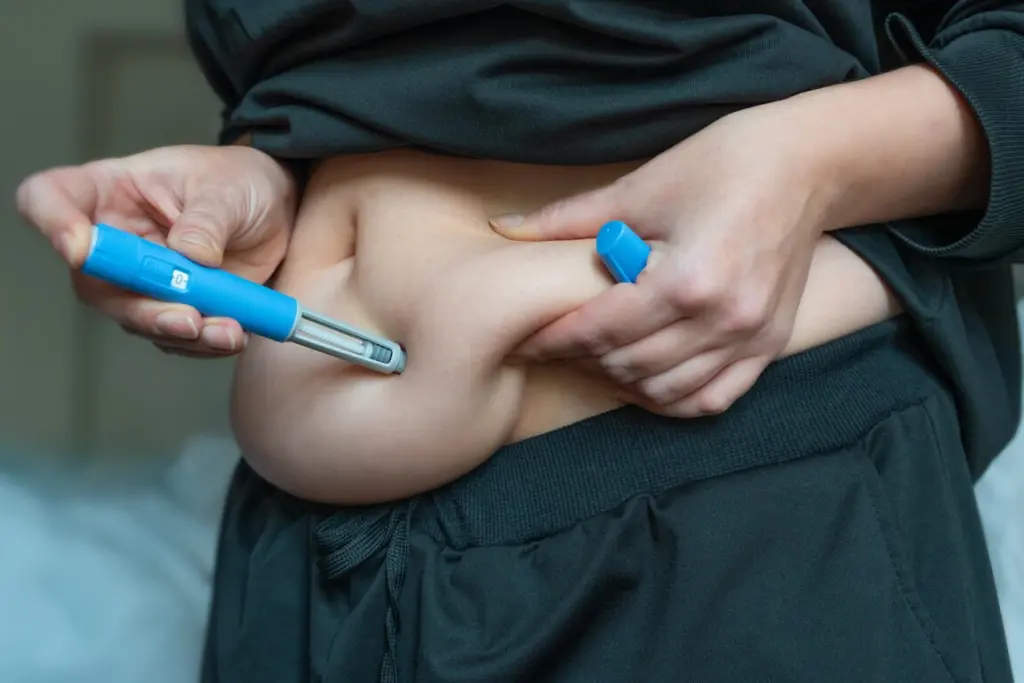
When the injection is stopped, many people find that their appetite returns and that some or all of the lost weight may come back, unless other habits are in place. This is not a failure. It reflects how the medicine works, and it is a reason to plan for the long term from the start.
After a gastric sleeve, the stomach stays smaller, which helps many people maintain their results. Even so, weight regain can happen over the years, especially if eating habits drift. Regular follow up and healthy habits support the outcome in both cases.
How to Decide With Your Doctor
The choice is personal and medical. A sensible way to approach it is as follows:
- Gather your health history, your current medicines and your previous attempts to lose weight.
- Ask a doctor to check for conditions that affect the choice, such as diabetes, heart disease or reflux.
- Discuss what you hope to achieve and what you can realistically maintain.
- Compare the risks, costs and follow up of each option for your own case.
- Take your time and ask for a second opinion if you are unsure.
You do not need to decide at the first appointment. A good doctor will explain both paths and will not pressure you toward either.
Frequently Asked Questions
Is gastric sleeve better than a weight loss injection?
Neither is better for everyone. Studies suggest surgery leads to larger average weight loss, while medicine avoids an operation and can be stopped. The right choice depends on your health, your goals and your doctor’s advice.
Can I use a weight loss injection instead of having surgery?
For some people, yes. A doctor may consider medicine first, especially when surgery is not suitable or not wanted. Different products are licensed for different uses, so it is important to discuss which one is appropriate.
Will I regain weight if I stop the injection?
Many people regain some or all of the weight after stopping, unless other lasting habits are in place. This is why a long term plan with your doctor matters.
Can I have a gastric sleeve after using a weight loss injection?
Some people do. Medicine may be used before or after surgery, and your doctor will advise on timing, especially because these medicines can affect the stomach and the preparation for an operation.

 |