Skip to content
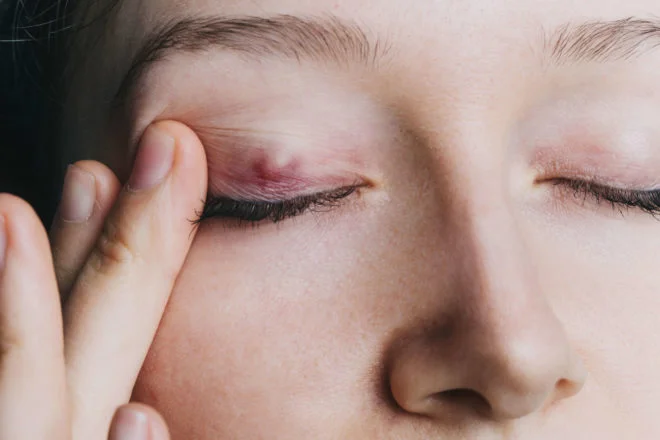
A chalazion, often referred to as an eyelid cyst, meibomian cyst, or internal granüloma, is a non-infectious, localized, inflammatory bump that develops on the upper or lower eyelid. It occurs when one of the meibomian (oil-producing) glands along the lid margin becomes blocked, causing thick lipid secretions to build up and form an encapsulated inflammatory mass within the tarsal plate. While early-stage bumps may respond to conservative home measures such as warm compresses, eyelid massage, and topical medications, chronic nodules that harden and persist for weeks or months require in-office chalazion surgery (incision and curettage).
Navigating eyelid minor surgery often brings up clinical and practical questions. Patients frequently seek information on private chalazion surgery options, compare clinical variables driving chalazion surgery cost, analyze documented chalazion surgery before and after outcomes, review expected chalazion surgery recovery time, prepare for normal post-op bruising after chalazion surgery, ask with concern is chalazion surgery painful, and check whether an incision leaves a visible chalazion surgery scar. This comprehensive medical guide details the surgical steps, pain control protocols, healing milestones, and procedural pricing variables.
Table of Contents
What Is Chalazion Surgery and How Is It Performed?
Chalazion surgery is a minor, highly successful ophthalmic procedure designed to drain trapped lipid contents and excise the surrounding inflammatory capsule without compromising eyelid margin mechanics or aesthetic contours.
Get Free Consultation
Have any questions? Leave your details and we'll get back to you shortly.
Rather than making an external incision across the delicate skin of the eyelid, ophthalmic surgeons almost always operate from the internal side of the lid (the palpebral conjunctiva):
- Anesthetic Infiltration: The surgeon numbs the eye surface with drops, followed by a tiny, targeted local anesthetic injection directly adjacent to the nodule.
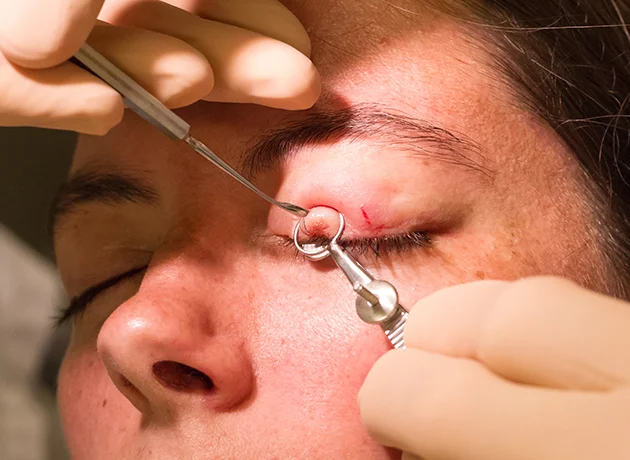
- Eversion and Clamping: A specialized oval chalazion clamp is positioned around the lesion and tightened. This clamp turns the lid inside out, isolates the cyst, and compresses local micro-vessels to maintain a dry, bloodless surgical field.
- Vertical Incision: Using a fine ophthalmic blade, the surgeon makes a precise vertical cut on the mucosal underside of the lid. A vertical cut runs parallel to the meibomian glands, preserving healthy adjacent oil channels.
- Curettage and Capsule Debridement: A miniature curette cleans out all hardened lipid secretions, keratin debris, and inflammatory tissue. If a thick fibrous capsule has developed, the surgeon gently excises it to prevent recurrence.
- Hemostasis and Dressing: The clamp is released, light pressure is applied to stop minor bleeding, antibiotic eye ointment is instilled, and a firm pressure eye pad is taped over the eye.
Is Chalazion Surgery Painful?
One of the most pressing concerns for patients is: is chalazion surgery painful?
- During Anesthetic Delivery: The only brief moment of discomfort occurs during the local anesthetic injection into the eyelid tissue, which produces a brief sting or pinch lasting roughly 3 to 5 seconds. Topical numbing drops applied beforehand help dull the surface of the eye.
- During the Surgery Itself: The procedure is completely painless. The local anesthetic fully blocks pain receptors in the tarsal plate. Patients feel only light pressure, touch, and the firm hold of the clamp for the 10- to 15-minute duration.
- Post-Operative Sensation: As the anesthetic wears off after 2 to 3 hours, patients describe a mild, dull ache, tenderness, or a sensation similar to a bruised eyelid. This discomfort is easily controlled with simple oral analgesics like paracetamol or acetaminophen; strong narcotics are rarely required.
Post-Operative Effects: Bruising After Chalazion Surgery & Scars
Understanding natural tissue responses prevents unnecessary alarm during early healing:
Bruising After Chalazion Surgery
The eyelid skin is the thinnest tissue on the human body and possesses an extensive microvascular network. As a result, localized bruising after chalazion surgery is normal and expected:
- A black-and-blue discoloration often develops along the eyelid margin and may spread down under the eye, mimicking a mild “black eye.”
- Swelling typically peaks within the first 24 to 48 hours after removing the eye patch and gradually fades to yellow-green over 7 to 14 days.
- Cold compresses applied during the first 48 hours, followed by warm compresses after day 3, help clear residual subcutaneous blood pools.
Will There Be a Chalazion Surgery Scar?
In over 95 percent of cases, there is zero visible chalazion surgery scar. Because the incision is placed vertically on the conjunctival underside of the lid, the inner mucosal lining heals rapidly without external skin marking. The incision is left to close naturally without sutures, which eliminates suture marks.
Exception: In rare instances where a long-neglected chalazion has eroded through the outer skin or thinned the anterior dermal layer, the surgeon may make an external horizontal incision along a natural eyelid crease. When sutured with ultra-fine, hair-thin ophthalmic thread, these scars mature into virtually undetectable hairline creases within 3 to 6 months.
Clinical Visuals: Chalazion Surgery Before and After
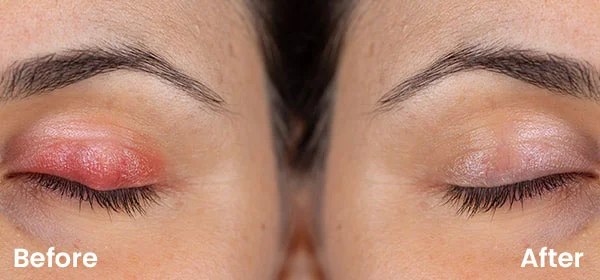
Examining documented chalazion surgery before and after cases highlights key functional and aesthetic improvements:
- Restoration of Smooth Eyelid Contours: The visible, unsightly bulge stretching the eyelid skin is completely flattened, restoring natural lid symmetry.
- Relief from Induced Astigmatism: Large or hard upper eyelid chalazia exert mechanical pressure on the cornea, temporarily warping its curvature and causing blurry vision. Surgical decompression removes this corneal distortion, normalizing uncorrected visual acuity.
- Elimination of Chronic Inflammation: Chronic eyelid heaviness, localized tenderness, and reactive eyelid redness resolve permanently once the encapsulated sebum is cleared.
Recovery Milestones: Chalazion Surgery Recovery Time
The chalazion surgery recovery time is straightforward and predictable:
- First 24 Hours: Keep the firm pressure patch clean and dry to minimize swelling and stop oozing. Do not attempt to drive or operate machinery while one eye is patched.
- Day 2 (Removing the Patch): Remove the pad as directed by your surgeon. You may notice blood-tinged discharge or slight crusting on the eyelashes; gently clean the area using boiled, cooled water and a sterile gauze pad.
- Days 3 to 7: Apply the prescribed antibiotic/corticosteroid eye ointment twice daily. Avoid wearing contact lenses, eye makeup, or rubbing the eye. Sedentary jobs can be resumed after 24 to 48 hours.
- Weeks 2 to 4: Bruising fades completely. You may safely resume wearing contact lenses, applying cosmetic eye products, and engaging in swimming or strenuous gym workouts.
Treatment Pathways: Clinical Comparison Matrix
| Parameter | In-Office Chalazion Surgery (I&C) | Intralesional Steroid Injection | Conservative Home Therapy |
| Primary Approach | Mechanical incision, drainage & curettage | Triamcinolone acetonide injection | Warm compresses & lid massages |
| Ideal For | Chronic, large, firm, encapsulated cysts | Small, soft cysts near the tear punctum | Fresh cysts (under 2 to 3 weeks old) |
| Success / Resolution Rate | High (85% to 95% single-procedure success) | Moderate (60% to 75%, may need 2nd shot) | Low to Moderate (25% to 45%) |
| Visible Skin Scars | None (0% with transconjunctival entry) | None | None |
| Risk of Skin Depigmentation | None | Possible in darker skin types | None |
| Procedure Duration | 10 to 15 Minutes | 5 Minutes | Weeks to months of daily care |
| Average Downtime | 24 Hours with patch; 7 days bruising | Zero downtime; minimal swelling | Zero downtime |
Financial Variables: What Determines Chalazion Surgery Cost?
When researching chalazion surgery cost or planning a private chalazion surgery, patients will discover that pricing varies based on several specific clinical, geographic, and facility variables rather than a single flat fee:
- Unilateral vs. Bilateral & Multiple Lesions: Draining a single isolated chalazion requires less clinical time and fewer disposables than excising multiple cysts distributed across both upper and lower lids during the same sitting.
- Clinical Setting & Surgeon Credentials: Consultations and procedures carried out by fellowship-trained oculoplastic surgeons or consultant ophthalmologists in specialized eye surgical centers involve different pricing structures than general outpatient clinics.
- Diagnostic Workup & Histopathology Testing: In recurrent or atypical chalazia, particularly in elderly patients, a biopsy specimen of the excised capsule may be sent to pathology to rule out meibomian gland carcinoma (sebaceous cell carcinoma), introducing dedicated laboratory fees.
- Anesthesia Requirements (Adults vs. Pediatric): While adults undergo the procedure under straightforward local anesthesia in a treatment room, young children require general anesthesia or deep intravenous sedation in a pediatric operating theater, significantly altering anesthesia and facility charges.
- Medication Packages & Follow-Up Inclusions: Comprehensive private packages typically cover the initial ophthalmic slit-lamp examination, the minor surgery, post-operative antibiotic ointments, protective eye dressings, and a scheduled follow-up review.
Frequently Asked Questions (FAQ)
Does a chalazion come back after surgery?
Surgery has a high success rate (over 90 percent), but it does not prevent new cysts from forming in adjacent, previously unaffected meibomian glands. Patients prone to chronic blepharitis, meibomian gland dysfunction (MGD), or ocular rosacea must maintain daily eyelid hygiene routines (such as warm lid wipes and omega-3 dietary supplementation) to prevent future blockages.
When can I wear contact lenses and makeup after chalazion surgery?
You should avoid wearing contact lenses for at least 7 to 10 days post-surgery, or until the conjunctival incision has completely closed and you have finished your course of antibiotic ointment. Eye makeup (mascara, eyeliner, eyeshadow) must be avoided for at least 10 to 14 days to prevent bacterial contamination and irritation of the healing wound.
Can a chalazion heal on its own without surgery?
Yes. During the first two to three weeks of onset, approximately 30 to 50 percent of small chalazia resolve on their own with consistent home care, including warm compresses applied for 10 to 15 minutes three to four times a day, followed by gentle downward or upward finger massage. If the lump becomes firm, painless, and remains unchanged after four to six weeks, an encapsulated cyst has formed that usually requires surgical drainage.
What should I do if my eyelid looks worse the day after surgery?
It is common for the eyelid to appear more swollen, discolored, and puffy 24 to 48 hours after surgery than it did before entering the clinic. This is a normal reactive inflammatory response to local anesthetic infiltration, the clamp pressure, and surgical manipulation. Applying cold ice packs wrapped in clean towels for 10 minutes at a time will help speed up the resolution of post-surgical swelling and bruising.

 |
|