Skip to content
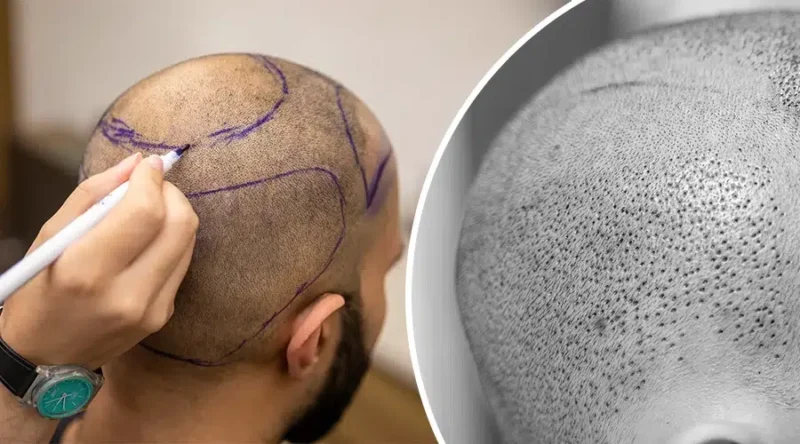
Follicular Unit Extraction (FUE) has revolutionized modern hair restoration, enabling surgeons to extract individual hair grafts meticulously without leaving a linear scar. However, as the global demand for high-density hair restoration has surged, an outstanding clinical complication has emerged in low-tier medical environments: hair transplant over harvesting.
At our clinic, we routinely consult with patients who have traveled abroad for low-cost, ultra-high-graft procedures, only to find that the back of their head has been visually depleted. Protecting the structural integrity of your extraction zone is just as critical as building a natural-looking hairline.
This comprehensive medical guide defines the physiological boundaries of your extraction zones, explains how to recognize a depleted donor area, and explores the modern clinical pathways available to fix over-extraction damage.
Get Free Consultation
Have any questions? Leave your details and we'll get back to you shortly.
Table of Contents
What Is Hair Transplant Over-Harvesting?
To understand hair transplant over harvesting, we must look into the biological limitations of the human scalp. The hair on the back and sides of your head is genetically resistant to dihydrotestosterone (DHT) the hormone responsible for male pattern baldness. This area is anatomically classified as the safe donor zone.
Over-harvesting occurs when an inexperienced practitioner or automated extraction tool removes too many follicular units from a concentrated square centimeter of the scalp, or extracts grafts outside the biological boundaries of the safe zone. Because hair follicles do not regenerate once they are removed, extracting beyond safe thresholds permanently thins out the hair cover at the back of the head, leaving behind visible patches.
What Are the Early Symptoms of a Depleted Donor Area?
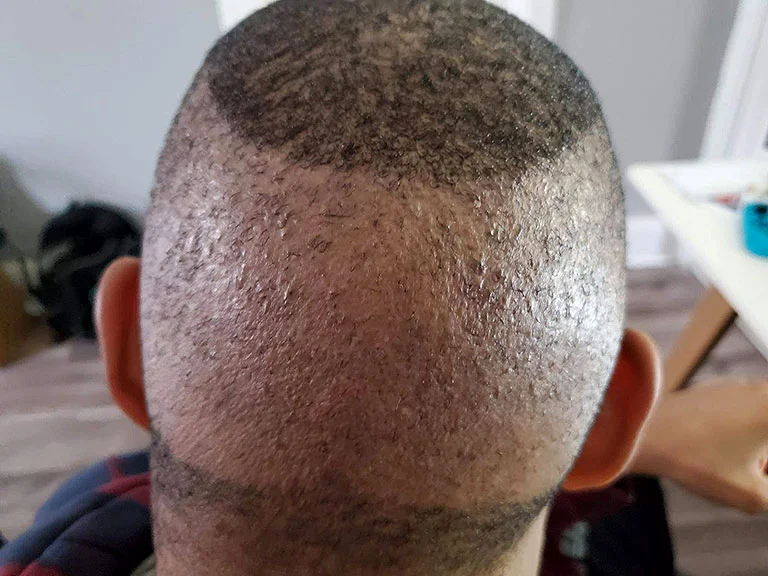
When analyzing a patient’s post-operative recovery, recognizing the structural signs of hair transplant donor thinning requires differentiating normal healing patterns from permanent follicle depletion.
The most common signs of an over-extracted extraction zone include:
- A Patchy or Moth-Eaten Appearance: The back of the head displays a translucent, irregular pattern where the white scalp skin shines through prominently under bright light.
- Sub-Surface Micro-Scarring: Excessive punctures placed too close together create a dense web of sub-surface scar tissue, which can feel rigid or completely numb to the touch.
- Severe Post-Op Alopecia (Shock Loss): While temporary shock loss can occur due to local trauma, over-harvesting induces localized ischemia (restricted blood flow), leading to permanent hair drop-out surrounding the extraction sites.
How Does a Surgeon Calculate the Safe Donor Zone Limits?
To prevent a patchy hair transplant back of head outcome, a qualified hair restoration surgeon follows strict mathematical and anatomical extraction protocols before the first graft is ever touched:
THE MATHEMATICAL EXTRACTION LIMIT:
Total Available Grafts in Safe Zone (approx. 12,000 – 15,000)
↓
Maximum Safe Lifetime Extraction Limit = 30% to 35% Max
↓
Safe Per-Session Yield = 3,500 – 4,000 Grafts Max
Exceeding a 35% extraction ratio in a single session disrupts the overlapping pattern of surrounding hairs, making it impossible for the remaining hair strands to visually camouflage the empty extraction spaces. Furthermore, spacing out incisions dynamically is essential; if two extraction sites are placed too close together, the skin tissue between them can undergo necrosis due to localized blood supply failure.
How Do You Fix an Over-Harvested Donor Area Permanently?
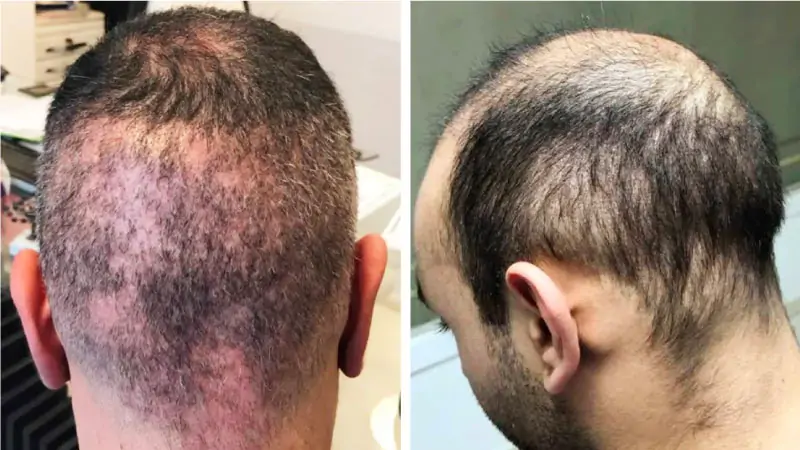
If you are already living with the aesthetic consequences of a depleted extraction zone, specialized restorative therapies can significantly improve the density and texture of the damaged skin tissue.
1. Scalp Micropigmentation (SMP)
This is often the most effective, non-invasive treatment option for extensive damage. SMP involves depositing specialized medical-grade pigments directly into the dermal layer of the bald patches. By mimicking the appearance of natural, short-cut hair follicles, SMP darkens the exposed white scalp skin, instantly reducing the visual contrast and camouflaging the patchy areas.
2. Secondary Body Hair Transplants (BHT)
If a patient still requires additional hair density on their crown or hairline but their scalp extraction zone is completely depleted, a surgeon can harvest follicular units from alternative body zones, such as the beard or chest. These body grafts can then be carefully transplanted back into the thinned-out areas at the back of the head to restore a uniform hair layer.
3. Regenerative Stem Cell and PRP Therapies
To treat localized tissue rigidity and support failing hair follicles, clinicians deploy targeted Platelet-Rich Plasma (PRP) or stem cell micro-injections. These biological therapies stimulate angiogenesis (the growth of new blood vessels), delivering vital oxygen to damaged skin tissues and reviving shocked, dormant follicles.
Frequently Asked Questions (FAQ)
What is usually the main cause of hair transplant over-harvesting?
The main cause is an inexperienced technician attempting to harvest an excessive number of grafts (e.g., 5,000+ grafts) in a single session to maximize coverage, without considering the biological density limits of the patient’s safe extraction zone.
Do hair follicles grow back at the back of the head after extraction?
No, once a hair follicle is extracted during an FUE procedure, it is gone permanently and will not grow back at the extraction site. The follicle is physically relocated to the balding area, which is why calculating safe extraction ratios is so vital.
How long does it take to confirm permanent hair transplant donor thinning?
Initial post-operative thinning can be worsened by temporary shock loss. It takes roughly 6 to 9 months for the surrounding hair cycles to fully stabilize, allowing a clinician to accurately differentiate temporary thinning from permanent over-harvesting damage.
Can scalp micropigmentation completely hide a patchy hair transplant?
While it cannot restore physical hair strands, scalp micropigmentation can highly effectively camouflage the empty spaces. By reducing the color contrast between the white scar tissue and dark surrounding hair, it creates the optical illusion of uniform density.

 |
|