Skip to content
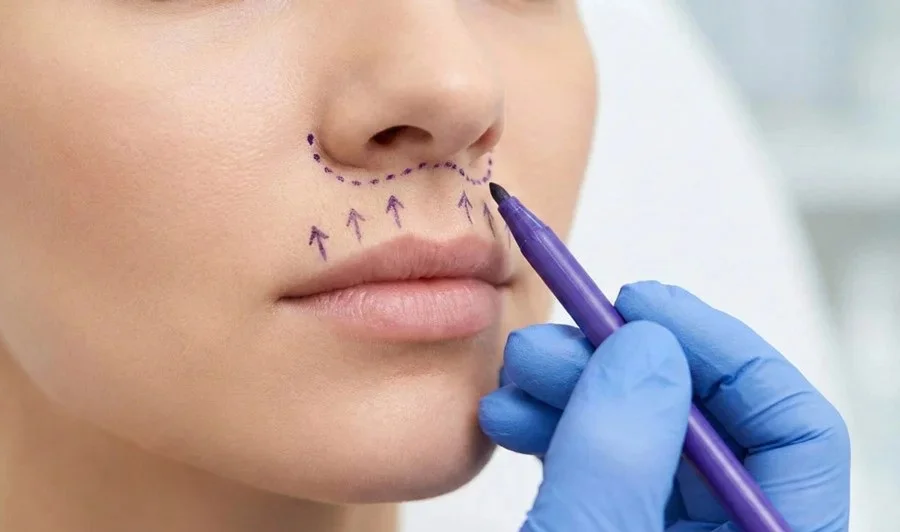
The perioral region, the anatomical zone encompassing the lips, philtrum, and lower midface, plays a definitive role in facial balance, youthful vitality, and smile aesthetics. As part of natural facial aging or genetic inheritance, the distance between the base of the nose and the vermilion border (the red edge of the upper lip) can become excessively elongated. When the philtrum stretches past 15 millimeters, it creates an inverted upper lip that rolls inward, completely hides the maxillary teeth during speech, and produces an aged or fatigued appearance.
While temporary dermal fillers add volume, repeatedly injecting hyaluronic acid into an elongated philtrum often weighs the tissue down further, leading to an unnatural, protruding projection (the so-called “duck lip” deformity). For individuals seeking structural anatomical rejuvenation, lip lift surgery offers a definitive, permanent surgical solution.
Table of Contents
What Is a Lip Lift Surgery and How Does It Work?
If you are researching what is a lip lift surgery, it is an outpatient facial plastic surgery procedure designed to shorten the vertical height of the philtrum, roll the pink vermilion border outward (lip eversion), and restore youthful tooth show when the mouth is slightly open or during speech.
Get Free Consultation
Have any questions? Leave your details and we'll get back to you shortly.
The most widely performed and aesthetically reliable technique is the subnasal bullhorn lip lift:
- Preoperative Mapping: The facial surgeon precisely measures the philtral columns. An aesthetic distance between the subnasale (base of the nose) and the Cupid’s bow is typically 11 to 13 millimeters for women and 13 to 15 millimeters for men. Any excess skin (usually 3 to 6 millimeters) is carefully demarcated.
- The Bullhorn Incision: The incision is placed directly within the natural shadow of the subnasal sulcus, following the curvature of the nostril sills and extending around the columella like the horns of a bull.
- Deep Fascial Anchoring: To prevent tension from pulling the nose downward or stretching the scar, the surgeon secures the deep dermis and orbicularis oris muscle fascia directly to the periosteum of the anterior nasal spine.
- Skin Redraping and Multi-Layer Closure: The designated strip of skin is excised, the upper lip is elevated and rotated outward, and the margins are re-approximated using fine, non-absorbable sutures under zero surface tension.
Surgical Variations: Upper Lip Lift vs. Corner Lip Lift Surgery
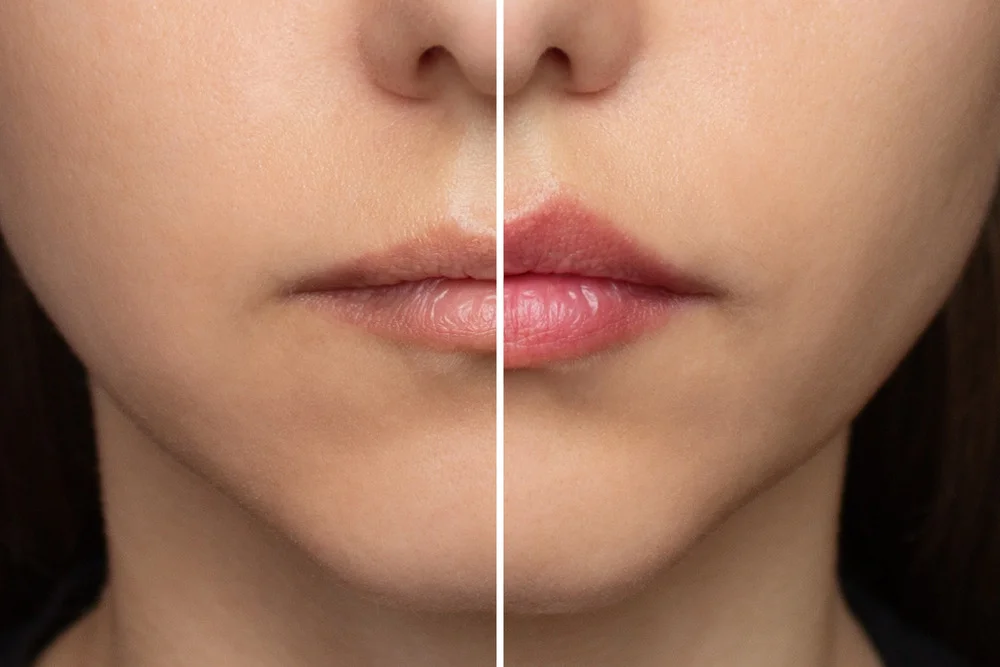
Surgeons categorize lip lifting based on anatomical vectors and individual lip contours:
1. Central Upper Lip Lift (Bullhorn / Subnasal)
- Focus Area: The central two-thirds of the upper lip, specifically the Cupid’s bow and the central philtral columns.
- Aesthetic Effect: Elevates the central vermilion, increases central tooth show, and shortens the vertical midface distance.
- Ideal Candidate: Patients with an elongated philtrum who lack central upper tooth display at rest.
2. Corner Lip Lift Surgery (Gull-Wing of the Mouth Corners)
- Focus Area: The lateral oral commissures (the corners of the mouth).
- Aesthetic Effect: Addresses downward-turned mouth corners that create a permanent frowning, sad, or bitter facial expression.
- Technique: Small triangular or wedge-shaped incisions are made directly above the corners of the mouth, releasing the depressor anguli oris vector and slightly elevating the oral corners. It is frequently performed alongside an upper lip lift for total perioral harmony.
Incision Healing: The Lip Lift Surgery Scar
A common concern among facial surgery candidates is the visibility of the lip lift surgery scar:
- Natural Anatomical Concealment: In a subnasal bullhorn approach, the incision is placed in the natural anatomical crease where the nose meets the upper lip. Once healed, the scar is hidden within the shadow of the nostril base.
- The Healing Timeline: During the first 4 to 8 weeks, the scar line will appear slightly pink, firm, and mildly raised due to active collagen remodeling. By months 3 to 6, the scar flattens out, and by month 12, it matures into a pale, thin, virtually invisible line.
- Minimizing Tension: Tension-free deep muscular anchoring ensures the scar does not stretch or widen over time.
- Scar Management: Starting two to three weeks post-operatively, surgeons prescribe medical-grade silicone scar gel, strict SPF 50 sun protection, and, if needed, gentle vascular laser therapy (such as pulsed dye laser or microneedling) to expedite scar blending.
Real-World Transformations: Lip Lift Surgery Before and After
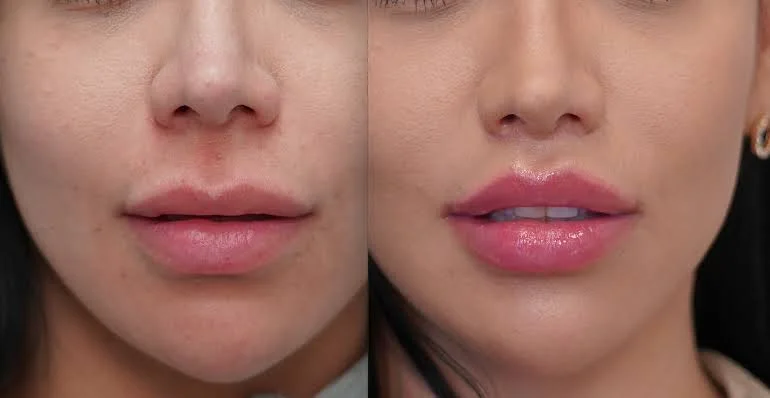
Examining documented lip lift surgery before and after portfolios illustrates the facial balance achieved:
- Natural Upper Tooth Show: At rest, the lip rests comfortably, revealing 2 to 4 millimeters of the central incisors, a classic hallmark of youthfulness.
- Vermilion Eversion: The thin, rolled-in red portion of the upper lip is rolled upward and outward, restoring volumetric fullness without dermal filler injections.
- Shorter Midface: The long, aging distance between the nose and mouth is shortened, enhancing overall facial harmony and jaw-to-nose proportions.
- Uplifted Facial Expression: Neutralizing down-turned lip corners restores a resting, welcoming facial expression.
Recovery Milestones and Healing Timeline
Recovery after a lip lift is relatively quick, but managing early swelling is critical:
- Days 1 to 3: Swelling peaks around day 2 or 3, causing the upper lip to look temporarily tight, elevated, and stiff. Cold compresses applied for 15 minutes at a time help limit edema. Patients maintain a soft food diet to avoid excessive mouth stretching.
- Days 5 to 7: Non-dissolvable external sutures are removed in the clinic. Light walking and desk work can be resumed, though speaking should remain gentle.
- Weeks 2 to 3: The majority of visible bruising and swelling subsides. Patients can comfortably wear light concealer over the incision line and resume social activities.
- Months 2 to 3: Deep muscular stiffness resolves completely, allowing full natural smiling, puckering, and expressive mobility.
- Months 6 to 12: The scar achieves final maturation and full structural stability.
Treatment Comparison: Surgical Lip Lift vs. Dermal Fillers vs. Lip Flip
| Parameter | Surgical Lip Lift | Hyaluronic Acid Dermal Fillers | Botox Lip Flip |
| Mechanism of Action | Surgical excision of skin and muscle anchoring | Injected volumetric hyaluronic acid gel | Neuromodulator relaxes upper lip muscle |
| Philtrum Length | Physically shortens the vertical distance | Does not shorten; can weigh the lip down | Subtle outward roll; no actual shortening |
| Tooth Show at Rest | Significantly increases upper tooth display | Minimal to no improvement | Minor increase during smiling |
| Result Longevity | Permanent (Results last a lifetime) | Temporary (6 to 12 Months) | Very Short (8 to 12 Weeks) |
| Invasiveness | Minor outpatient surgery | In-office needle injections | In-office needle injections |
| Downtime | 5 to 7 Days for suture removal | 24 to 48 Hours for swelling | Zero downtime |
What Determines the Lip Lift Surgery Cost?
When researching lip lift surgery cost or exploring international healthcare packages for lip lift surgery Turkey, patients will find that pricing is personalized based on several clinical, surgical, and logistical variables rather than a single flat fee:
- Surgical Technique Applied: A standalone subnasal bullhorn upper lip lift involves different surgical planning and time than combining it with a bilateral corner lip lift or a V-Y mucosal advancement.
- Type of Anesthesia Administered: The procedure can be performed under local anesthesia in an accredited outpatient clinic, or under IV sedation/general anesthesia when combined with other facial surgeries, which affects operating room and anesthesiologist fees.
- Combination Procedures: A lip lift is frequently paired with rhinoplasty, deep-plane facelift, buccal fat removal, or facial fat grafting. Combining treatments alters overall operating theater time and professional charges.
- Surgeon Expertise and Board Certification: Craniofacial plastic surgeons and facial plastic specialists with proven track records in perioral aesthetics charge professional fees reflecting their specialized anatomical skill and scar minimization techniques.
- Geographic Location and Package Structures: Medical overhead differs between Western Europe, the US, and accredited medical tourism destinations. Clinics in Turkey frequently bundle the surgical procedure, local or general anesthesia, hotel accommodations (4 to 5 nights), private VIP transfers, and post-operative follow-up into a comprehensive all-inclusive arrangement.
Frequently Asked Questions (FAQ)
Will a lip lift surgery change the shape of my nose or pull my nostrils down?
When performed correctly by an experienced facial plastic surgeon, no. The surgeon anchors the deep tissues directly to the rigid periosteum of the nasal spine underneath the skin. This deep anchoring bears the full mechanical tension of the lift, ensuring the nostrils and nasal base remain completely unaltered.
Can I get a lip lift if I currently have lip fillers?
If you currently have hyaluronic acid fillers in your upper lip, it is strongly recommended to dissolve them using hyaluronidase at least two to four weeks before surgery. Dissolving the filler restores your true anatomical lip volume and philtrum baseline, allowing the surgeon to measure and excise the precise amount of skin required.
How painful is a lip lift surgery?
The procedure is virtually painless during surgery due to local anesthesia. In the first 48 to 72 hours post-operatively, patients describe the feeling as a tight, pulling sensation across the upper lip rather than acute pain. This discomfort is easily managed with mild oral analgesics like paracetamol.
When can I wear makeup and lipstick after a lip lift?
You can wear makeup on the rest of your face within a few days, but you must avoid applying any cosmetic products, lipstick, or lip gloss directly over the healing incision line for at least 14 days, or until the wound is completely sealed and cleared by your surgeon.

 |
|