Skip to content

The lower third of the face anchors aesthetic harmony, balancing the projection of the nose and framing the jawline and neck. A severely recessed chin (retrogenia), an overprojected chin (progenia), or structural facial asymmetry can alter the entire facial profile, often making a normal nose appear disproportionately large or creating the illusion of a premature double chin. While temporary dermal fillers or alloplastic silicone chin implants offer cosmetic volume, they fail to resolve deep skeletal deficiencies or vertical height discrepancies. For a permanent, structural, and anatomically natural correction, sliding genioplasty (osseous genioplasty) represents the gold standard in maxillofacial surgery.
Prospective facial surgery patients frequently ask what is sliding genioplasty, review authentic sliding genioplasty before and after patient transformations, examine the long-term stability of sliding genioplasty results, evaluate the stages of sliding genioplasty recovery, research specialized surgical care for sliding genioplasty Turkey, and analyze the clinical variables that determine the overall sliding genioplasty cost. This comprehensive clinical guide examines the osteotomy mechanics, biological fixation methods, functional airway expansion, recovery milestones, and procedural pricing dynamics.
Table of Contents
What Is Sliding Genioplasty and How Does It Work?
If you are researching what is sliding genioplasty, it is an osseous plastic and maxillofacial surgical procedure where the chin bone (the anterior lower border of the mandible) is horizontally sectioned, repositioned into an anatomically ideal position, and permanently fixed using titanium plates and screws.
Get Free Consultation
Have any questions? Leave your details and we'll get back to you shortly.
Unlike foreign-body chin implants, a sliding genioplasty utilizes the patient’s own living bone, preserving vascular muscle attachments:
- Intraoral Access: The entire surgery is conducted through a single horizontal incision made inside the mouth in the lower labial sulcus (between the lower lip and gums). This ensures that zero external skin incisions or visible facial scars are created.
- Horizontal Bone Osteotomy: Using a high-precision oscillating saw or ultrasonic piezoelectric surgical saw with continuous sterile saline cooling, the surgeon performs a horizontal osteotomy across the symphysis of the chin bone, carefully preserving the mental nerve branches exiting beneath the premolars.
- Multi-Directional Repositioning: Because the bone segment is completely mobile, the surgeon can reposition it in multiple spatial planes:
- Advancement: Sliding the chin segment forward to correct a receding profile.
- Setback: Sliding the segment backward to reduce an over-projected chin.
- Vertical Lengthening or Shortening: Adding bone grafts to lengthen a short face, or shaving a wedge of bone to shorten a vertically long chin.
- Asymmetry Correction: Shifting the chin segment laterally to center a crooked jaw.
- Rigid Internal Fixation (RIF): The mobilized bone segment is secured in its new position using pre-bent, low-profile medical-grade titanium osteosynthesis plates and monocortical screws. This rigid fixation provides immediate stability, allowing the bone to fuse and remodel naturally over time.
Functional Advantages: Airway Expansion and Neck Contouring
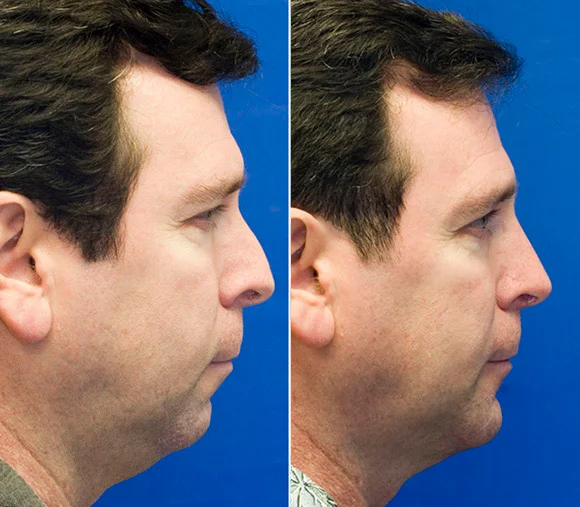
Beyond its aesthetic benefits, sliding genioplasty provides significant functional and reconstructive advantages:
- Genioglossus and Hyoid Muscle Advancement: The genial tubercles on the back of the chin bone serve as the anatomical anchor for the genioglossus muscle (the primary tongue muscle) and the geniohyoid muscle. When the chin bone is advanced forward, these muscle attachments are pulled forward simultaneously.
- Airway Expansion for Sleep Apnea: Pulling the tongue base forward enlarges the retroglossal pharyngeal airway space, significantly reducing airway collapse during sleep and serving as an effective adjunct treatment for mild-to-moderate obstructive sleep apnea (OSA).
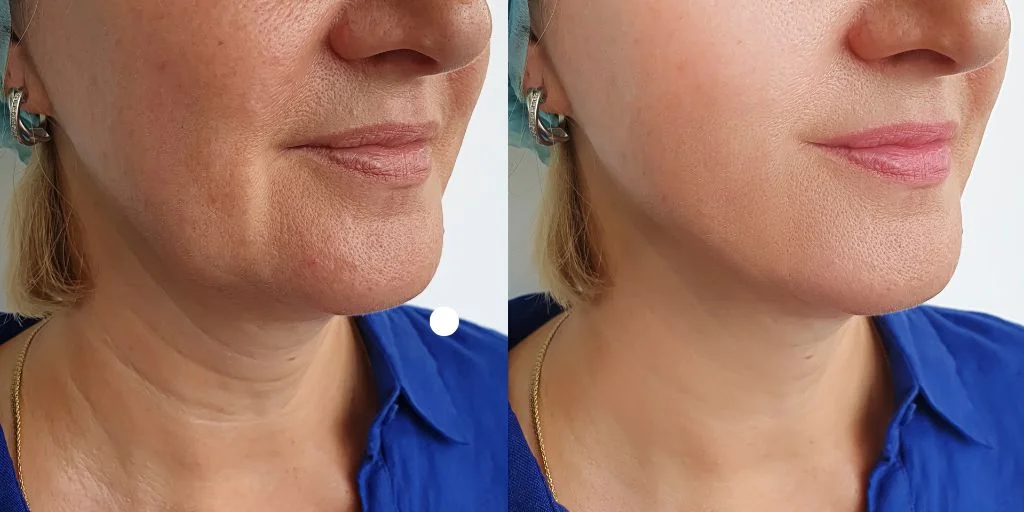
- Enhanced Cervicomental Angle: Advancing the chin bone stretches and tightens the submental soft tissues and suprahyoid musculature. This sharpens the jawline-to-neck transition, defining the jaw border and resolving soft-tissue slack under the chin without requiring aggressive neck liposuction.
Clinical Visuals: Sliding Genioplasty Before and After
Examining documented sliding genioplasty before and after portfolios illustrates structural profile transformations:
- Harmonized Facial Thirds: The lower facial third is brought into strict alignment with the forehead and midface, achieving classic aesthetic balance.
- Natural Chin Contour: Because the patient’s natural bony arch is moved forward rather than masked with an artificial implant, the transition between the chin and the jawline remains smooth, with zero unnatural steps or implant wings visible beneath the skin.
- Normalized Labiomental Fold: Deep, over-creased folds beneath the lower lip are smoothed out, and lip strain caused by incompetence (difficulty closing the lips comfortably over the front teeth) is eliminated.
- Zero External Scarring: Because the mucosal incision is placed entirely inside the lower lip, the outer facial skin remains free of surgical marks.
Recovery Milestones: Sliding Genioplasty Recovery
Because this surgery involves an intentional bone cut (osteotomy), adhering to a structured sliding genioplasty recovery protocol is critical:
- Days 1 to 3 (Acute Phase): The patient wears a supportive compression chin strap to limit soft-tissue edema. Swelling around the lower lip and chin peaks between 48 and 72 hours. Mild lower lip numbness (hypoesthesia) is normal due to temporary stretching of the mental nerves. A cool, liquid-to-pureed diet is maintained, and mouth rinses with antiseptic chlorhexidine are performed after every meal.
- Days 5 to 7: The external supportive taping is removed. Peak swelling begins to subside, and patients transition to a soft, non-chew diet (scrambled eggs, mashed potatoes, smooth soups). Light daily walking is encouraged.
- Weeks 2 to 3: Roughly 70 percent of visible facial swelling and bruising clears. Dissolvable intraoral stitches begin to soften and shed. Most patients feel comfortable returning to remote desk jobs and basic social settings.
- Weeks 6 to 8: Primary osseous union occurs as new bone bridges across the osteotomy gap. The titanium plates are fully integrated, and patients are cleared to resume normal chewing, gym workouts, and light non-contact exercise.
- Months 6 to 12: Residual internal tissue swelling clears completely, fine tactile sensation in the lower lip normalizes, and definitive sliding genioplasty results are locked in permanently.
Procedural Comparison: Sliding Genioplasty vs. Chin Implants vs. Dermal Fillers
| Clinical Parameter | Sliding Genioplasty (Osseous) | Alloplastic Chin Implant (Silicone/Medpor) | Hyaluronic Acid Dermal Fillers |
| Procedure Type | Surgical Bone Osteotomy & Fixation | Surgical Subperiosteal Pocket Placement | In-Office Needle Injections |
| Material Used | Patient’s own vascularized bone | Synthetic silicone or porous polyethylene | Hyaluronic acid gel |
| Movement Capabilities | 3D: Forward, backward, up, down, lateral | 1D to 2D: Forward and subtle width only | Mild outward volume only |
| Bone Resorption Risk | Zero (Promotes bone remodeling) | Moderate (Implant pressure erodes underlying bone) | Zero |
| Infection / Rejection | Near-zero (Living autologous tissue) | Moderate (Foreign body infection/migration risk) | Low |
| Airway Expansion | Yes (Pulls tongue base forward) | No (Purely superficial aesthetic mask) | No |
| Longevity | Permanent (Living bone fuses for life) | Long-term (Subject to shifting or replacement) | Temporary (9 to 18 Months) |
| Surgical Incision | Intraoral (100% hidden inside mouth) | Intraoral or submental (under-chin skin cut) | Zero incisions |
What Determines the Sliding Genioplasty Cost?
When researching sliding genioplasty cost or planning treatment programs for sliding genioplasty Turkey, patients will find that pricing is personalized rather than fixed. Overall surgical fees depend on several specific clinical, surgical, and logistical variables:
- Surgical Complexity and Bone Movement Requirements: A straightforward horizontal advancement requires less surgical time than a complex three-dimensional repositioning involving asymmetric leveling, interpositional bone grafting, or vertical reduction.
- Diagnostic Workup and 3D Virtual Surgical Planning (VSP): State-of-the-art procedures utilize preoperative high-resolution Cone Beam Computed Tomography (CBCT) scans, 3D computer simulations, and custom-printed surgical cutting guides to ensure precision, which influences technical fees.
- Fixation Hardware Utilized: The quantity, profile, and brand of specialized osteosynthesis titanium plates and self-drilling monocortical screws introduce specific material costs.
- Combination Surgeries: Sliding genioplasty is frequently performed alongside other procedures, such as orthognathic jaw surgery (double jaw surgery), rhinoplasty (profiloplasty), or submental liposuction, which adjusts operating theater time, anesthesia duration, and surgical charges.
- Surgeon Specialization: Board-certified oral and maxillofacial surgeons or craniofacial plastic surgeons with dedicated fellowship training in bone osteotomies command professional fees reflecting their surgical expertise.
- International Healthcare Packages: Programs in Turkey frequently bundle the surgical procedure, general anesthesia, hospital inpatient stay with overnight nursing, medications, 4- or 5-star hotel accommodations (6 to 7 nights), private VIP transfers, and follow-up clinical visits into a transparent, cost-effective arrangement.
Frequently Asked Questions (FAQ)
Can the titanium plates and screws be felt through the skin or will they need to be removed?
Low-profile titanium osteosynthesis plates are contoured flush against the mandibular bone and are positioned beneath thick mentalis muscle and soft tissue. In the vast majority of patients, they cannot be felt or seen. Because titanium is biocompatible, the plates remain safely in place for life. They are only removed in the rare event of localized plate irritation, cold sensitivity, or delayed infection (in less than 3 to 5 percent of cases) via a minor in-office procedure under local anesthesia.
Is sliding genioplasty permanent?
Yes. Unlike temporary synthetic fillers that dissolve or implants that can shift, a sliding genioplasty is permanent. Once the osteotomy gap heals and new bone knits across the cut over six to twelve weeks, the repositioned chin bone becomes a permanent, living part of your jaw skeleton for the rest of your life.
Will sliding genioplasty cause permanent nerve damage or lip numbness?
Temporary numbness of the lower lip and chin (mental nerve neuropraxia) occurs in almost all patients immediately after surgery due to mechanical retraction and localized tissue swelling. In over 95 percent of cases performed by experienced maxillofacial surgeons, normal sensory function gradually returns over several weeks to months as the nerve regenerates. Permanent partial numbness occurs in less than 1 to 2 percent of cases.
What is the difference between a sliding genioplasty and orthognathic jaw surgery?
Sliding genioplasty modifies only the lower bony tip of the chin and does not alter your dental occlusion (how your upper and lower teeth bite together). Orthognathic surgery (such as BSSO or Le Fort osteotomies) cuts and moves the entire tooth-bearing jaw to correct severe malocclusions, bite misalignments, and skeletal jaw discrepancies. Genioplasty is often performed either as an isolated aesthetic procedure or as the final balancing step of orthognathic surgery.

 |
|