Skip to content

The upper third of the face, comprising the forehead, the glabella (the area between the eyebrows), and the eyebrow architecture, is the primary canvas for conveying human emotion, alertness, and youthfulness. As time moves forward, the gradual degradation of dermal elastin fibers, muscle laxity, and tissue descent cause the brows to sag over the orbital rim. This structural shift can make people look tired, angry, or prematurely aged. In past decades, correcting a heavy upper face required open surgical techniques that involved massive, ear-to-ear crown incisions, causing prolonged numbness and visible hair loss.
Modern facial plastic surgery offers a far more advanced alternative. An endoscopic brow lift represents the peak of minimal-incision facial contouring. By utilizing high-definition cameras and specialized micro-instruments, surgeons can elevate the entire brow matrix, erase deep forehead furrows, and open up the eye region with minimal tissue trauma and incredibly fast recovery timelines. This detailed guide breaks down the technical steps of the procedure, outlines day-by-day healing, reviews global costs, analyzes potential risks, and answers your most critical questions.
Table of Contents
What Is an Endoscopic Brow Lift?
To understand the engineering behind this advanced facial procedure, we must first address a core question: what is an endoscopic brow lift in terms of medical equipment and tissue manipulation? Clinically termed a “keyhole forehead lift,” an endoscopic brow lift is a minimally invasive rejuvenation surgery performed under general anesthesia or deep intravenous sedation.
Get Free Consultation
Have any questions? Leave your details and we'll get back to you shortly.
Instead of making a continuous incision across the scalp, the surgeon makes 3 to 5 tiny vertical incisions hidden entirely within the hair-bearing scalp. Through one of these keyhole entries, an endoscope (a thin probe equipped with a micro-camera and cold light source) is inserted. The high-definition camera projects a magnified view of the internal muscles, blood vessels, and bone structures onto a theater monitor. This visualization allows the surgeon to safely loosen and elevate the forehead tissues without causing severe bleeding or nerve injury.
What Is the Technical Process Behind the Endoscopic Brow Lift Technique?
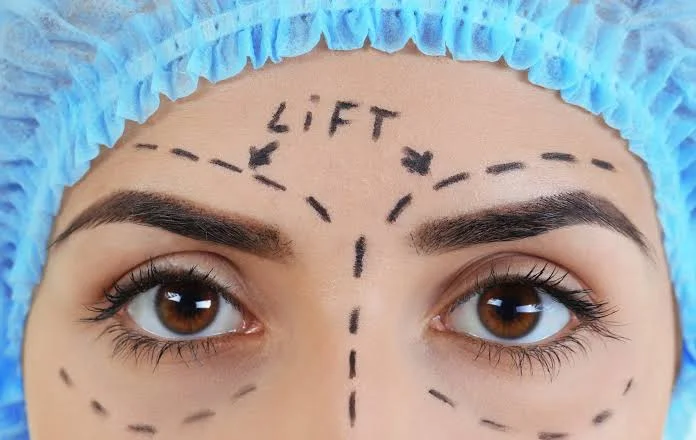
The execution of an advanced endoscopic brow lift technique relies on complete structural release and secure anatomical fixation:
- Step 1: Incision & Camera Insertion: The surgeon makes microscopic keyhole incisions hidden inside the hairline and inserts the endoscope probe.
- Step 2: Periosteal Release: Using specialized micro-dissectors, the surgeon detaches the rigid tissue layer (periosteum) covering the forehead bone. This release goes all the way down to the orbital rims, loosening the eyebrows completely.
- Step 3: Muscle Modulation: The muscles responsible for chronic frowning and vertical glabella furrows (the corrugator and procerus muscles) are carefully isolated and weakened.
- Step 4: Elevation & Fixation: The entire forehead skin and brow complex are shifted upward into a more youthful position. To keep the tissues securely anchored while they naturally heal to the bone in their new home, the surgeon uses advanced medical fixation devices, such as micro-screws, surgical loops, or temporary bio-absorbable Endotine implants.
Endoscopic Brow Lift Scars: Are They Visible?
A major cosmetic benefit of this approach is the complete concealment of surgical footprints. When discussing endoscopic brow lift scars, patients can feel fully reassured. Because all 3 to 5 keyhole entry points are placed 1 to 2 centimeters behind the hairline within the scalp, they are completely invisible during normal daily interactions.
The surgeon uses specialized micro-sutures or medical staples to close the incisions, ensuring that once healing is complete and hair grows through the areas, there is zero external trace of cosmetic intervention.
Endoscopic Brow Lift Recovery Day by Day Timeline
Because this method avoids major open tissue cutting, the initial recovery window is remarkably manageable. Understanding an endoscopic brow lift recovery day by day blueprint helps patients organize their downtime comfortably:
- Day 1 (Immediate Post-Op): You will wake up wearing a snug head bandage to limit fluid buildup. Expect a feeling of tightness across the forehead and mild localized tenderness.
- Day 2 – 3: The compression bandage is safely removed at the clinic. Swelling and light bruising peak around the upper eyelids and cheeks. You will begin using specialized anti-inflammatory medications.
- Day 4 – 5: Swelling begins to move down the face and soften. You can safely wash your hair using lukewarm water and gentle, non-chemical baby shampoos, being careful around the suture lines.
- Day 7 – 10: The surgeon removes the medical staples or micro-sutures at your follow-up appointment. Most bruising has faded, allowing you to comfortably use light camouflage makeup.
- Day 14: You can confidently return to your non-strenuous office job and resume light walking exercises.
- Month 1 – 3: Residual internal tissue tightness and occasional itching resolve completely as the nerves heal. The lifted forehead structures lock permanently into their new positions.
Endoscopic Brow Lift Before and After Results
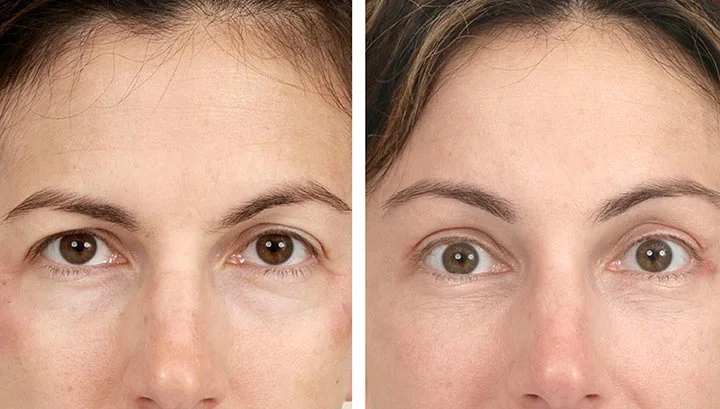
Studying a verified endoscopic brow lift before and after timeline highlights the elegant, balanced outcomes achieved through keyhole surgery. Before the procedure, patients often present with a chronically heavy, sad expression, deep horizontal wrinkles, and sagging skin that crowds the upper eyelids.
Following a brief healing phase, the final endoscopic brow lift results reveal a completely refreshed upper face. The eyebrows sit in a natural, elegant arch just above the orbital bone, the forehead skin appears completely smooth, and the upper eyes open up beautifully without creating an unnatural, startled look.
What Are the Potential Endoscopic Brow Lift Complications?
While feature-rich and highly precise, every advanced facial surgery involves a careful balance of benefits and potential clinical risks. When analyzing potential endoscopic brow lift complications, patients must be aware of:
- Temporary Scalp Numbness: Because the sensory nerves are gently stretched during the tissue elevation, a temporary reduction in scalp sensation is common. Normal feeling typically returns fully within 2 to 6 months.
- Temporary Hair Thinning (Alopecia): Mild, localized hair shedding can occasionally occur immediately surrounding the keyhole incision lines due to temporary hair follicle shock. The hair grows back fully within a few months.
- Asymmetry: Minor differences in healing between the left and right sides can occur, though these are easily prevented by using advanced digital mapping during the operation.
- Fixation Sensitivity: In rare cases, patients can feel the temporary bio-absorbable Endotine clips underneath their skin during the first few weeks before the implants naturally dissolve.
When Is an Endoscopic Brow Lift Revision Necessary?
An endoscopic brow lift revision is a specialized procedure reserved for cases where an initial surgery performed at an uncertified clinic resulted in under-correction (insufficient lifting), noticeable asymmetry, or premature tissue drop due to poor anatomical fixation.
Revision surgeries require a highly experienced facial specialist who can carefully navigate past scar tissue, release the restricted planes, and safely re-anchor the brows into perfect, long-lasting facial symmetry.
Endoscopic Brow Lift Cost Worldwide
The baseline endoscopic brow lift cost depends on the experience level of the facial plastic surgeon, the clinical facility registration tier, the type of fixation implants selected (such as Endotines), and the geographical location of the center. In the UK, USA, and Western Europe, private surgical clinics charge between £6,000 and £11,000 for a standalone keyhole forehead lift.
This significant cost is why choosing an endoscopic brow lift Turkey package has become a leading alternative for international patients. On average, a premium endoscopic brow lift in Turkey ranges from €2,500 to €4,000.
Because of lower local operational overheads, favorable currency exchange dynamics, and a highly competitive, government-supported medical tourism infrastructure, top-tier surgical centers in Turkey can provide identical world-class operating standards, board-certified plastic surgeons, and FDA-approved fixation materials at a fraction of Western prices. These comprehensive healthcare packages seamlessly combine the advanced keyhole surgery, luxury hotel accommodation, private VIP transfers, and a full year of post-operative follow-up care into a single financial solution.
Comprehensive Surgical Technique Comparison
| Facial Metric / Feature | Endoscopic Brow Lift | Traditional Coronor Open Lift | Direct Brow Lift |
| Incision Size & Layout | 3 – 5 Tiny vertical keyholes | Large, ear-to-ear crown incision | Incision placed directly above eyebrow |
| Surgical Scar Visibility | Zero (Hidden entirely inside hair) | Moderate (Long scar line across scalp) | High (Visible scar line above brow) |
| Risk of Scalp Numbness | Extremely Low (Temporary) | High (Often permanent over crown) | None (Localized to brow only) |
| Average Surgical Time | 60 to 90 Minutes | 120 to 150 Minutes | 45 Minutes |
| Risk of Altering Hairline | None (Preserves natural hairline) | High (Shifts hairline upward/backward) | None |
| Average Initial Healing | 7 to 10 Days | 21 to 28 Days | 10 to 14 Days |
| Ideal Patient Demographics | Young to Mature (All laxity tiers) | Advanced tissue sagging only | Elderly patients with deep brow lines |
Frequently Asked Questions (FAQ)
How long does endoscopic brow lift last?
An endoscopic brow lift delivers highly durable, long-term results that typically remain stable for 10 to 15 years. While the surgery permanently resets your anatomical facial clock upward, your skin will continue to age naturally over the next decade. Maintaining an excellent medical skincare routine and using consistent sun protection will maximize the lifespan of your results.
Does endoscopic brow lift work?
Yes, it is exceptionally successful. Clinical records spanning over two decades demonstrate that the endoscopic approach provides strong, consistent tissue elevation, erases deep forehead lines, and corrects heavy brow sagging. It achieves these high success rates by modifying the deep muscle structures under high-definition camera guidance, ensuring reliable and long-lasting stability.
Which is better endoscopic or direct brow lift?
For most patients seeking comprehensive facial rejuvenation, the endoscopic approach is far superior because it lifts the entire forehead, leaves no visible scars, and preserves your natural hairline. A direct brow lift requires making a cut right above the eyebrow hairs, which leaves a permanent external scar. For this reason, direct lifts are typically reserved for elderly patients with deep, pre-existing forehead creases or cases involving facial nerve paralysis.
How painful is an endoscopic brow lift?
The procedure is remarkably comfortable because it is performed under general anesthesia or deep sedation. Post-operatively, patients describe the feeling as a sensation of tightness or pressure across the forehead, along with mild soreness, rather than intense pain. These mild symptoms are easily managed during the first 3 to 5 days using standard medications prescribed by your surgeon.

 |
|