Skip to content
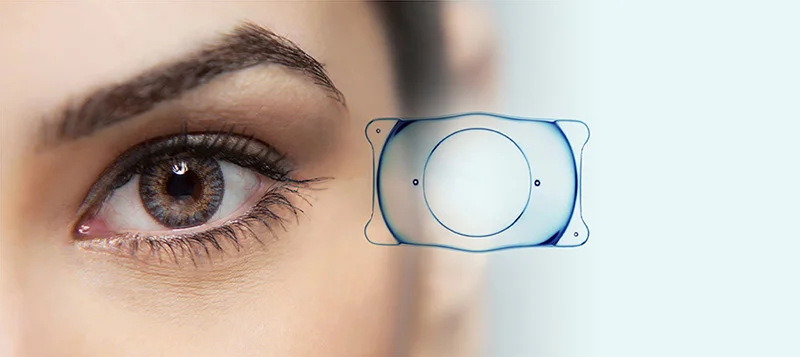
Refractive vision correction has evolved significantly beyond laser corneal reshaping options such as LASIK and PRK. For individuals presenting with extreme prescription levels, thin corneas, or severe dry eye syndrome, traditional laser eye procedures often carry significant clinical risks or are entirely contraindicated. In these complex cases, intraocular refractive technology offers a safer, fully reversible alternative to laser eye surgery.
Clinically categorized as a phakic IOL surgery icl surgery, the Implantable Collamer Lens (ICL) procedure places a biocompatible, micro-thin lens inside the eye without altering or removing any corneal tissue. As popularity grows worldwide, prospective patients frequently research what is icl surgery, assess mandatory icl surgery requirements, evaluate potential disadvantages of icl surgery, compare the icl surgery cost, and ask critical recovery questions like can you fly after icl surgery or why blurry vision after icl surgery occurs. This clinical guide provides an expert overview of the procedure, outlines global costs, details before and after icl surgery expectations, and highlights why international surgical hubs like Turkey lead in refractive eye care.
Table of Contents
What Is ICL Surgery and How Does It Function?
To evaluate if this advanced intraocular treatment aligns with your visual goals, we must answer a foundational question: what is icl surgery from an anatomical perspective?
Get Free Consultation
Have any questions? Leave your details and we'll get back to you shortly.
Unlike LASIK or PRK, which reshape the outer clear front window of the eye (the cornea) using an excimer laser, phakic IOL surgery icl surgery works with the eye’s natural anatomy. The word “phakic” means that your natural crystalline lens remains completely intact inside the eye.
During the procedure, an ophthalmic surgeon creates a microscopic, self-healing incision at the base of the cornea. A folded, custom-crafted Collamer lens (made from a purified collagen-based material) is gently inserted and positioned behind the iris (the colored part of the eye) and directly in front of your natural lens. This extra lens works in harmony with your natural focusing system to sharply focus light onto the retina, instantly correcting high myopia (nearsightedness), hyperopia (farsightedness), and astigmatism.
What Are the Mandatory ICL Surgery Requirements?
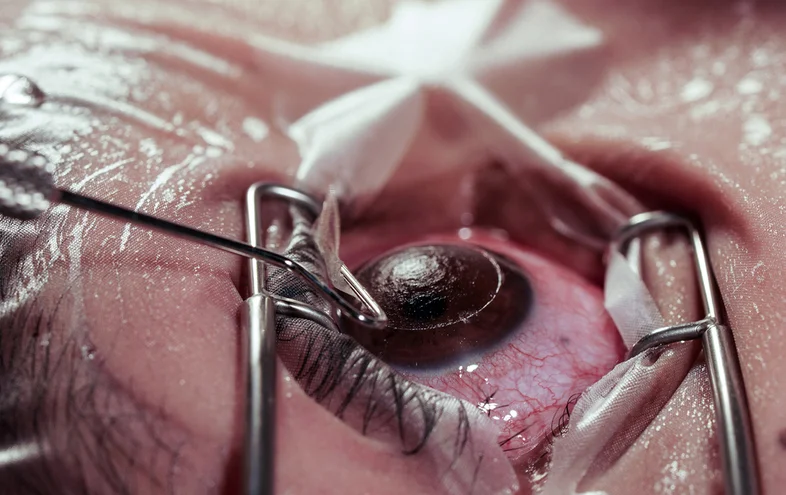
Not every patient experiencing vision impairment qualifies for a Collamer lens. Surgeons enforce strict safety criteria to prevent post-operative complications:
Essential ICL Surgery Requirements:
- Age Parameter: Candidates must be between 21 and 45 years old. Younger patients may experience changing eye prescriptions, while older patients develop age-related crystalline lens changes (cataracts).
- Stable Prescription: The vision prescription must remain stable for at least 12 consecutive months (less than a 0.50 D change).
- Anatomical Anterior Chamber Depth (ACD): The space between the inner corneal layer and the front of the iris must measure at least 2.8 mm to 3.0 mm to ensure the lens rests comfortably without raising intraocular pressure.
- Endothelial Cell Count: The cornea must feature a high density of endothelial cells to maintain long-term corneal clarity.
- Absence of Ocular Pathologies: Candidates must be free from active glaucoma, iritis, diabetic retinopathy, or severe untreated dry eye syndrome.
How Long Does ICL Surgery Take and What Happens During the Procedure?
A common anxiety among patients centers on surgical timing: how long does icl surgery take?
The physical procedure itself is remarkably fast, taking approximately 10 to 15 minutes per eye. Including pre-operative numbing drops and post-operative pressure monitoring, your entire outpatient clinic visit typically lasts about 1.5 to 2 hours.
Surgical Workflow Steps:
- Step 1: Topical anesthetic eye drops are applied to render the eye completely numb. No general anesthesia or intravenous sedation is required.
- Step 2: A micro-incision (approx. 2.2 mm to 2.0 mm) is made at the peripheral corneal edge.
- Step 3: The flexible ICL is injected into the eye, where it unfolds smoothly.
- Step 4: The surgeon gently tucks the four corners (haptics) of the lens behind the iris, ensuring ideal centering over the pupil.
- Step 5: Gel lubricants are rinsed out, and the microscopic incision seals itself naturally without requiring any sutures or stitches.
Disadvantages of ICL Surgery and Potential Risks
While ICL boasts an impressive safety record, patients must weigh the disadvantages of icl surgery alongside its high visual benefits:
- Surgical Invasive Nature: Because the procedure enters the interior chamber of the eye, it carries a very low, but real, risk of intraocular infection (endophthalmitis) compared to surface-level lasers.
- Risk of Elevated Intraocular Pressure (Glaucoma): If the lens blocks natural fluid flow (aqueous humor) through the pupil, eye pressure can rise, requiring additional pressure-lowering eye drops or an iridotomy hole.
- Early Cataract Development: If the ICL sits too close to your natural lens, micro-friction can accelerate localized clouding (cataract formation) over time.
- Lens Vault Imbalance: An improperly sized lens (too large or too small) may require surgical repositioning, exchange, or removal.
- Cost Factor: Premium biocompatible Collamer material makes ICL significantly more expensive than standard surface laser procedures.
Understanding Blurry Vision After ICL Surgery and Flying Restrictions
Setting realistic expectations during the before and after icl surgery recovery timeline helps prevent unnecessary post-operative anxiety:
Blurry Vision After ICL Surgery
It is completely normal to experience mild to moderate blurry vision after icl surgery during the first 24 to 72 hours. This temporary haze is caused by pupils dilated with strong drops during surgery, microscopic corneal swelling, gel lubricants clearing out, and your brain adapting to a sudden HD visual input. Severe, persistent blurriness accompanied by throbbing pain should be reported to your surgeon immediately.
Can You Fly After ICL Surgery?
A frequent travel query is: can you fly after icl surgery?
In most cases, patients can safely fly 24 to 48 hours after surgery, provided they complete their mandatory 1-day post-op checkup and receive clear clearance from their eye surgeon. Commercial cabin pressure changes do not alter intraocular pressure or harm the implant. However, dry cabin air can irritate healing eyes, so flying with preservative-free artificial tears and wearing UV-protective sunglasses is essential.
ICL Surgery Cost in Western Countries vs. Turkey
Evaluating the financial aspect shows that the icl surgery cost is higher than standard LASIK due to the custom-manufactured Collamer lens.
In the United States, the United Kingdom, and Western Europe, the average icl surgery cost ranges between €2,500 and €4,500 per eye ($3,000 to $5,000), bringing the total cost for both eyes to €5,000–€9,000.
Why Choose ICL Surgery in Turkey?
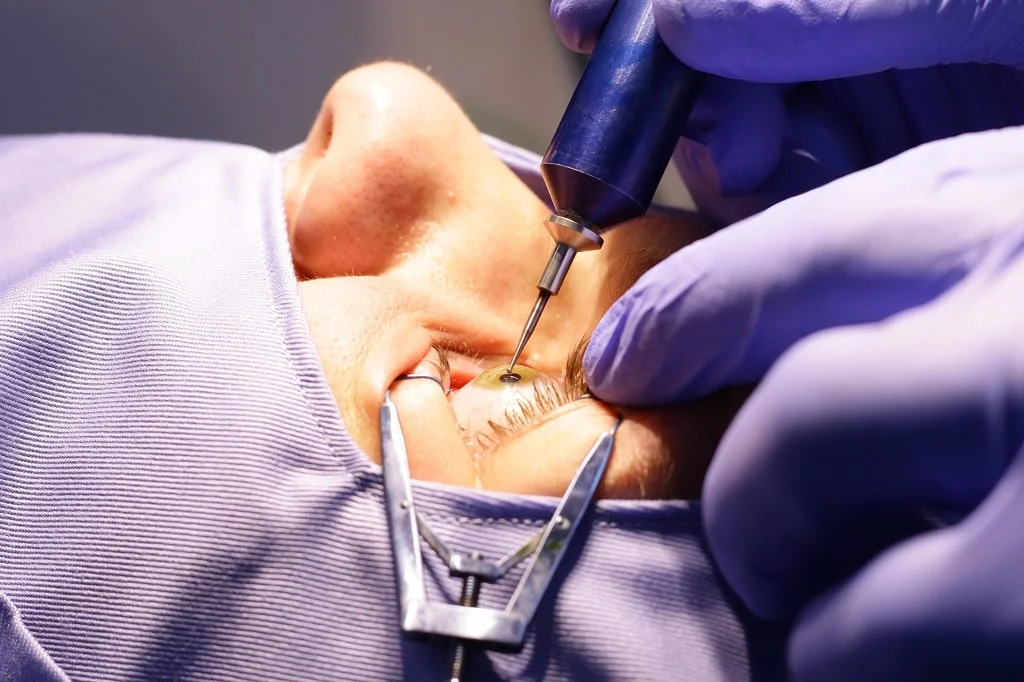
To access world-class eye care at a fraction of Western rates, opting for an icl surgery cost Turkey package has become a leading choice for international patients. Turkish ophthalmic centers utilize the exact same FDA-approved Visian ICL lenses (manufactured by STAAR Surgical) and are staffed by internationally trained eye surgeons.
On average, the all-inclusive icl surgery cost Turkey ranges from €1,800 to €3,000 for both eyes. These comprehensive medical tourism packages combine pre-op diagnostics, custom Visian ICL lenses, surgeon fees, post-op medications, luxury hotel accommodations, and private VIP airport transfers into a single transparent price.
Comprehensive Surgical & Anatomical Comparison Matrix
| Clinical Parameter | ICL (Implantable Collamer Lens) | Femto-LASIK | PRK / LASEK |
| Surgical Approach | Intraocular lens implantation | Corneal flap & laser reshaping | Surface corneal ablation |
| Corneal Tissue Removal | Zero (Preserves 100% corneal tissue) | Moderate tissue removal | Low to Moderate tissue ablation |
| Treatment Reversibility | 100% Reversible (Lens can be removed) | Irreversible (Permanent tissue change) | Irreversible (Permanent tissue change) |
| Dry Eye Syndrome Risk | Extremely Low (Nerves intact) | Moderate to High | Low to Moderate |
| Ideal Prescription Range | High Myopia up to -20.0 D | Moderate Myopia up to -8.0 D | Mild to Moderate Myopia |
| Average Surgical Time | 10 to 15 Minutes per eye | 10 Minutes per eye | 5 to 10 Minutes per eye |
| Visual Recovery Speed | Rapid (24 to 48 hours) | Rapid (24 to 48 hours) | Slow (3 to 7 days) |
Frequently Asked Questions (FAQ)
What is ICL surgery and can other people see the lens inside my eye?
ICL surgery involves implanting a microscopic, flexible Collamer lens behind your iris to correct high myopia, hyperopia, or astigmatism. Because the lens is positioned completely behind the colored part of your eye (iris), it is 100% invisible to the naked eye. No one looking at you will ever notice you have an implant.
What are the main disadvantages of ICL surgery compared to LASIK?
The primary disadvantages of ICL surgery are that it is an intraocular procedure (entering inside the eye rather than treating the surface), it carries a small risk of elevating eye pressure or accelerating early cataract growth if sized incorrectly, and it is significantly more expensive than standard surface laser procedures due to the custom Collamer lens.
Why do I experience blurry vision after ICL surgery during the first few days?
Experiencing mild blurry vision after ICL surgery for the first 1 to 3 days is normal. It is caused by widespread pupil dilation from pre-op drops, residual gel lubricants inside the eye, mild microscopic corneal swelling, and the natural adjustment period as your visual cortex adapts to sharp visual signals.
Can you fly after ICL surgery and how long should I wait before boarding a plane?
Yes, you can safely fly 24 to 48 hours after ICL surgery once your surgeon conducts your 1-day post-op checkup, measures normal intraocular pressure, and gives official clearance. Airplane cabin pressure does not affect the lens, though bringing preservative-free artificial tears is advised to combat cabin dryness.
What should I expect during the before and after ICL surgery recovery phase?
Before ICL surgery, you will undergo precise 3D corneal and anterior chamber scans to size your lens. Immediately after surgery, you will notice brighter, clearer vision within 24 hours. Full visual stabilization occurs over 1 to 2 weeks, during which you must apply antibiotic eye drops and avoid rubbing your eyes, swimming, or wearing heavy eye makeup.

 |
|