Skip to content

The structures inside the human eye require absolute structural clarity to focus light accurately onto the retina. When blood, inflammatory debris, or scar tissue compromises this clear pathway, specialized clinical intervention becomes necessary. This is precisely what the vitrectomy surgery is a highly sophisticated microsurgical procedure designed to clear the internal workspace of the eye.
At our clinic, we frequently guide patients through the anxieties surrounding advanced ophthalmic procedures. Whether you are exploring a private vitrectomy for persistent visual obstructions or seeking solutions for complex retinal pathologies, understanding the mechanical process and the recovery timeline is essential. Let’s break down the surgical stages, structural implications, and what to expect during your postoperative journey.
Table of Contents
What is a Vitrectomy Eye Surgery?
To answer the common patient question, “Is a vitrectomy a major surgery?”, it helps to frame it within modern ophthalmology. While it is an intraocular procedure requiring immense microsurgical precision, it is performed using advanced minimally invasive instruments, typically as an outpatient surgery.
Get Free Consultation
Have any questions? Leave your details and we'll get back to you shortly.
A vitrectomy eye surgery involves the precise surgical removal of the vitreous humor the clear, gel-like substance that fills the large rear chamber of the eye between the lens and the retina. The primary objective is to gain direct mechanical access to the retina to repair tears, treat detachments, or clear chronic optical blockages that impair baseline visual acuity.
Clinical Indications: Retinal Tears, Detachments and Floaters
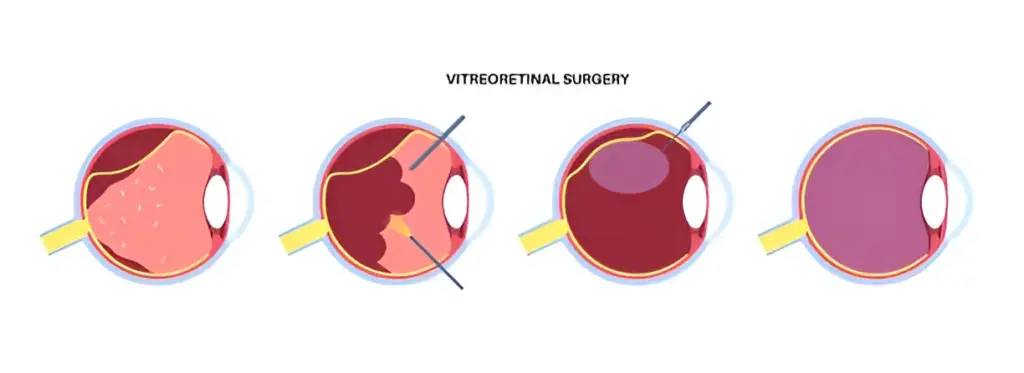
Ophthalmologists utilize this surgical pathway to address a distinct cluster of intraocular pathologies:
- Retinal Detachment and Tears: When the retina pulls away from its underlying tissue layer, a vitrectomy is performed to clear the pulling forces and hold the retina back in its anatomical position.
- Diabetic Retinopathy and Vitreous Hemorrhage: Severe diabetes can cause fragile blood vessels to leak into the vitreous gel, clouding vision entirely. Removing the blood-filled gel restores light transmission.
- Vitrectomy for Floaters: While minor eye floaters are common, severe, chronic vitreous strands can create permanent, web-like shadows across your central field of vision. When conservative treatments fail, a specialized vitrectomy removes these dense fibers to clear the visual axis.
Technical Phase: The Vitrectomy Steps
Modern intraocular procedures are performed under local or general anesthesia using a specialized operating microscope. The mechanical vitrectomy steps follow a strict clinical protocol:
- Micro-Incision Placement: The surgeon creates three microscopic incisions, less than one millimeter wide, in the sclera (the white part of the eye). These access ports do not typically require physical stitches to close.
- Infusion Line Stabilization: An automated fluid line is connected to one port, continuously pumping a sterile saline solution into the eye to maintain perfect internal pressure and structure during the procedure.
- Vitreous Removal (The Vitreor): Using a high-speed miniature cutting instrument called a vitreor, the surgeon gently separates and vacuums out the vitreous gel bit by bit.
- Retinal Repair and Gas/Oil Tamponade: Once the gel is removed, the surgeon performs necessary repairs on the retina using micro-forceps or localized lasers. To keep the retina stable during healing, the chamber is filled with a temporary medical gas bubble or silicone oil.
The Healing Timeline: Vitrectomy Recovery
When planning for treatment, patients always ask: “How long does it take to recover from a vitrectomy?” While initial structural healing occurs quickly, full visual stabilization is a gradual process.
Immediate Postoperative Phase
Many patients are relieved to find out the answer to “Is a vitrectomy painful?” The surgery itself is painless due to advanced local nerve blocks, and postoperative discomfort is typically manageable with mild, over-the-counter pain relievers.
The Critical Posturing Rule
If a medical gas bubble was placed inside your eye, you must adhere to strict face-down posturing for several days to a week. The gas bubble acts as an internal bandage, floating upward to push the healing retina flat against the back of the eye. Failing to maintain this position can cause the repair to fail or induce premature cataracts.
6 Weeks After Vitrectomy
By 6 weeks after vitrectomy, the eye structure has largely stabilized. If a medical gas bubble was used, it will have naturally dissolved and been replaced by the eye’s own clear fluid. At this stage, your ophthalmologist will perform detailed visual acuity tests and begin discussing updated prescription lenses or the removal of silicone oil if it was used.
The Cost of Vitrectomy

The baseline cost of vitrectomy varies substantially based on the complexity of the underlying retinal disease, the type of anesthesia used, and whether specialized laser tools are required during the procedure. Choosing a private vitrectomy clinic allows patients to bypass long public hospital waiting lists, ensuring rapid access to specialized vitreoretinal surgeons a critical factor when dealing with time-sensitive conditions like acute retinal detachment.
Frequently Asked Questions (FAQ)
What is a vitrectomy eye surgery?
A vitrectomy is a specialized intraocular procedure where the clear vitreous gel is removed from the back of the eye to treat retinal conditions or clear severe visual obstructions like blood or floaters.
Is a vitrectomy a major eye surgery?
Yes, it is considered a major intraocular surgery due to the high precision required to operate near the retina. However, modern micro-incision tools allow it to be performed as an outpatient procedure with minimal external trauma.
Is a vitrectomy procedure painful?
No, the procedure itself is painless because it is performed under local nerve blocks or general anesthesia. Postoperative recovery may involve a dull ache or scratchy sensation, which is manageable with standard medication.
How long does it take for vision to clear after a vitrectomy?
Initial healing takes about 2 to 4 weeks. However, if a gas bubble was used, your vision will remain significantly blurred until the gas naturally dissolves, a process that is typically complete around 6 weeks after vitrectomy.
Can I travel by air during my vitrectomy recovery?
If your surgeon used a medical gas bubble, you must absolutely avoid flying or traveling to high altitudes until the gas has completely dissolved. The atmospheric pressure change can cause the gas bubble to expand rapidly inside the eye, leading to irreversible blindness.

 |
|